
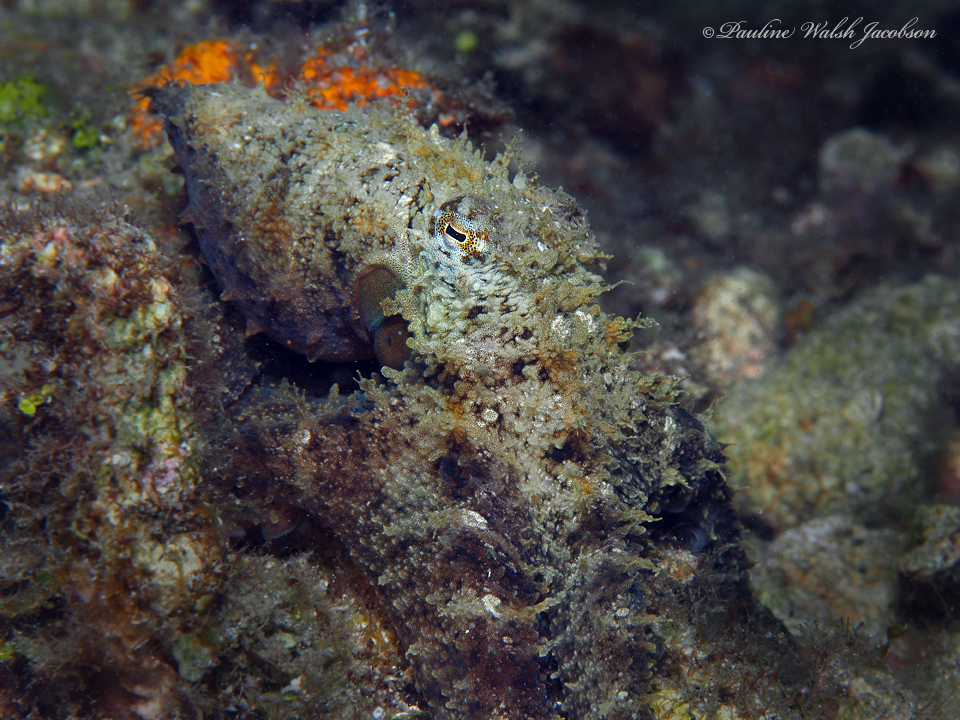
Algae Octopus
Abdopus aculeatus
- Usual depth0–1 m
- Water temperature25–29 °C
- Best monthsJanuary, March, and May
- How commonRare
Photo credit: (c) Pauline Walsh Jacobson, some rights reserved (CC BY) · CC BY · iNaturalist
About this species
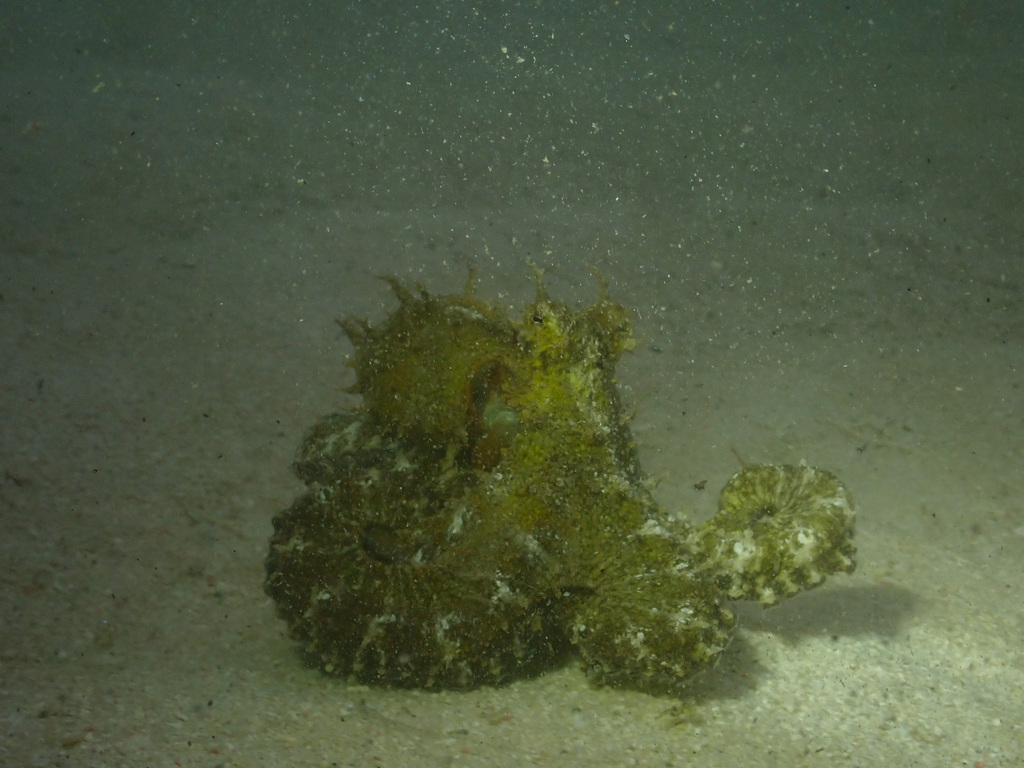
Abdopus aculeatus is a small species of octopus in the order Octopoda. It has the common name algae octopus due to its typical resting camouflage, which resembles a gastropod shell overgrown with algae. It is small in size with a mantle around the size of a small orange and arms 25 cm in length, and is adept at mimicking its surroundings.
Text from the Wikipedia article “Abdopus aculeatus”, licensed CC BY-SA 4.0. Read the article
Where and when
Where it has been recorded
Worldwide
Loading the map
Best months
Worldwide (open data)
- January: 4 records
- February: 1 records
- March: 4 records
- April: 4 records
- May: 6 records
- June: 2 records
- July: 1 records
- August: 3 records
- September: 3 records
- October: 2 records
- November: 4 records
- December: 4 records
Depth and water temperature
Depth
Mostly recorded at 0–1 m · Deepest record: 1 m
Water temperature
Recorded in surface water of 25–29 °C
Photos
no rights reserved · CC0 1.0 · iNaturalist 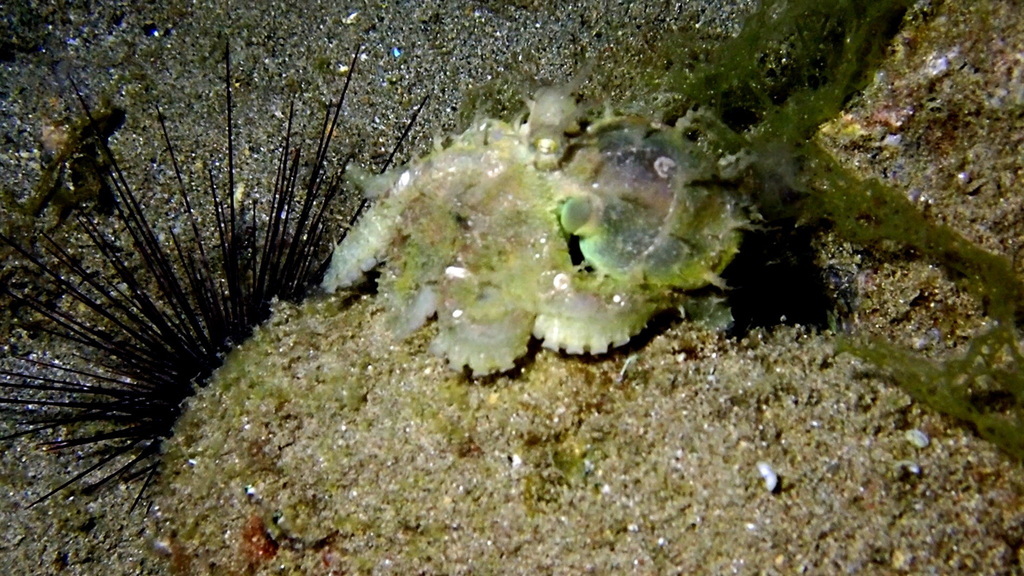
(c) Gregor Bailar, some rights reserved (CC BY) · CC BY · iNaturalist
Names and classification
- English
- Algae Octopus, Prickly Octopus
Names in 2 more languages
- Japanese
- ウデナガカクレダコ
- Thai
- ปลาหมึกสายหัวหนาม
Other scientific names: Octopus (Abdopus) aculeatus, Octopus aculeatus, Octopus harmandi
Similar species
- Mosaic Drop-arm Octopus
Abdopus abaculus
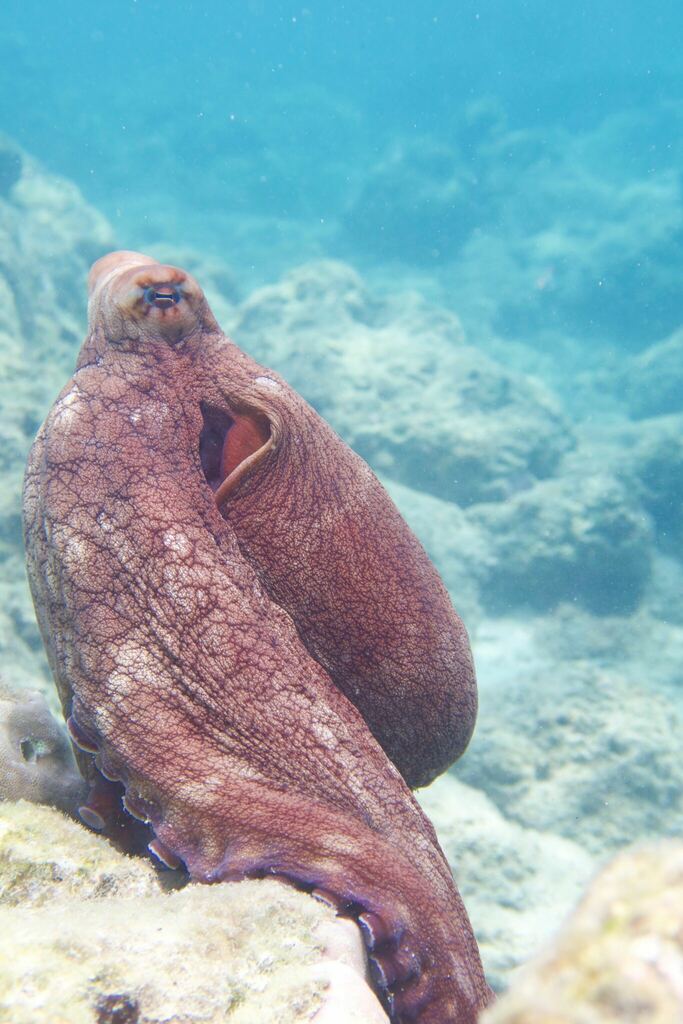 Big blue octopus
Octopus cyanea
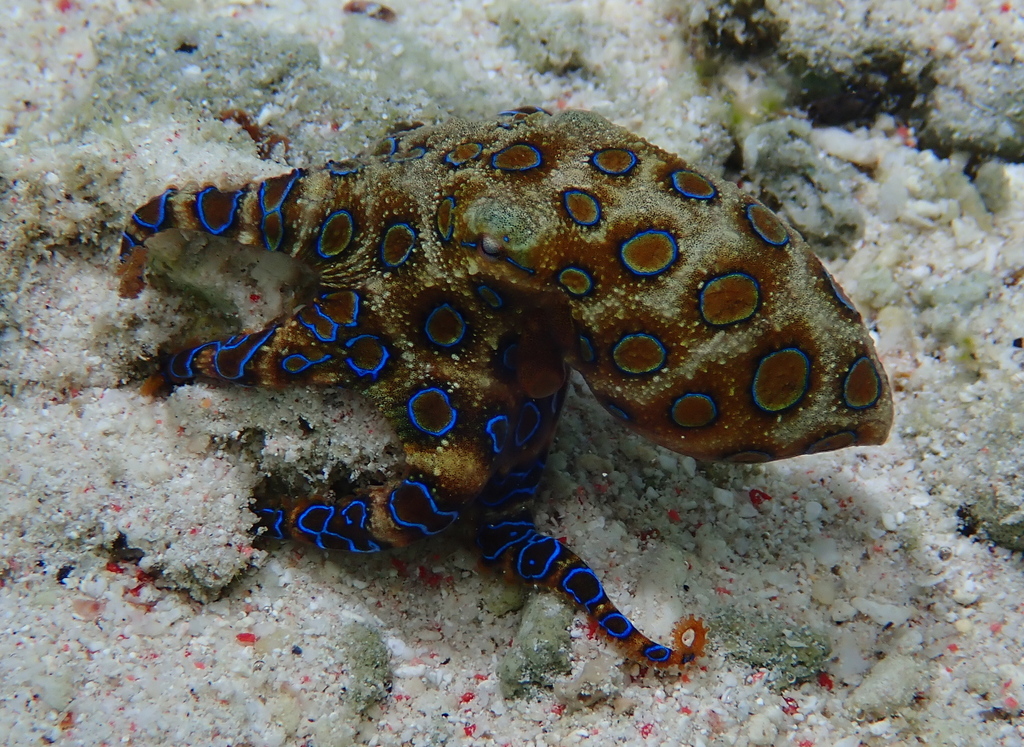 Greater blue-ringed octopus
Hapalochlaena lunulata
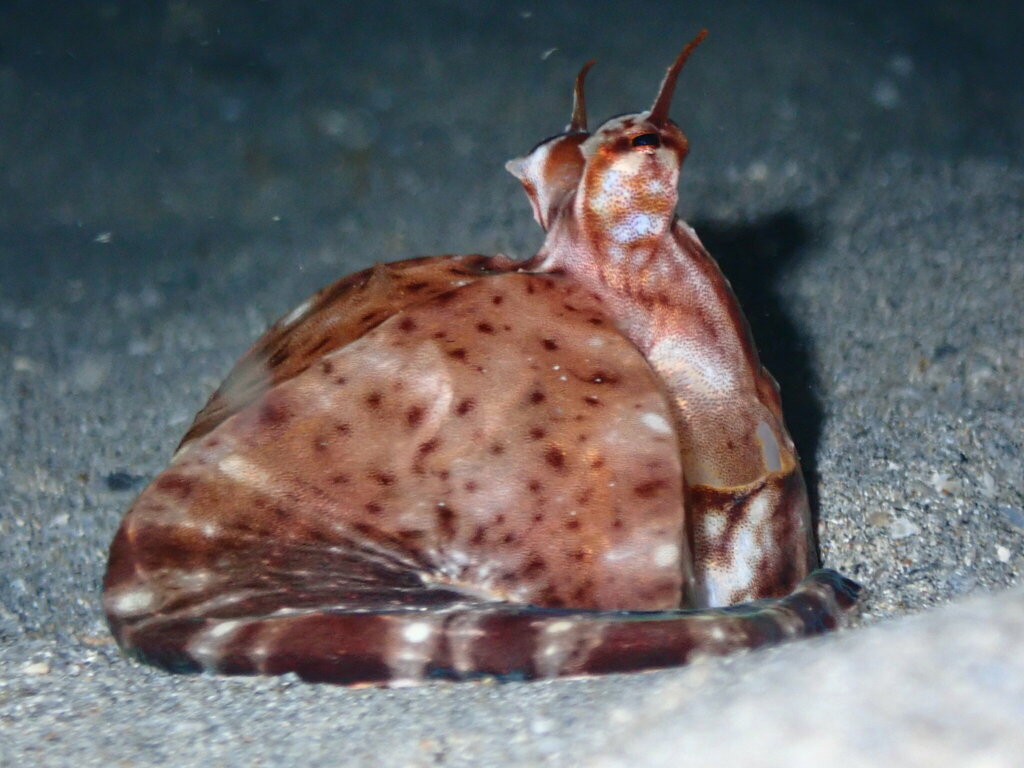 Mimic octopus
Thaumoctopus mimicus
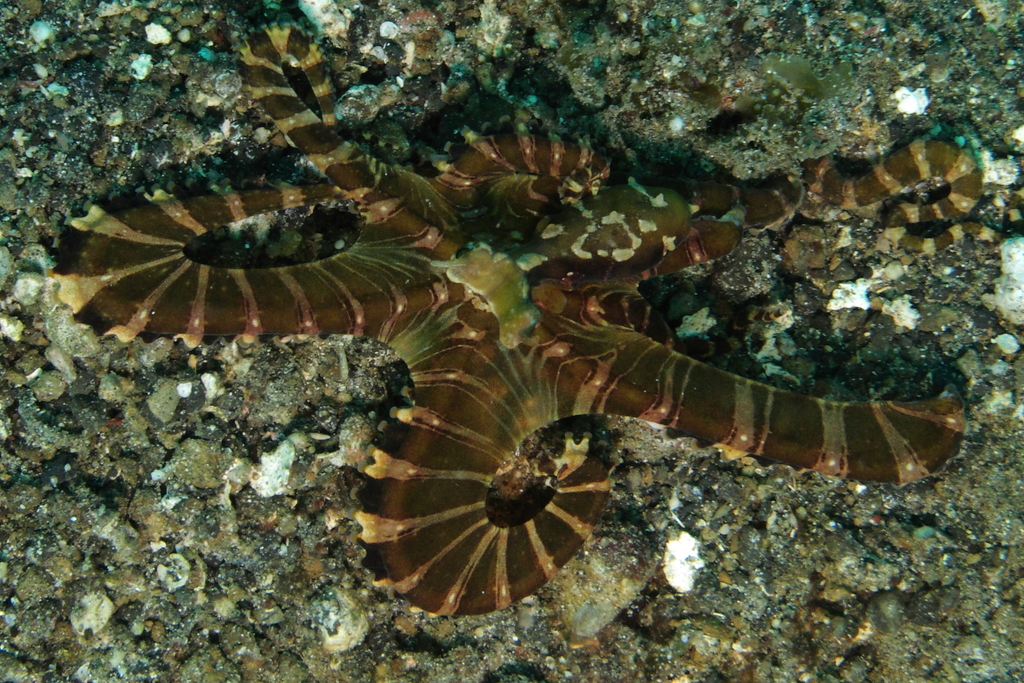 Wonderpus
Wunderpus photogenicus
Sources and credits
Names and taxonomy: WoRMS (CC BY 4.0) and the GBIF Backbone (CC BY 4.0). Photos: iNaturalist observers, each under the licence shown (CC0, CC BY or CC BY-SA).
- Depth, temperature, months and maps: records from OBIS and GBIF under CC0 or CC BY.
- Descriptions: Wikipedia, licensed CC BY-SA, each linked to its article.
- Conservation status as published by GBIF (IUCN Red List).
- 59 open-data records from 1882 to 2018.
- Species data updated October 26, 2026.
Log what you see on your next dive
The free DiveHive diver app keeps your logbook with every sighting and shows what lives at the site you dive next.