
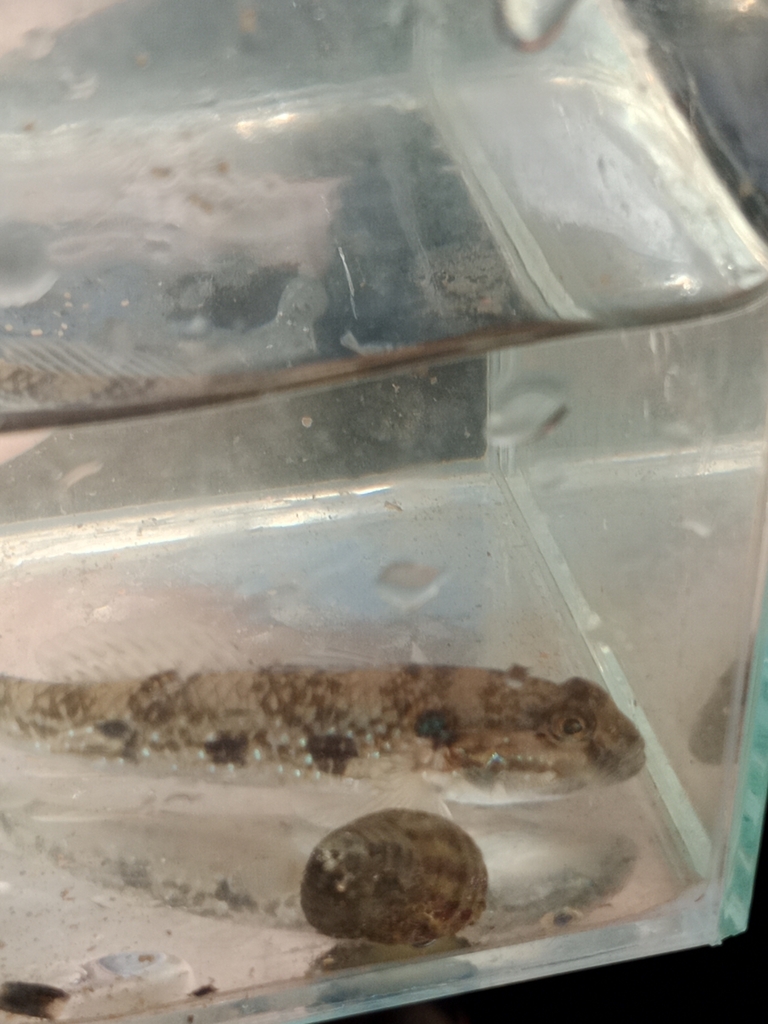
Tropical sand goby
Acentrogobius caninus
- Usual depth0–18 m
- Water temperature23–30 °C
- Best monthsMay, July, and September
- How commonRare
Photo credit: (c) Patrick Connolly, some rights reserved (CC BY) · CC BY · iNaturalist
About this species
Acentrogobius caninus, also known as the tropical sand goby or green-shouldered goby, is an amphidromous benthopelagic species of fish in the family Gobiidae.
Text from the Wikipedia article “Acentrogobius caninus”, licensed CC BY-SA 4.0. Read the article
Where and when
Where it has been recorded
Worldwide
Loading the map
Best months
Worldwide (open data)
- January: 13 records
- February: 13 records
- March: 6 records
- April: 14 records
- May: 22 records
- June: 11 records
- July: 21 records
- August: 18 records
- September: 19 records
- October: 11 records
- November: 5 records
- December: 16 records
Depth and water temperature
Depth
Mostly recorded at 0–18 m · Deepest record: 29 m
Water temperature
Recorded in surface water of 23–30 °C
Names and classification
- English
- Tropical sand goby, dogtoothed goby, Dog-toothed goby, Tropical sand goby, Green-shouldered Goby, Green-shoulder Goby, tropical sand goby
Names in 3 more languages
- Japanese
- Hokurohaze, ホクロハゼ
- Thai
- ปลาบู่เขี้ยว
- Simplified Chinese
- 犬牙細棘鰕虎, 虎齒細棘鰕虎
Other scientific names: Amoya caninus, Ctenogobius caninus, Gobius caninus, Gobius philipi, Gobius philippi, Radigobius caninus, Yongeichthys caninus
Similar species
 Barcheek Amoya
Acentrogobius moloanus
 greenspotted goby
Acentrogobius viridipunctatus
- Green-spotted Goby
Acentrogobius janthinopterus
- Sulu goby
Acentrogobius suluensis
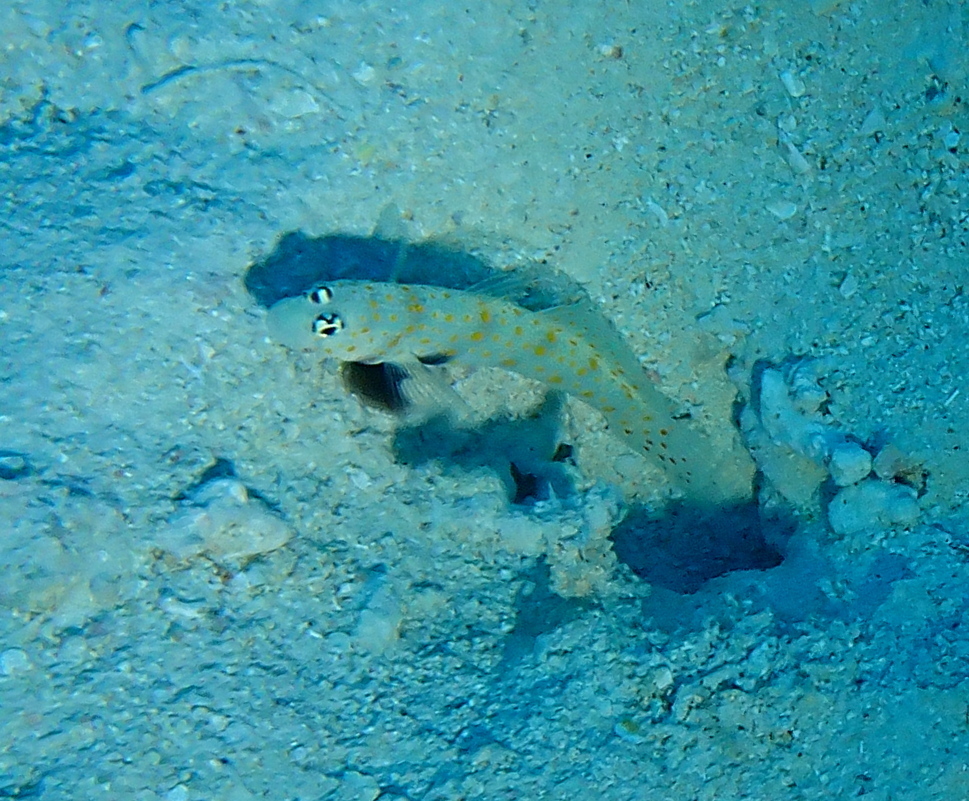 Black-chest Shrimp-goby
Amblyeleotris guttata
Sources and credits
Names and taxonomy: WoRMS (CC BY 4.0) and the GBIF Backbone (CC BY 4.0). Photos: iNaturalist observers, each under the licence shown (CC0, CC BY or CC BY-SA).
- Depth, temperature, months and maps: records from OBIS and GBIF under CC0 or CC BY.
- Descriptions: Wikipedia, licensed CC BY-SA, each linked to its article.
- Conservation status as published by GBIF (IUCN Red List).
- 299 open-data records from 1837 to 2021.
- Species data updated October 26, 2026.
Log what you see on your next dive
The free DiveHive diver app keeps your logbook with every sighting and shows what lives at the site you dive next.