
Speckled shrimpfish
Aeoliscus punctulatus
- Usual depth2–150 m
- Water temperature19–29 °C
- Best monthsAugust, October, and December
- How commonRare
About this species
Aeoliscus punctulatus, also known as the speckled shrimpfish or jointed razorfish, is a member of the family Centriscidae of the order Syngnathiformes. This fish adopts a head-down, tail-up position as an adaptation for hiding among sea urchin spines. This fish is found in coastal waters in the Indo-West Pacific. Its natural habitat includes beds of seagrass and coral reefs, where sea urchins are found.
Text from the Wikipedia article “Aeoliscus punctulatus”, licensed CC BY-SA 4.0. Read the article
Where and when
Where it has been recorded
Worldwide
Loading the map
Best months
Worldwide (open data)
- January: 0 records
- February: 1 records
- March: 1 records
- April: 0 records
- May: 1 records
- June: 1 records
- July: 2 records
- August: 6 records
- September: 2 records
- October: 5 records
- November: 3 records
- December: 4 records
Depth and water temperature
Depth
Mostly recorded at 2–150 m · Deepest record: 150 m
Water temperature
Recorded in surface water of 19–29 °C
Names and classification
- English
- Speckled shrimpfish, razorfish, shrimpfish, speckled shrimpfish
Names in 2 more languages
- German
- Gepunkteter Schnepfenmesserfisch
- Simplified Chinese
- 斑紋鰕魚, 斑纹鰕鱼
Other scientific names: Aeoliscus punctatus, Amphisile punctata, Amphisile punctulata, Amphisyle brevispina, Centriscus punctulatus
Similar species
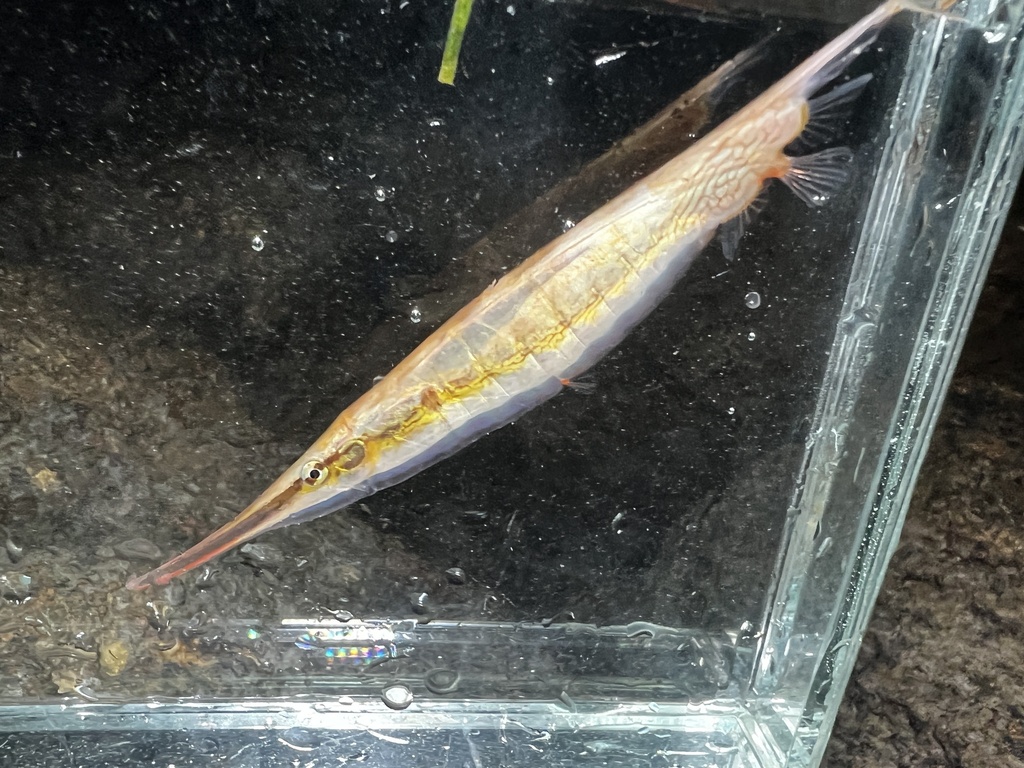 Razorfish
Aeoliscus strigatus
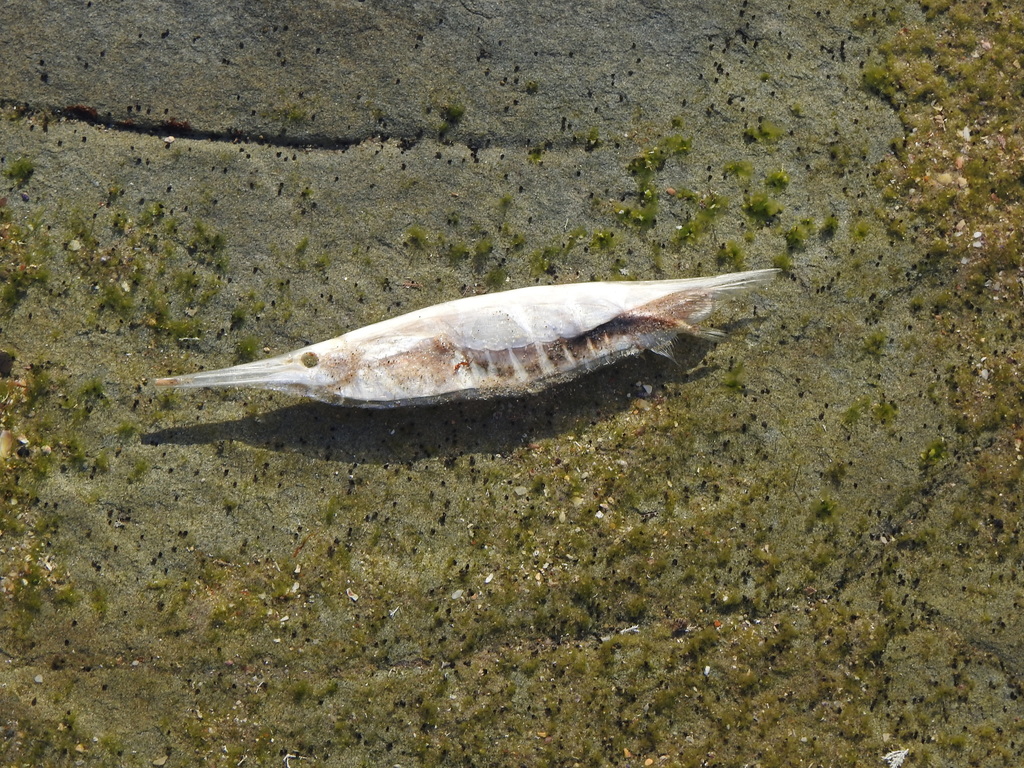 Grooved razorfish
Centriscus scutatus
Sources and credits
Names and taxonomy: WoRMS (CC BY 4.0) and the GBIF Backbone (CC BY 4.0). Photos: iNaturalist observers, each under the licence shown (CC0, CC BY or CC BY-SA).
- Depth, temperature, months and maps: records from OBIS and GBIF under CC0 or CC BY.
- Descriptions: Wikipedia, licensed CC BY-SA, each linked to its article.
- Conservation status as published by GBIF (IUCN Red List).
- 106 open-data records from 1928 to 2009.
Log what you see on your next dive
The free DiveHive diver app keeps your logbook with every sighting and shows what lives at the site you dive next.