
Leaping blenny
Alticus kirkii
- Usual depth1–30 m
- Water temperature24–30 °C
- Best monthsApril, July, and October
- How commonRare
About this species
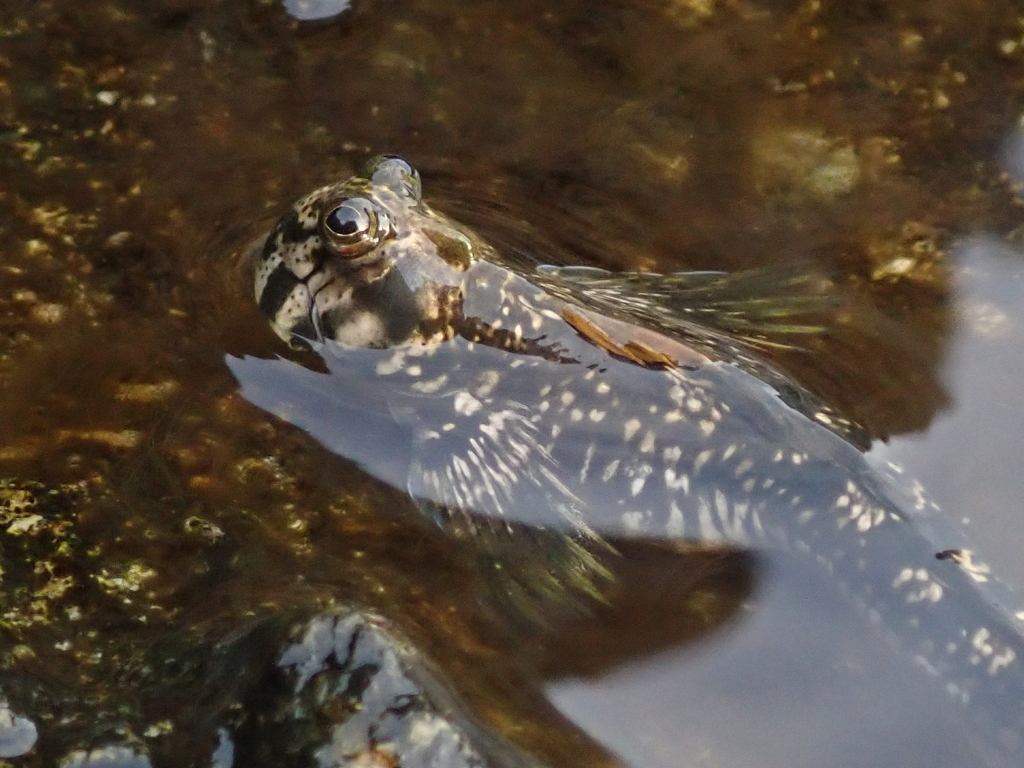
The Kirk's blenny is a species of combtooth blenny in the genus Alticus. It was described by A. Günther in 1964, originally as a member of the genus Salarias. It is a tropical blenny which is known from the Red Sea, Mozambique, Réunion, the Persian Gulf, and India, in the Indian Ocean. Kirk's blennies inhabit waters near the shore, and often spend time out of the water. They are able to breathe air when on land. They are oviparous, and form distinct pairs when mating; they also guard their eggs.
Text from the Wikipedia article “Kirk's blenny”, licensed CC BY-SA 4.0. Read the article
Where and when
Where it has been recorded
Worldwide
Loading the map
Best months
Worldwide (open data)
- January: 1 records
- February: 0 records
- March: 1 records
- April: 4 records
- May: 0 records
- June: 1 records
- July: 4 records
- August: 1 records
- September: 1 records
- October: 4 records
- November: 4 records
- December: 0 records
Depth and water temperature
Depth
Mostly recorded at 1–30 m · Deepest record: 30 m
Water temperature
Recorded in surface water of 24–30 °C
Names and classification
- English
- Leaping blenny, Kirk's Blenny, leaping blenny
Other scientific names: Alticus kirki, Lophalticus kirki, Lophalticus kirkii, Salarias kirkii
Similar species
 Montano's Rockskipper
Alticus montanoi
- Leaping Rockskipper
Alticus arnoldorum
- Magnus Blenny
Alticus magnusi
- Filament Blenny
Alticus monochrus
- Jumping Blenny
Alticus saliens
Sources and credits
Names and taxonomy: WoRMS (CC BY 4.0) and the GBIF Backbone (CC BY 4.0). Photos: iNaturalist observers, each under the licence shown (CC0, CC BY or CC BY-SA).
- Depth, temperature, months and maps: records from OBIS and GBIF under CC0 or CC BY.
- Descriptions: Wikipedia, licensed CC BY-SA, each linked to its article.
- Conservation status as published by GBIF (IUCN Red List).
- 72 open-data records from 1868 to 2023.
Log what you see on your next dive
The free DiveHive diver app keeps your logbook with every sighting and shows what lives at the site you dive next.