
Yellowfin damsel
Amblyglyphidodon flavilatus
- Usual depth4–10 m
- Water temperature25–30 °C
- Best monthsOctober
- How commonRare
About this species
Amblyglyphidodon flavilatus, known as yellow damselfish, yellowfin damselfish, yellow flank damselfish, yellow side damselfish, and yellow-sided Damselfish, is part Pomacentridae, which is a family of ray-finned fish including damselfish and clownfish. This family represents the greatest diversity and abundance of fish species inhabiting coral reefs. They were first described in 1980 by Allen and Randall.
Text from the Wikipedia article “Amblyglyphidodon flavilatus”, licensed CC BY-SA 4.0. Read the article
Where and when
Where it has been recorded
Worldwide
Loading the map
Best months
Worldwide (open data)
- January: 1 records
- February: 1 records
- March: 1 records
- April: 1 records
- May: 0 records
- June: 0 records
- July: 0 records
- August: 1 records
- September: 1 records
- October: 5 records
- November: 0 records
- December: 0 records
Depth and water temperature
Depth
Mostly recorded at 4–10 m · Deepest record: 15 m
Water temperature
Recorded in surface water of 25–30 °C
Names and classification
- English
- Yellowfin damsel, Yellowflank damselfish, yellowfin damsel, Yellowflank Damsel, yellowflank damselfish, Yellow-side Damselfish
Names in 2 more languages
- German
- Gelbseiten-Demoiselle
- French
- Demoiselle à flanc jaune
Similar species
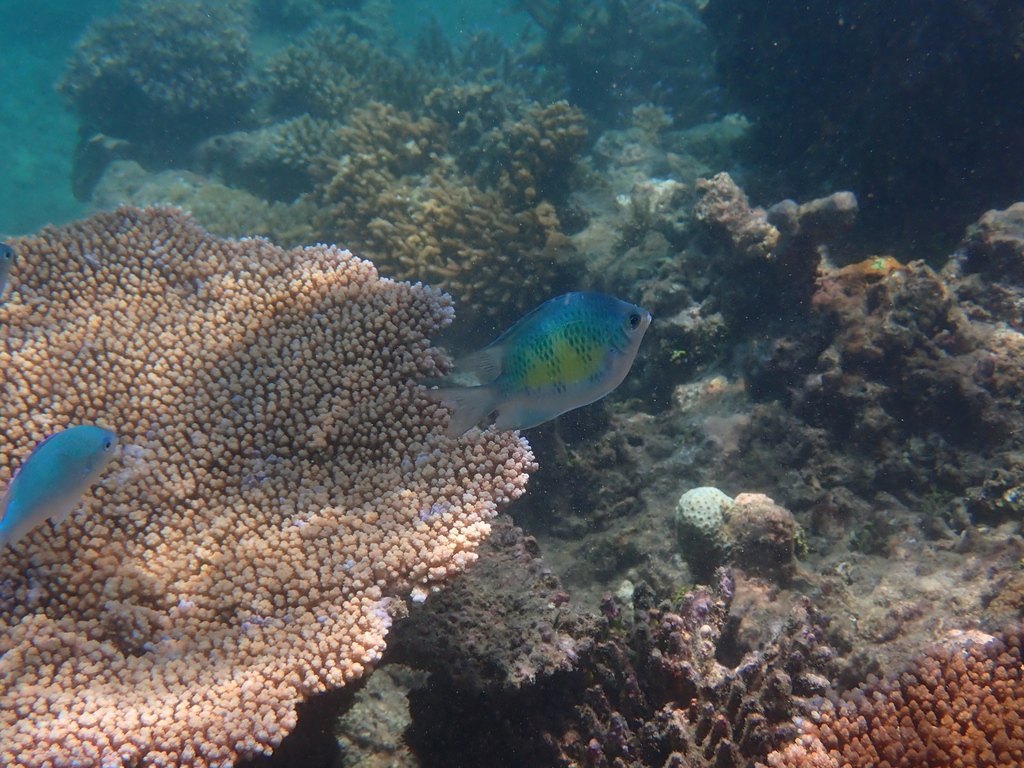 Black-snouted Sergeant-major
Amblyglyphidodon curacao
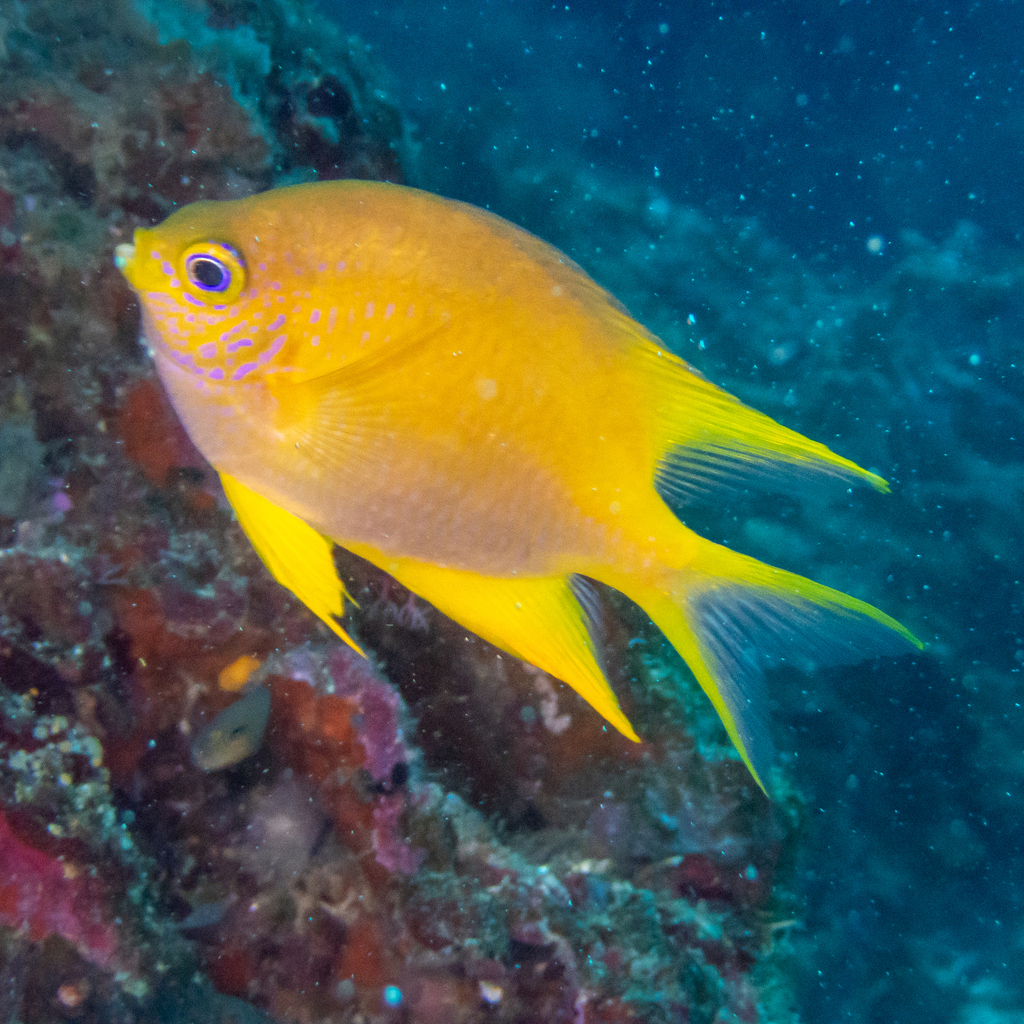 Golden Damsel
Amblyglyphidodon aureus
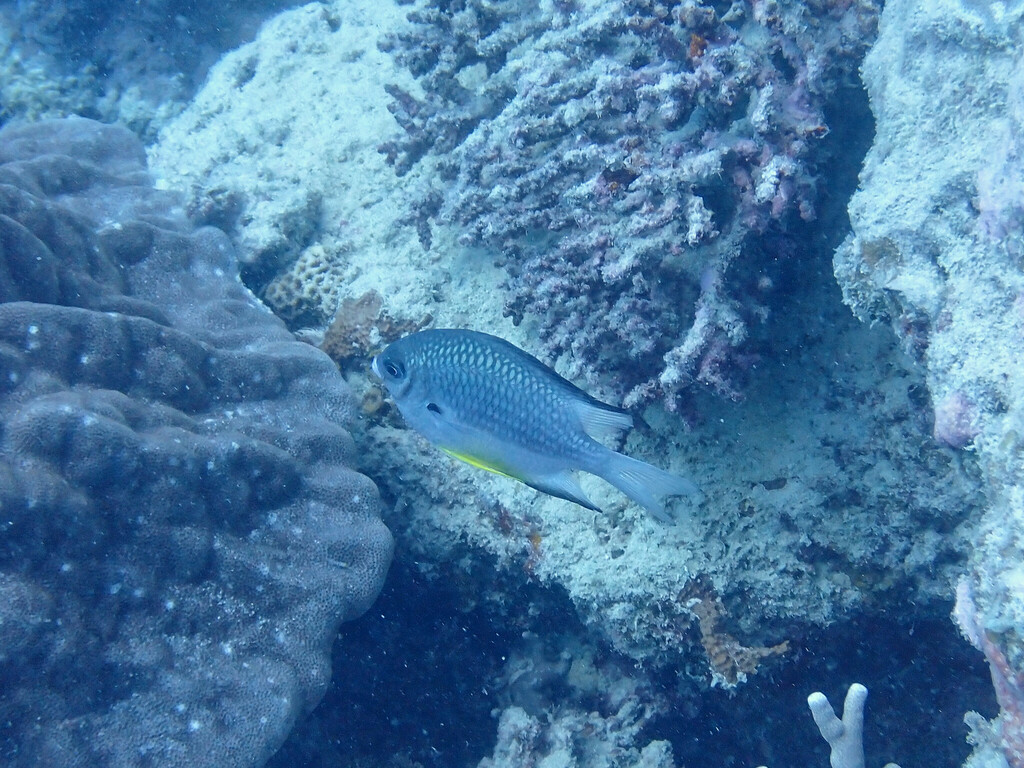 Whitebelly damselfish
Amblyglyphidodon leucogaster
- Green Damselfish
Amblyglyphidodon indicus
- Blackfin Damselfish
Amblyglyphidodon melanopterus
Sources and credits
Names and taxonomy: WoRMS (CC BY 4.0) and the GBIF Backbone (CC BY 4.0). Photos: iNaturalist observers, each under the licence shown (CC0, CC BY or CC BY-SA).
- Depth, temperature, months and maps: records from OBIS and GBIF under CC0 or CC BY.
- Descriptions: Wikipedia, licensed CC BY-SA, each linked to its article.
- Conservation status as published by GBIF (IUCN Red List).
- 73 open-data records from 1957 to 2014.
Log what you see on your next dive
The free DiveHive diver app keeps your logbook with every sighting and shows what lives at the site you dive next.