
Blue-lip Anemonefish
Amphiprion latezonatus
- Usual depth10–14 m
- Water temperature21–24 °C
- Best monthsFebruary
- How commonRare
About this species
Amphiprion latezonatus, also known as the wide-band anemonefish, is a species of anemonefish found in subtropical waters off the east coast of Australia. Like all anemonefishes, it forms a symbiotic mutualism with sea anemones and is unaffected by the stinging tentacles of its host. It is a sequential hermaphrodite with a strict size-based dominance hierarchy; the female is largest, the breeding male is second largest, and the male nonbreeders get progressively smaller as the hierarchy descends. They exhibit protandry, meaning the breeding male changes to female if the sole breeding female dies, with the largest nonbreeder becoming the breeding male.
Text from the Wikipedia article “Amphiprion latezonatus”, licensed CC BY-SA 4.0. Read the article
Where and when
Where it has been recorded
Worldwide
Loading the map
Best months
Worldwide (open data)
- January: 6 records
- February: 20 records
- March: 0 records
- April: 3 records
- May: 0 records
- June: 0 records
- July: 1 records
- August: 1 records
- September: 3 records
- October: 0 records
- November: 1 records
- December: 5 records
Depth and water temperature
Depth
Mostly recorded at 10–14 m · Deepest record: 17.5 m
Water temperature
Recorded in surface water of 21–24 °C
Names and classification
- English
- Blue-lip Anemonefish, Wide-band Anemonefish, Wideband Anemonefish, Wide-banded Anemonefish, Wide-striped Anemonefish
Names in 3 more languages
- German
- Weißband-Anemonenfisch
- Spanish
- Pez Payaso de labio azul
- French
- Poisson-clown à lèvres bleues
Similar species
 Skunk clownfish
Amphiprion akallopisos
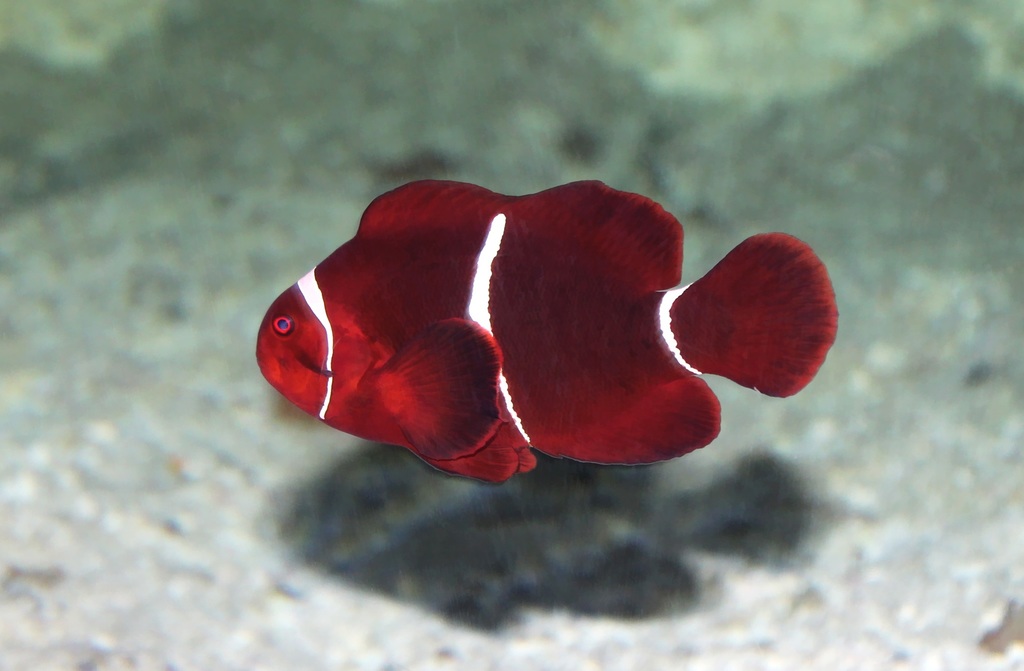 Maroon Clownfish
Amphiprion biaculeatus
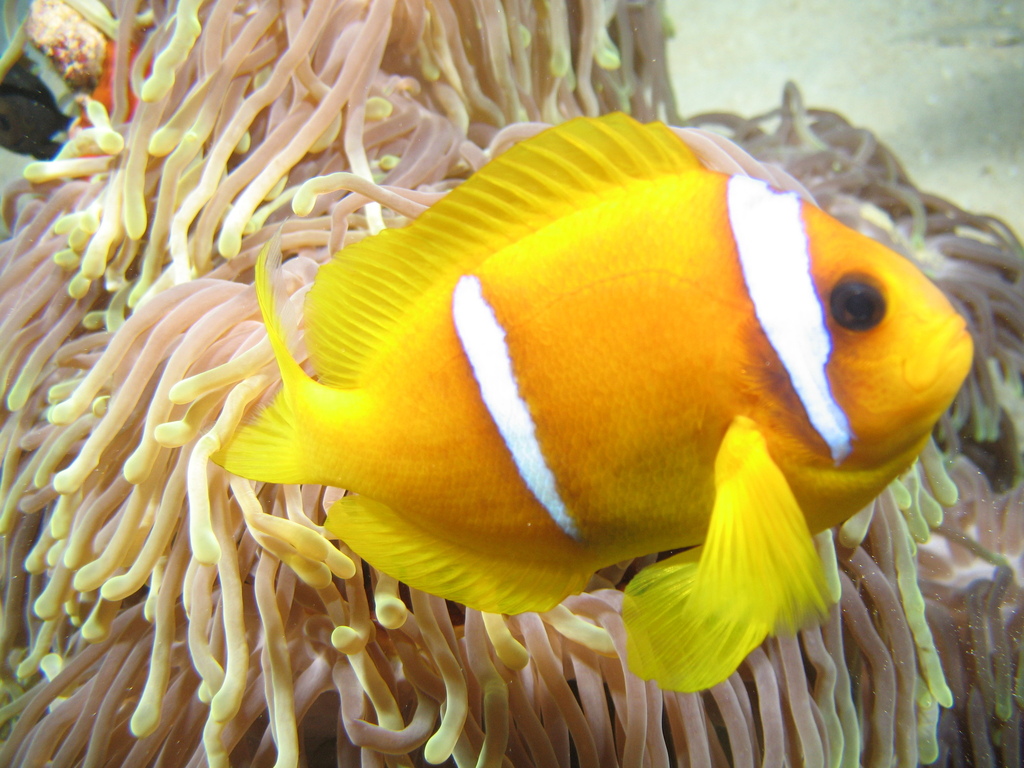 Twoband anemonefish
Amphiprion bicinctus
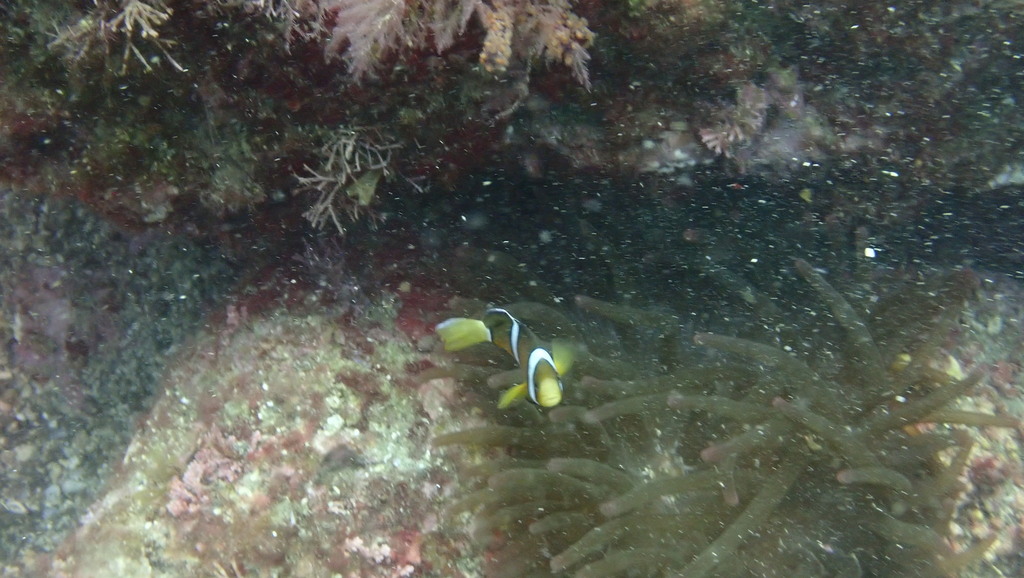 Yellowtail clownfish
Amphiprion clarkii
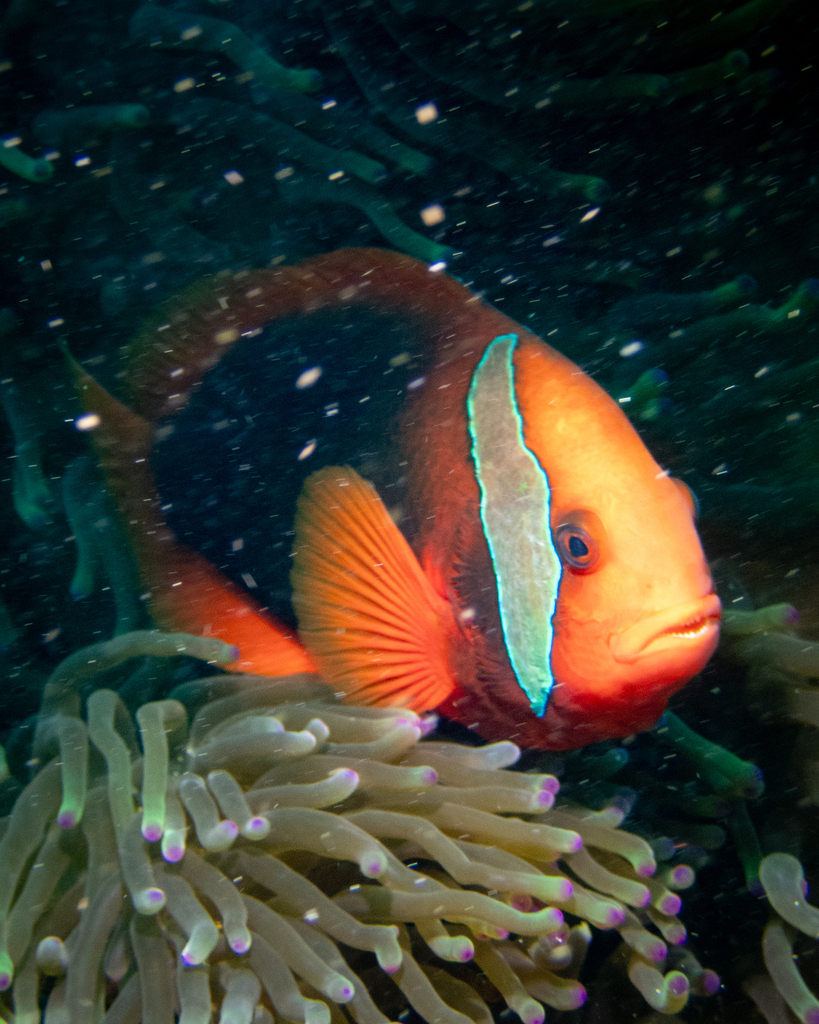 blackback anemonefish
Amphiprion frenatus
 black anemonefish
Amphiprion melanopus
Sources and credits
Names and taxonomy: WoRMS (CC BY 4.0) and the GBIF Backbone (CC BY 4.0). Photos: iNaturalist observers, each under the licence shown (CC0, CC BY or CC BY-SA).
- Depth, temperature, months and maps: records from OBIS and GBIF under CC0 or CC BY.
- Descriptions: Wikipedia, licensed CC BY-SA, each linked to its article.
- Conservation status as published by GBIF (IUCN Red List).
- 146 open-data records from 1972 to 2013.
Log what you see on your next dive
The free DiveHive diver app keeps your logbook with every sighting and shows what lives at the site you dive next.