
whitebonnet anemonefish
Amphiprion leucokranos
- Usual depth7–12 m
- Water temperature29°C
- Best monthsApril
- How commonRare
About this species
Amphiprion leucokranos, the white bonnet anemonefish, is a naturally occurring hybrid anemonefish found in the western central Pacific Ocean. Like all anemonefishes it forms a symbiotic mutualism with sea anemones and is unaffected by the stinging tentacles of the host anemone. It is a sequential hermaphrodite with a strict dominance hierarchy, features which are critical to the direction of gene flow.
Text from the Wikipedia article “Amphiprion leucokranos”, licensed CC BY-SA 4.0. Read the article
Where and when
Where it has been recorded
Worldwide
Loading the map
Best months
Worldwide (open data)
- January: 0 records
- February: 0 records
- March: 0 records
- April: 2 records
- May: 0 records
- June: 0 records
- July: 0 records
- August: 0 records
- September: 0 records
- October: 0 records
- November: 0 records
- December: 1 records
Depth and water temperature
Depth
Mostly recorded at 7–12 m · Deepest record: 12 m
Water temperature
Recorded in surface water of 29°C
Names and classification
- English
- whitebonnet anemonefish, White Bonnet Anemonefish
Other scientific names: Amphiprion leucokranus
Similar species
 Skunk clownfish
Amphiprion akallopisos
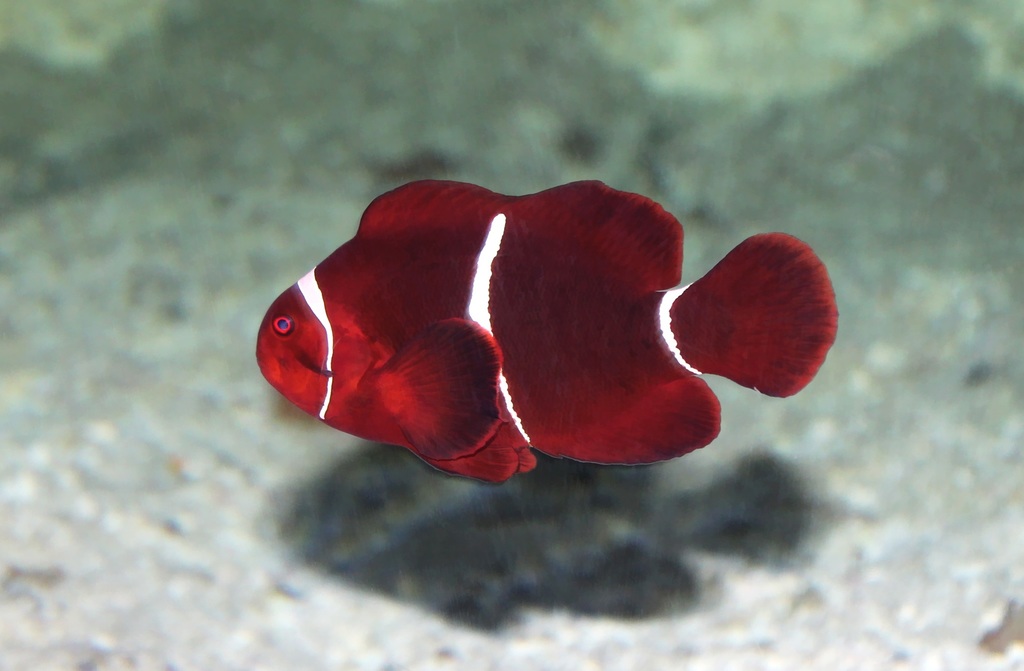 Maroon Clownfish
Amphiprion biaculeatus
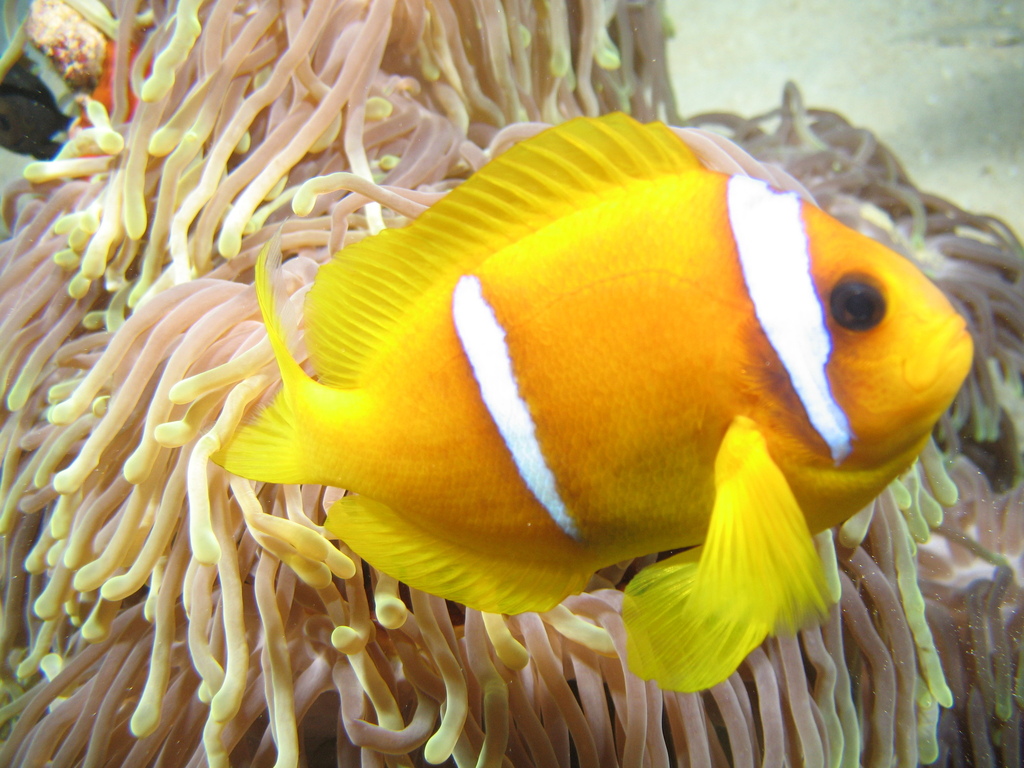 Twoband anemonefish
Amphiprion bicinctus
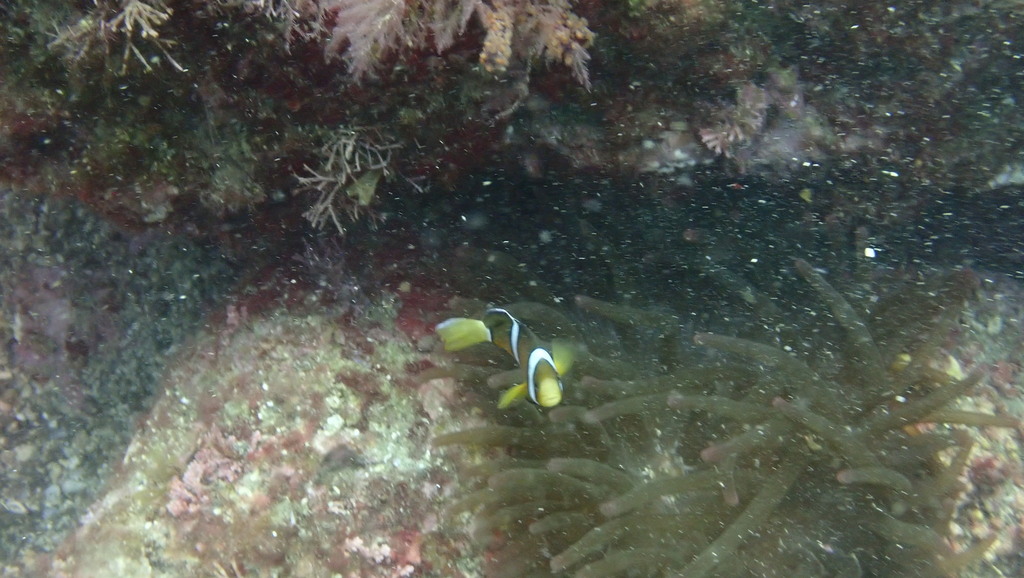 Yellowtail clownfish
Amphiprion clarkii
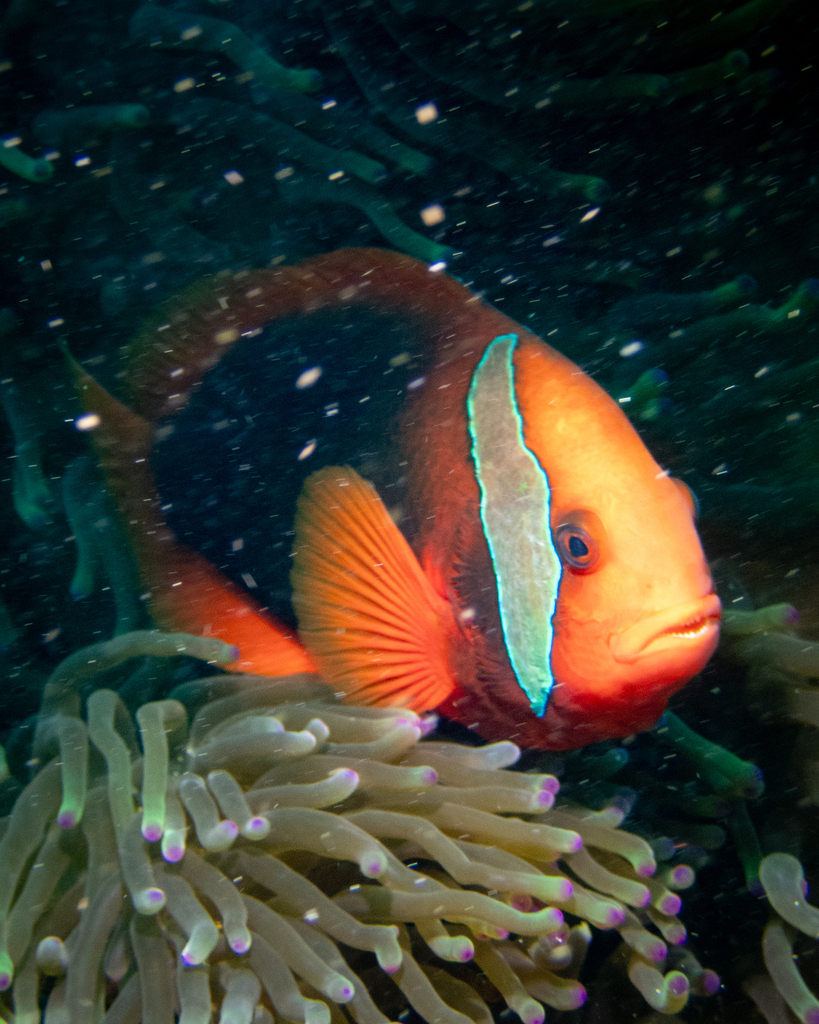 blackback anemonefish
Amphiprion frenatus
 black anemonefish
Amphiprion melanopus
Sources and credits
Names and taxonomy: WoRMS (CC BY 4.0) and the GBIF Backbone (CC BY 4.0). Photos: iNaturalist observers, each under the licence shown (CC0, CC BY or CC BY-SA).
- Depth, temperature, months and maps: records from OBIS and GBIF under CC0 or CC BY.
- Descriptions: Wikipedia, licensed CC BY-SA, each linked to its article.
- Conservation status as published by GBIF (IUCN Red List).
- 22 open-data records from 1972 to 1985.
Log what you see on your next dive
The free DiveHive diver app keeps your logbook with every sighting and shows what lives at the site you dive next.