
About this species
Aniculus aniculus, the red hermit crab or scaly-legged hermit crab, is a species of aquatic hermit crab of the family Diogenidae. It is distributed across French Polynesia in the Gambier, Marquesas, Society, and Tuamotu archipelagoes. It has also been recorded in the Mozambique Channel and around Mauritius. Of the species in the genus Aniculus, only it and A. ursus are considered common. The species is the host of the parasitic isopod Parathelges aniculi, and it is one of several hermit crabs preyed upon by Nautilus macromphalus.
Text from the Wikipedia article “Aniculus aniculus”, licensed CC BY-SA 4.0. Read the article
Where and when
Where it has been recorded
Worldwide
Loading the map
Best months
Worldwide (open data)
- January: 0 records
- February: 0 records
- March: 0 records
- April: 1 records
- May: 0 records
- June: 0 records
- July: 3 records
- August: 1 records
- September: 0 records
- October: 0 records
- November: 0 records
- December: 0 records
Depth and water temperature
Water temperature
Recorded in surface water of 26–29 °C
Names and classification
Names in 1 more languages
- Japanese
- ムニンオニヤドカリ
Other scientific names: Aniculus typicus, Pagurus aniculus
Similar species
- Reticulated Hawaiian hermit
Aniculus hopperae
- Hairy yellow hermit
Aniculus maximus
- Reticulated Hermit Crab
Aniculus retipes
- Bear-like Hermit Crab
Aniculus ursus
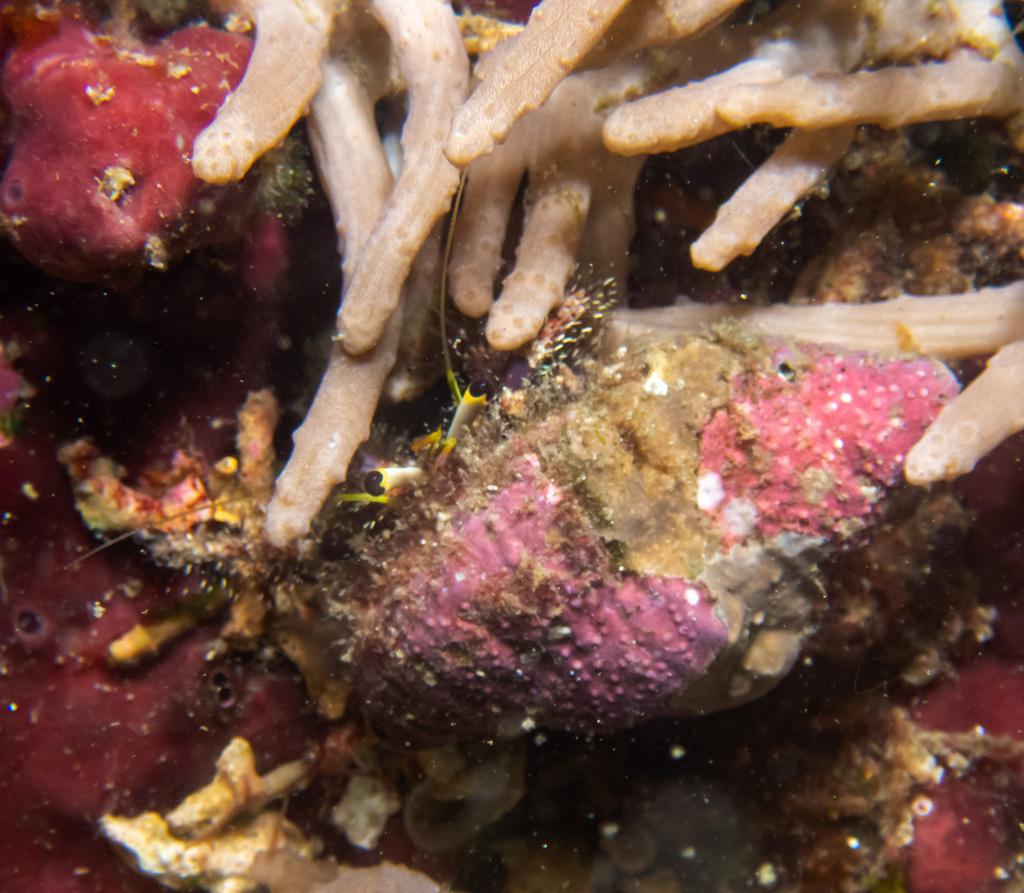 Black-eyed hermit crab
Dardanus lagopodes
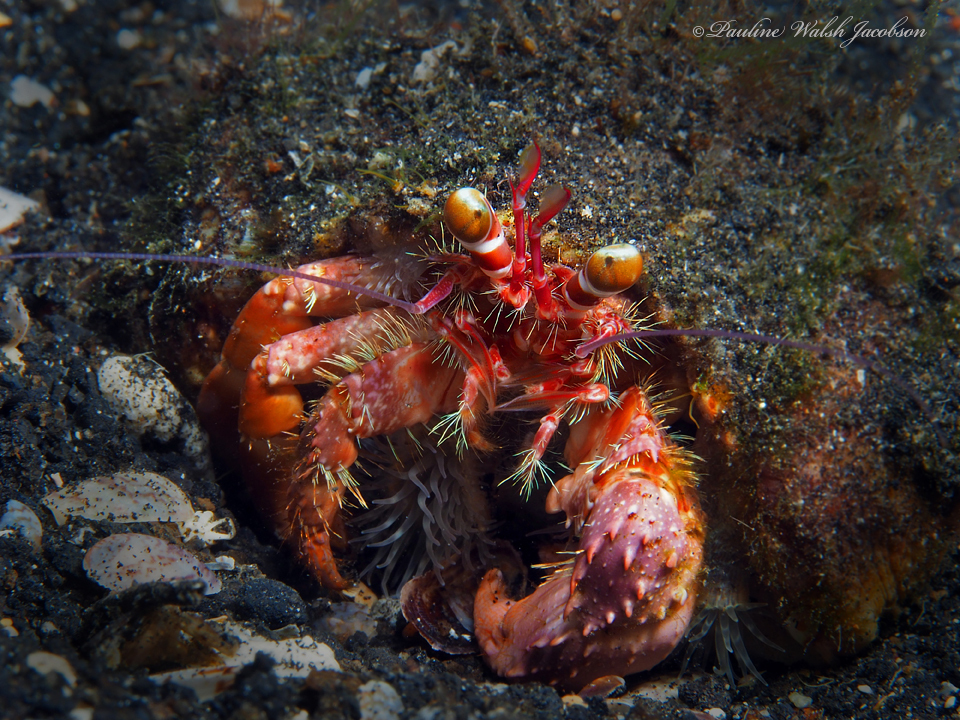 Anemone hermit crab
Dardanus pedunculatus
Sources and credits
Names and taxonomy: WoRMS (CC BY 4.0) and the GBIF Backbone (CC BY 4.0). Photos: iNaturalist observers, each under the licence shown (CC0, CC BY or CC BY-SA).
- Depth, temperature, months and maps: records from OBIS and GBIF under CC0 or CC BY.
- Descriptions: Wikipedia, licensed CC BY-SA, each linked to its article.
- Conservation status as published by GBIF (IUCN Red List).
- 42 open-data records from 1787 to 1985.
- Species data updated October 27, 2026.
Log what you see on your next dive
The free DiveHive diver app keeps your logbook with every sighting and shows what lives at the site you dive next.