

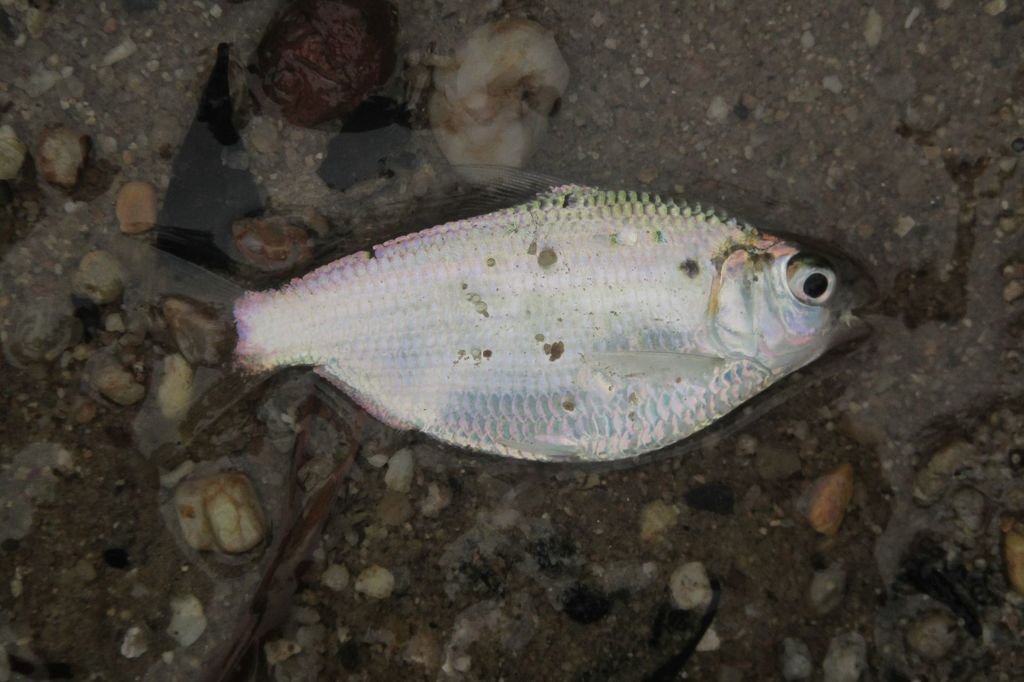
Chacunda gizzard shad
Anodontostoma chacunda
- Usual depth1–36 m
- Water temperature25–30 °C
- Best monthsJanuary
- How commonOccasional
Photo credit: (c) Sahat Ratmuangkhwang, some rights reserved (CC BY) · CC BY · iNaturalist
About this species
Anodontostoma chacunda or Chacunda gizzard shad is a small species of gizzard shad found in both fresh and marine waters. The fish is from the family Clupeidae.
Text from the Wikipedia article “Anodontostoma chacunda”, licensed CC BY-SA 4.0. Read the article
Where and when
Where it has been recorded
Worldwide
Loading the map
Best months
Worldwide (open data)
- January: 361 records
- February: 9 records
- March: 7 records
- April: 17 records
- May: 17 records
- June: 11 records
- July: 6 records
- August: 15 records
- September: 23 records
- October: 8 records
- November: 17 records
- December: 20 records
Depth and water temperature
Depth
Mostly recorded at 1–36 m · Deepest record: 44.5 m
Water temperature
Recorded in surface water of 25–30 °C
Photos
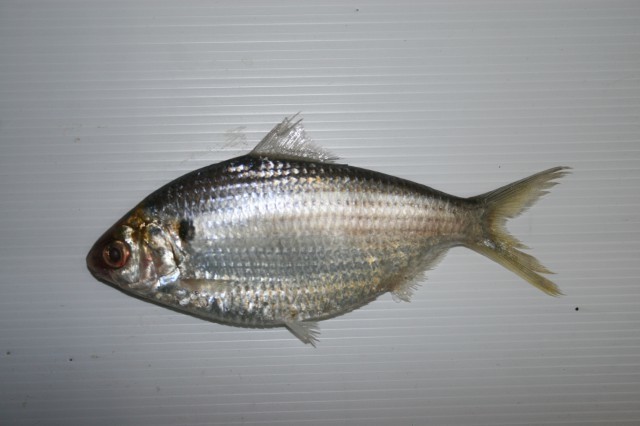
(c) BEDO (Thailand), some rights reserved (CC BY-SA) · CC BY-SA · iNaturalist
Names and classification
- English
- Chacunda gizzard shad, shortnose gizzard shad
Names in 2 more languages
- Spanish
- sábalo chacunda
- French
- Alose chaconde
Other scientific names: Anadontostoma chacunda, Andontostoma chacunda, Anodontasoma chacunda, Anodontostoma chacundo, Anodontostoma hasseltii, Chatoessus chacunda, Chatoessus tampo, Clupanodon chacunda, Clupanodon chanpole, Dorosoma chacunda, Gonostoma javanicum, Nematalosa chanpole
Similar species
- Thai gizzard shad
Anodontostoma thailandiae
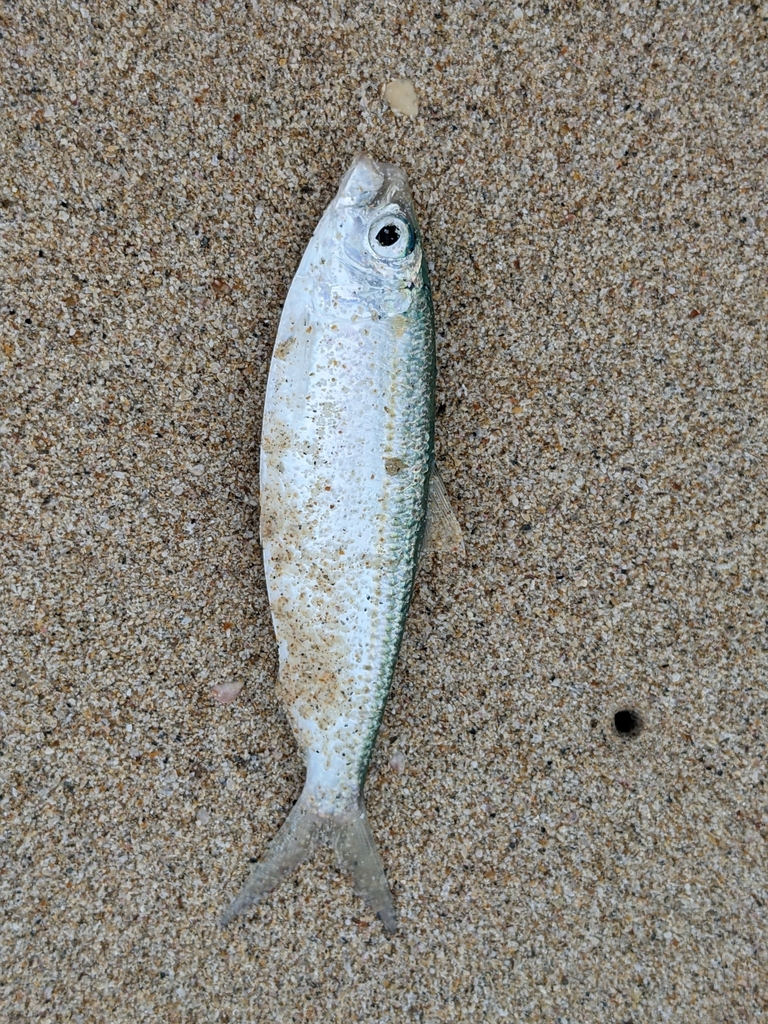 Goldstripe sardinella
Sardinella gibbosa
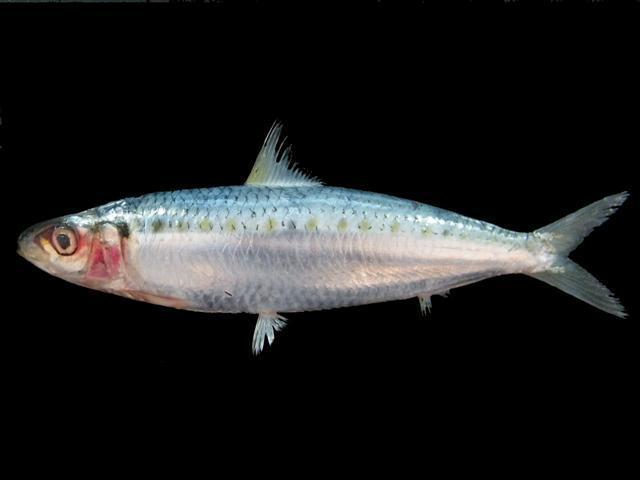 Spotted sardinella
Amblygaster sirm
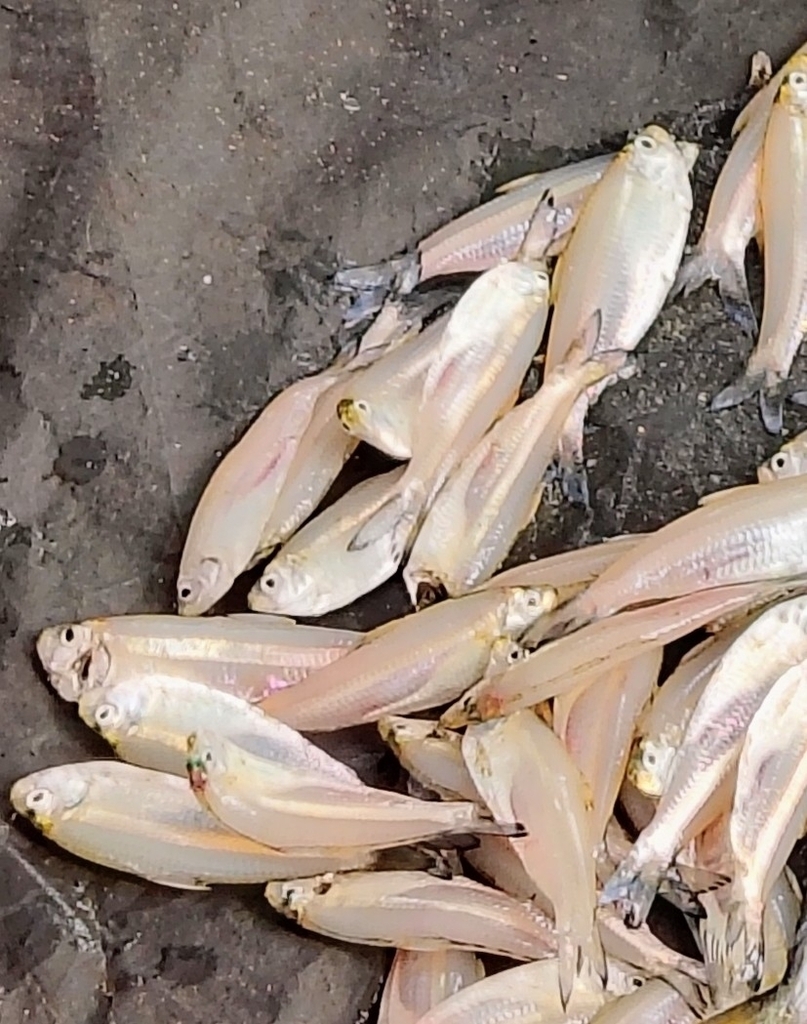 Deep Herring
Escualosa thoracata
 Bluestripe herring
Herklotsichthys quadrimaculatus
 hairback herring
Nematalosa come
Sources and credits
Names and taxonomy: WoRMS (CC BY 4.0) and the GBIF Backbone (CC BY 4.0). Photos: iNaturalist observers, each under the licence shown (CC0, CC BY or CC BY-SA).
- Depth, temperature, months and maps: records from OBIS and GBIF under CC0 or CC BY.
- Descriptions: Wikipedia, licensed CC BY-SA, each linked to its article.
- Conservation status as published by GBIF (IUCN Red List).
- 664 open-data records from 1822 to 2023.
- Species data updated October 26, 2026.
Log what you see on your next dive
The free DiveHive diver app keeps your logbook with every sighting and shows what lives at the site you dive next.