
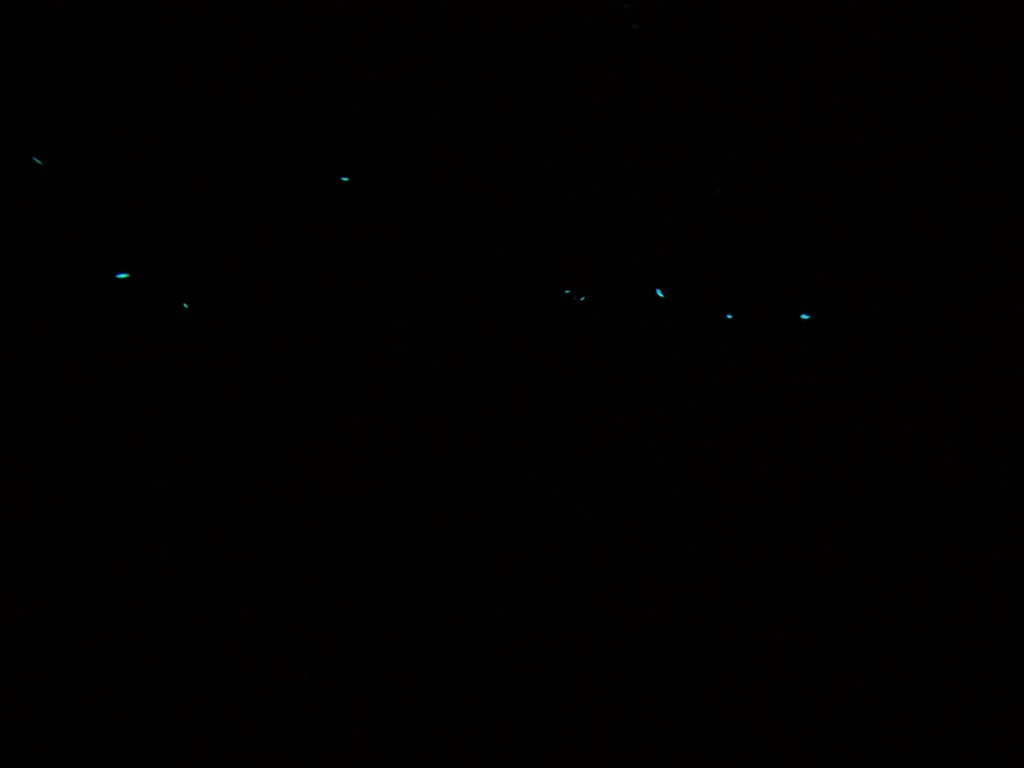
Great flashlightfish
Anomalops katoptron
- Usual depth6–329 m
- Water temperature24–30 °C
- Best monthsApril and November
- How commonRare
Photo credit: (c) Robin van der Vliet, some rights reserved (CC BY-SA) · CC BY-SA · iNaturalist
About this species
The splitfin flashlightfish or two-fin flashlightfish is a species of schooling reef fish in the family Anomalopidae. It is found in warm waters in the central and western Pacific Ocean near reefs 200–400 m (660–1,300 ft) in depth. It can grow to a length of 35 cm (14 in) TL. It is the only known member of the genus Anomalops. It is listed under the IUCN as a species of least concern.
Text from the Wikipedia article “Splitfin flashlightfish”, licensed CC BY-SA 4.0. Read the article
Where and when
Where it has been recorded
Worldwide
Loading the map
Best months
Worldwide (open data)
- January: 0 records
- February: 0 records
- March: 4 records
- April: 9 records
- May: 1 records
- June: 2 records
- July: 0 records
- August: 2 records
- September: 0 records
- October: 1 records
- November: 7 records
- December: 1 records
Depth and water temperature
Depth
Mostly recorded at 6–329 m · Deepest record: 365.8 m
Water temperature
Recorded in surface water of 24–30 °C
Names and classification
- English
- Great flashlightfish, Indian flashlightfish, Lantern eye fish, Splitfin flashlightfish, Two-fin Flashlightfish, Twofin Flashlightfish
Names in 4 more languages
- Spanish
- Ojo de linterna indio
- Japanese
- Hikarikimmedai, ヒカリキンメダイ
- Thai
- ปลาตาเรืองแสง
- Simplified Chinese
- 菲律賓燈頰鯛, 閃光魚
Other scientific names: Anamalops katoptron, Anamolops katoptron, Anomalops graeffei, Anomalops kaptoptron, Heterophthalmus katoptron
Sources and credits
Names and taxonomy: WoRMS (CC BY 4.0) and the GBIF Backbone (CC BY 4.0). Photos: iNaturalist observers, each under the licence shown (CC0, CC BY or CC BY-SA).
- Depth, temperature, months and maps: records from OBIS and GBIF under CC0 or CC BY.
- Descriptions: Wikipedia, licensed CC BY-SA, each linked to its article.
- Conservation status as published by GBIF (IUCN Red List).
- 63 open-data records from 1969 to 2006.
- Species data updated October 26, 2026.
Log what you see on your next dive
The free DiveHive diver app keeps your logbook with every sighting and shows what lives at the site you dive next.