
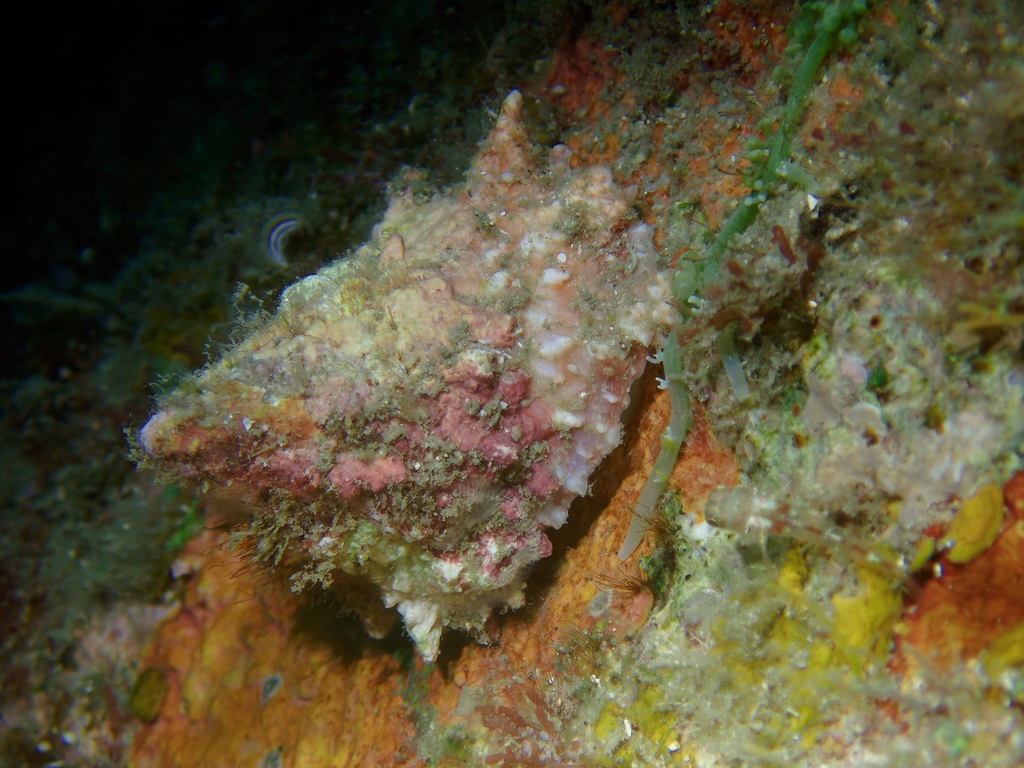
Astralium rhodostomum
- Usual depth12–17 m
- Water temperature20–30 °C
- Best monthsFebruary
- How commonOccasional
Photo credit: (c) Jay Paroline, some rights reserved (CC BY) · CC BY · iNaturalist
About this species
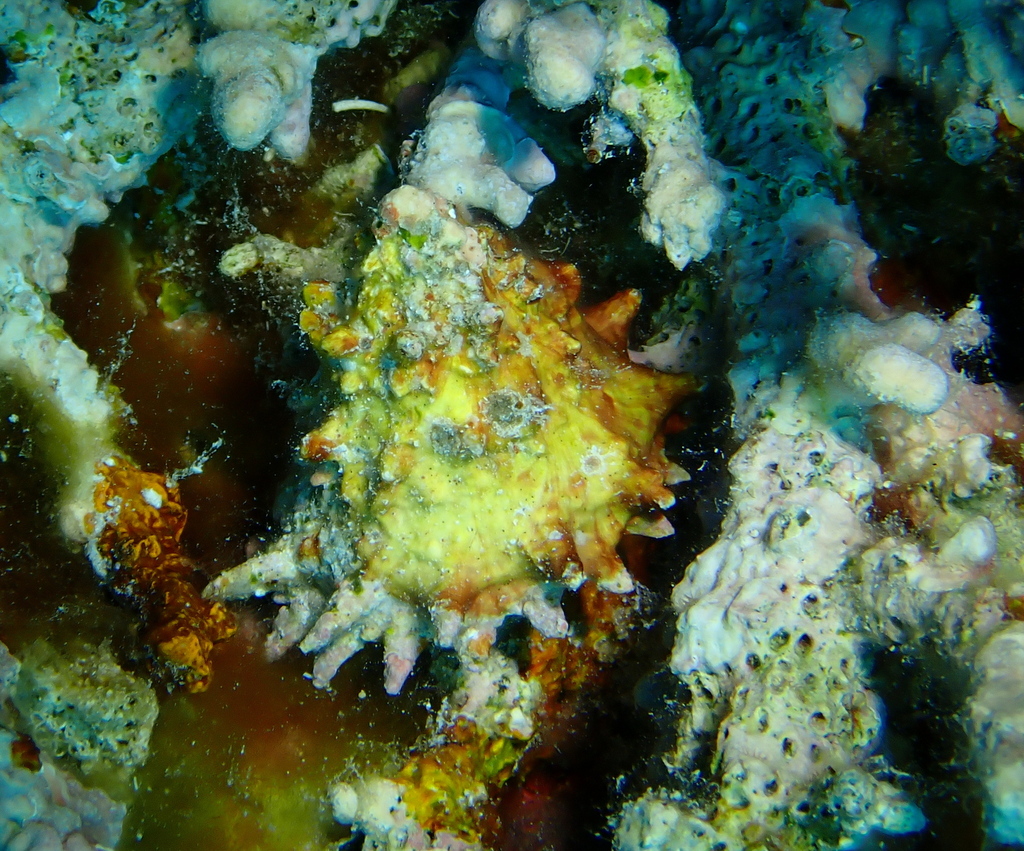
Astralium rhodostomum, common name the rosemouth star shell, is a species of sea snail, a marine gastropod mollusk in the family Turbinidae, the turban snails.
Text from the Wikipedia article “Astralium rhodostomum”, licensed CC BY-SA 4.0. Read the article
Where and when
Where it has been recorded
Worldwide
Loading the map
Best months
Worldwide (open data)
- January: 40 records
- February: 136 records
- March: 18 records
- April: 9 records
- May: 20 records
- June: 20 records
- July: 16 records
- August: 15 records
- September: 23 records
- October: 25 records
- November: 21 records
- December: 41 records
Depth and water temperature
Depth
Mostly recorded at 12–17 m · Deepest record: 38 m
Water temperature
Recorded in surface water of 20–30 °C
Photos
(c) Debra Baker, some rights reserved (CC BY) · CC BY · iNaturalist
Names and classification
Names in 1 more languages
- Japanese
- オオウラウズガイ
Other scientific names: Astraea rhodostoma, Astralium (Distellifer) rhodostoma, Astralium tuberosum, Trochus rhodostomus
Similar species
- Common Tent Shell
Astralium tentoriiforme
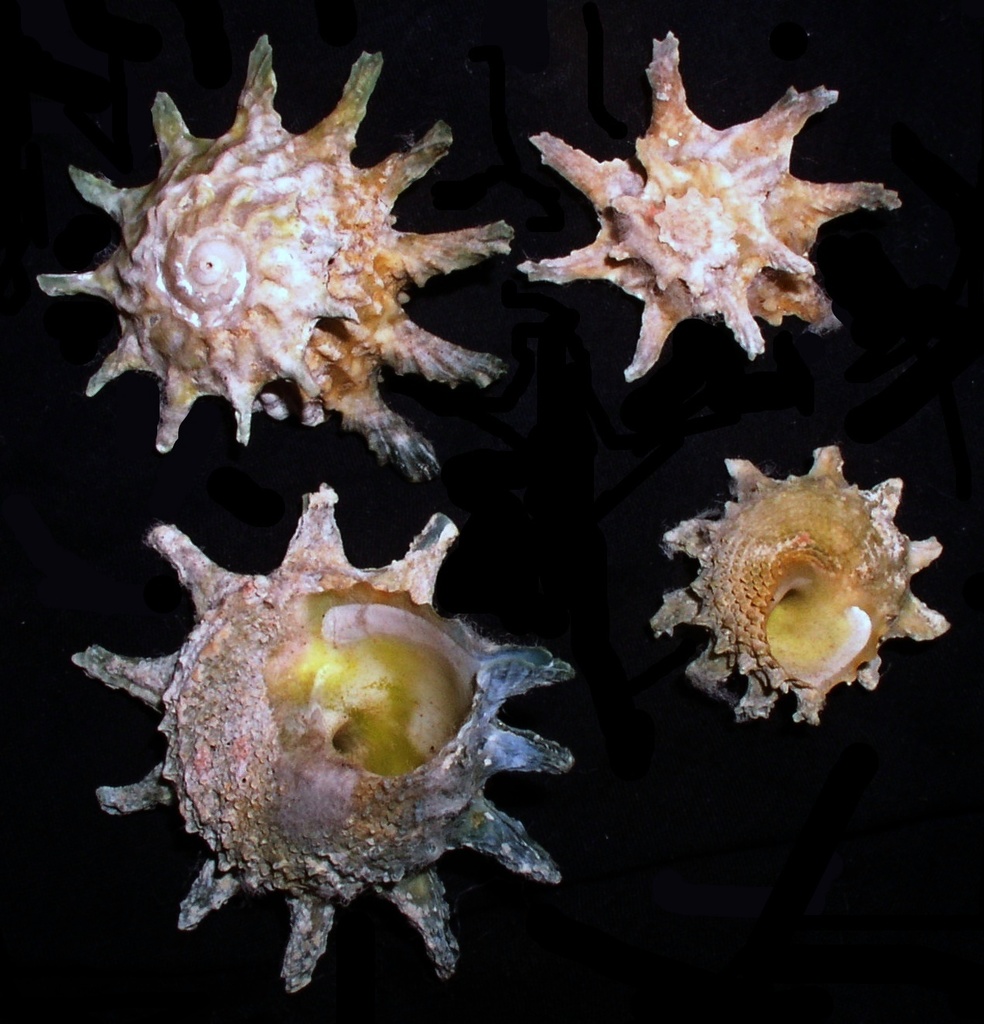 Spurred starshell
Astralium calcar
- Pacific star shell
Astralium haematragum
- rotary star shell
Astralium rotularium
- blue-mouthed turban
Astralium stellare
Sources and credits
Names and taxonomy: WoRMS (CC BY 4.0) and the GBIF Backbone (CC BY 4.0). Photos: iNaturalist observers, each under the licence shown (CC0, CC BY or CC BY-SA).
- Depth, temperature, months and maps: records from OBIS and GBIF under CC0 or CC BY.
- Descriptions: Wikipedia, licensed CC BY-SA, each linked to its article.
- Conservation status as published by GBIF (IUCN Red List).
- 413 open-data records from 1822 to 2023.
- Species data updated October 26, 2026.
Log what you see on your next dive
The free DiveHive diver app keeps your logbook with every sighting and shows what lives at the site you dive next.