
DiscoverSpeciesCorals and anemones
Australogyra coral
Australogyra zelli
- Usual depth6–10 m
- Water temperature25–30 °C
- Best monthsFebruary, May, and September
- How commonRare
About this species
Australogyra zelli is a species of stony coral native to the Central Indo-Pacific. It is the only species in the genus Australogyra. They are uncommon corals found in tropical waters to a range of up to 30 m (98 ft) deep. They can occur as branching growths or as hemispherical shapes reaching up to 2 m (6.6 ft) in diameter. Their color ranges from gray-green to a yellowish purple-brown. They are also sometimes known as the branching moon coral or the branching brain coral in the aquarium trade. The species is classified as Vulnerable by the IUCN Red List of Threatened Species. Their range includes Australia, the Solomon Islands, Papua New Guinea, Indonesia, the Philippines, Taiwan, southern China, Vietnam, Cambodia, Thailand, and Malaysia.
Text from the Wikipedia article “Australogyra”, licensed CC BY-SA 4.0. Read the article
Where and when
Where it has been recorded
Worldwide
Loading the map
Best months
Worldwide (open data)
- January: 0 records
- February: 3 records
- March: 0 records
- April: 0 records
- May: 4 records
- June: 0 records
- July: 0 records
- August: 3 records
- September: 4 records
- October: 0 records
- November: 0 records
- December: 0 records
Depth and water temperature
Depth
Mostly recorded at 6–10 m · Deepest record: 13 m
Water temperature
Recorded in surface water of 25–30 °C
Names and classification
- English
- Australogyra coral
Other scientific names: Platygyra zelli
Similar species
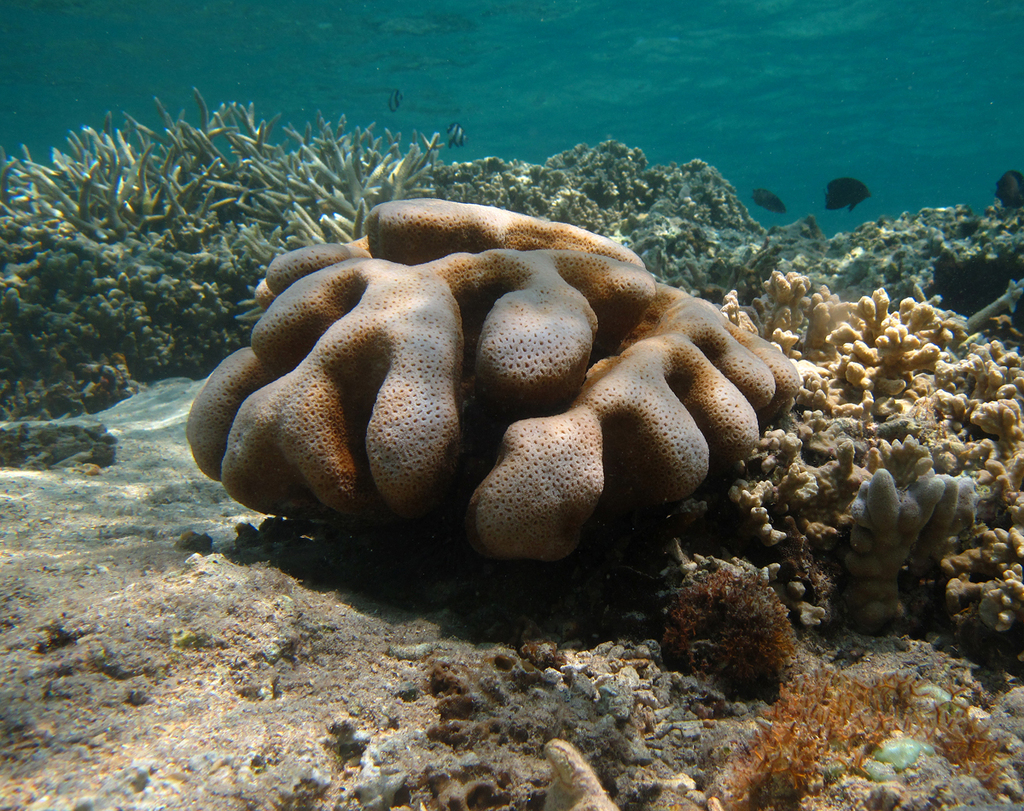 Lesser knob coral
Cyphastrea serailia
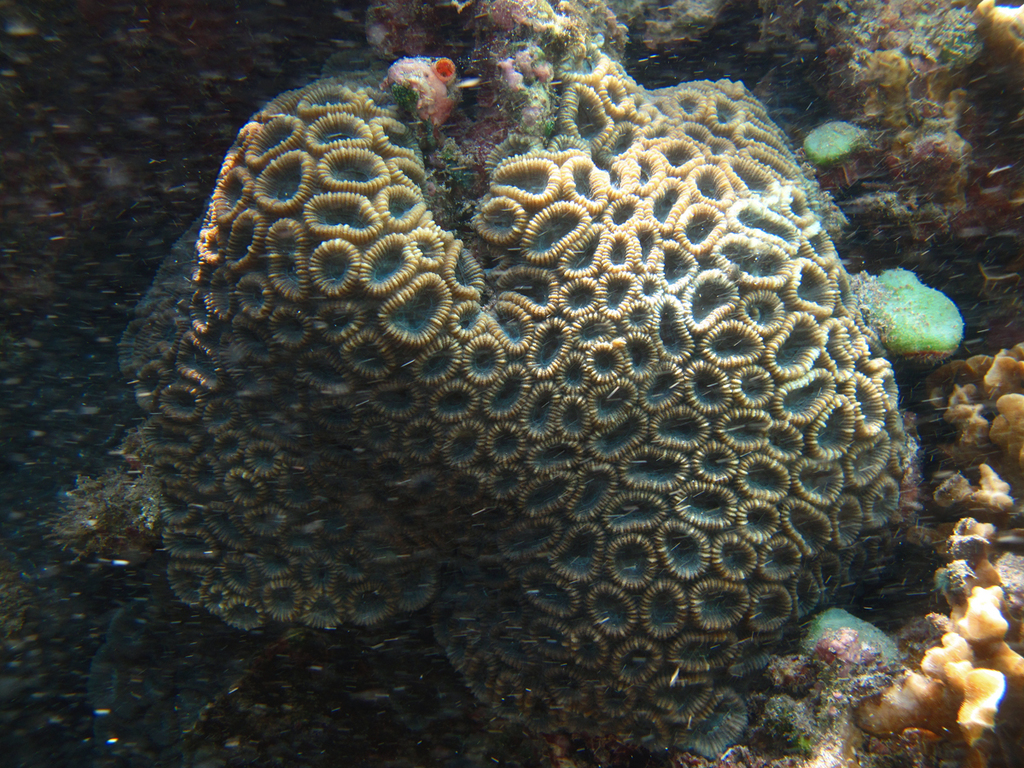 knob coral
Dipsastraea speciosa
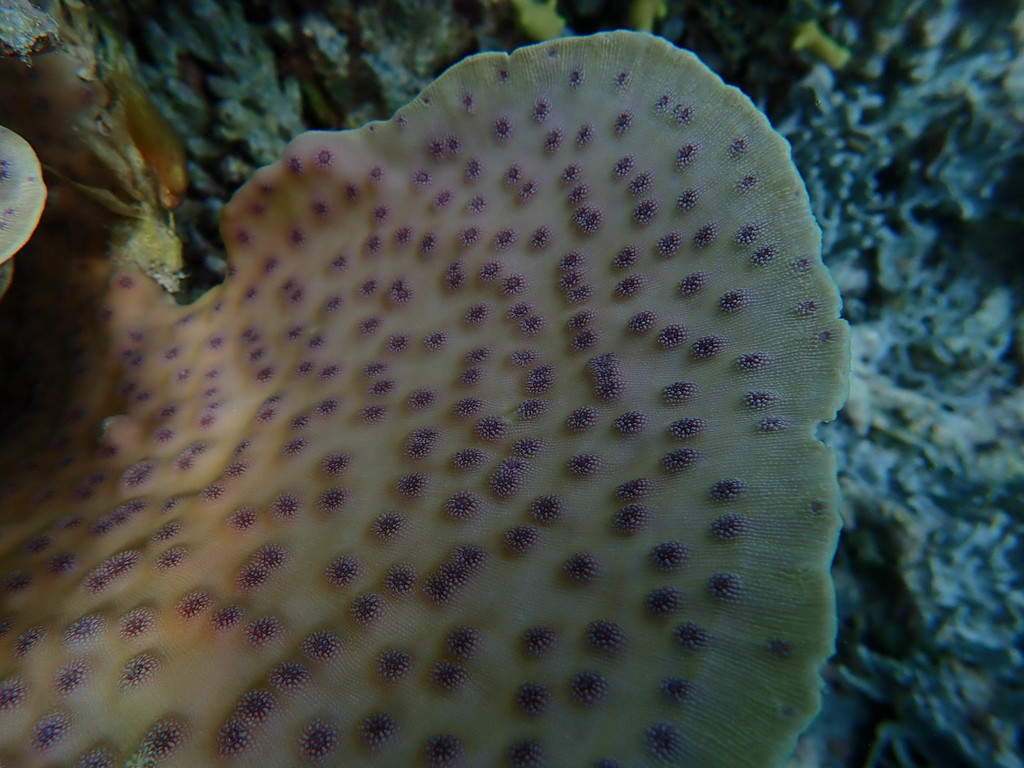 Hedgehog coral
Echinopora lamellosa
- false knob coral
Astrea curta
- Head Coral
Dipsastraea favus
- knob coral
Dipsastraea pallida
Sources and credits
Names and taxonomy: WoRMS (CC BY 4.0) and the GBIF Backbone (CC BY 4.0). Photos: iNaturalist observers, each under the licence shown (CC0, CC BY or CC BY-SA).
- Depth, temperature, months and maps: records from OBIS and GBIF under CC0 or CC BY.
- Descriptions: Wikipedia, licensed CC BY-SA, each linked to its article.
- Conservation status as published by GBIF (IUCN Red List).
- 40 open-data records from 1984 to 2010.
Log what you see on your next dive
The free DiveHive diver app keeps your logbook with every sighting and shows what lives at the site you dive next.