
Black and White Butterflyfish
Chaetodon burgessi
- Usual depth43–97 m
- Water temperature29–29 °C
- Best monthsApril
- How commonRare
About this species
Burgess' butterflyfish, also known as the black & white butterflyfish or black-barred butterflyfish, is a species of marine ray-finned fish, a butterflyfish belonging to the family Chaetodontidae. It occurs in the western Pacific Ocean.
Text from the Wikipedia article “Burgess' butterflyfish”, licensed CC BY-SA 4.0. Read the article
Where and when
Where it has been recorded
Worldwide
Loading the map
Best months
Worldwide (open data)
- January: 2 records
- February: 1 records
- March: 1 records
- April: 6 records
- May: 0 records
- June: 0 records
- July: 1 records
- August: 2 records
- September: 1 records
- October: 2 records
- November: 2 records
- December: 0 records
Depth and water temperature
Depth
Mostly recorded at 43–97 m · Deepest record: 96.5 m
Water temperature
Recorded in surface water of 29–29 °C
Names and classification
- English
- Black and White Butterflyfish, Black-barred Butterflyfish, Burgess' Butterflyfish
Names in 3 more languages
- German
- Burgess Falterfisch
- Spanish
- Pez Mariposa de Burgess
- Simplified Chinese
- 柏氏蝴蝶魚, 柏氏蝶, 波斯灣蝴蝶魚
Similar species
 Threadfin butterflyfish
Chaetodon auriga
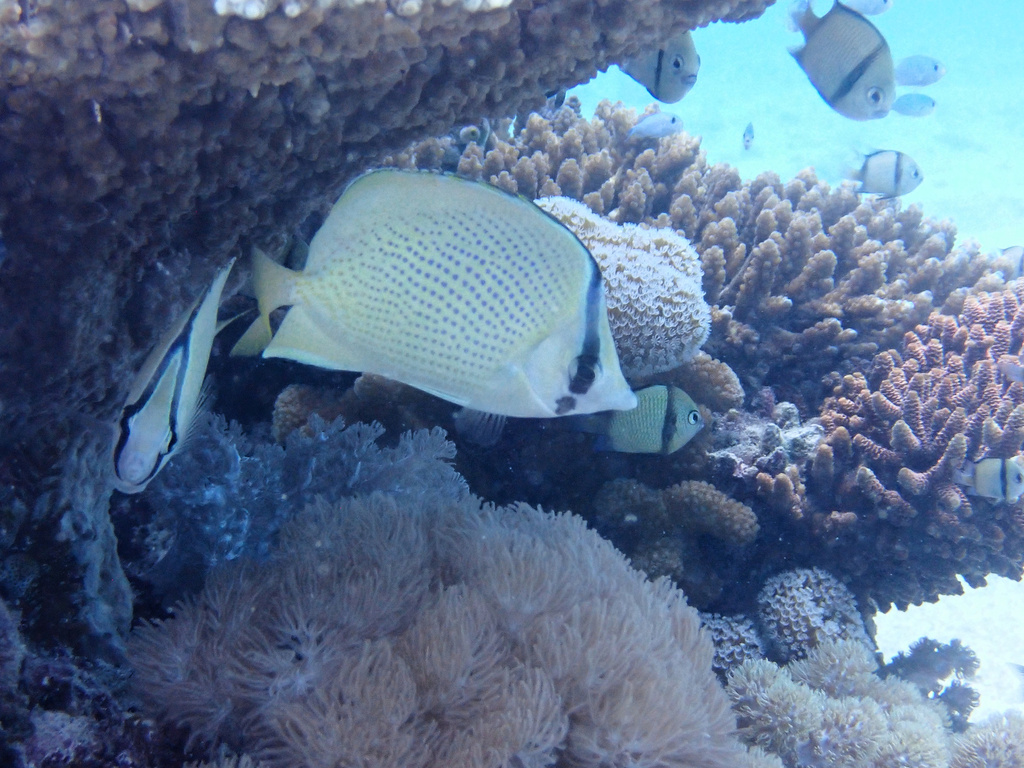 Citron Butterfly
Chaetodon citrinellus
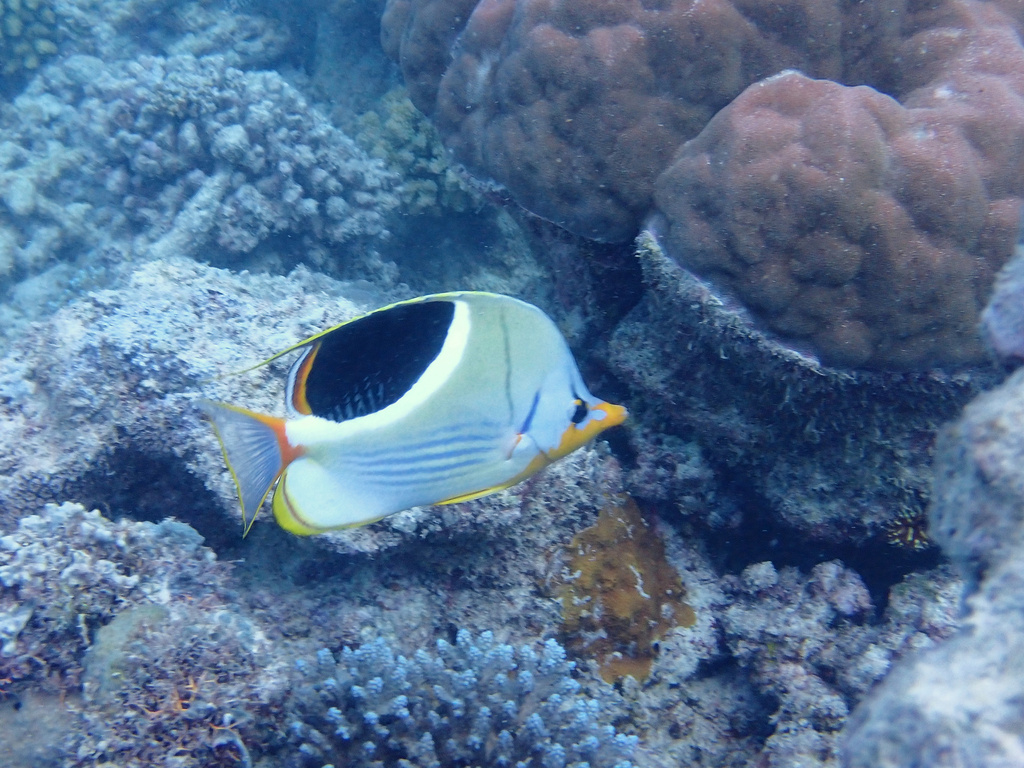 Blackblotch Butterflyfish
Chaetodon ephippium
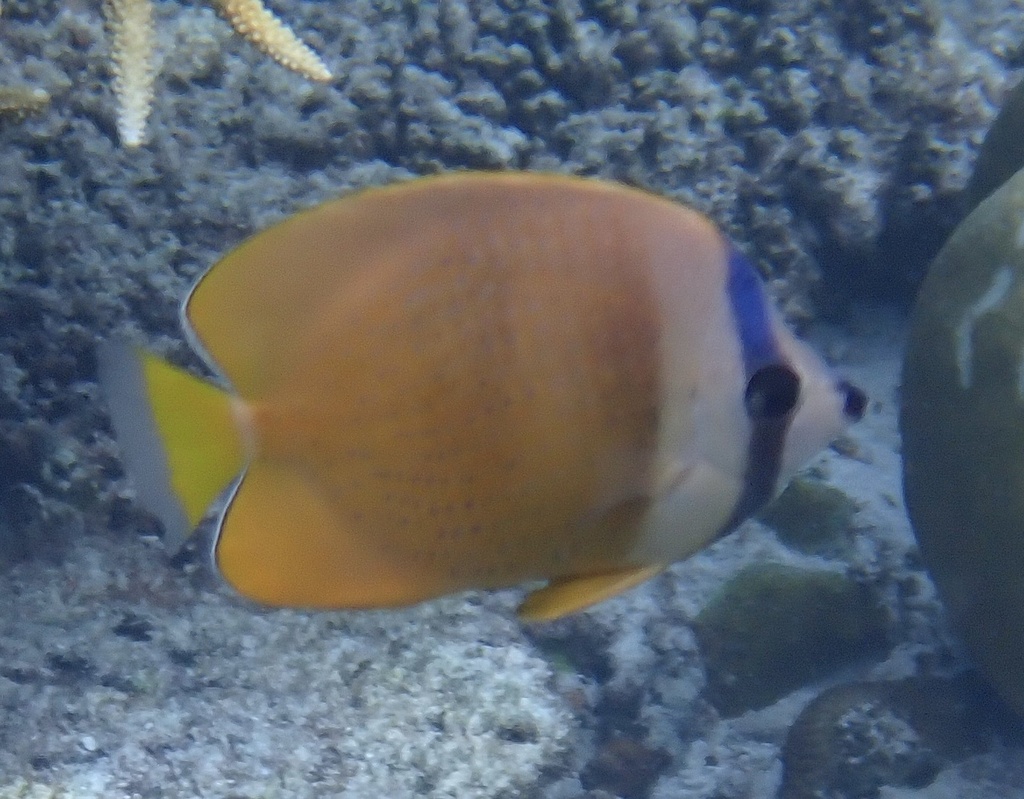 Sunburst butterflyfish
Chaetodon kleinii
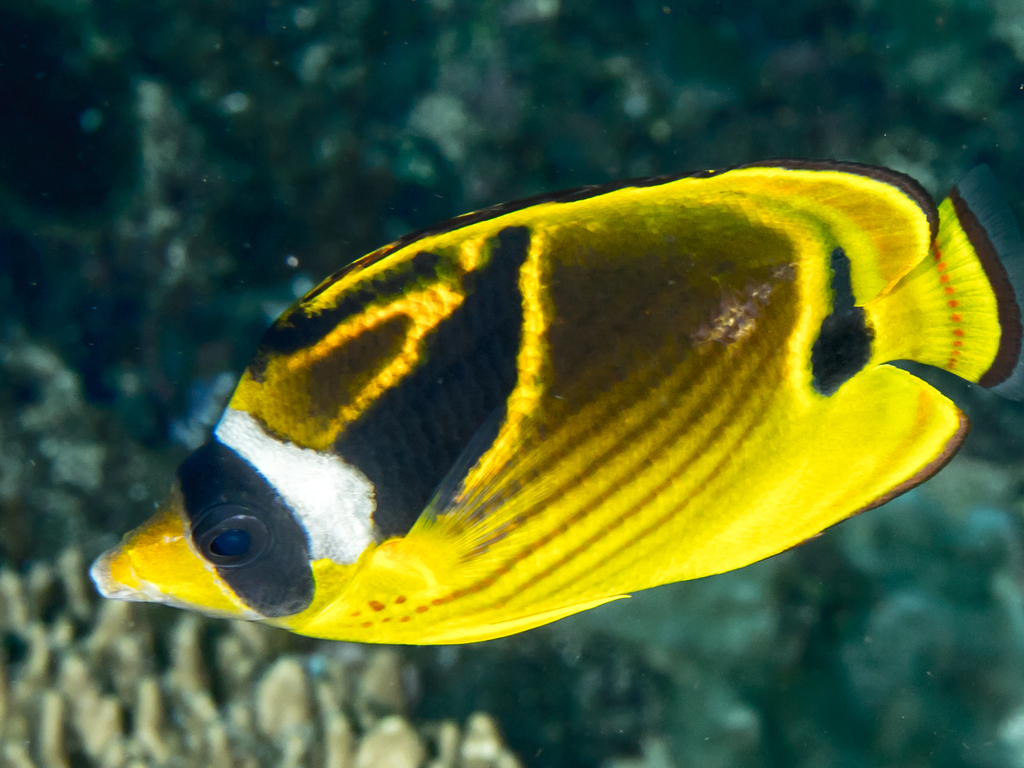 Raccoon butterflyfish
Chaetodon lunula
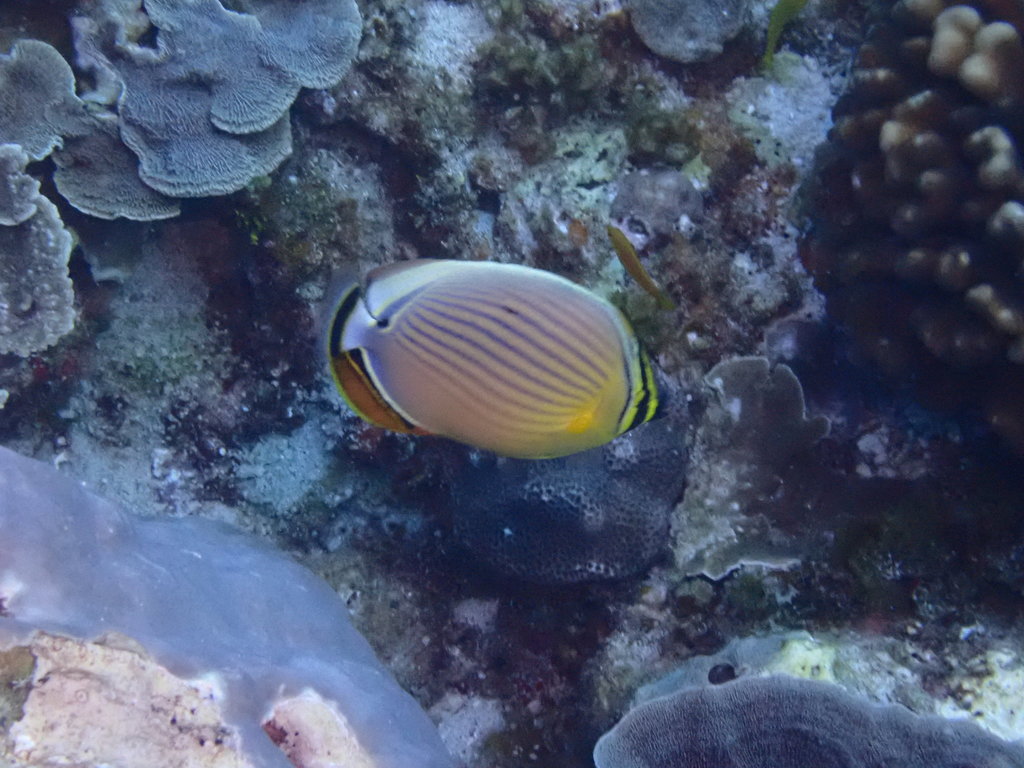 Oval Butterflyfish
Chaetodon lunulatus
Sources and credits
Names and taxonomy: WoRMS (CC BY 4.0) and the GBIF Backbone (CC BY 4.0). Photos: iNaturalist observers, each under the licence shown (CC0, CC BY or CC BY-SA).
- Depth, temperature, months and maps: records from OBIS and GBIF under CC0 or CC BY.
- Descriptions: Wikipedia, licensed CC BY-SA, each linked to its article.
- Conservation status as published by GBIF (IUCN Red List).
- 19 open-data records from 1972 to 2007.
- Species data updated October 26, 2026.
Log what you see on your next dive
The free DiveHive diver app keeps your logbook with every sighting and shows what lives at the site you dive next.