

DiscoverSpeciesOther invertebrates
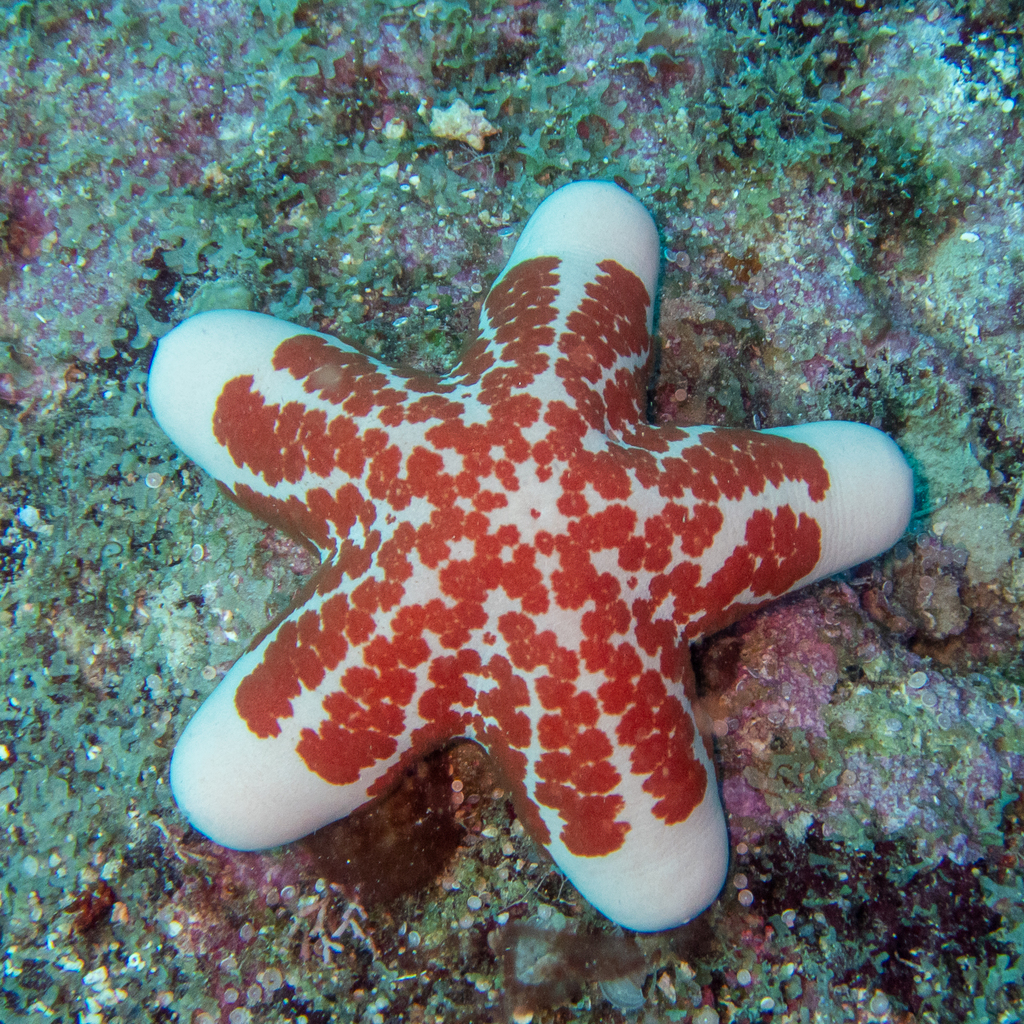
Grainy Cushion Star
Choriaster granulatus
- Usual depth3–46 m
- Water temperature25–30 °C
- How commonOccasional
Photo credit: (c) TonyT, some rights reserved (CC BY) · CC BY · iNaturalist
About this species
Choriaster is a monotypic genus in the family Oreasteridae, containing the single species Choriaster granulatus, commonly known as the granulated sea star. Other common names include big-plated sea star, hunter-five sea star and doughboy starfish.
Text from the Wikipedia article “Choriaster”, licensed CC BY-SA 4.0. Read the article
Where and when
Where it has been recorded
Worldwide
Loading the map
Best months
Worldwide (open data)
- January: 96 records
- February: 112 records
- March: 123 records
- April: 123 records
- May: 113 records
- June: 108 records
- July: 121 records
- August: 107 records
- September: 129 records
- October: 116 records
- November: 116 records
- December: 133 records
Depth and water temperature
Depth
Mostly recorded at 3–46 m · Deepest record: 58 m
Water temperature
Recorded in surface water of 25–30 °C
Photos
(c) Piotr Lukasik, some rights reserved (CC BY) · CC BY · iNaturalist 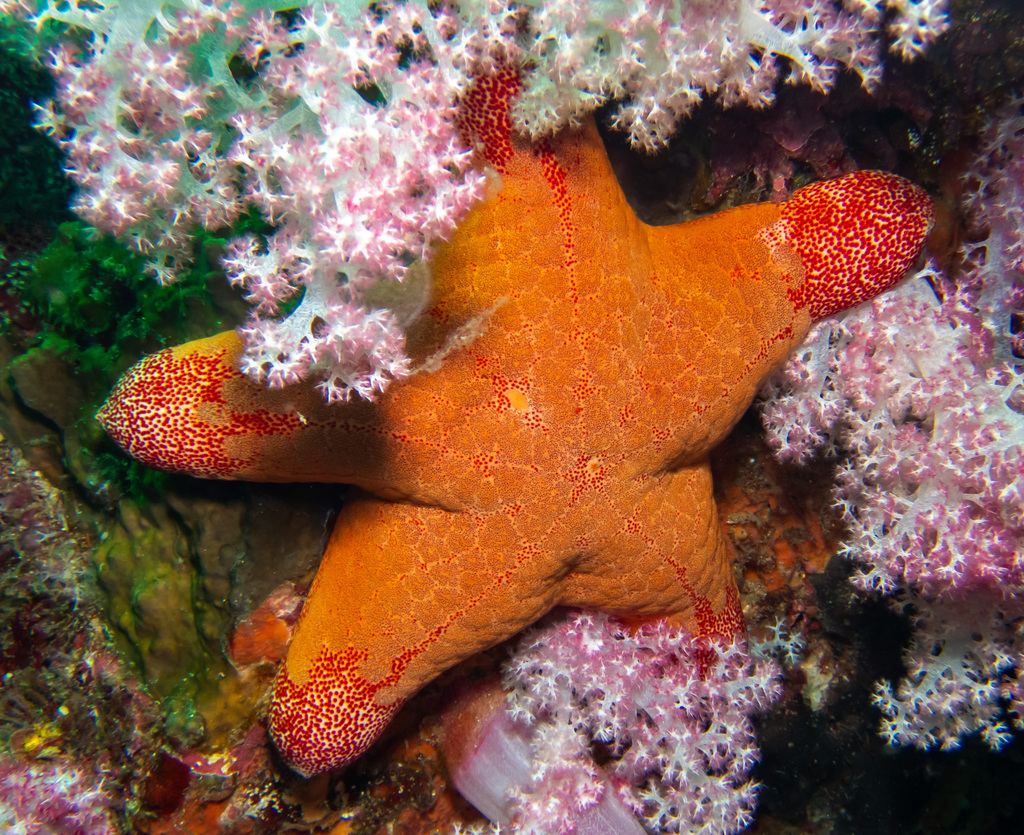
(c) portioid, some rights reserved (CC BY) · CC BY · iNaturalist 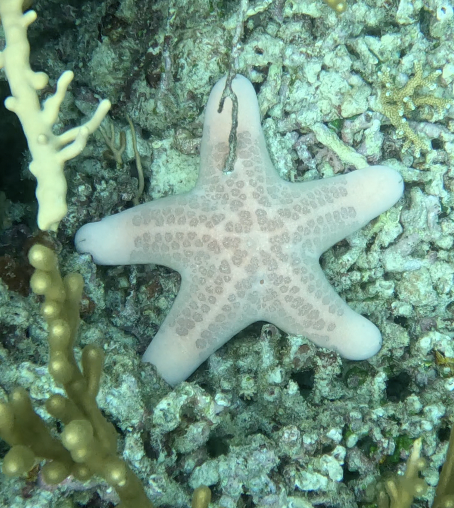
(c) Sockrosma, some rights reserved (CC BY) · CC BY · iNaturalist 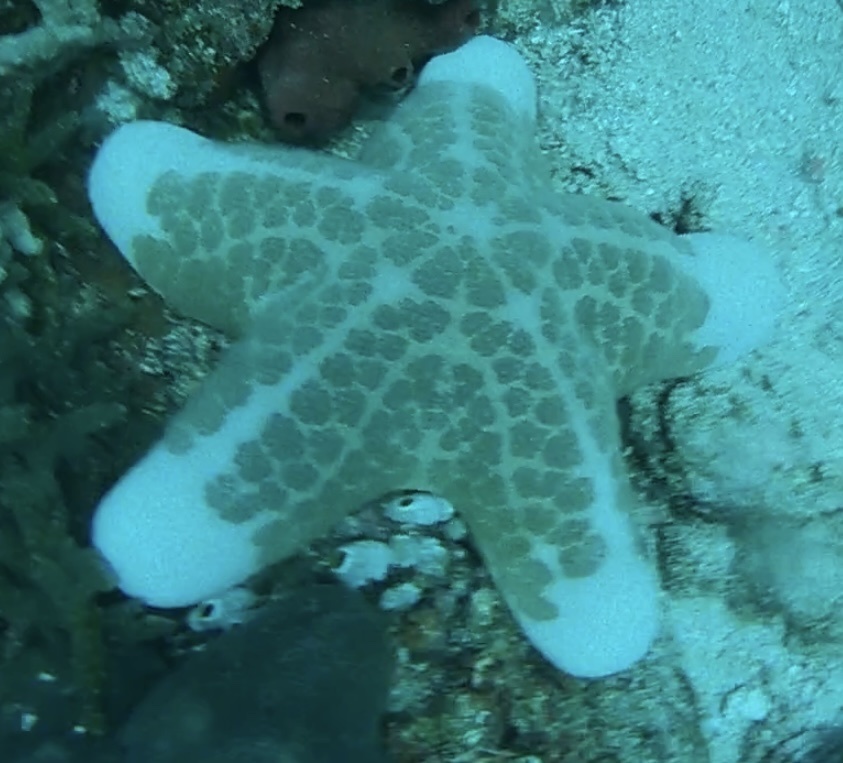
no rights reserved · CC0 1.0 · iNaturalist 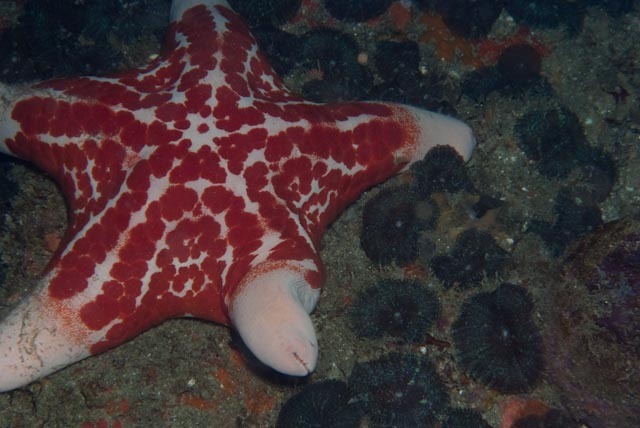
(c) Georgina Jones, some rights reserved (CC BY-SA) · CC BY-SA · iNaturalist 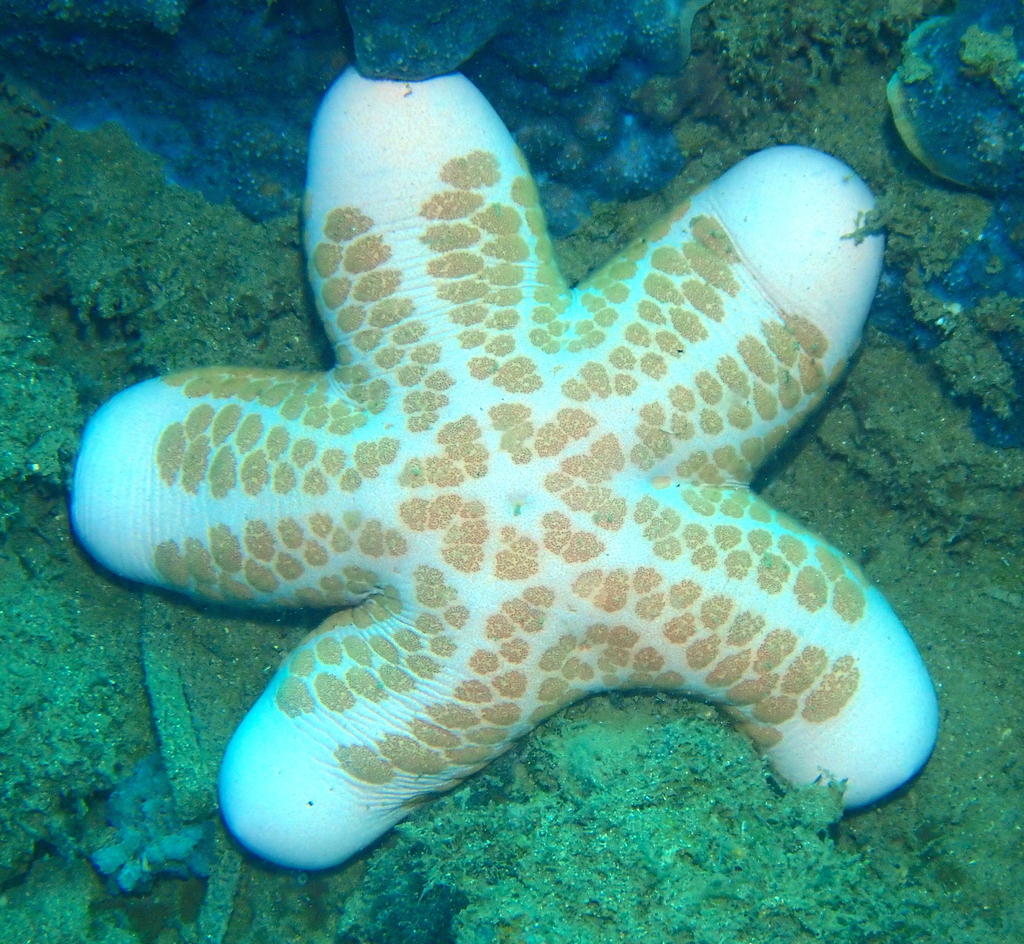
(c) desertnaturalist, some rights reserved (CC BY) · CC BY · iNaturalist
Names and classification
- English
- Grainy Cushion Star, Granulated Sea Star, Granulated Star
Names in 4 more languages
- German
- Gekörnter Kissenstern, Walzenseestern, Walzenstern
- French
- Etoile-coussin granuleuse
- Japanese
- カワテブクロ
- Simplified Chinese
- 粒皮瘤海星
Other scientific names: Bothriaster primigenius, Choriaster niassensis, Culcita niassensis
Similar species
 Cushion star
Culcita novaeguineae
- Mosaic Cushion Star
Halityle regularis
- Cushion sea star
Pentaceraster alveolatus
- Blunt Arm Sea Star
Pentaster obtusatus
Sources and credits
Names and taxonomy: WoRMS (CC BY 4.0) and the GBIF Backbone (CC BY 4.0). Photos: iNaturalist observers, each under the licence shown (CC0, CC BY or CC BY-SA).
- Depth, temperature, months and maps: records from OBIS and GBIF under CC0 or CC BY.
- Descriptions: Wikipedia, licensed CC BY-SA, each linked to its article.
- Conservation status as published by GBIF (IUCN Red List).
- 330 open-data records from 1869 to 2023.
- Species data updated October 26, 2026.
Log what you see on your next dive
The free DiveHive diver app keeps your logbook with every sighting and shows what lives at the site you dive next.