
barramundi cod
Cromileptes altivelis
- Usual depth0–26 m
- Water temperature23–30 °C
- Best monthsMay, August, and October
- How commonOccasional
About this species
The humpback grouper, also known as the panther grouper, barramundi cod, lapu-lapung senorita, miro-miro, mérou de Grace Kelly, sarasa-hata, kalava, and many other local names, is a species of marine ray-finned fish. Specifically, it is a grouper from the subfamily Epinephelinae, which is in the family Serranidae, which also includes the anthias and sea basses. It occurs in the Western Pacific Ocean.
Text from the Wikipedia article “Humpback grouper”, licensed CC BY-SA 4.0. Read the article
Where and when
Where it has been recorded
Worldwide
Loading the map
Best months
Worldwide (open data)
- January: 5 records
- February: 3 records
- March: 5 records
- April: 3 records
- May: 7 records
- June: 2 records
- July: 3 records
- August: 6 records
- September: 4 records
- October: 8 records
- November: 3 records
- December: 6 records
Depth and water temperature
Depth
Mostly recorded at 0–26 m · Deepest record: 67 m
Water temperature
Recorded in surface water of 23–30 °C
Names and classification
- English
- barramundi cod, Humpback grouper, panther fish
Names in 3 more languages
- Spanish
- mero jorobado
- French
- Grisette, Loche truite, Loche voile, Mérou bossu
- Japanese
- サラサハタ
Similar species
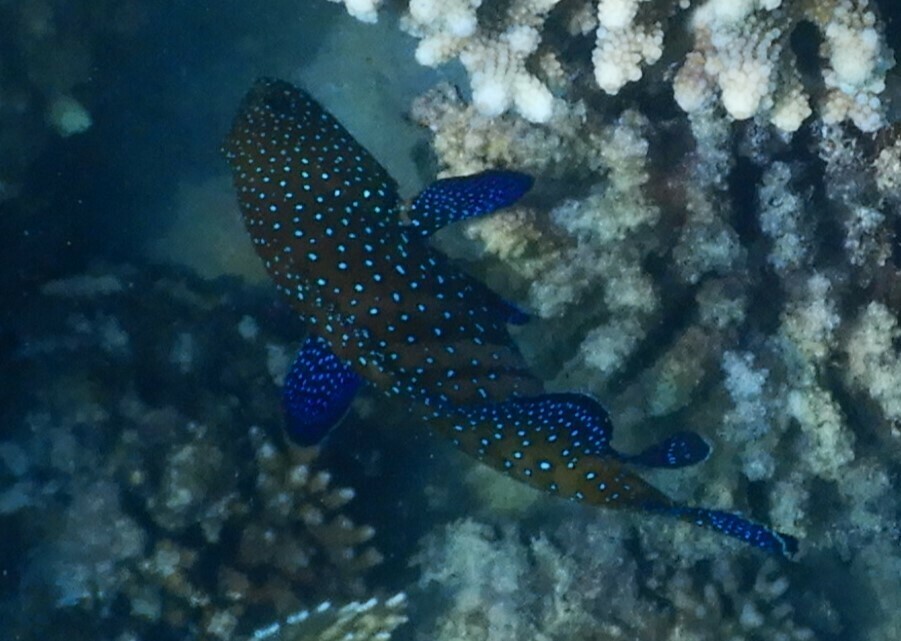 Peacock grouper
Cephalopholis argus
 Coral grouper
Cephalopholis miniata
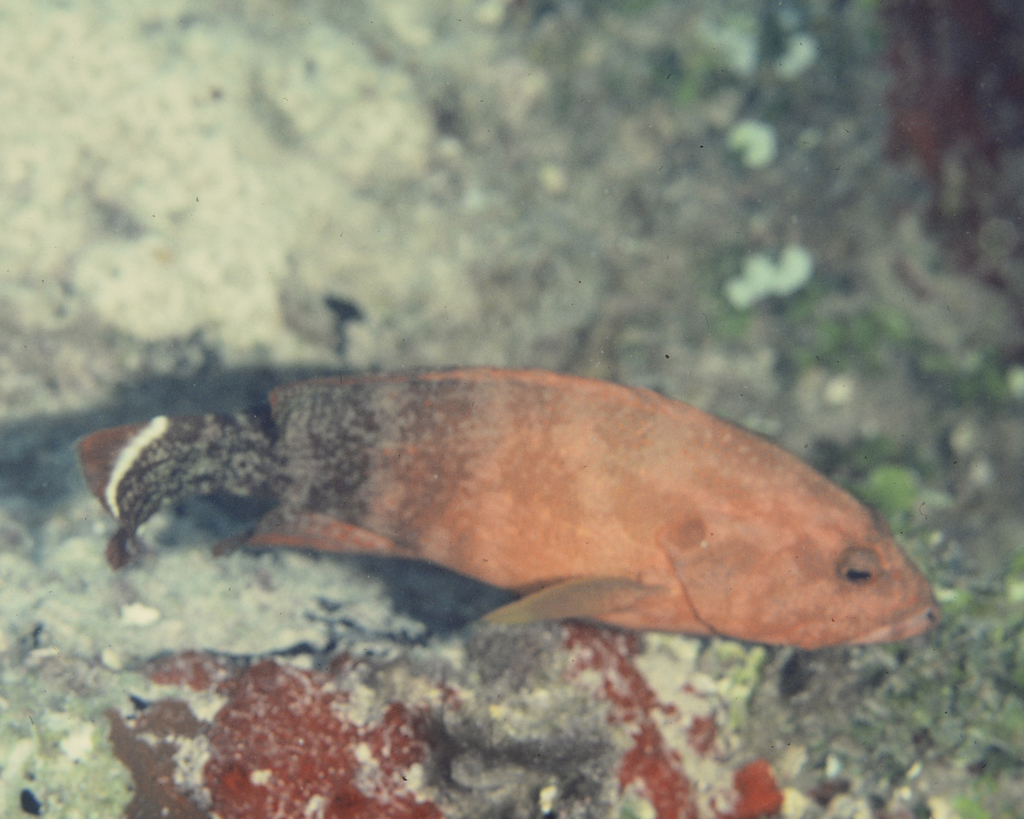 Darkfin hind
Cephalopholis urodeta
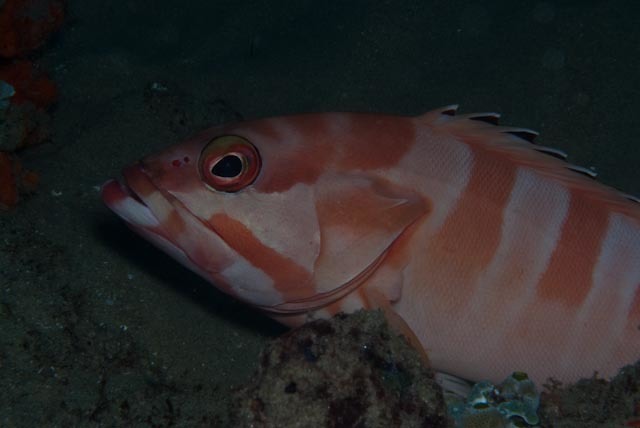 Blacktip grouper
Epinephelus fasciatus
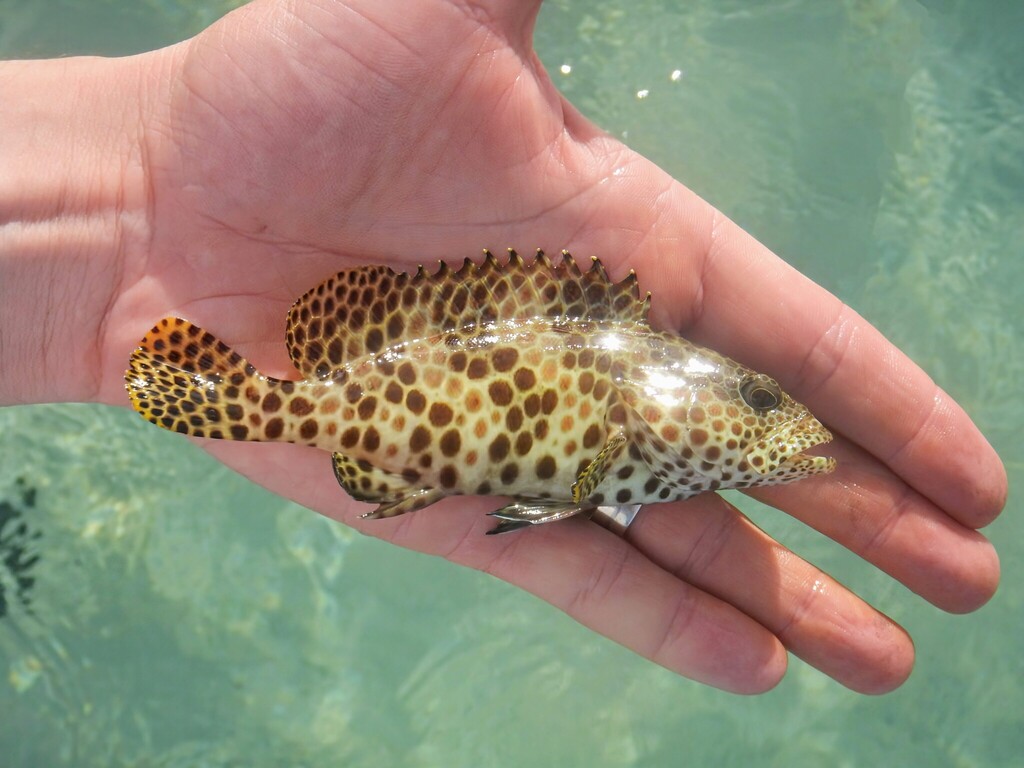 Honeycomb grouper
Epinephelus merra
- Blacksaddled coralgrouper
Plectropomus laevis
Sources and credits
Names and taxonomy: WoRMS (CC BY 4.0) and the GBIF Backbone (CC BY 4.0). Photos: iNaturalist observers, each under the licence shown (CC0, CC BY or CC BY-SA).
- Depth, temperature, months and maps: records from OBIS and GBIF under CC0 or CC BY.
- Descriptions: Wikipedia, licensed CC BY-SA, each linked to its article.
- Conservation status as published by GBIF (IUCN Red List).
- 385 open-data records from 1828 to 2022.
- Species data updated October 26, 2026.
Log what you see on your next dive
The free DiveHive diver app keeps your logbook with every sighting and shows what lives at the site you dive next.