
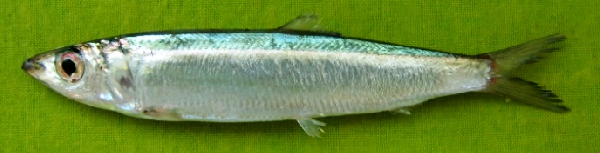
Slender rainbow sardine
Dussumieria elopsoides
- Usual depth16–74 m
- Water temperature23–29 °C
- Best monthsOctober and November
- How commonOccasional
Photo credit: (c) Hamid Badar Osmany, bazı hakları saklıdır (CC BY) · CC BY · iNaturalist
About this species
The slender rainbow sardine is a small, subtropical, salt water fish of the Indian Ocean and the South China Sea which was first described by Bleeker in 1849. Dussumieria hasselti and Dussumieria productissima are synonyms for this same fish. It is a round herring of the family Clupeidae.
Text from the Wikipedia article “Slender rainbow sardine”, licensed CC BY-SA 4.0. Read the article
Where and when
Where it has been recorded
Worldwide
Loading the map
Best months
Worldwide (open data)
- January: 16 records
- February: 7 records
- March: 5 records
- April: 8 records
- May: 3 records
- June: 5 records
- July: 5 records
- August: 16 records
- September: 13 records
- October: 49 records
- November: 46 records
- December: 27 records
Depth and water temperature
Depth
Mostly recorded at 16–74 m · Deepest record: 456.5 m
Water temperature
Recorded in surface water of 23–29 °C
Photos
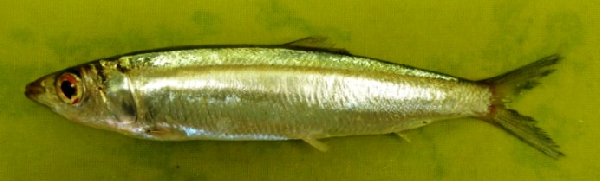
(c) Hamid Badar Osmany, bazı hakları saklıdır (CC BY) · CC BY · iNaturalist
Names and classification
- English
- Slender rainbow sardine, Rainbow Round Herring, slender rainbow sardine, Slender Sardine, Van Hasselt's Sprat
Names in 3 more languages
- French
- Sardine arc-en-ciel gracile
- Japanese
- ギンイワシ
- Simplified Chinese
- 尖嘴鰮, 尖頭鰮, 砂䰳, 臭肉鰮, 銀圓腹鰮, 鰮仔, 黃帶圓腹鯡
Other scientific names: Dussumieria elapsoides, Dussumieria elopoides, Dussumieria elopsides, Dussumieria elopsoids
Similar species
- Rainbow sardine
Dussumieria acuta
- Hasselt's rainbow sardine
Dussumieria hasseltii
Sources and credits
Names and taxonomy: WoRMS (CC BY 4.0) and the GBIF Backbone (CC BY 4.0). Photos: iNaturalist observers, each under the licence shown (CC0, CC BY or CC BY-SA).
- Depth, temperature, months and maps: records from OBIS and GBIF under CC0 or CC BY.
- Descriptions: Wikipedia, licensed CC BY-SA, each linked to its article.
- Conservation status as published by GBIF (IUCN Red List).
- 457 open-data records from 1849 to 2021.
- Species data updated October 26, 2026.
Log what you see on your next dive
The free DiveHive diver app keeps your logbook with every sighting and shows what lives at the site you dive next.