
South Pacific Striped Triplefin
Enneapterygius rhabdotus
- Usual depth2–7 m
- Water temperature26–29 °C
- Best monthsMay and June
- How commonRare
About this species
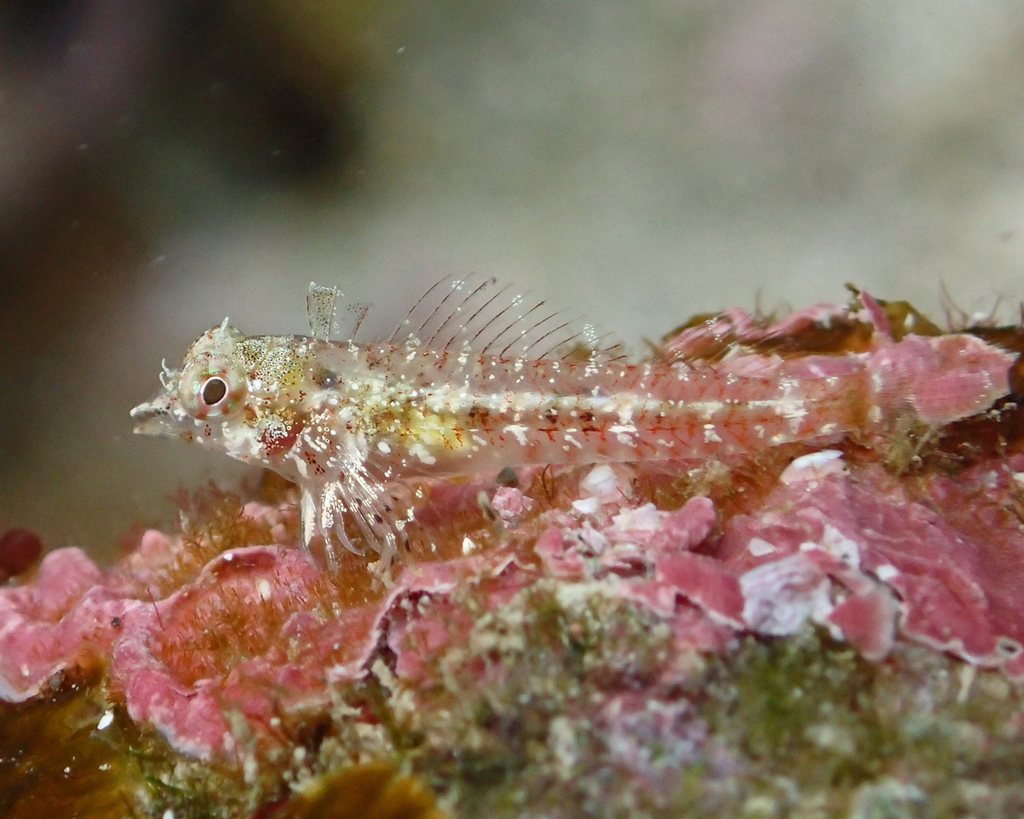
Enneapterygius rhabdotus, the umpire triplefin or South Pacific striped triplefin, is a species of triplefin blenny in the genus Enneapterygius. It was described by Ronald Fricke in 1994. This species occurs in the western central Pacific Ocean the Izu Peninsula in Japan, Taiwan, Batanes and Palawan in the northern Philippines, the Gulf of Thailand, Palau, and most of Melanesia east to the Pitcairn Islands.
Text from the Wikipedia article “Enneapterygius rhabdotus”, licensed CC BY-SA 4.0. Read the article
Where and when
Where it has been recorded
Worldwide
Loading the map
Best months
Worldwide (open data)
- January: 0 records
- February: 0 records
- March: 0 records
- April: 2 records
- May: 12 records
- June: 8 records
- July: 0 records
- August: 0 records
- September: 1 records
- October: 3 records
- November: 1 records
- December: 0 records
Depth and water temperature
Depth
Mostly recorded at 2–7 m · Deepest record: 10 m
Water temperature
Recorded in surface water of 26–29 °C
Names and classification
- English
- South Pacific Striped Triplefin, Umpire Triplefin
Names in 2 more languages
- French
- Triptérygion zébré
- Japanese
- Kurenaihebigimpo, クレナイヘビギンポ
Similar species
 Highfin Threefin
Enneapterygius tutuilae
- Blacktail Threefin
Enneapterygius bahasa
- Northern Bicoloured Triplefin
Enneapterygius flavoccipitis
- Blackbelly Triplefin
Enneapterygius fuscoventer
- Blackbelly Triplefin
Enneapterygius hemimelas
- Minute Triplefin
Enneapterygius minutus
Sources and credits
Names and taxonomy: WoRMS (CC BY 4.0) and the GBIF Backbone (CC BY 4.0). Photos: iNaturalist observers, each under the licence shown (CC0, CC BY or CC BY-SA).
- Depth, temperature, months and maps: records from OBIS and GBIF under CC0 or CC BY.
- Descriptions: Wikipedia, licensed CC BY-SA, each linked to its article.
- Conservation status as published by GBIF (IUCN Red List).
- 60 open-data records from 1957 to 2009.
- Species data updated October 26, 2026.
Log what you see on your next dive
The free DiveHive diver app keeps your logbook with every sighting and shows what lives at the site you dive next.