
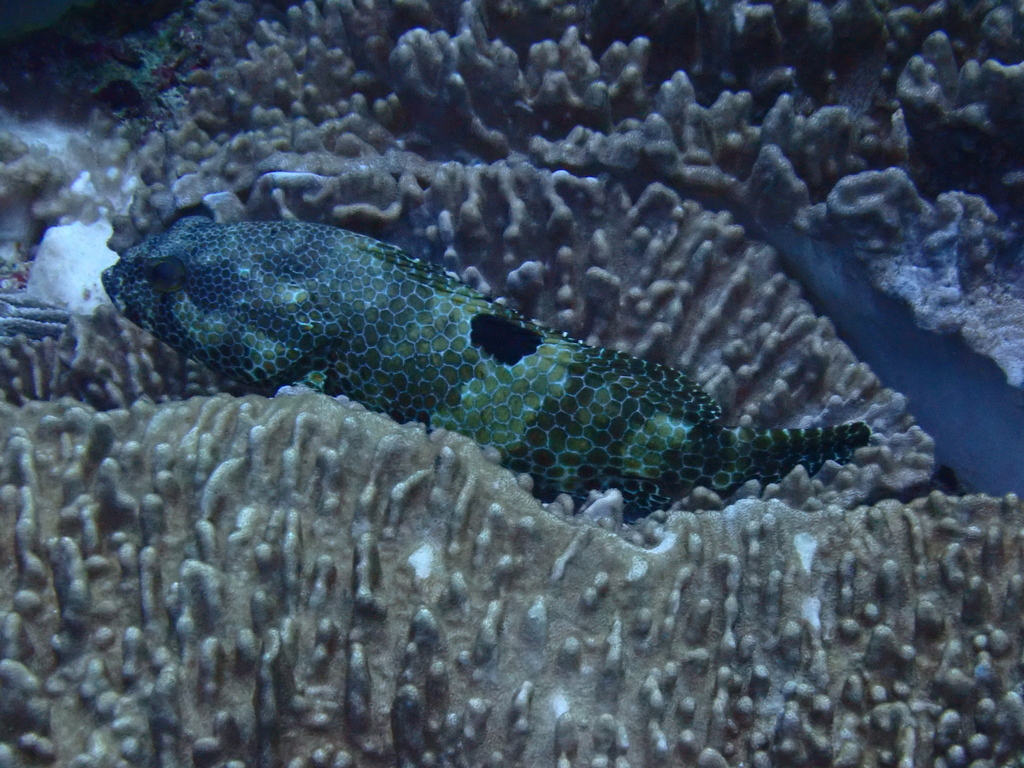
One-blotch grouper
Epinephelus melanostigma
- Usual depth4–22 m
- Water temperature24–30 °C
- Best monthsFebruary, March, and April
- How commonRare
Photo credit: (c) Austen Novis, some rights reserved (CC BY) · CC BY · iNaturalist
About this species
Epinephelus is a genus of groupers. They are predatory fish, largely associated with reefs, and are found in tropical and subtropical seas throughout the world. They are important target species for fisheries.
Text from the Wikipedia article “Epinephelus”, licensed CC BY-SA 4.0. Read the article
Where and when
Where it has been recorded
Worldwide
Loading the map
Best months
Worldwide (open data)
- January: 22 records
- February: 58 records
- March: 58 records
- April: 43 records
- May: 40 records
- June: 36 records
- July: 30 records
- August: 7 records
- September: 13 records
- October: 5 records
- November: 9 records
- December: 1 records
Depth and water temperature
Depth
Mostly recorded at 4–22 m · Deepest record: 27 m
Water temperature
Recorded in surface water of 24–30 °C
Names and classification
- English
- One-blotch grouper, Blackspot Cod, Black-spot Grouper, Blackspot Grouper, Blackspot Honeycomb Gouper, Coral Cod, one-blotch grouper, Oneblotch Grouper, Schultz's Rockcod
Names in 5 more languages
- Spanish
- Mero Espaldaron
- French
- Loche Ponctuee, Loche ponctuée, Mérou dossard, Merou Doussard
- Japanese
- Sumitsukihata, スミツキハタ
- Thai
- ปลากะรังลายตาข่าย
- Simplified Chinese
- 石斑, 黑斑石斑魚, 黑點石斑魚
Similar species
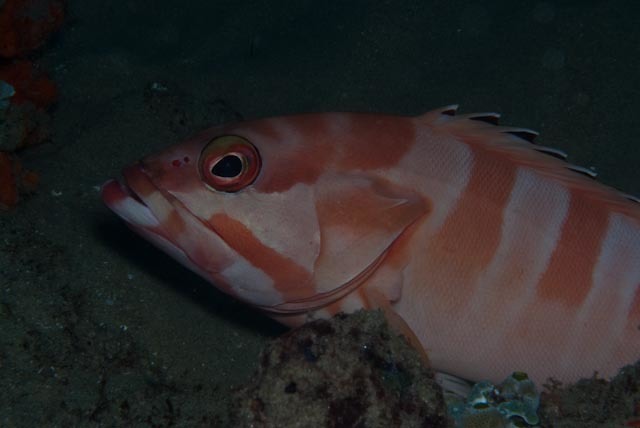 Blacktip grouper
Epinephelus fasciatus
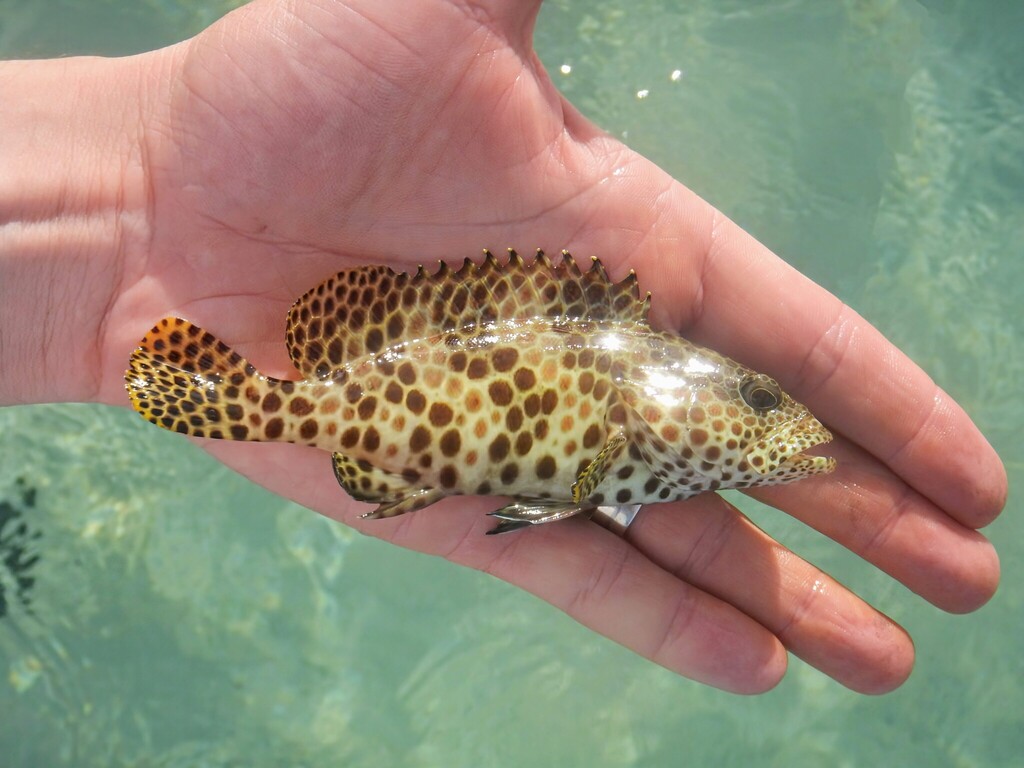 Honeycomb grouper
Epinephelus merra
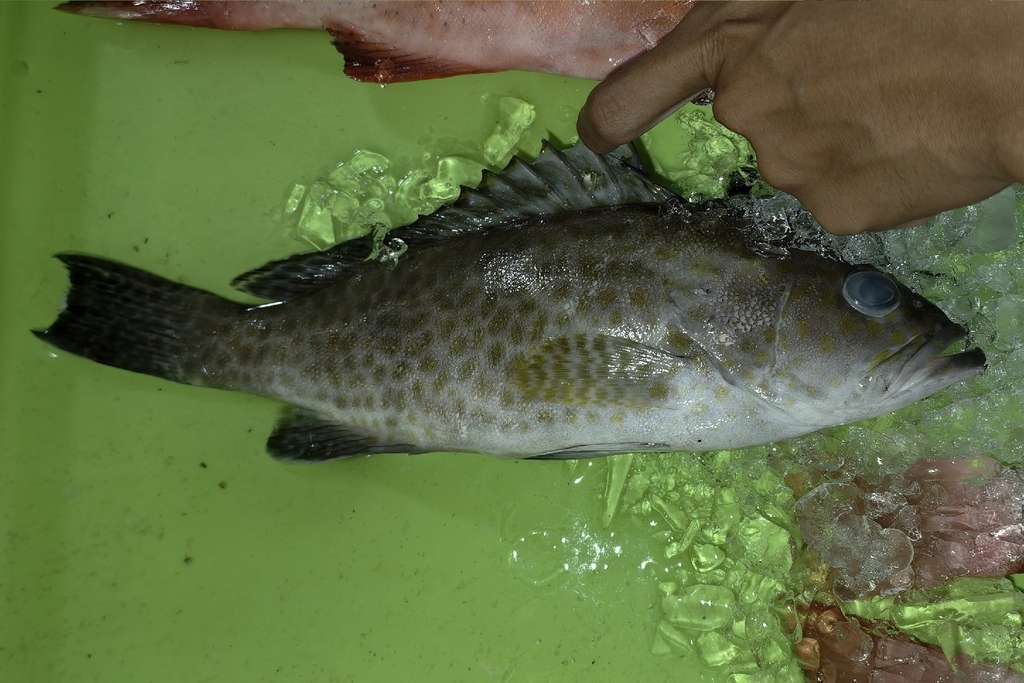 Areolate grouper
Epinephelus areolatus
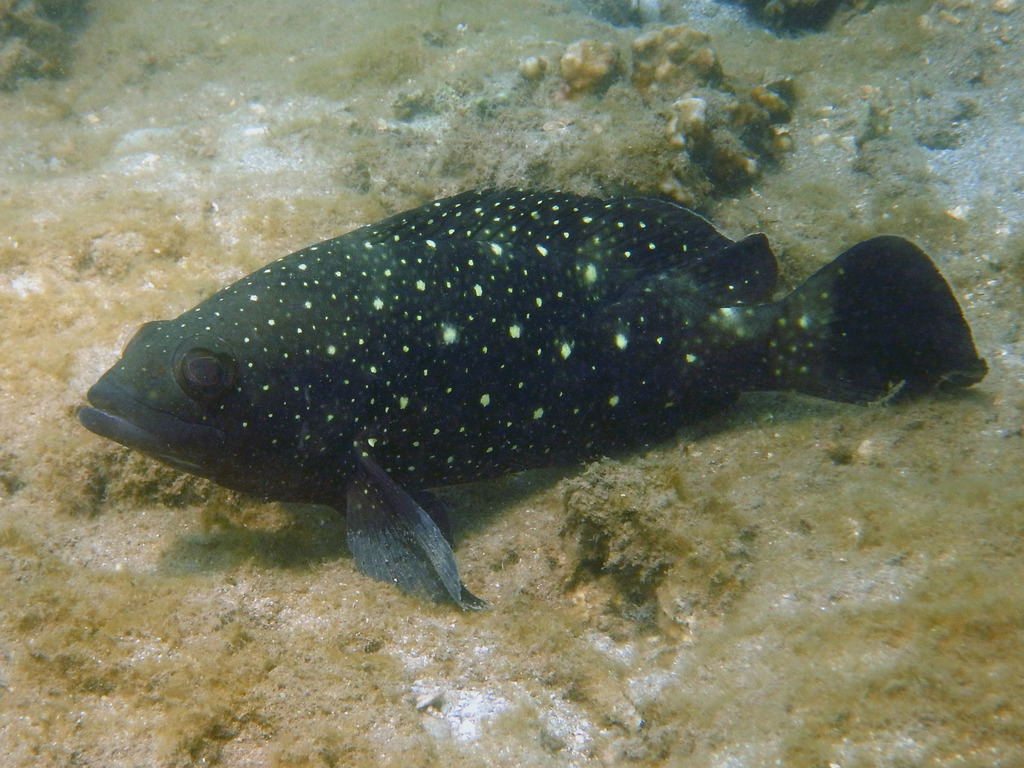 Garrupa
Epinephelus coeruleopunctatus
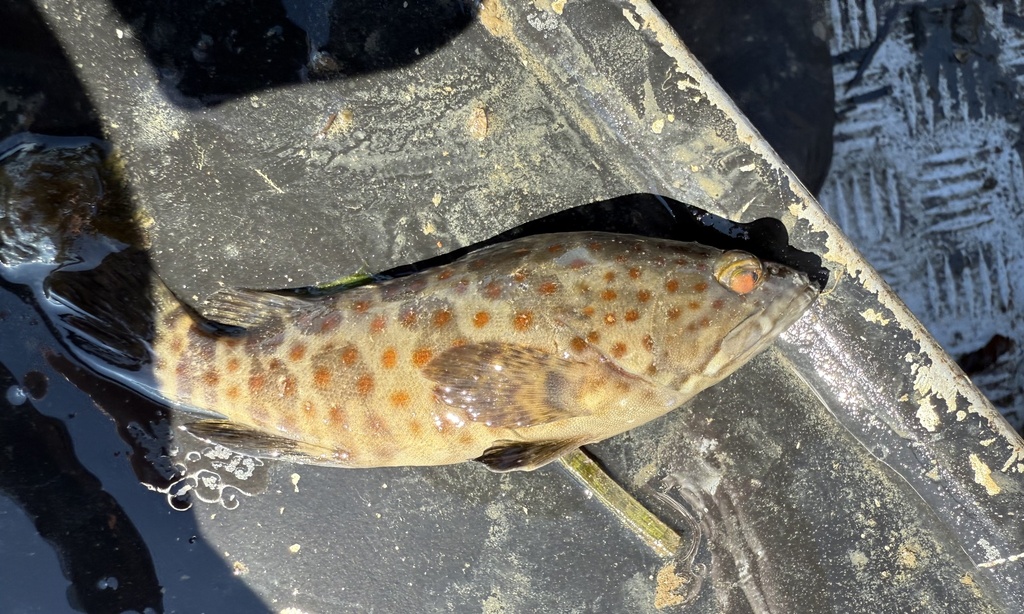 Orange-spotted grouper
Epinephelus coioides
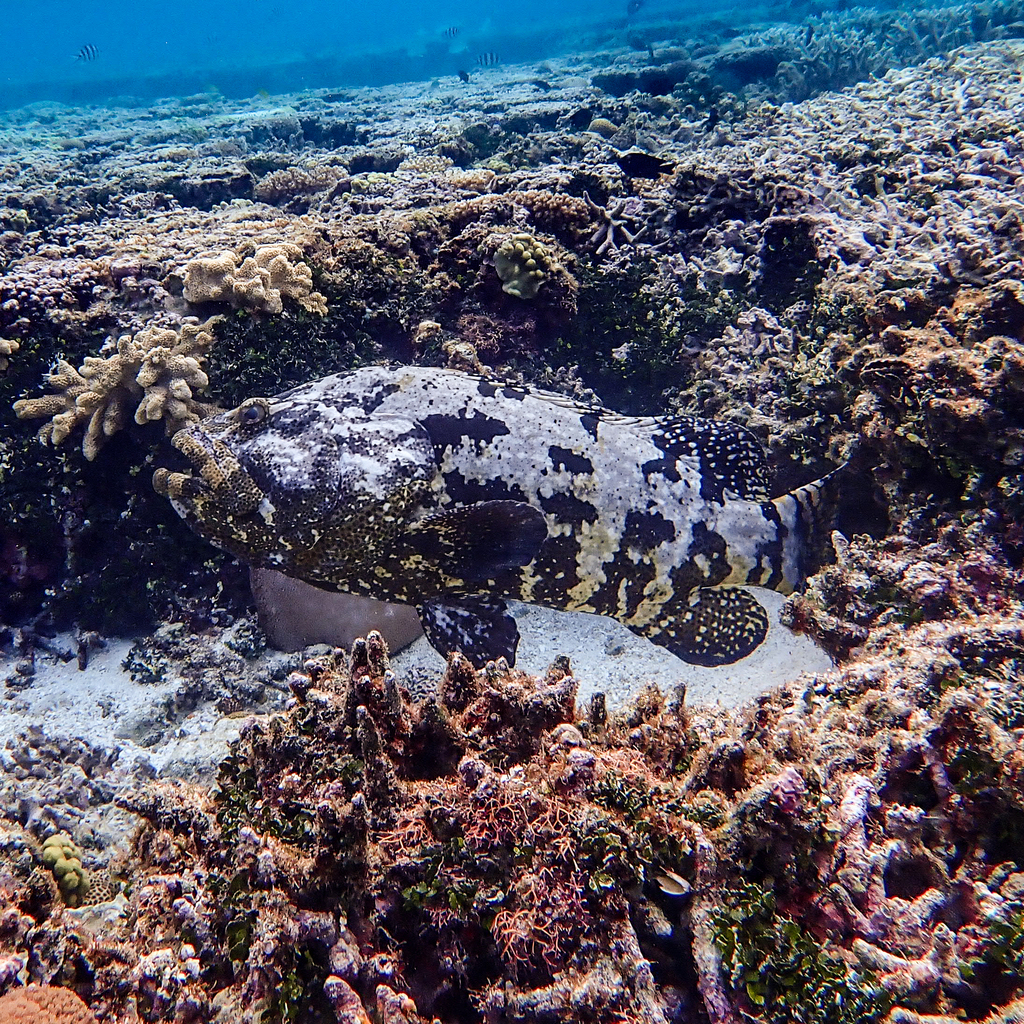 Brown-marbled grouper
Epinephelus fuscoguttatus
Sources and credits
Names and taxonomy: WoRMS (CC BY 4.0) and the GBIF Backbone (CC BY 4.0). Photos: iNaturalist observers, each under the licence shown (CC0, CC BY or CC BY-SA).
- Depth, temperature, months and maps: records from OBIS and GBIF under CC0 or CC BY.
- Descriptions: Wikipedia, licensed CC BY-SA, each linked to its article.
- Conservation status as published by GBIF (IUCN Red List).
- 396 open-data records from 1939 to 2018.
- Species data updated October 26, 2026.
Log what you see on your next dive
The free DiveHive diver app keeps your logbook with every sighting and shows what lives at the site you dive next.