
Abbott's Moray
Gymnothorax eurostus
- Usual depth2–25 m
- Water temperature20–29 °C
- Best monthsApril, May, and September
- How commonOccasional
About this species
Abbott's moray eel, also known as the stout moray and the salt and pepper moray, is a moray eel of the family Muraenidae. G. eurostus is found in the Indo-Pacific, and its range exhibits an antitropical distribution. It is the most common moray eel in the Hawaiian Islands. Abbott's moray is found in the eastern Pacific Ocean from Costa Rica to Easter Island, at depths down to 74 m (243 ft). With a body that is variable in color, the length of this species is up to 60 cm (24 in).
Text from the Wikipedia article “Abbott's moray eel”, licensed CC BY-SA 4.0. Read the article
Where and when
Where it has been recorded
Worldwide
Loading the map
Best months
Worldwide (open data)
- January: 12 records
- February: 17 records
- March: 21 records
- April: 48 records
- May: 42 records
- June: 25 records
- July: 11 records
- August: 32 records
- September: 43 records
- October: 26 records
- November: 36 records
- December: 26 records
Depth and water temperature
Depth
Mostly recorded at 2–25 m · Deepest record: 125 m
Water temperature
Recorded in surface water of 20–29 °C
Names and classification
- English
- Abbott's Moray, Abbott's Moray Eel, Indo-Pacific Stout Moray, Moray Eel, Salt and Pepper Moray, Spotted Moray, Stout Moray, White-speckled Moray
Names in 5 more languages
- German
- Abbotts Muräne
- Spanish
- Morena de Abbott
- French
- Murène brune, Murène poivre et sel, Murène vigoureuse
- Japanese
- ワカウツボ
- Simplified Chinese
- 呆仔鰻, 米鰻, 糬鰻, 花鰻, 薯鰻, 虎鰻, 錢鰻, 黴身裸胸鯙, 黴身裸胸鱔
Other scientific names: Gymnothorax laysanus, Lycodontis eurostus, Lycodontis laysanus, Muraena laysana, Thyrsoidea eurosta
Similar species
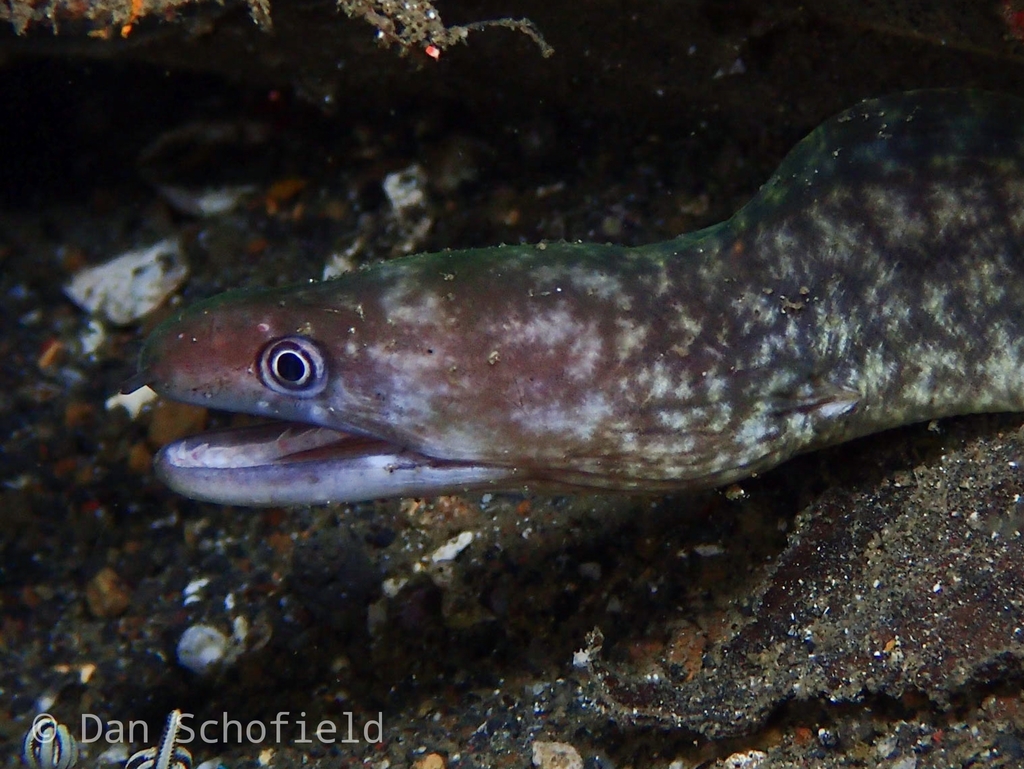 Lipspot moray
Gymnothorax chilospilus
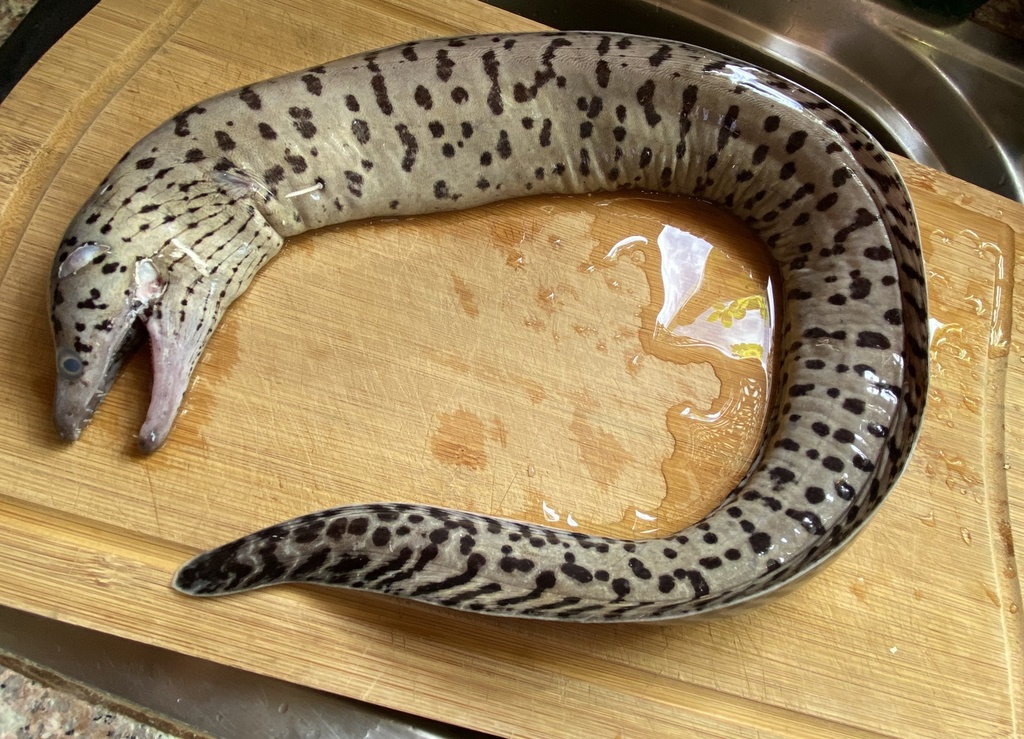 Fimbriated moray
Gymnothorax fimbriatus
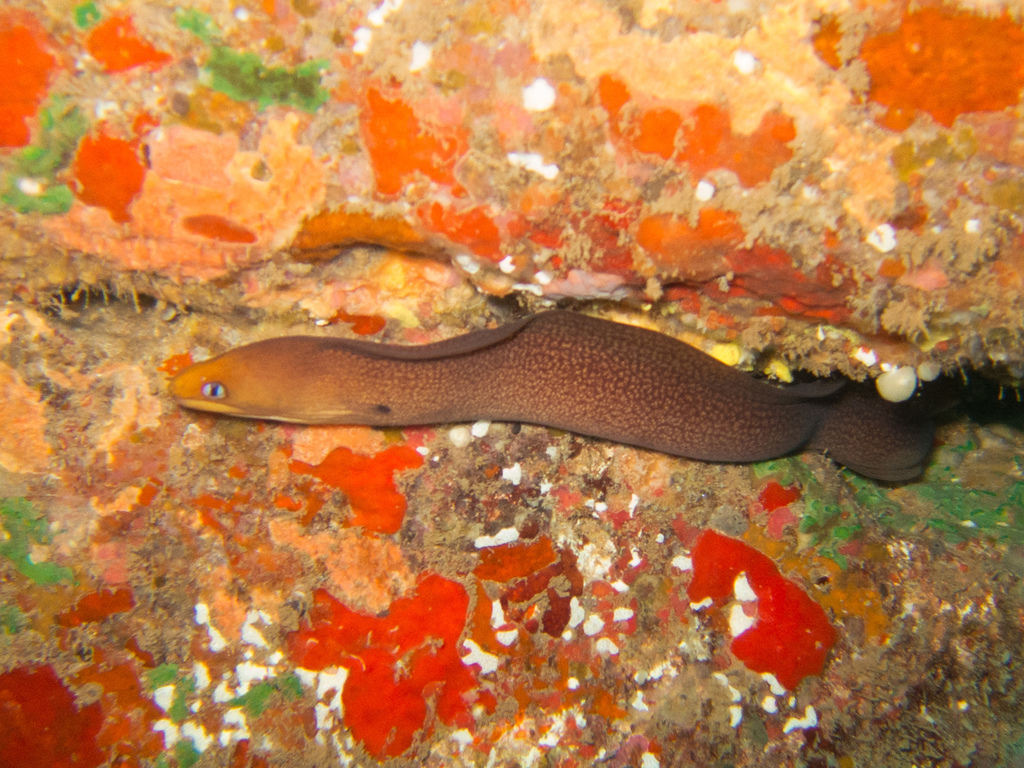 Blackspot Moray
Gymnothorax melatremus
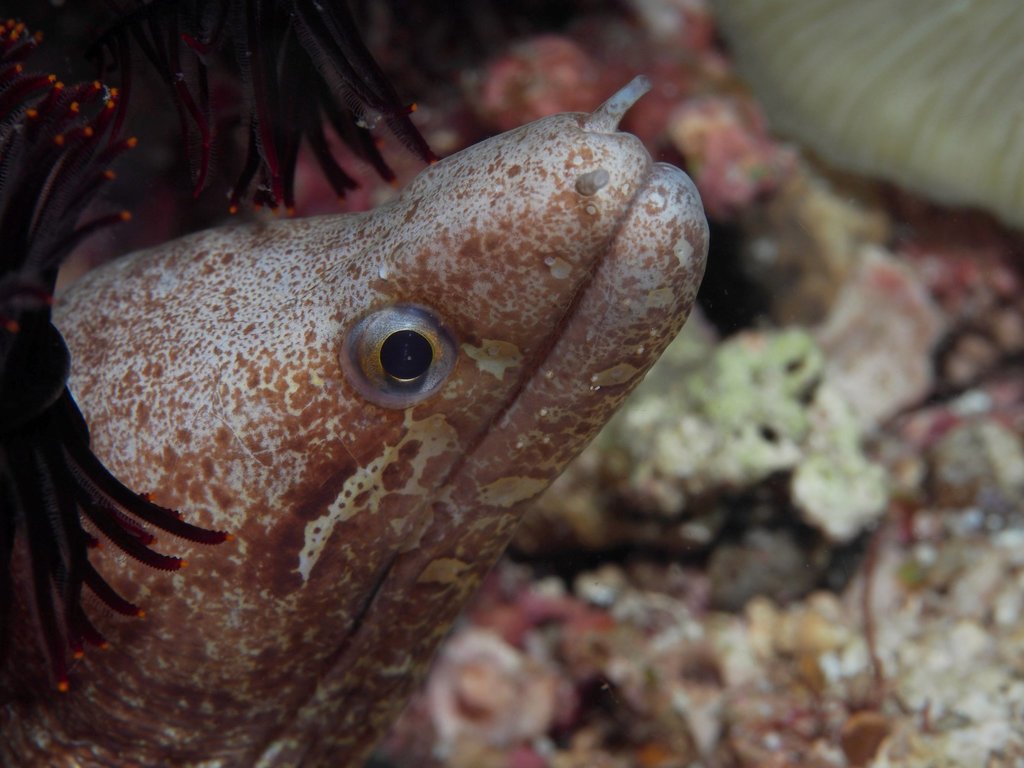 Barred-fin Moray
Gymnothorax zonipectis
- Vagrant moray
Gymnothorax buroensis
- Laced moray
Gymnothorax favagineus
Sources and credits
Names and taxonomy: WoRMS (CC BY 4.0) and the GBIF Backbone (CC BY 4.0). Photos: iNaturalist observers, each under the licence shown (CC0, CC BY or CC BY-SA).
- Depth, temperature, months and maps: records from OBIS and GBIF under CC0 or CC BY.
- Descriptions: Wikipedia, licensed CC BY-SA, each linked to its article.
- Conservation status as published by GBIF (IUCN Red List).
- 882 open-data records from 1860 to 2023.
Log what you see on your next dive
The free DiveHive diver app keeps your logbook with every sighting and shows what lives at the site you dive next.