
Brown-stripe Wrasse
Halichoeres bicolor
- Usual depth0–18 m
- Water temperature25–29 °C
- Best monthsJuly
- How commonRare
About this species
Halichoeres bicolor, or the pearly-spotted wrasse, is a species of salt water wrasse found in the Indo-West Pacific Ocean from Sri Lanka to the Indo-Malayan region.
Text from the Wikipedia article “Halichoeres bicolor”, licensed CC BY-SA 4.0. Read the article
Where and when
Where it has been recorded
Worldwide
Loading the map
Best months
Worldwide (open data)
- January: 0 records
- February: 1 records
- March: 0 records
- April: 2 records
- May: 3 records
- June: 1 records
- July: 9 records
- August: 2 records
- September: 2 records
- October: 2 records
- November: 0 records
- December: 0 records
Depth and water temperature
Depth
Mostly recorded at 0–18 m · Deepest record: 18 m
Water temperature
Recorded in surface water of 25–29 °C
Names and classification
- English
- Brown-stripe Wrasse, Earmuff Wrasse, Hyrtl's Wrasse, Pearly-spotted Wrasse
Names in 2 more languages
- German
- Perlen-Junker
- Thai
- ปลานกขุนทองแถบสองจุด
Other scientific names: Halichoeres bicolour, Halichoeres hyrtli, Halichoeres hyrtlii, Halichoeres xanti, Julis hyrtlii, Labrus bicolor, Platyglossus xanti
Similar species
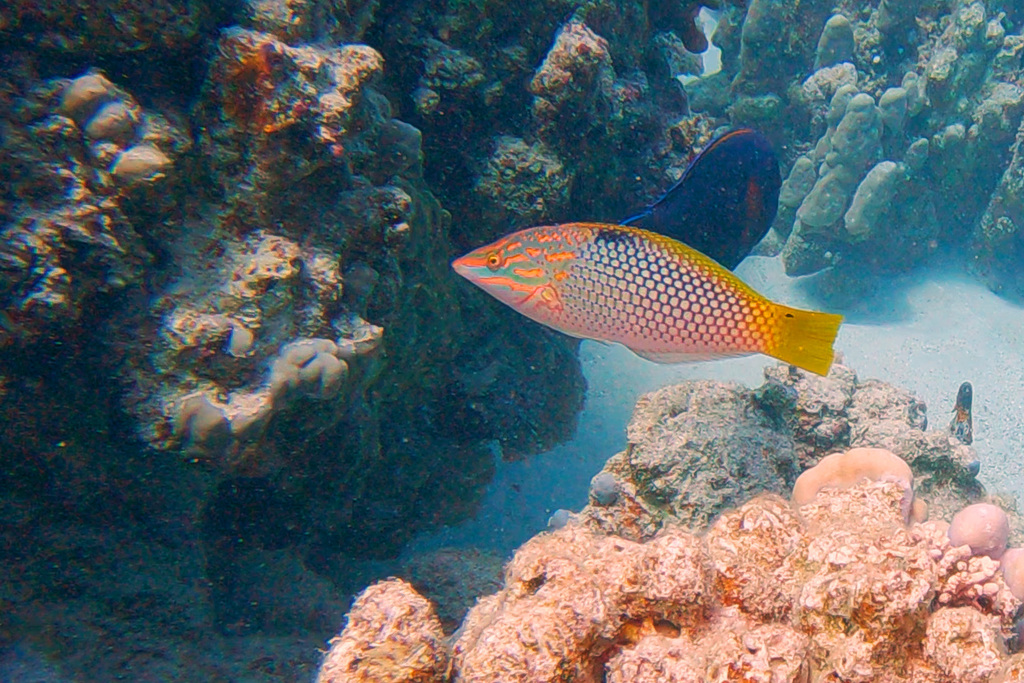 Checkerboard wrasse
Halichoeres hortulanus
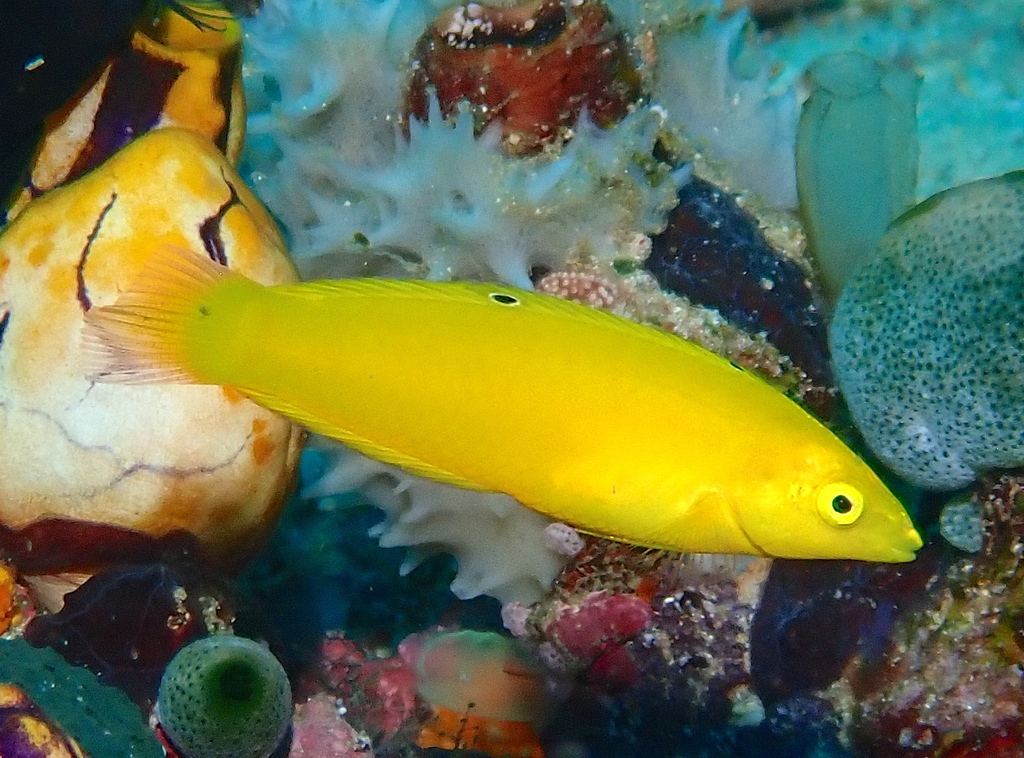 Canary Wrasse
Halichoeres chrysus
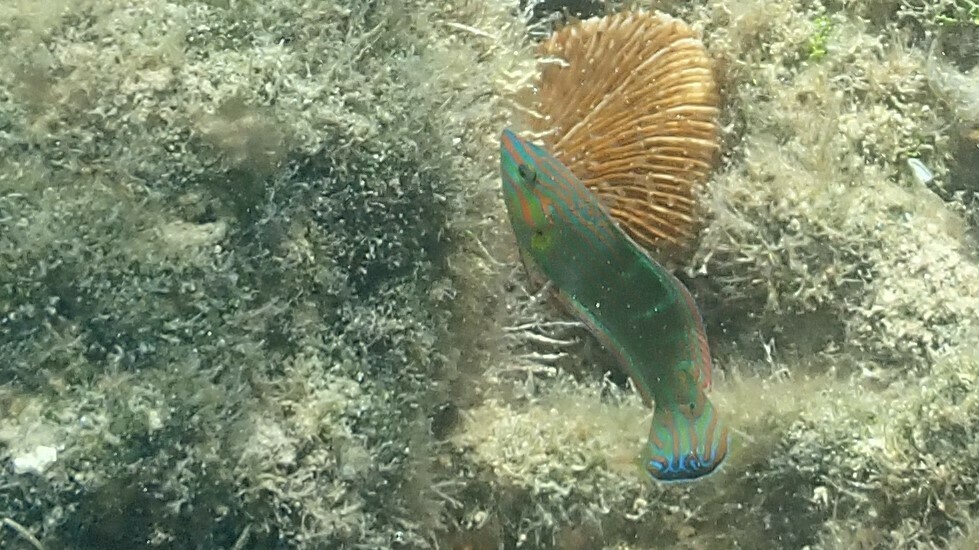 duskytailed rainbowfish
Halichoeres melanurus
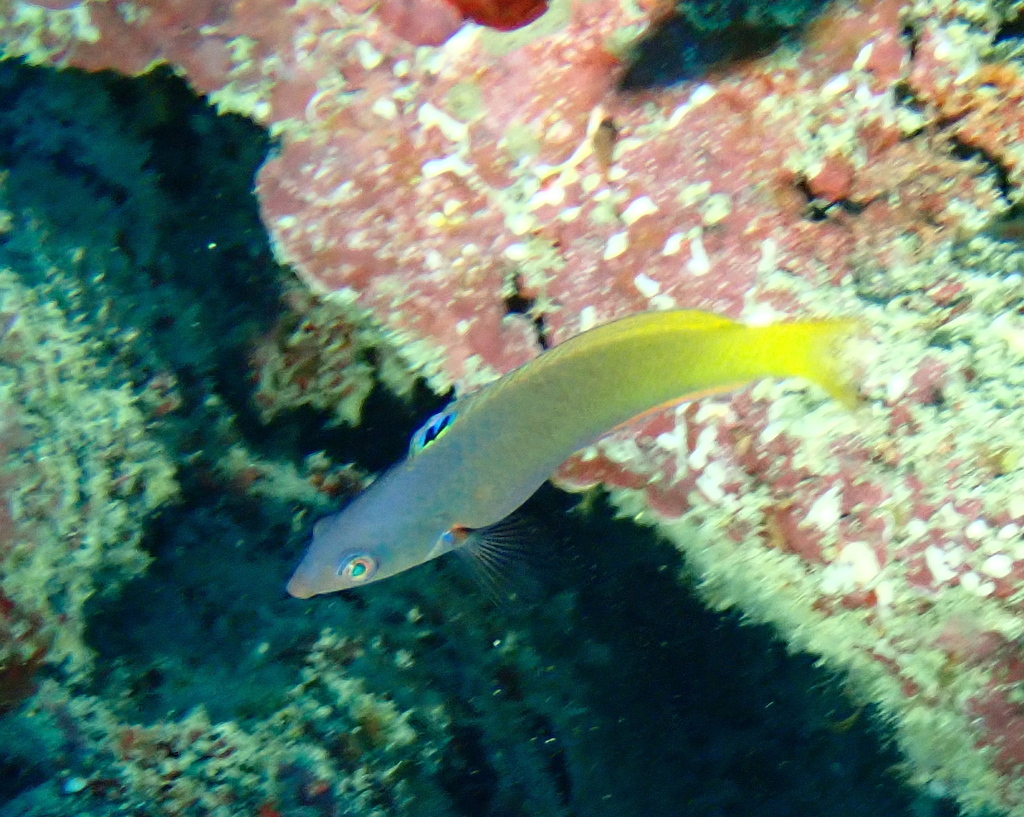 Half-grey Wrasse
Halichoeres prosopeion
- Argus Wrasse
Halichoeres argus
- Biocellated Wrasse
Halichoeres biocellatus
Sources and credits
Names and taxonomy: WoRMS (CC BY 4.0) and the GBIF Backbone (CC BY 4.0). Photos: iNaturalist observers, each under the licence shown (CC0, CC BY or CC BY-SA).
- Depth, temperature, months and maps: records from OBIS and GBIF under CC0 or CC BY.
- Descriptions: Wikipedia, licensed CC BY-SA, each linked to its article.
- Conservation status as published by GBIF (IUCN Red List).
- 67 open-data records from 1901 to 2018.
Log what you see on your next dive
The free DiveHive diver app keeps your logbook with every sighting and shows what lives at the site you dive next.