
Bear paw clam
Hippopus hippopus
- Usual depth1–7 m
- Water temperature13–30 °C
- Best monthsJuly
- How commonOccasional
About this species
Hippopus hippopus, also known as the Horse Hoof clam and Strawberry clam, is a species of giant clam in the Subfamily Tridacninae and the genus Hippopus. Hippopus is a delicacy in many Southeast Asian countries due to its high quality meat.
Text from the Wikipedia article “Hippopus hippopus”, licensed CC BY-SA 4.0. Read the article
Where and when
Where it has been recorded
Worldwide
Loading the map
Best months
Worldwide (open data)
- January: 7 records
- February: 1 records
- March: 14 records
- April: 11 records
- May: 17 records
- June: 12 records
- July: 104 records
- August: 13 records
- September: 8 records
- October: 15 records
- November: 6 records
- December: 16 records
Depth and water temperature
Depth
Mostly recorded at 1–7 m · Deepest record: 8 m
Water temperature
Recorded in surface water of 13–30 °C
Names and classification
- English
- Bear paw clam, Bear's paw clam, Horses hoof, Horse's hoof, Horseshoe clam, Strawberry clam, Bear Paw, bear paw clam, bear's paw clam, horseshoe clam, horse's hoof, horses hoof, Horse’s hoof clam, Horse's Hoof Clam, strawberry clam
Names in 5 more languages
- German
- Pferdehufmuschel
- Spanish
- Almeja garra de oso
- French
- bénitier roulant
- Japanese
- シャゴウ, シャゴウガイ
- Simplified Chinese
- 菱硨磲蛤, 馬蹄硨磲
Other scientific names: Chama asinus, Chama hippopus, Hippopus brassica, Hippopus equinus, Hippopus maculatus, Tridachnes ungula
Similar species
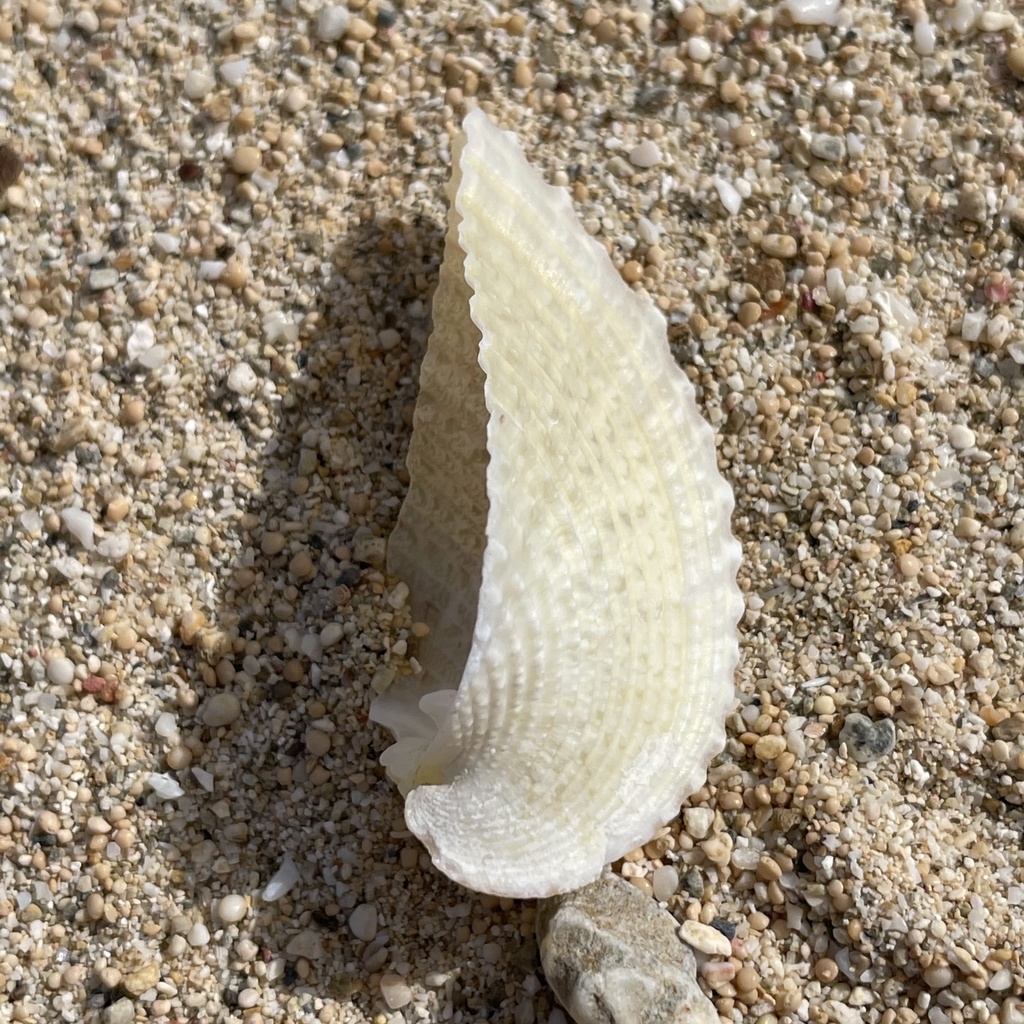 Heart cockle
Corculum cardissa
- Pacific strawberry cockle
Fragum fragum
- Strawberry cockle
Fragum unedo
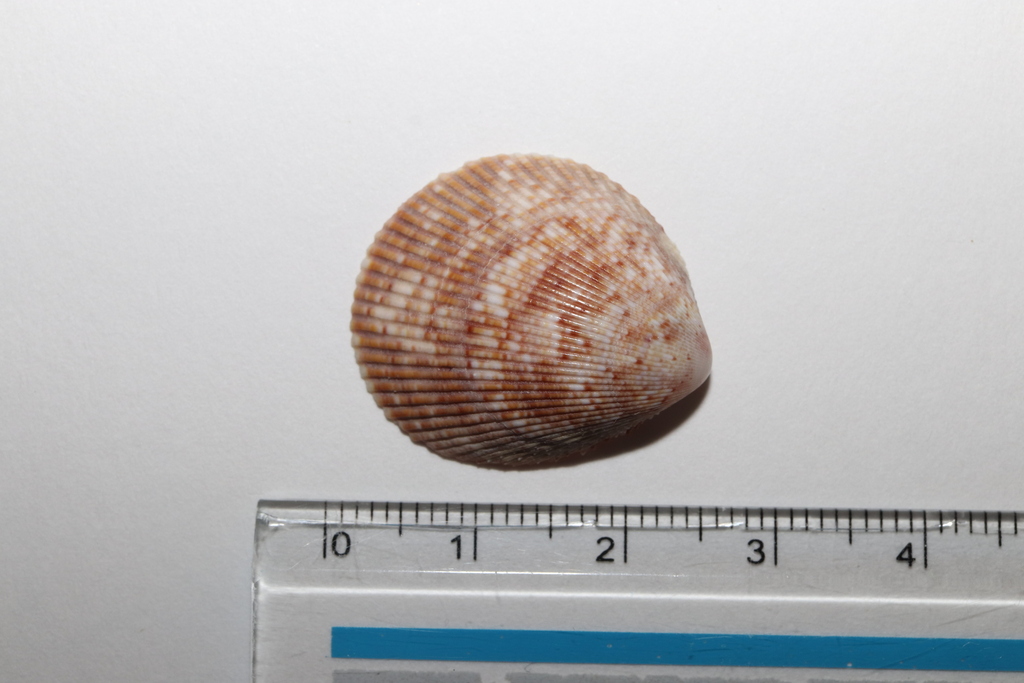
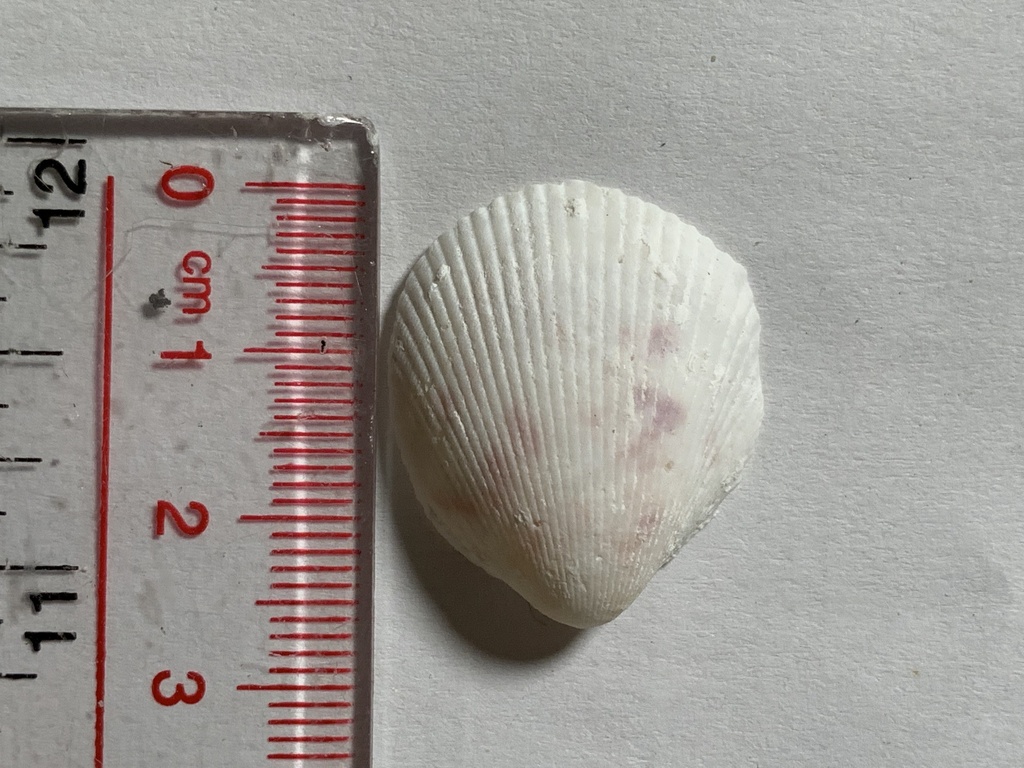
- Double-Rayed Cockle
Acrosterigma biradiatum
Sources and credits
Names and taxonomy: WoRMS (CC BY 4.0) and the GBIF Backbone (CC BY 4.0). Photos: iNaturalist observers, each under the licence shown (CC0, CC BY or CC BY-SA).
- Depth, temperature, months and maps: records from OBIS and GBIF under CC0 or CC BY.
- Descriptions: Wikipedia, licensed CC BY-SA, each linked to its article.
- Conservation status as published by GBIF (IUCN Red List).
- 508 open-data records from 1758 to 2023.
Log what you see on your next dive
The free DiveHive diver app keeps your logbook with every sighting and shows what lives at the site you dive next.