
Pale Razorfish
Iniistius aneitensis
- Usual depth3–23 m
- Water temperature22–29 °C
- Best monthsMay
- How commonRare
About this species
Iniistius aneitensis, the yellowblotch razorfish, is a species of marine ray-finned fish from the family Labridae, the wrasses. It is found in the Indo-Pacific Ocean.
Text from the Wikipedia article “Iniistius aneitensis”, licensed CC BY-SA 4.0. Read the article
Where and when
Where it has been recorded
Worldwide
Loading the map
Best months
Worldwide (open data)
- January: 3 records
- February: 0 records
- March: 1 records
- April: 2 records
- May: 6 records
- June: 1 records
- July: 1 records
- August: 3 records
- September: 0 records
- October: 2 records
- November: 1 records
- December: 0 records
Depth and water temperature
Depth
Mostly recorded at 3–23 m · Deepest record: 25 m
Water temperature
Recorded in surface water of 22–29 °C
Names and classification
- English
- Pale Razorfish, White-blotch Razorfish, White-blotch Razor Wrasse, Whitepatch Razorfish, Yellowblotch Razorfish
Names in 4 more languages
- Spanish
- Cuchillo pálido
- Filipino
- Bankilan, Bungat, Isdang bato
- Japanese
- Hage-hirabera, Hagehirabera, ハゲヒラベラ
- Simplified Chinese
- 安納地項鰭魚, 安納地頸鰭魚, 平倍良, 楔鯛, 短頸鰭魚, 短项鳍鱼, 紅姑娘仔, 紅新娘, 胭脂冷, 虹彩鯛, 角龍, 豎停仔, 離鰭鯛
Other scientific names: Novacula aneitensis, Xyrichthys anaitensis, Xyrichthys niveilatus, Xyrichtys aneitensis
Similar species
- Peacock razorfish
Iniistius pavo
- Five-finger Razorfish
Iniistius pentadactylus
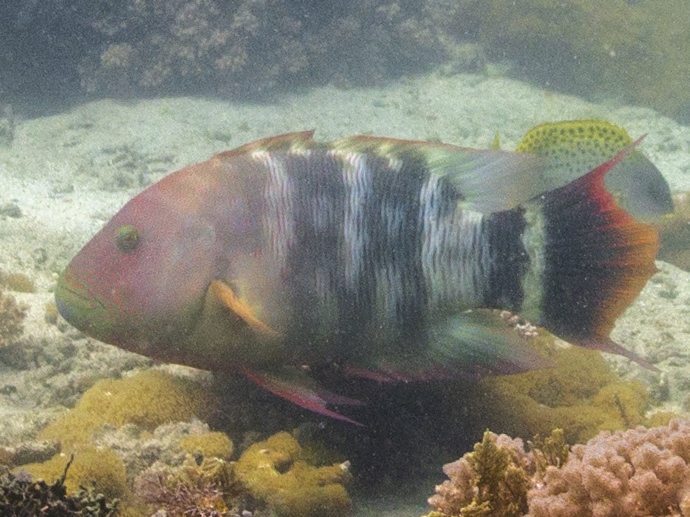 Tripletail wrasse
Cheilinus trilobatus
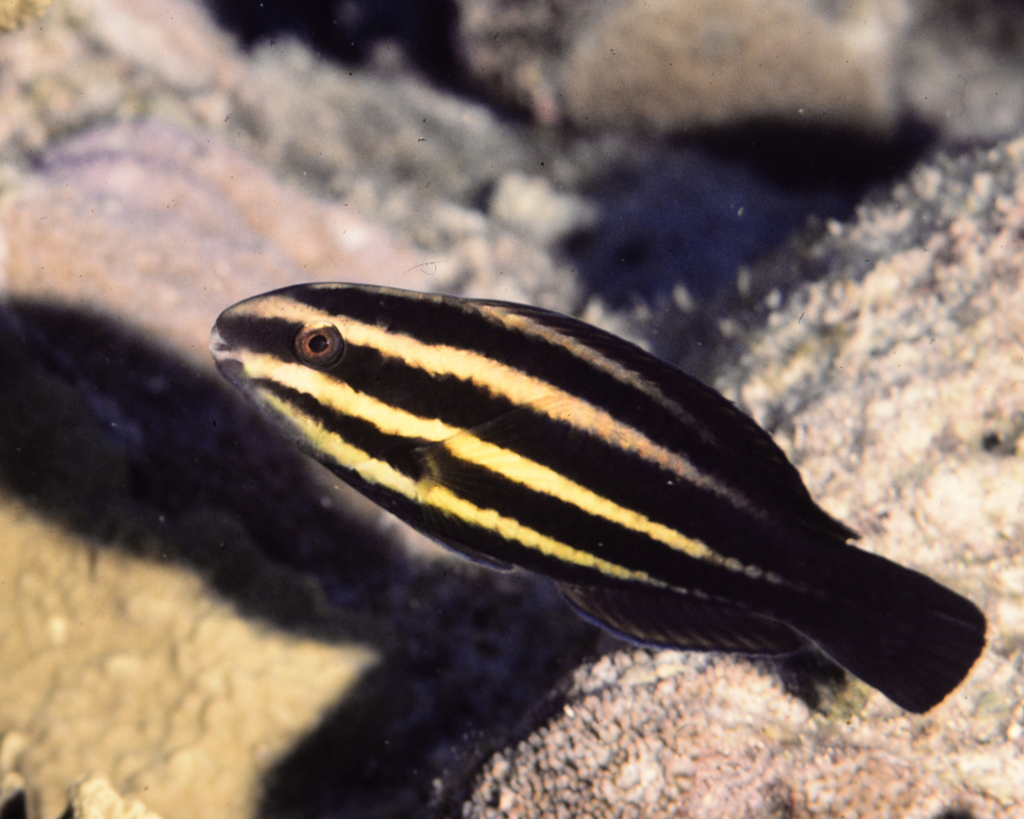 Blunt-head Parrotfish
Chlorurus microrhinos
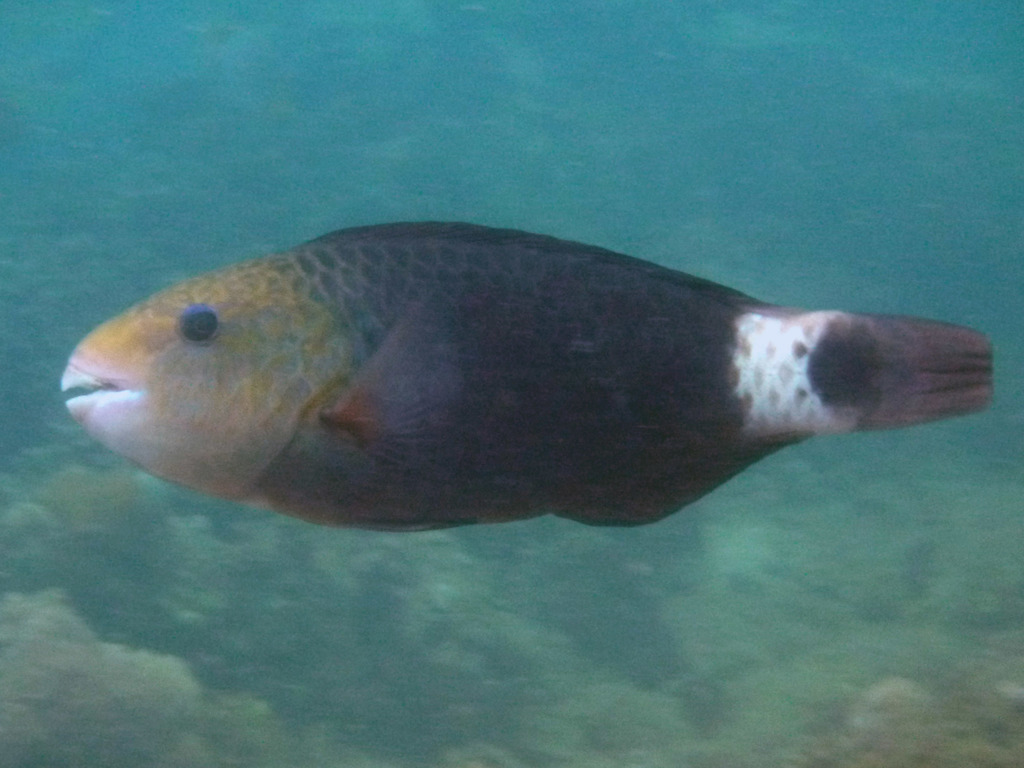 bullethead parrotfish
Chlorurus sordidus
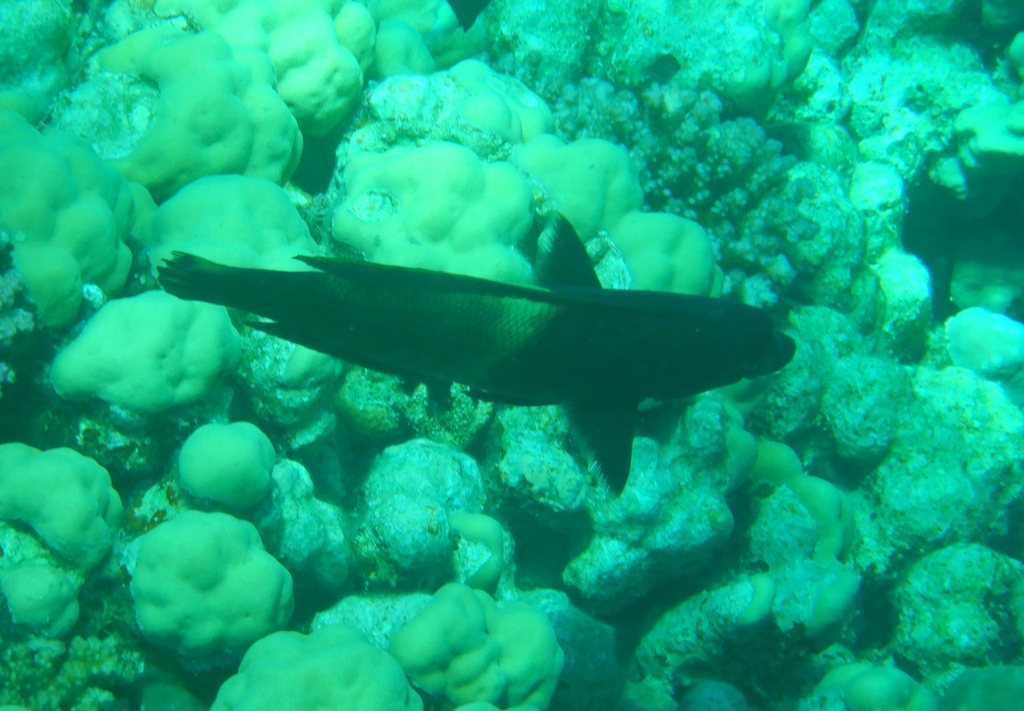 Clown wrasse
Coris aygula
Sources and credits
Names and taxonomy: WoRMS (CC BY 4.0) and the GBIF Backbone (CC BY 4.0). Photos: iNaturalist observers, each under the licence shown (CC0, CC BY or CC BY-SA).
- Depth, temperature, months and maps: records from OBIS and GBIF under CC0 or CC BY.
- Descriptions: Wikipedia, licensed CC BY-SA, each linked to its article.
- Conservation status as published by GBIF (IUCN Red List).
- 70 open-data records from 1990 to 2017.
Log what you see on your next dive
The free DiveHive diver app keeps your logbook with every sighting and shows what lives at the site you dive next.