
Streaky rockskipper
Istiblennius dussumieri
- Usual depth0–4 m
- Water temperature18–30 °C
- Best monthsApril, May, and September
- How commonOccasional
About this species
Istiblennius dussumieri, the streaky rockskipper, is a species of combtooth blenny found in coral reefs in the western Pacific and Indian Oceans. It is also commonly known as the Dussumier's rockskipper, streaky dussumier, or the Dussumier's blenny.
Text from the Wikipedia article “Istiblennius dussumieri”, licensed CC BY-SA 4.0. Read the article
Where and when
Where it has been recorded
Worldwide
Loading the map
Best months
Worldwide (open data)
- January: 13 records
- February: 8 records
- March: 9 records
- April: 29 records
- May: 42 records
- June: 26 records
- July: 21 records
- August: 18 records
- September: 37 records
- October: 22 records
- November: 20 records
- December: 24 records
Depth and water temperature
Depth
Mostly recorded at 0–4 m · Deepest record: 135 m
Water temperature
Recorded in surface water of 18–30 °C
Names and classification
- English
- Streaky rockskipper, Dussumier's blenny, Dussumier's Rockskipper, rippled rockskipper, streaky rockskipper, Twin-banded Blenny, Twinbanded Blenny
Names in 5 more languages
- Spanish
- Blenio de Dussumier
- French
- Cabot marare
- Japanese
- Kaeruuomodoki, カエルウオモドキ
- Thai
- ปลากระบี่ลาย
- Simplified Chinese
- 杜氏蛙鳚
Other scientific names: Halmabblennius dussumieri, Halmablennius dussumieri, Halmablennius striatomaculatus, Istiblennius dussumeri, Istiblennius striatomaculatus, Istiblennus zamboangae, Salarias auridens, Salarias barbatus, Salarias cheverti, Salarias cristiceps, Salarias doliatus, Salarias dussumieri, Salarias forsteri, Salarias geminatus, Salarias olivaceus, Salarias siamensis, Salarias striatomaculatus, Salarias zamboangae
Similar species
- Rippled rockskipper
Istiblennius edentulus
- Black-lined Blenny
Istiblennius lineatus
- Cole's Rockskipper
Istiblennius colei
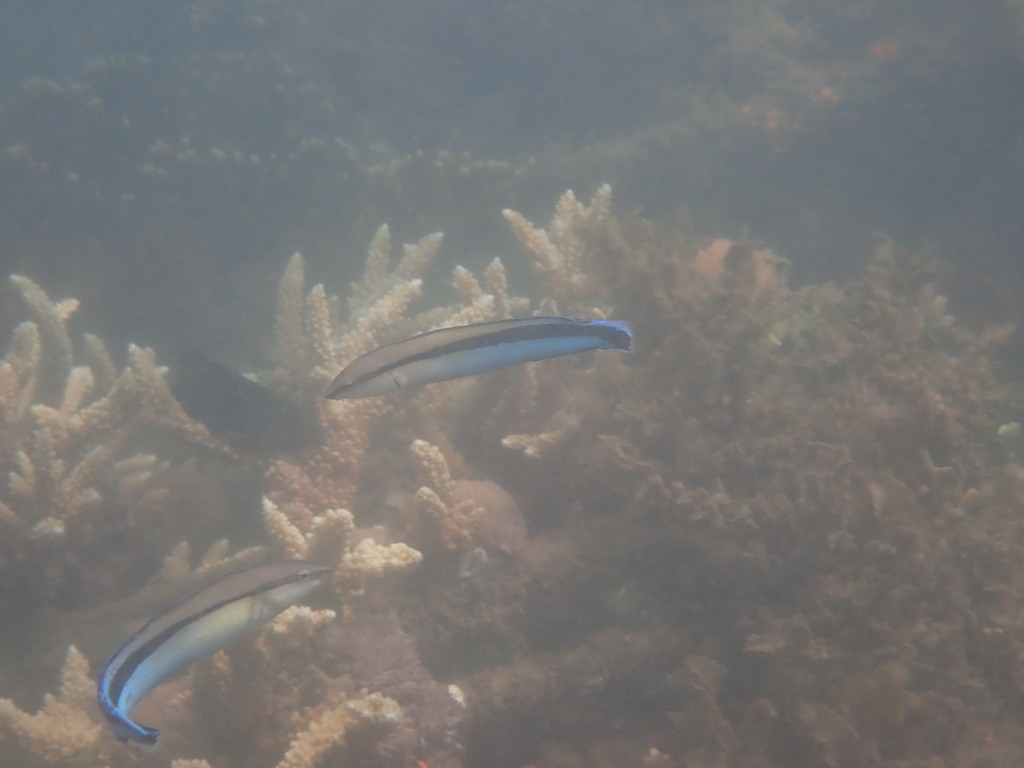 Mimic blenny
Aspidontus taeniatus
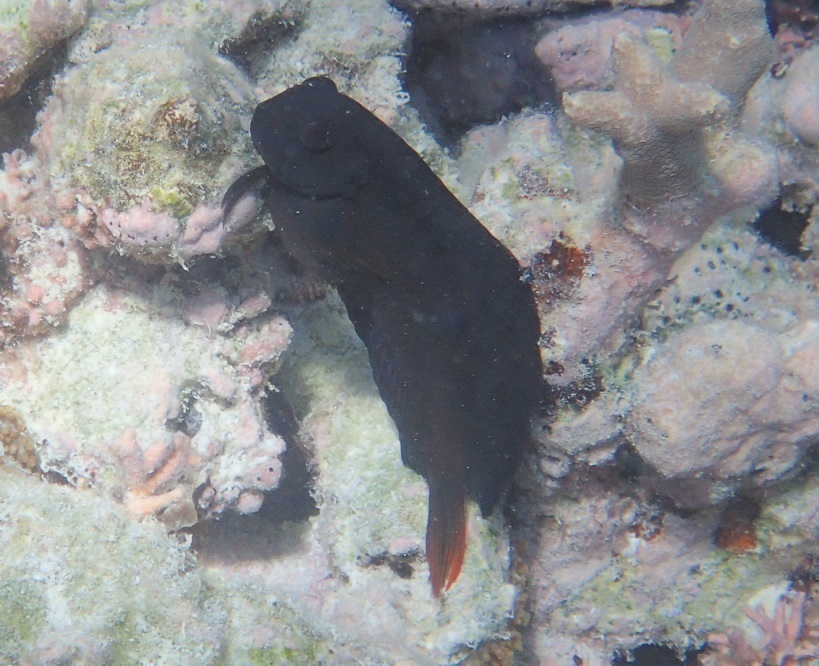 Black Blenny
Atrosalarias holomelas
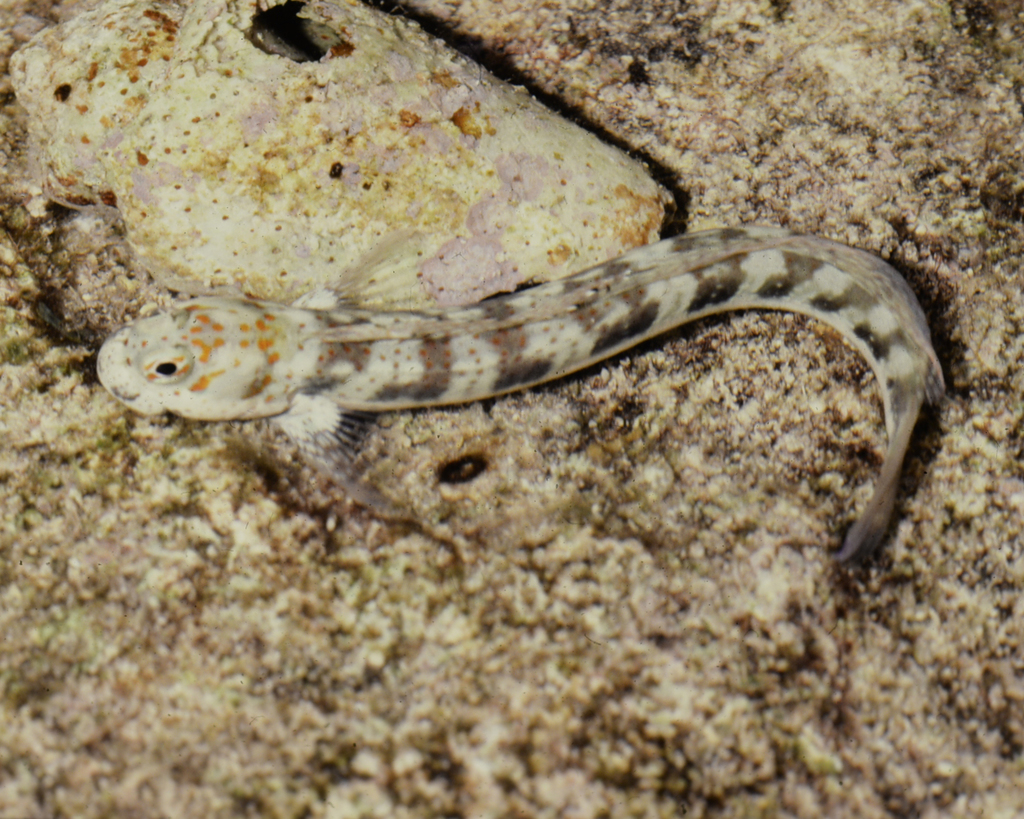 Bluespotted Blenny
Blenniella chrysospilos
Sources and credits
Names and taxonomy: WoRMS (CC BY 4.0) and the GBIF Backbone (CC BY 4.0). Photos: iNaturalist observers, each under the licence shown (CC0, CC BY or CC BY-SA).
- Depth, temperature, months and maps: records from OBIS and GBIF under CC0 or CC BY.
- Descriptions: Wikipedia, licensed CC BY-SA, each linked to its article.
- Conservation status as published by GBIF (IUCN Red List).
- 632 open-data records from 1836 to 2015.
Log what you see on your next dive
The free DiveHive diver app keeps your logbook with every sighting and shows what lives at the site you dive next.