
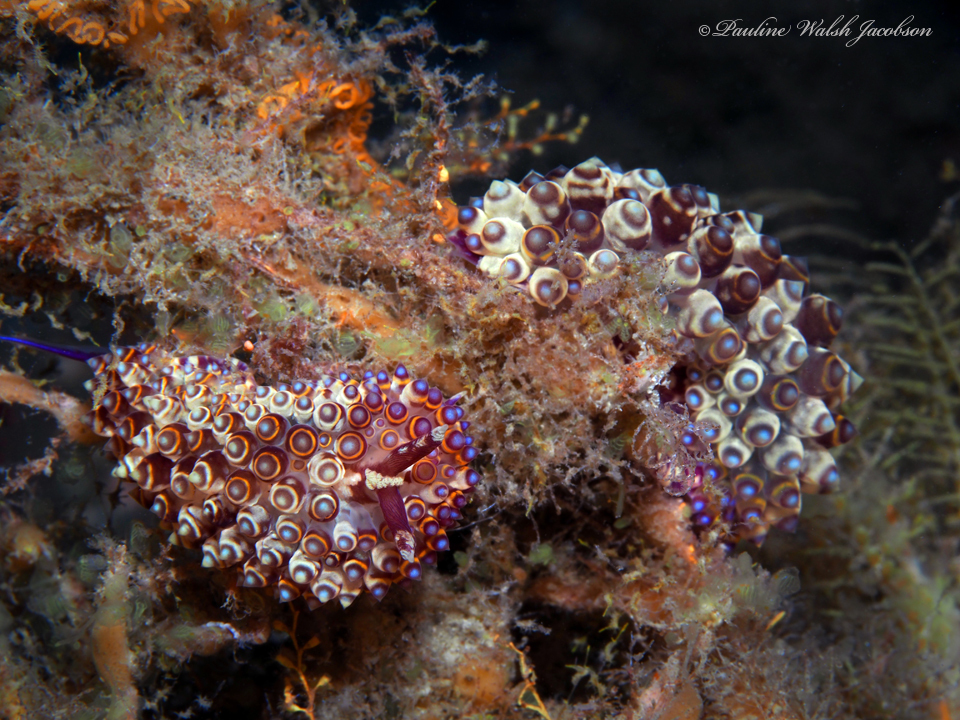
Janolus flavoanulatus
- Usual depth8–18 m
- Water temperature24–29 °C
- Best monthsJanuary, March, and May
- How commonRare
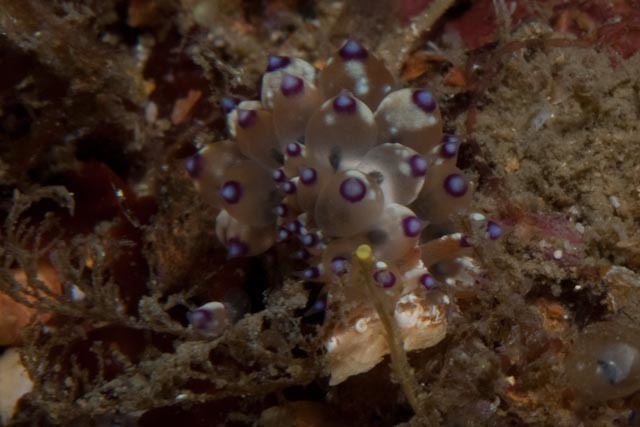
Photo credit: (c) Pauline Walsh Jacobson, some rights reserved (CC BY) · CC BY · iNaturalist
About this species
Janolus flavoanulatus is a sea slug species. The specific name is derived from Latin words flavus (“yellow”) and anulatus (“ringed”). These soft-bodied mollusks are known for their extraordinary colors and prominent forms. The first description of this species was reported by researcher Terry Gosliner, a leading researcher in the evolutionary history of nudibranchs. Upon his conducted research in the Philippines, Gosliner named Janolus flavoanulatus for its yellow ring around its cerata.
Text from the Wikipedia article “Janolus flavoanulatus”, licensed CC BY-SA 4.0. Read the article
Where and when
Where it has been recorded
Worldwide
Loading the map
Best months
Worldwide (open data)
- January: 36 records
- February: 22 records
- March: 31 records
- April: 26 records
- May: 31 records
- June: 19 records
- July: 21 records
- August: 22 records
- September: 12 records
- October: 17 records
- November: 21 records
- December: 17 records
Depth and water temperature
Depth
Mostly recorded at 8–18 m · Deepest record: 26 m
Water temperature
Recorded in surface water of 24–29 °C
Photos
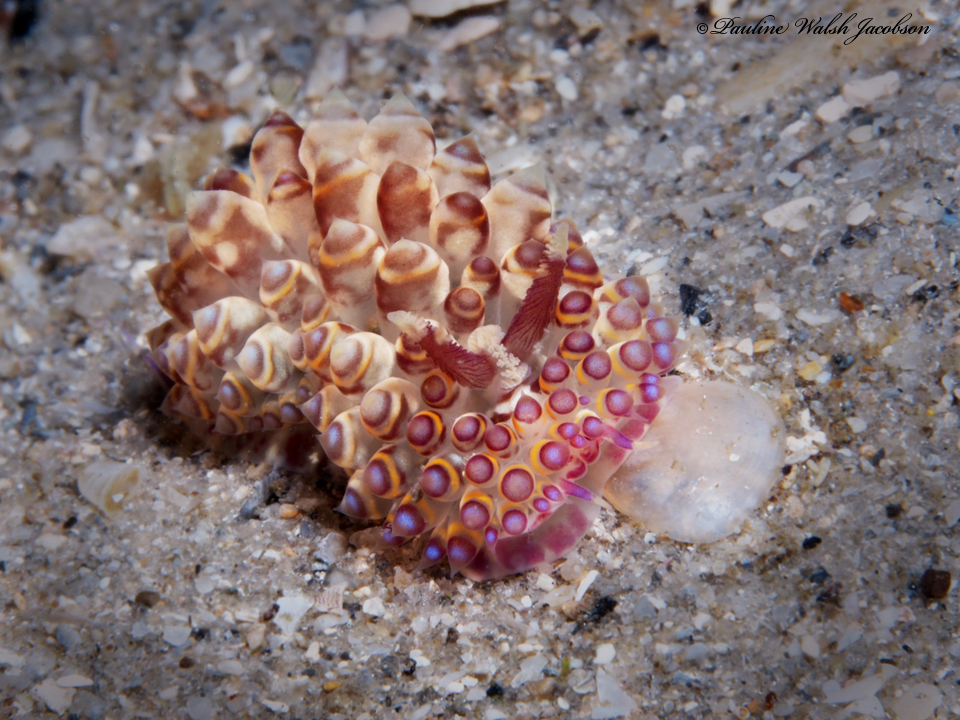
(c) Pauline Walsh Jacobson, some rights reserved (CC BY) · CC BY · iNaturalist 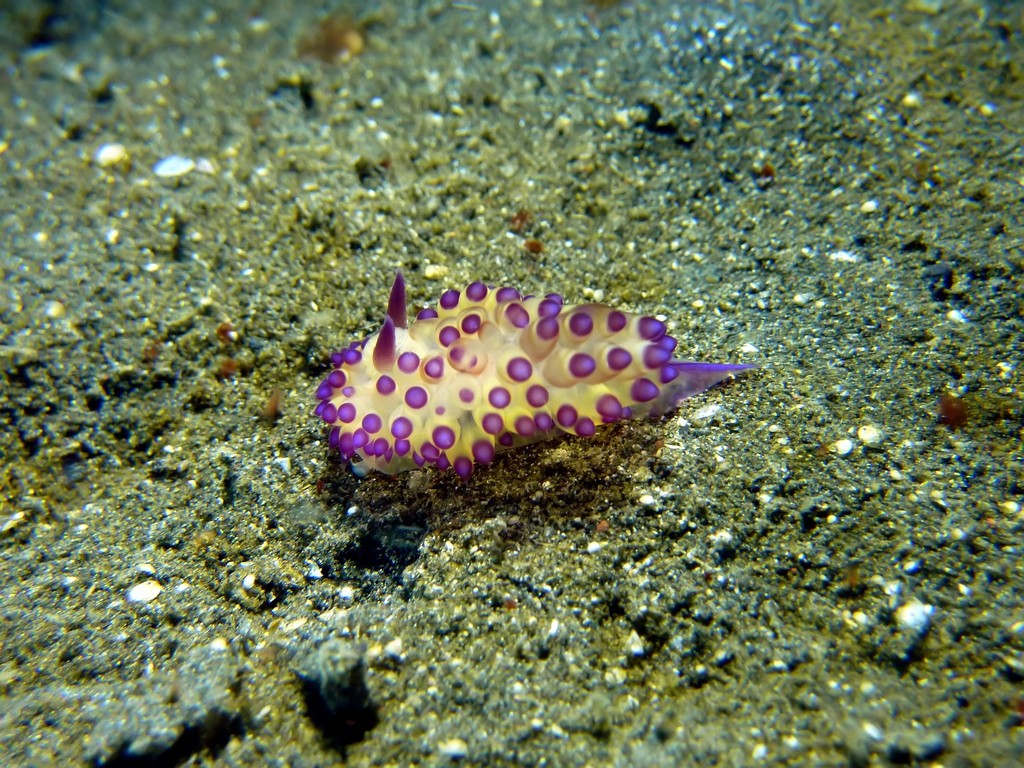
(c) Kai Squires, some rights reserved (CC BY) · CC BY · iNaturalist 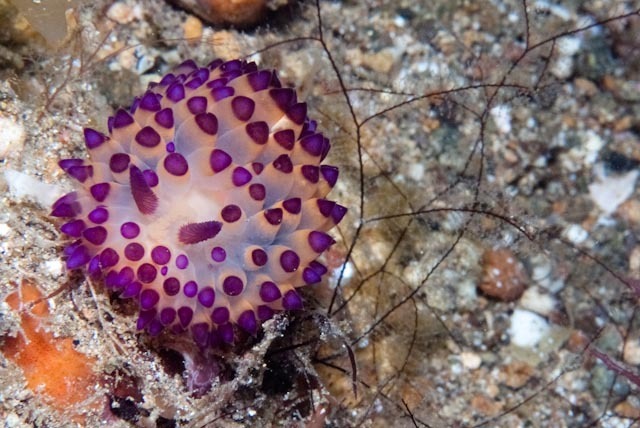
(c) Georgina Jones, some rights reserved (CC BY-SA) · CC BY-SA · iNaturalist 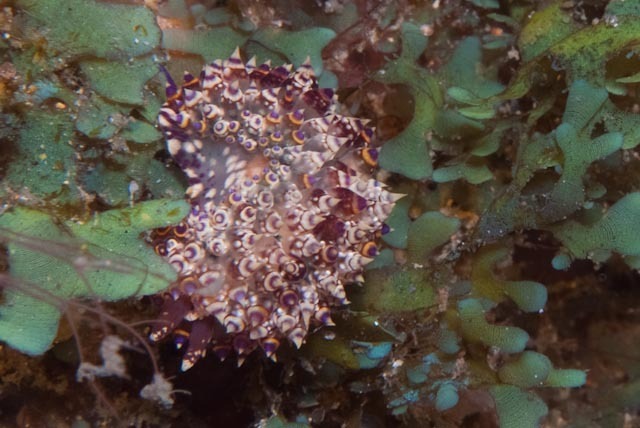
(c) Georgina Jones, some rights reserved (CC BY-SA) · CC BY-SA · iNaturalist 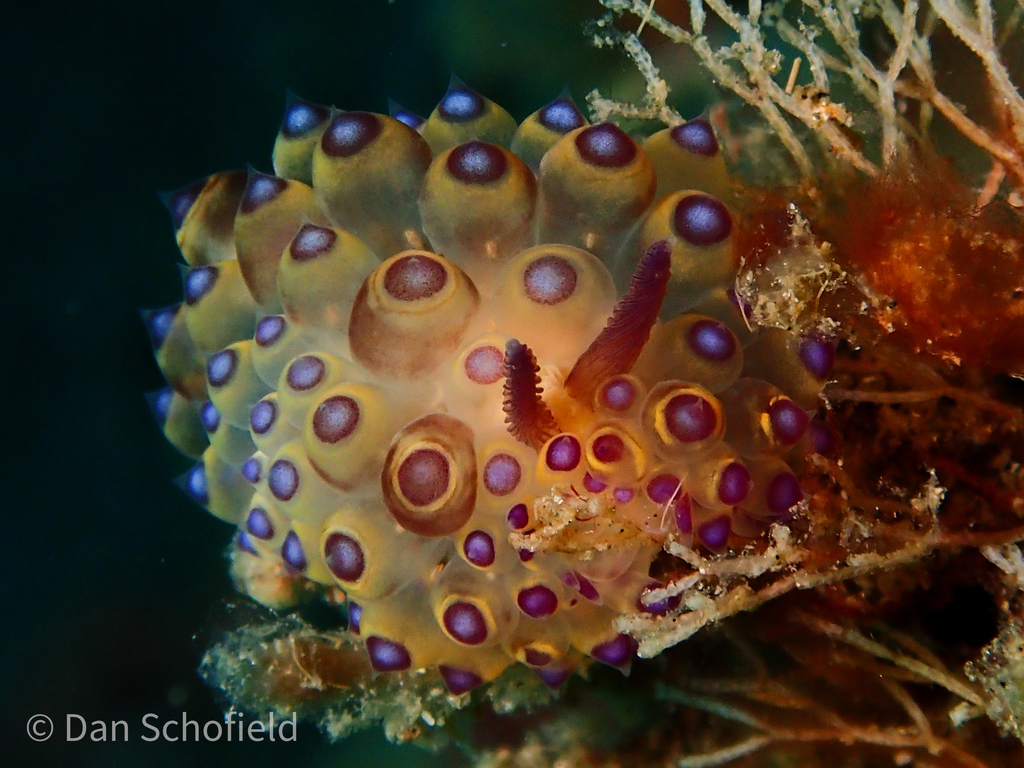
(c) Dan Schofield, some rights reserved (CC BY) · CC BY · iNaturalist 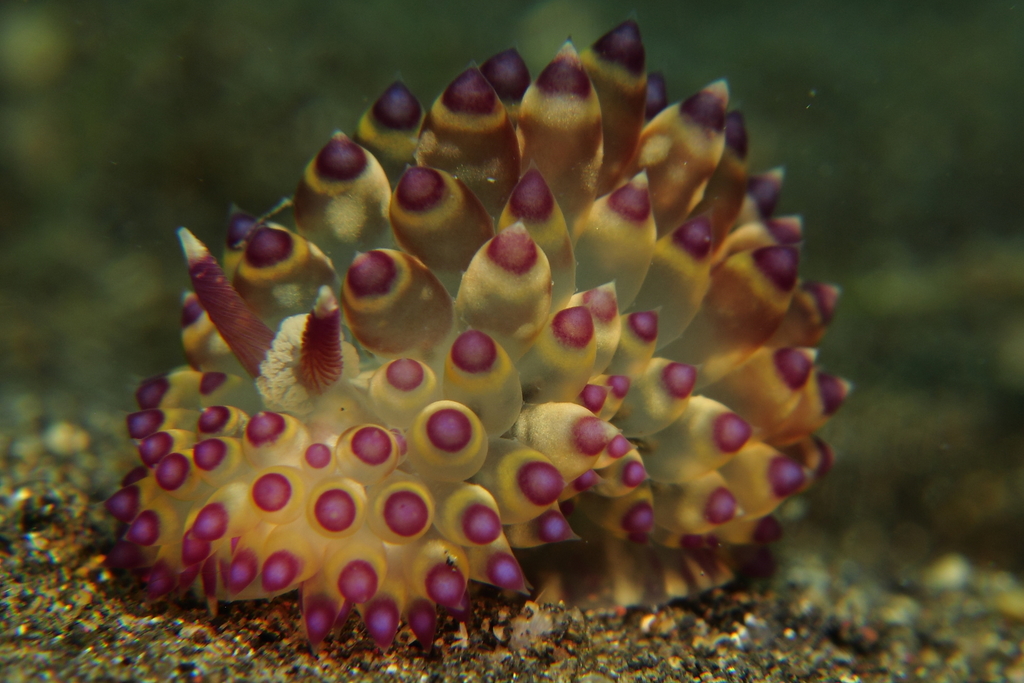
(c) Bart, some rights reserved (CC BY) · CC BY · iNaturalist
Names and classification
Names in 2 more languages
- French
- Janolus annelé d'or
- Japanese
- サーシャコヤナギウミウシ
Similar species
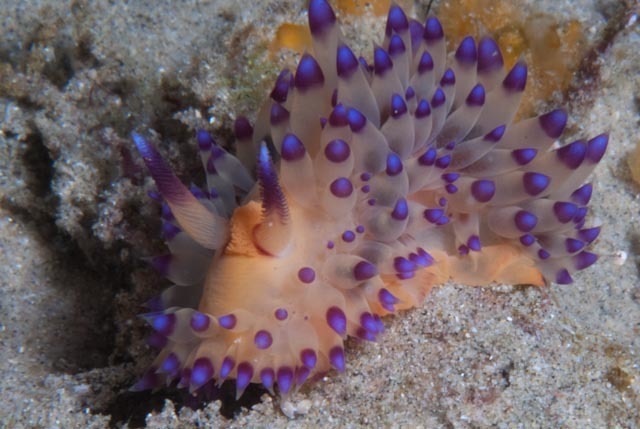 Harlequin Flame
Janolus savinkini
Sources and credits
Names and taxonomy: WoRMS (CC BY 4.0) and the GBIF Backbone (CC BY 4.0). Photos: iNaturalist observers, each under the licence shown (CC0, CC BY or CC BY-SA).
- Depth, temperature, months and maps: records from OBIS and GBIF under CC0 or CC BY.
- Descriptions: Wikipedia, licensed CC BY-SA, each linked to its article.
- Conservation status as published by GBIF (IUCN Red List).
- 41 open-data records from 2006 to 2026.
- Species data updated October 26, 2026.
Log what you see on your next dive
The free DiveHive diver app keeps your logbook with every sighting and shows what lives at the site you dive next.