
Dog conch
Laevistrombus canarium
- Usual depth1–456 m
- Water temperature15–30 °C
- Best monthsMarch, May, and July
- How commonRare
About this species
Laevistrombus canarium is a species of edible sea snail, a marine gastropod mollusc in the family Strombidae. Known from illustrations in books dating from the late 17th century, L. canarium is an Indo-Pacific species occurring from India and Sri Lanka to Melanesia, Australia and southern Japan. The shell of adult individuals is coloured from light yellowish-brown to golden to grey. It has a characteristic inflated body whorl, a flared, thick outer lip, and a shallow stromboid notch. The shell is valued as an ornament, and because it is heavy and compact, it is also often used as a sinker for fishing nets.
Text from the Wikipedia article “Laevistrombus canarium”, licensed CC BY-SA 4.0. Read the article
Where and when
Where it has been recorded
Worldwide
Loading the map
Best months
Worldwide (open data)
- January: 4 records
- February: 9 records
- March: 11 records
- April: 9 records
- May: 12 records
- June: 9 records
- July: 17 records
- August: 8 records
- September: 5 records
- October: 4 records
- November: 9 records
- December: 7 records
Depth and water temperature
Depth
Mostly recorded at 1–456 m · Deepest record: 455.5 m
Water temperature
Recorded in surface water of 15–30 °C
Names and classification
- English
- Dog conch, Yellow conch, dog conch, yellow conch
Names in 2 more languages
- German
- Hunds-Fechterschnecke, Hunds-Flügelschnecke
- Japanese
- サザナミスイショウガイ
Other scientific names: Laevistrombus (Laevistrombus) canarium, Strombus (Laevistrombus) canarium, Strombus canarium
Similar species
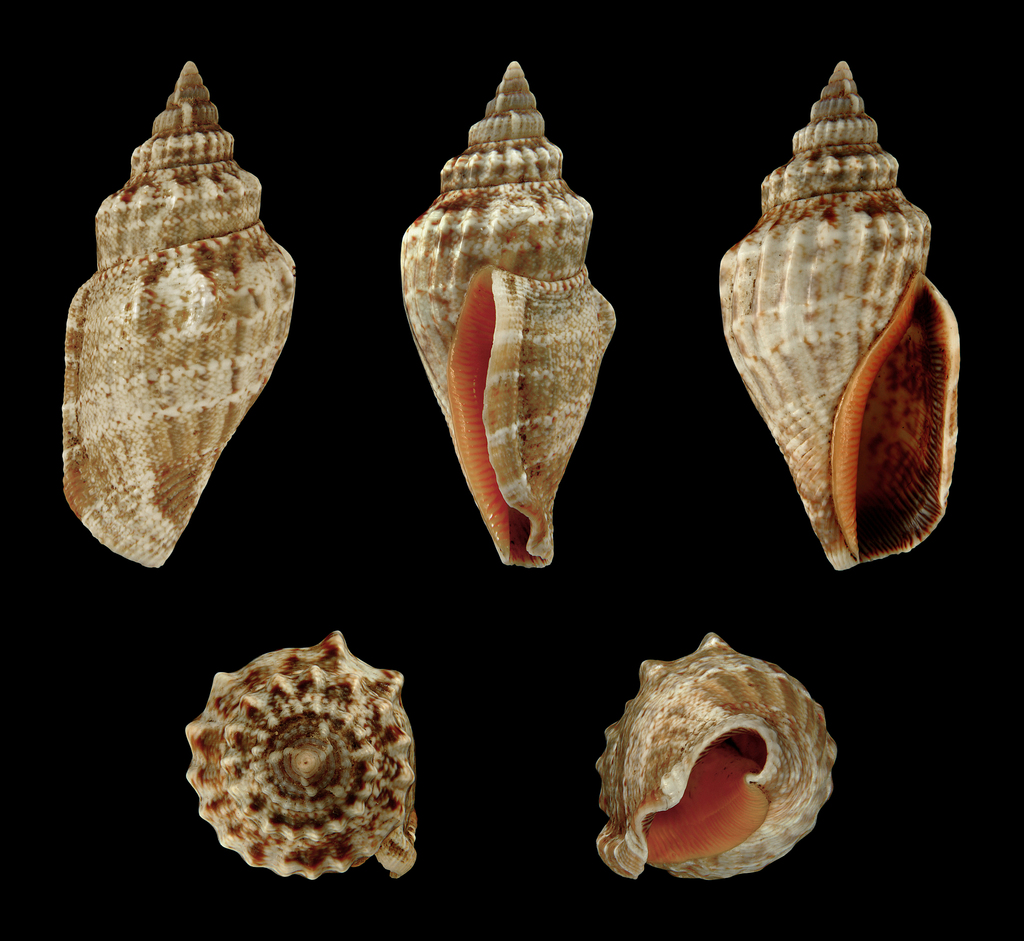 Labiate Stromb
Canarium labiatum
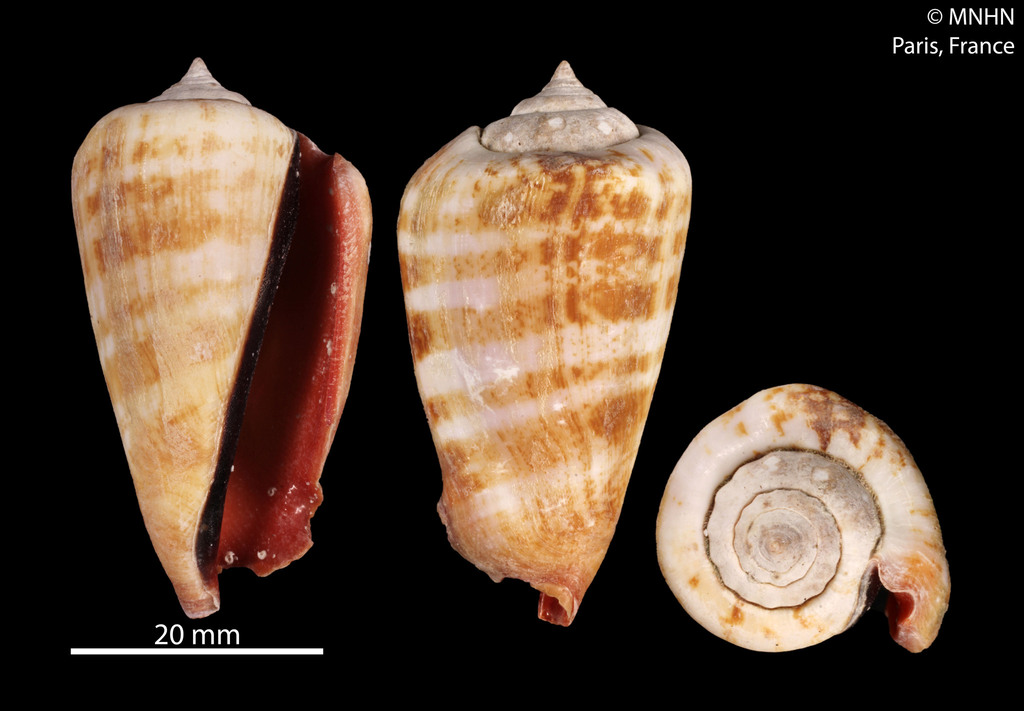 Red Mouthed Stromb
Conomurex luhuanus
- Gibbose Stromb
Gibberulus gibberulus
- Chiragra spider conch
Harpago chiragra
- Common spider conch
Lambis lambis
Sources and credits
Names and taxonomy: WoRMS (CC BY 4.0) and the GBIF Backbone (CC BY 4.0). Photos: iNaturalist observers, each under the licence shown (CC0, CC BY or CC BY-SA).
- Depth, temperature, months and maps: records from OBIS and GBIF under CC0 or CC BY.
- Descriptions: Wikipedia, licensed CC BY-SA, each linked to its article.
- Conservation status as published by GBIF (IUCN Red List).
- 313 open-data records from 1758 to 2011.
Log what you see on your next dive
The free DiveHive diver app keeps your logbook with every sighting and shows what lives at the site you dive next.