
DiscoverSpeciesOther invertebrates
Nepanthia belcheri
- Usual depth0–200 m
- Water temperature20–29 °C
- Best monthsFebruary, August, and October
- How commonRare
About this species
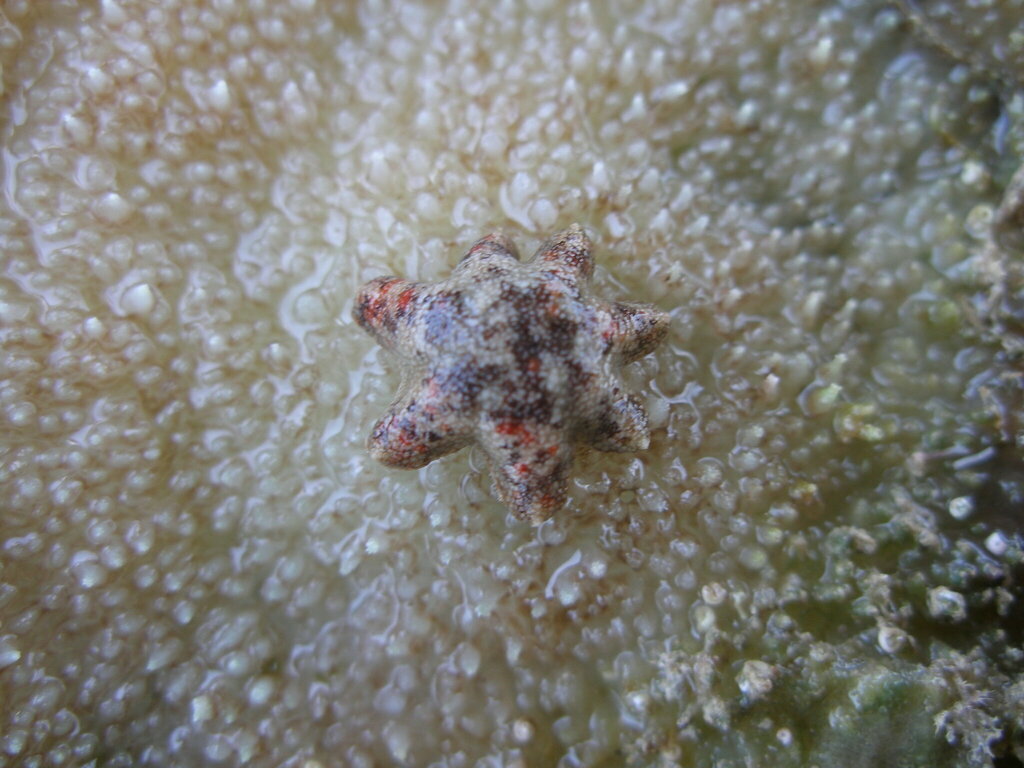
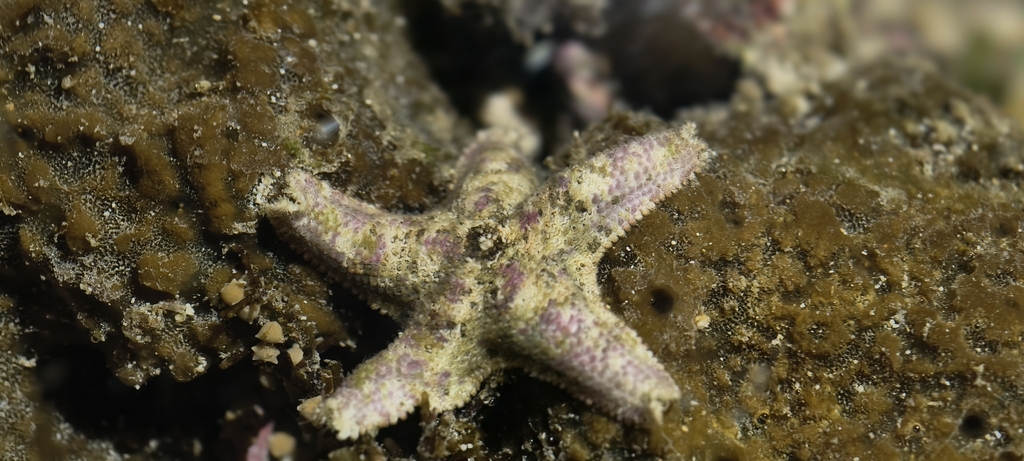
Nepanthia belcheri is a species of starfish in the family Asterinidae. It is found in shallow water in Southeast Asia and northeastern Australia. It is an unusual species in that it can reproduce sexually or can split in two by fission to form two new individuals. As a result, it has varying numbers of arms, and Hubert Lyman Clark, writing in 1938, stated, "It is a literal truth that no two of the 56 specimens at hand, nearly all from Lord Howe Island, are exactly alike in number, size and form of arms".
Text from the Wikipedia article “Nepanthia belcheri”, licensed CC BY-SA 4.0. Read the article
Where and when
Where it has been recorded
Worldwide
Loading the map
Best months
Worldwide (open data)
- January: 6 records
- February: 9 records
- March: 3 records
- April: 4 records
- May: 7 records
- June: 6 records
- July: 4 records
- August: 8 records
- September: 2 records
- October: 9 records
- November: 1 records
- December: 6 records
Depth and water temperature
Depth
Mostly recorded at 0–200 m · Deepest record: 225 m
Water temperature
Recorded in surface water of 20–29 °C
Names and classification
Names in 2 more languages
- Japanese
- コサメハダヒトデ
- Simplified Chinese
- 刺腕蠍海燕
Other scientific names: Asterina (Nepanthia) belcheri, Asterina (Nepanthia) brevis, Asterina brevis, Echinaster heteractis, Henricia heteractis, Henricides heteractis, Nepanthia brevis, Nepanthia joubini, Nepanthia magnispina, Nepanthia polyplax, Nepanthia suffarcinata, Nepanthia variabilis
Similar species
Sources and credits
Names and taxonomy: WoRMS (CC BY 4.0) and the GBIF Backbone (CC BY 4.0). Photos: iNaturalist observers, each under the licence shown (CC0, CC BY or CC BY-SA).
- Depth, temperature, months and maps: records from OBIS and GBIF under CC0 or CC BY.
- Descriptions: Wikipedia, licensed CC BY-SA, each linked to its article.
- Conservation status as published by GBIF (IUCN Red List).
- 249 open-data records from 1885 to 2023.
Log what you see on your next dive
The free DiveHive diver app keeps your logbook with every sighting and shows what lives at the site you dive next.