
Blackfin Sandperch
Parapercis snyderi
- Usual depth2–43 m
- Water temperature21–29 °C
- Best monthsApril, November, and December
- How commonRare
About this species
Parapercis snyderi, commonly known as Snyder's grubfish or U-mark sandperch, is a marine ray-finned fish native to the waters off northern Australia and Indonesia. The specific name honours the ichthyologist John Otterbein Snyder who collected the type specimen with David Starr Jordan, one of the co-describers of the species, at Nagasaki.
Text from the Wikipedia article “Parapercis snyderi”, licensed CC BY-SA 4.0. Read the article
Where and when
Where it has been recorded
Worldwide
Loading the map
Best months
Worldwide (open data)
- January: 4 records
- February: 4 records
- March: 2 records
- April: 10 records
- May: 3 records
- June: 3 records
- July: 6 records
- August: 6 records
- September: 9 records
- October: 7 records
- November: 10 records
- December: 10 records
Depth and water temperature
Depth
Mostly recorded at 2–43 m · Deepest record: 62 m
Water temperature
Recorded in surface water of 21–29 °C
Names and classification
- English
- Blackfin Sandperch, Grub fish, Snyder's Grubfish, Snyder's Sandperch, U-mark sandperch
Names in 3 more languages
- French
- Perche de sable de Snyder
- Japanese
- Koraitoragisu, コウライトラギス
- Simplified Chinese
- 史氏擬鱸, 沙鱸, 海狗甘仔, 狗, 舉目魚, 花狗母海, 雨傘閂
Similar species
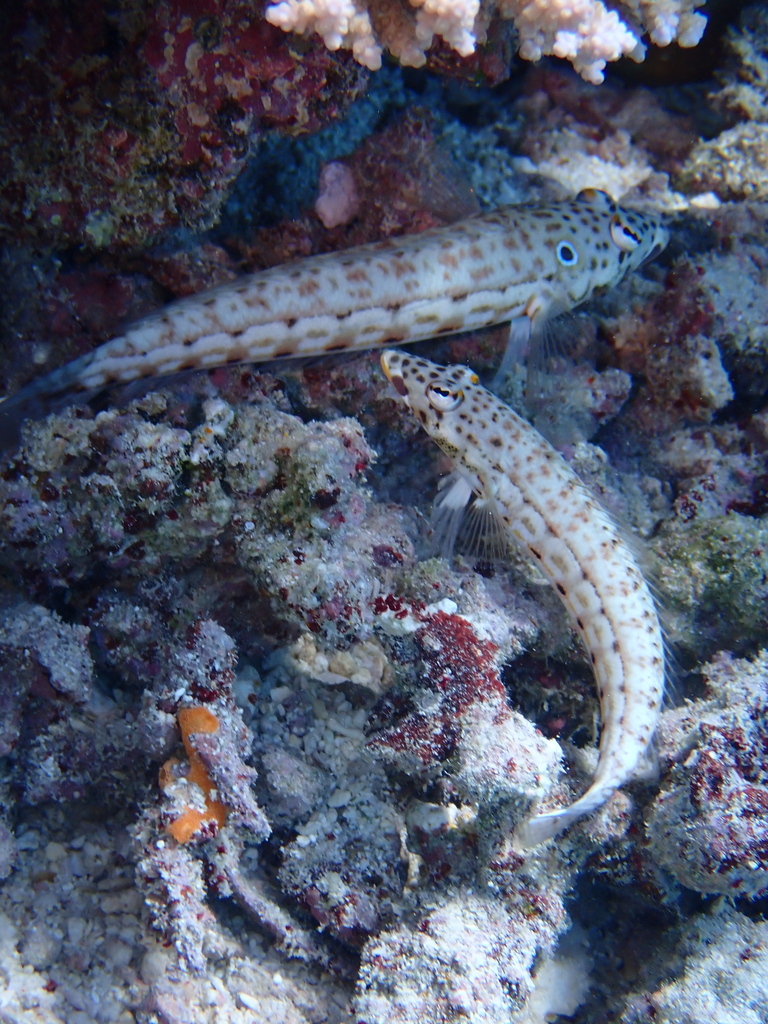 False-eyed Grubfish
Parapercis clathrata
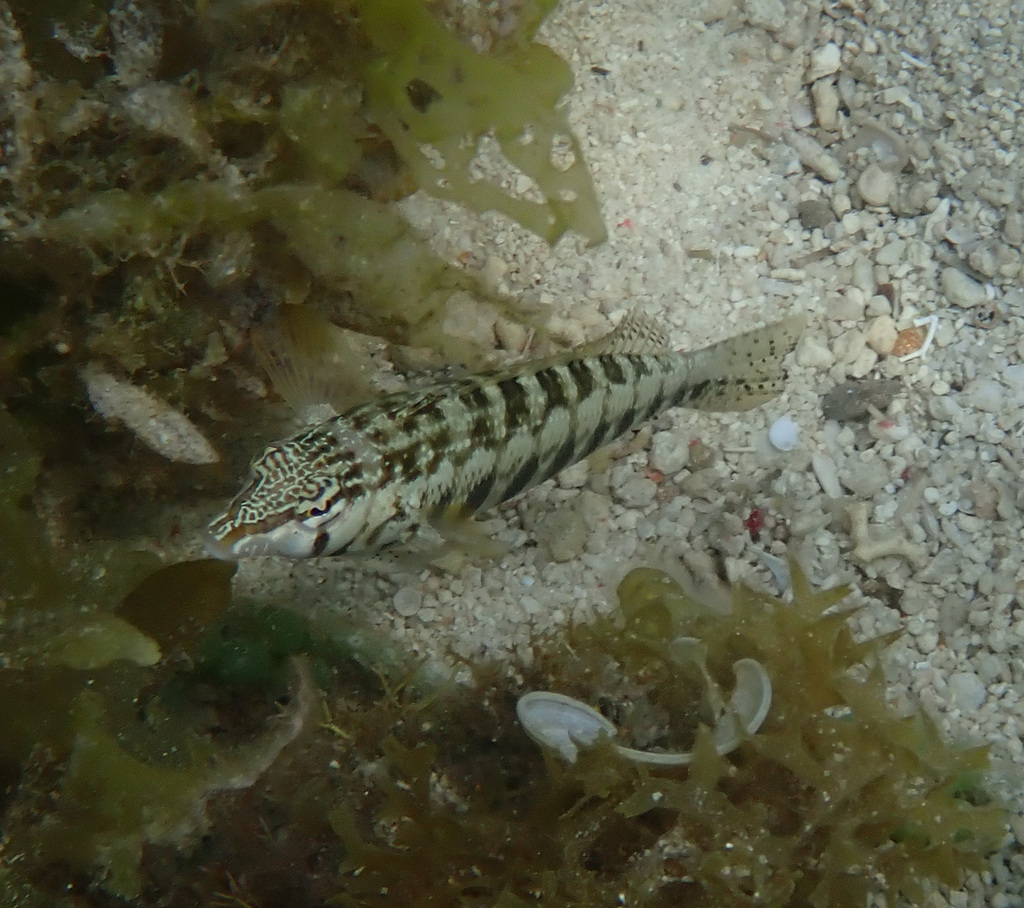 Cylindrical sandperch
Parapercis cylindrica
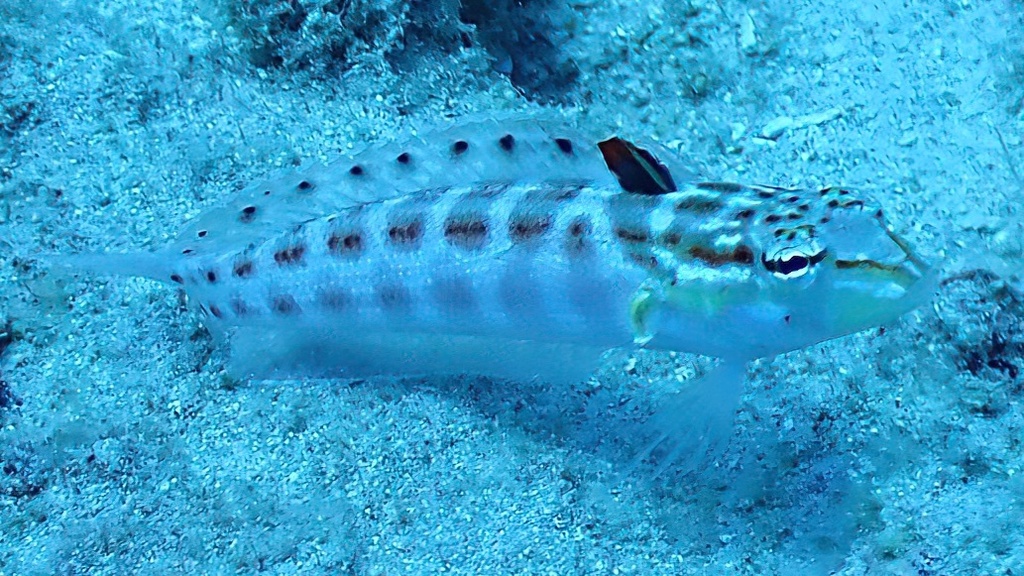 Flagfin Weever
Parapercis schauinslandii
 Java Sandperch
Parapercis xanthozona
- Spotted sandmelt
Parapercis hexophtalma
- Blackdotted sand perch
Parapercis millepunctata
Sources and credits
Names and taxonomy: WoRMS (CC BY 4.0) and the GBIF Backbone (CC BY 4.0). Photos: iNaturalist observers, each under the licence shown (CC0, CC BY or CC BY-SA).
- Depth, temperature, months and maps: records from OBIS and GBIF under CC0 or CC BY.
- Descriptions: Wikipedia, licensed CC BY-SA, each linked to its article.
- Conservation status as published by GBIF (IUCN Red List).
- 219 open-data records from 1900 to 2017.
Log what you see on your next dive
The free DiveHive diver app keeps your logbook with every sighting and shows what lives at the site you dive next.