
Blind Goby
Paratrypauchen microcephalus
- Usual depth4–62 m
- Water temperature18–30 °C
- Best monthsMarch, May, and October
- How commonRare
About this species
The comb goby is a species of goby native to marine and brackish waters of the Indian Ocean and the western Pacific Ocean. This species occurs mostly on muddy substrates near mangrove forests. This species grows to a length of 18 centimetres (7.1 in) TL. This species is of minor importance to local commercial fisheries and can also be found in the aquarium trade. This species is the only known member of its genus. Paratrypauchen microcephalus has been recorded from areas which have soft, muddy bottoms, in estuaries and around the mouths of rivers near mangroves where they inhabit deep burrows in the mud. It is not known if they excavate the burrows themselves. This species feeds on benthic invertebrates such as crustaceans.
Text from the Wikipedia article “Comb goby”, licensed CC BY-SA 4.0. Read the article
Where and when
Where it has been recorded
Worldwide
Loading the map
Best months
Worldwide (open data)
- January: 5 records
- February: 1 records
- March: 7 records
- April: 0 records
- May: 6 records
- June: 1 records
- July: 5 records
- August: 6 records
- September: 4 records
- October: 8 records
- November: 3 records
- December: 5 records
Depth and water temperature
Depth
Mostly recorded at 4–62 m · Deepest record: 67.5 m
Water temperature
Recorded in surface water of 18–30 °C
Names and classification
- English
- Blind Goby, Comb goby, Red Eel Goby
Names in 3 more languages
- Japanese
- Akauo, アカウオ
- Korean
- 빨갱이
- Simplified Chinese
- 小頭副孔鰕虎, 小頭副孔鰕虎魚, 櫛赤鯊
Other scientific names: Ctenotrypauchen barnardi, Ctenotrypauchen microcephalus, Taeniodes microcephalus, Trypauchen microcephalus, Trypauchen raha
Similar species
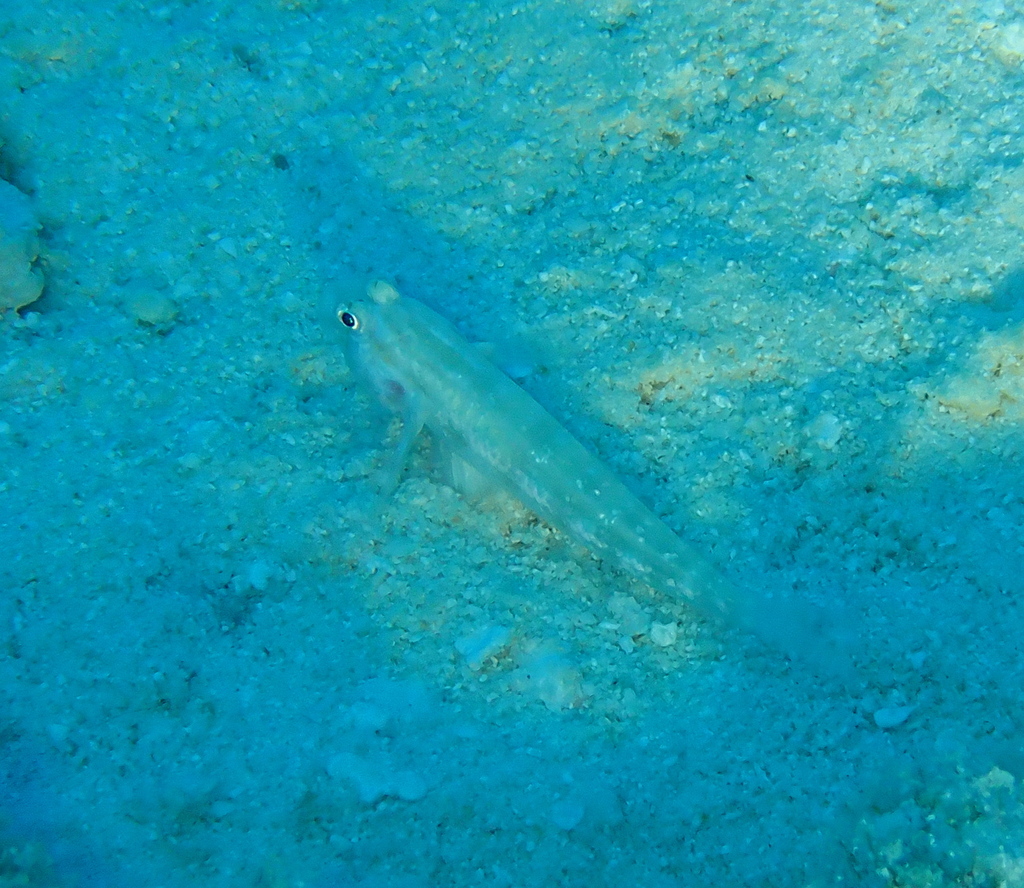 Eyebar goby
Gnatholepis cauerensis
- Anjer Eye-bar Goby
Gnatholepis anjerensis
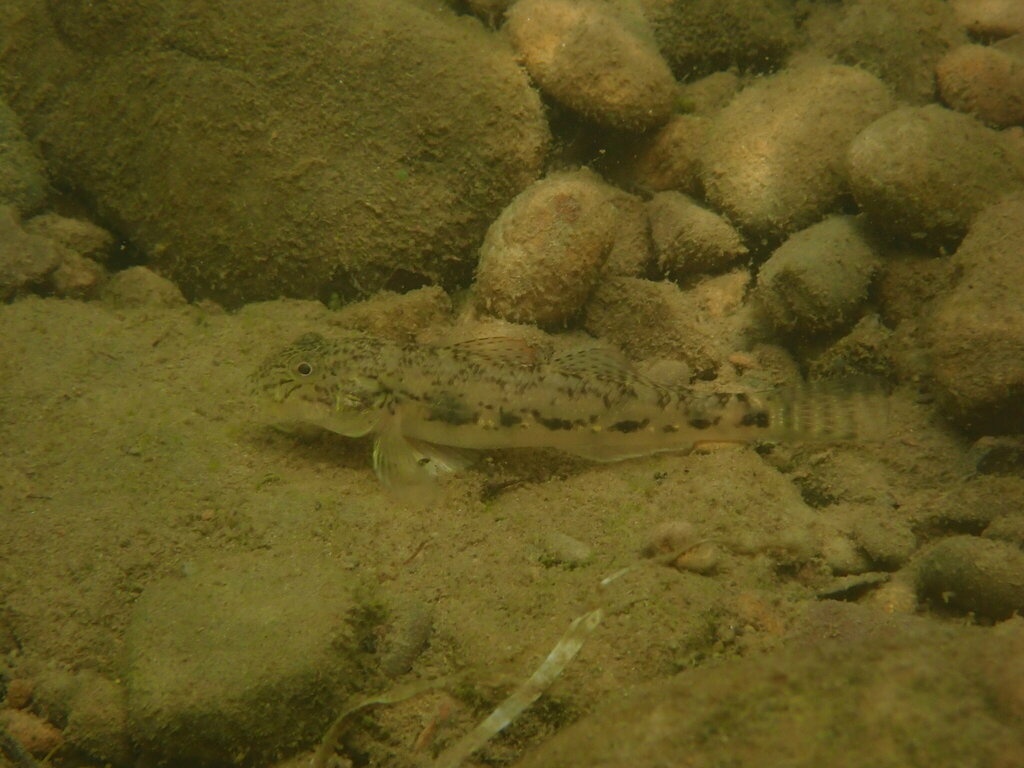 Largesnout Goby
Awaous melanocephalus
- Armour Eelgoby
Amblyotrypauchen arctocephalus
- Stripe-face Calamiana
Eugnathogobius mindora
Sources and credits
Names and taxonomy: WoRMS (CC BY 4.0) and the GBIF Backbone (CC BY 4.0). Photos: iNaturalist observers, each under the licence shown (CC0, CC BY or CC BY-SA).
- Depth, temperature, months and maps: records from OBIS and GBIF under CC0 or CC BY.
- Descriptions: Wikipedia, licensed CC BY-SA, each linked to its article.
- Conservation status as published by GBIF (IUCN Red List).
- 206 open-data records from 1860 to 2014.
Log what you see on your next dive
The free DiveHive diver app keeps your logbook with every sighting and shows what lives at the site you dive next.