
Dark Damsel
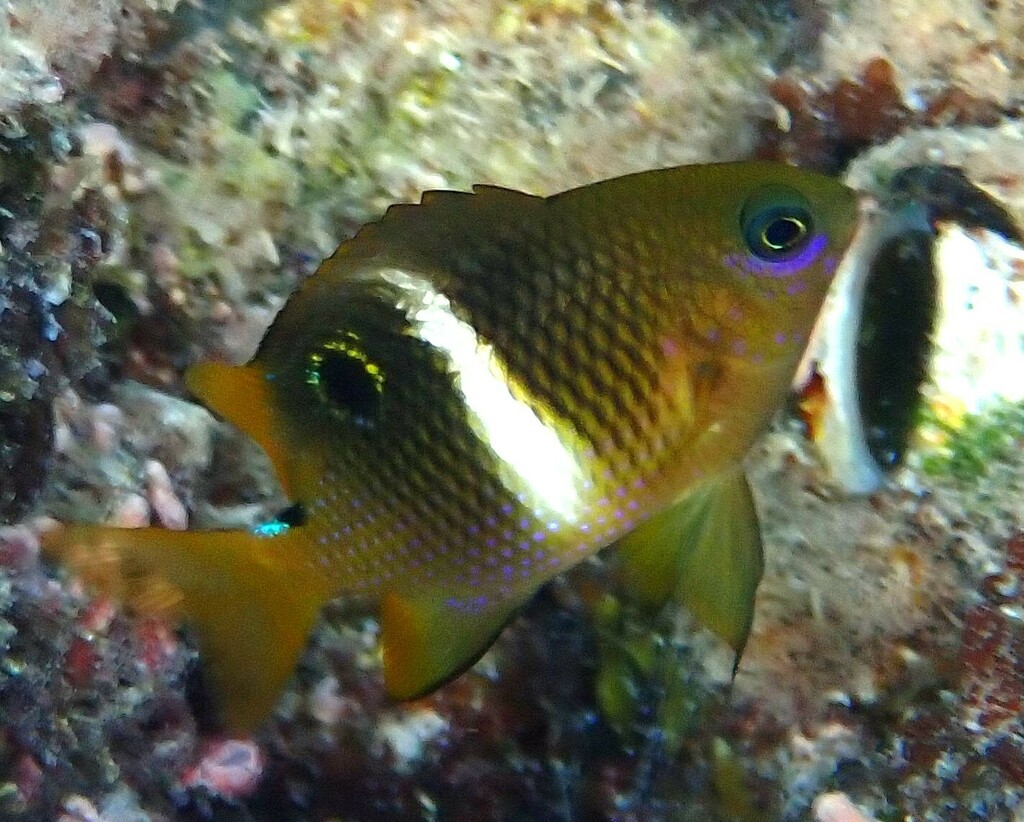
Plectroglyphidodon fasciolatus
- Usual depth4–15 m
- Water temperature21–30 °C
- Best monthsMarch, April, and May
- How commonCommon
About this species
Plectroglyphidodon fasciolatus, commonly called the Pacific gregory, is a species of damselfish in the family Pomacentridae. It is native to the tropical western Indo-Pacific. It feeds on filamentous algae.
Text from the Wikipedia article “Plectroglyphidodon fasciolatus”, licensed CC BY-SA 4.0. Read the article
Where and when
Where it has been recorded
Worldwide
Loading the map
Best months
Worldwide (open data)
- January: 52 records
- February: 705 records
- March: 1,254 records
- April: 2,064 records
- May: 1,391 records
- June: 788 records
- July: 325 records
- August: 286 records
- September: 788 records
- October: 366 records
- November: 74 records
- December: 33 records
Depth and water temperature
Depth
Mostly recorded at 4–15 m · Deepest record: 41.3 m
Water temperature
Recorded in surface water of 21–30 °C
Names and classification
- English
- Dark Damsel, Indian Gregory, Pacific gregory, Yellow-eye Damsel
Names in 4 more languages
- Spanish
- Coronel del Pacífico
- French
- Grégoire du Pacifique
- Japanese
- Fuchidorisuzumedai, フチドリスズメダイ
- Simplified Chinese
- 胸斑眶锯雀鲷, 藍紋高身雀鯛
Other scientific names: Eupomacentrus fasciolatus, Eupomacentrus paschalis, Pomacentrus atrilabiatus, Pomacentrus craticulus, Pomacentrus fasciolatus, Pomacentrus inornatus, Pomacentrus jenkinsi, Pomacentrus niomatus, Pomacentrus vanderbilti, Pseudopomacentrus navalis, Stegastes faciolatus, Stegastes fasciatus, Stegastes fasciolatus
Similar species
- Blackbar devil
Plectroglyphidodon dickii
- Johnston Island damsel
Plectroglyphidodon johnstonianus
 Singlebar devil
Plectroglyphidodon leucozona
- Brighteye damselfish
Plectroglyphidodon imparipennis
- Western Gregory
Plectroglyphidodon obreptus
- Phoenix devil
Plectroglyphidodon phoenixensis
Sources and credits
Names and taxonomy: WoRMS (CC BY 4.0) and the GBIF Backbone (CC BY 4.0). Photos: iNaturalist observers, each under the licence shown (CC0, CC BY or CC BY-SA).
- Depth, temperature, months and maps: records from OBIS and GBIF under CC0 or CC BY.
- Descriptions: Wikipedia, licensed CC BY-SA, each linked to its article.
- Conservation status as published by GBIF (IUCN Red List).
- 8,253 open-data records from 1889 to 2023.
Log what you see on your next dive
The free DiveHive diver app keeps your logbook with every sighting and shows what lives at the site you dive next.