
Whitetail damsel
Pomacentrus chrysurus
- Usual depth1–8 m
- Water temperature22–30 °C
- Best monthsFebruary, March, and April
- How commonOccasional
About this species
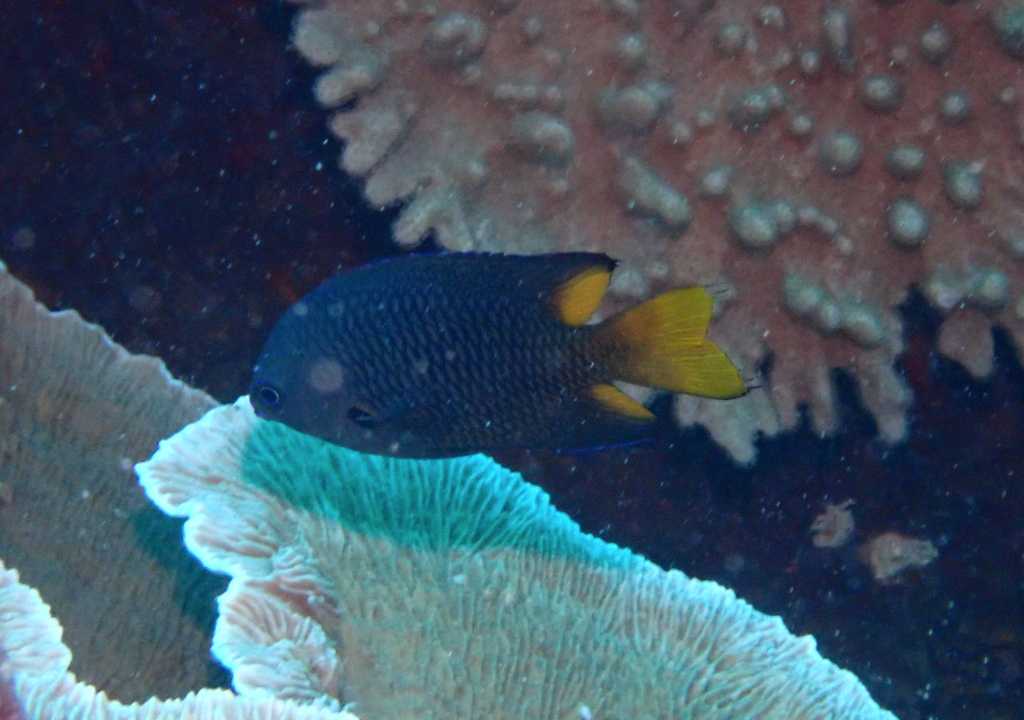
Pomacentrus chrysurus, the whitetail damselfish, is a species of damselfish in the family Pomacentridae. It is found in the Indo-Pacific. It can grow up to 9 centimetres (3.5 in). They are found at a depth range from 0 to 3 metres.
Text from the Wikipedia article “Pomacentrus chrysurus”, licensed CC BY-SA 4.0. Read the article
Where and when
Where it has been recorded
Worldwide
Loading the map
Best months
Worldwide (open data)
- January: 10 records
- February: 32 records
- March: 41 records
- April: 33 records
- May: 20 records
- June: 21 records
- July: 13 records
- August: 5 records
- September: 20 records
- October: 11 records
- November: 19 records
- December: 7 records
Depth and water temperature
Depth
Mostly recorded at 1–8 m · Deepest record: 22 m
Water temperature
Recorded in surface water of 22–30 °C
Names and classification
- English
- Whitetail damsel, whitetail damsel, White-tail damsel, Whitetail damselfish, White-tailed Damsel, Whitetailed Damsel, White-tailed Damselfish, White-tip Damsel, Yellow-tailed Damsel-fish
Names in 5 more languages
- Spanish
- Damita de cola blanca
- French
- Demoiselle à queue blanche
- Japanese
- Ojiro-suzumedai, Ojirosuzumedai, オジロスズメダイ
- Thai
- ปลาสลิดหินหางขาว
- Simplified Chinese
- 厚殼仔, 玫瑰雀鯛, 金尾雀鯛, 黃尾雀鯛
Other scientific names: Glyphidodon luteocaudatus, Pomacentrus flavicauda, Pomacentrus hogoleuensis, Pomacentrus luteocaudatus, Pomacentrus rhodonotatus, Pomacentrus rhodonotus
Similar species
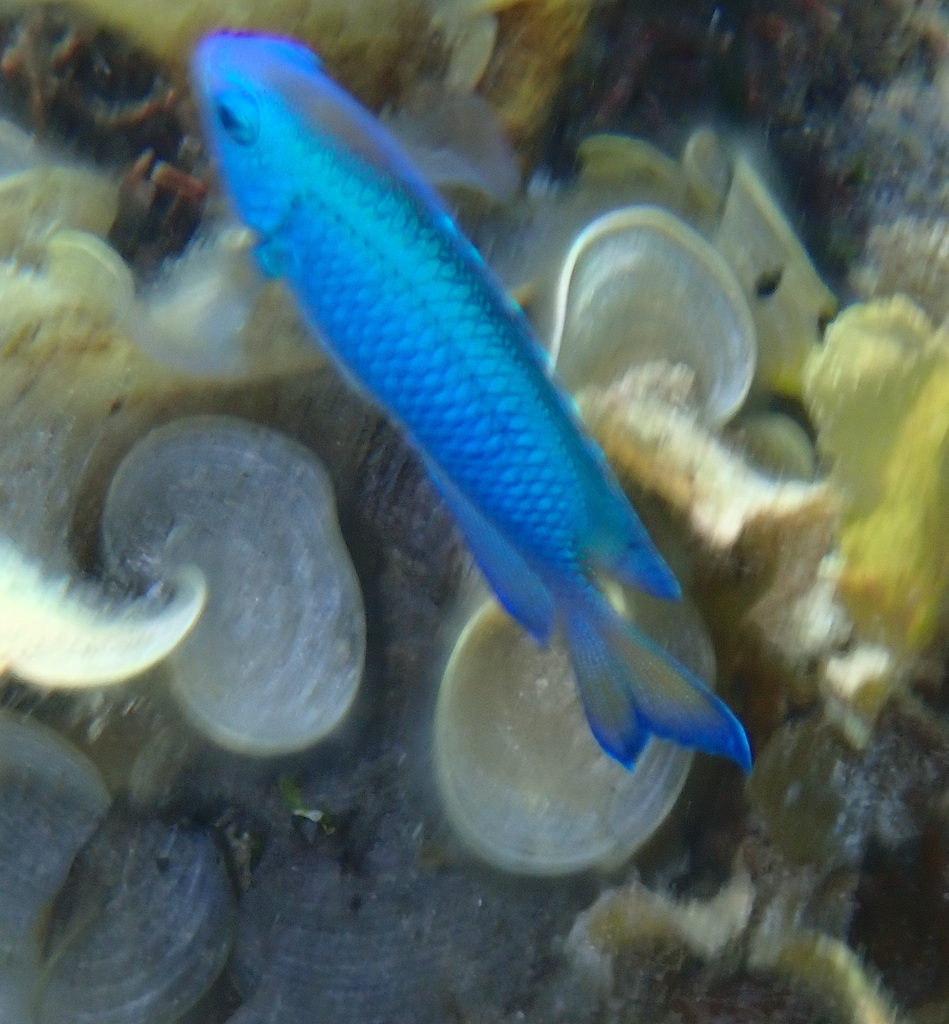 Blue Damsel
Pomacentrus coelestis
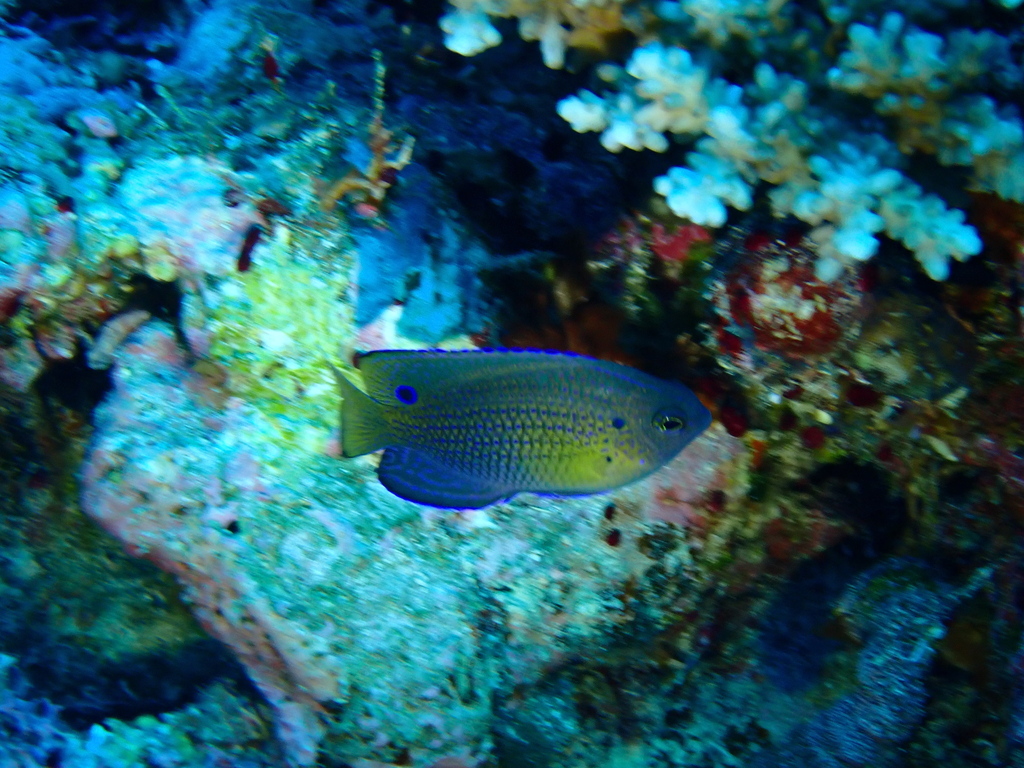 Ocellate Damselfish
Pomacentrus vaiuli
- Lemon damsel
Pomacentrus moluccensis
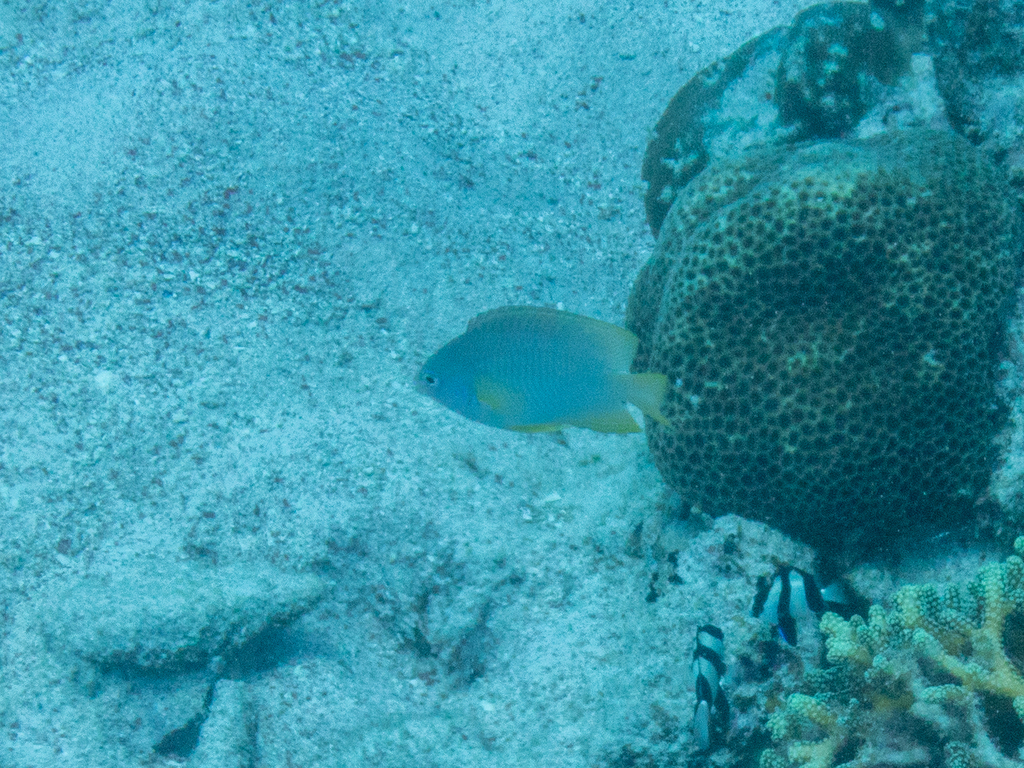 Amboina Damselfish
Pomacentrus amboinensis
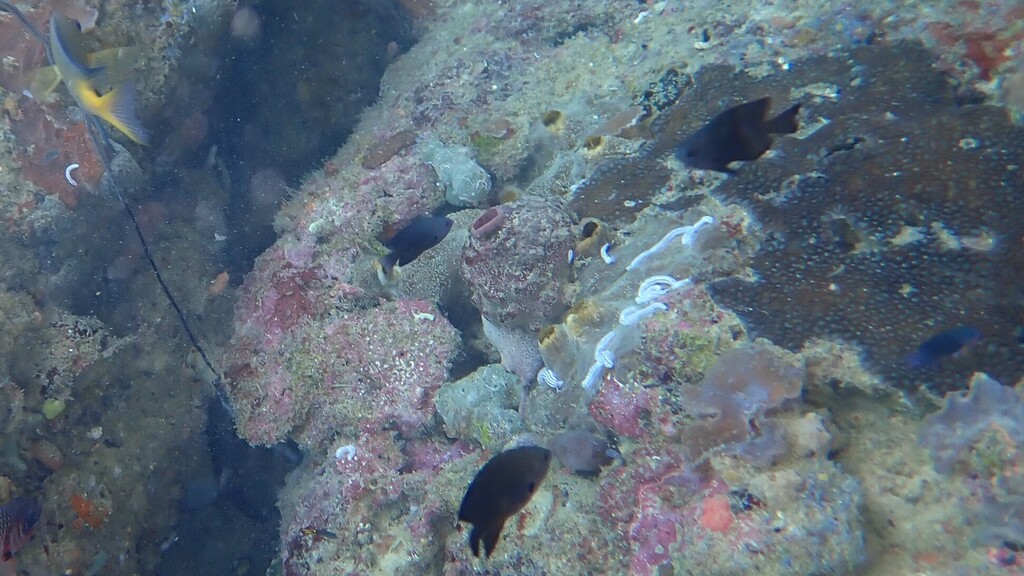 Charcoal damsel
Pomacentrus brachialis
 Philippine Damsel
Pomacentrus philippinus
Sources and credits
Names and taxonomy: WoRMS (CC BY 4.0) and the GBIF Backbone (CC BY 4.0). Photos: iNaturalist observers, each under the licence shown (CC0, CC BY or CC BY-SA).
- Depth, temperature, months and maps: records from OBIS and GBIF under CC0 or CC BY.
- Descriptions: Wikipedia, licensed CC BY-SA, each linked to its article.
- Conservation status as published by GBIF (IUCN Red List).
- 916 open-data records from 1830 to 2023.
Log what you see on your next dive
The free DiveHive diver app keeps your logbook with every sighting and shows what lives at the site you dive next.