
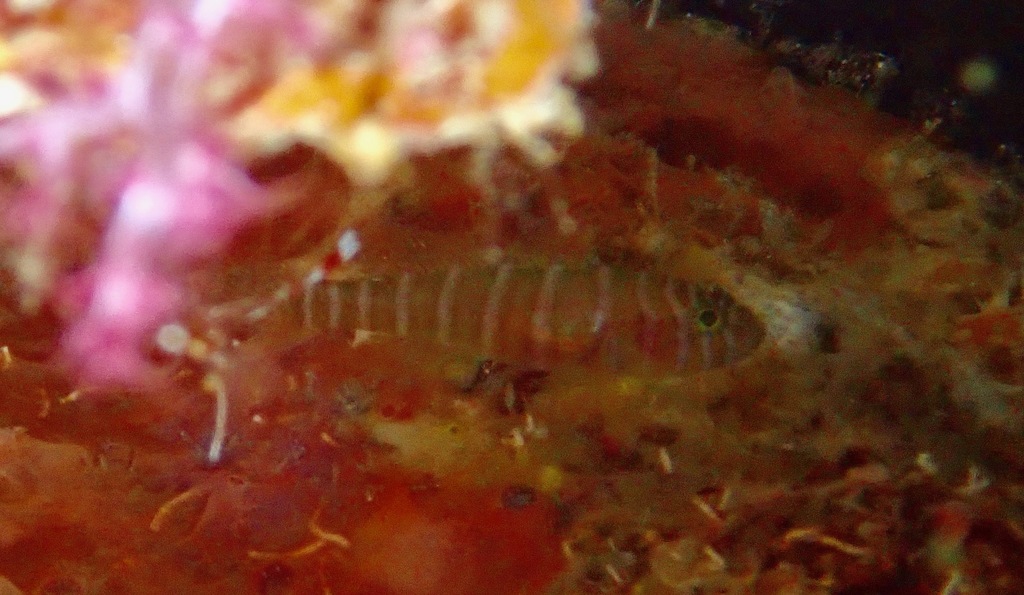
Banded Reef-goby
Priolepis cincta
- Usual depth1–28 m
- Water temperature20–30 °C
- Best monthsMay
- How commonOccasional
Photo credit: (c) jeyre, some rights reserved (CC BY) · CC BY · iNaturalist
About this species
Priolepis cincta, commonly known as the girdled goby, is a species of goby fish described by Regan in 1908.
Text from the Wikipedia article “Priolepis cincta”, licensed CC BY-SA 4.0. Read the article
Where and when
Where it has been recorded
Worldwide
Loading the map
Best months
Worldwide (open data)
- January: 44 records
- February: 29 records
- March: 33 records
- April: 55 records
- May: 93 records
- June: 46 records
- July: 29 records
- August: 31 records
- September: 52 records
- October: 42 records
- November: 52 records
- December: 25 records
Depth and water temperature
Depth
Mostly recorded at 1–28 m · Deepest record: 100 m
Water temperature
Recorded in surface water of 20–30 °C
Photos

(c) jeyre, some rights reserved (CC BY) · CC BY · iNaturalist 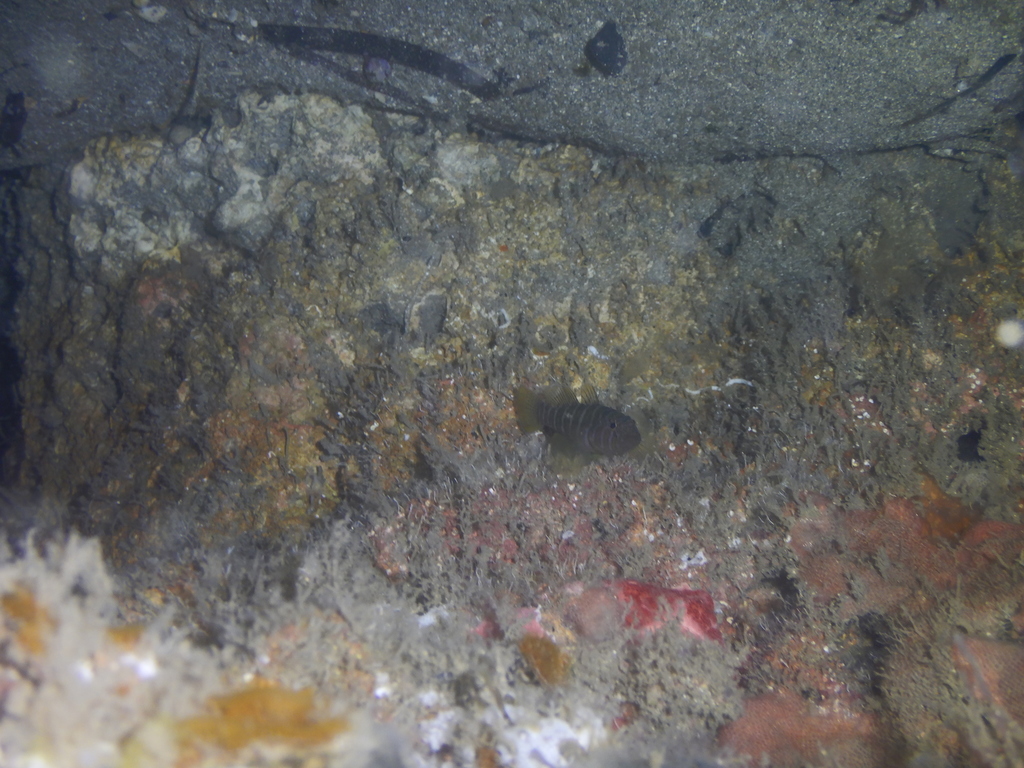
(c) Ewout Knoester, some rights reserved (CC BY-SA) · CC BY-SA · iNaturalist
Names and classification
- English
- Banded Reef-goby, Convict Goby, Girdled goby, Pacific Convict Goby
Names in 2 more languages
- Japanese
- Benkeihaze, ベンケイハゼ
- Simplified Chinese
- 橫帶鋸鱗鰕虎, 橫帶鋸鱗鰕虎魚
Other scientific names: Amblygobius naraharae, Cingulogobius boulengeri, Gobiomorphus cinctus, Pleurogobius boulengeri, Priolepis cinctus, Priolepis naraharae, Quisquilius cinctus, Zonogobius naraharae
Similar species
- Threadfin Reefgoby
Priolepis nuchifasciata
- Barrel Goby
Priolepis semidoliata
- Network Reefgoby
Priolepis agrena
- Eightbar Reefgoby
Priolepis fallacincta
- Brick goby
Priolepis inhaca
- Pale-barred Goby
Priolepis pallidicincta
Sources and credits
Names and taxonomy: WoRMS (CC BY 4.0) and the GBIF Backbone (CC BY 4.0). Photos: iNaturalist observers, each under the licence shown (CC0, CC BY or CC BY-SA).
- Depth, temperature, months and maps: records from OBIS and GBIF under CC0 or CC BY.
- Descriptions: Wikipedia, licensed CC BY-SA, each linked to its article.
- Conservation status as published by GBIF (IUCN Red List).
- 888 open-data records from 1929 to 2023.
- Species data updated October 26, 2026.
Log what you see on your next dive
The free DiveHive diver app keeps your logbook with every sighting and shows what lives at the site you dive next.