
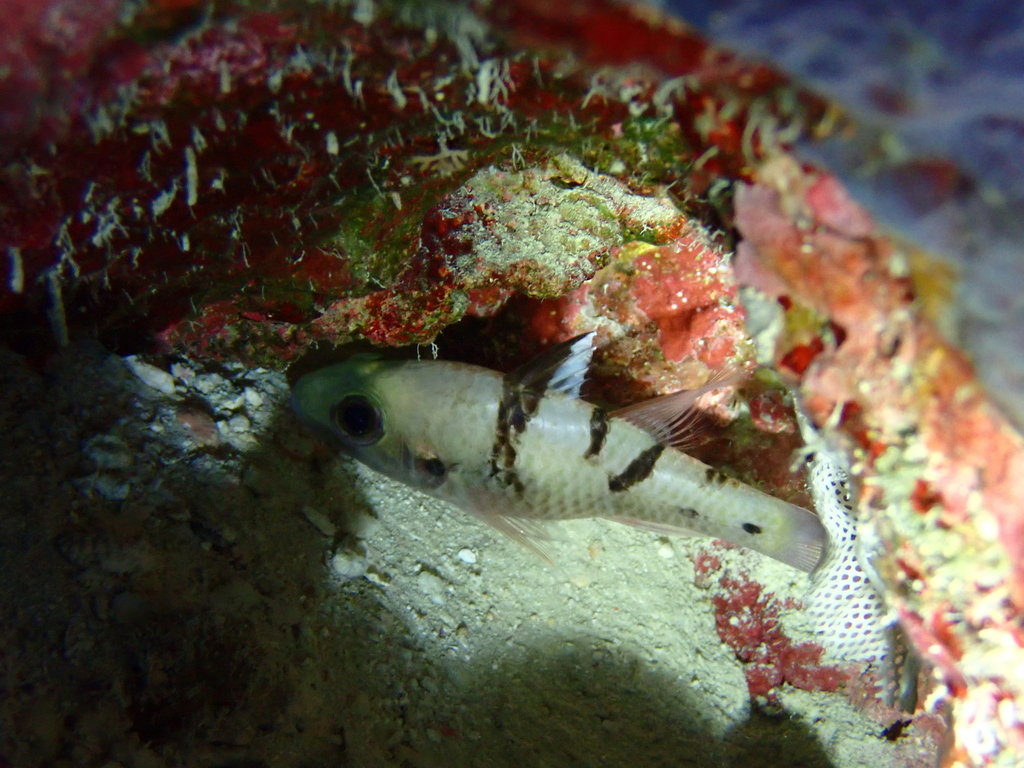
Three-spot Cardinal
Pristicon trimaculatus
- Usual depth1–15 m
- Water temperature23–30 °C
- Best monthsMarch, May, and November
- How commonOccasional
Photo credit: (c) Debra Baker, some rights reserved (CC BY) · CC BY · iNaturalist
About this species
Pristicon trimaculatus, also known as the three-spot cardinalfish, is a nocturnal fish that lives in the Western Pacific Ocean, living around inshore coral reefs in waters around the Ryukyu Islands and Western Australia and the southern Great Barrier Reef, east to Samoa and the Marshall Islands. This species is uncommon. Juveniles have intense, dark markings on a light background, while adults' markings are dusky. Like other cardinalfish, they brood their eggs inside their mouths.
Text from the Wikipedia article “Pristicon trimaculatus”, licensed CC BY-SA 4.0. Read the article
Where and when
Where it has been recorded
Worldwide
Loading the map
Best months
Worldwide (open data)
- January: 29 records
- February: 39 records
- March: 55 records
- April: 40 records
- May: 57 records
- June: 31 records
- July: 47 records
- August: 28 records
- September: 41 records
- October: 43 records
- November: 66 records
- December: 29 records
Depth and water temperature
Depth
Mostly recorded at 1–15 m · Deepest record: 32 m
Water temperature
Recorded in surface water of 23–30 °C
Photos
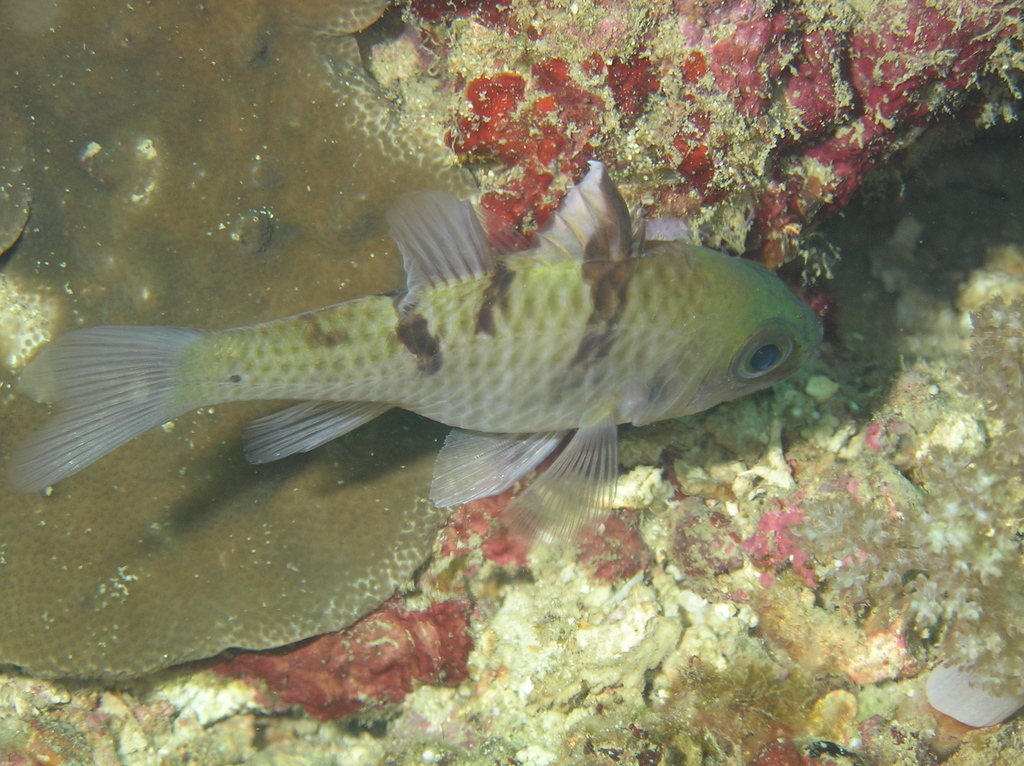
(c) Ditch Townsend, some rights reserved (CC BY-SA) · CC BY-SA · iNaturalist 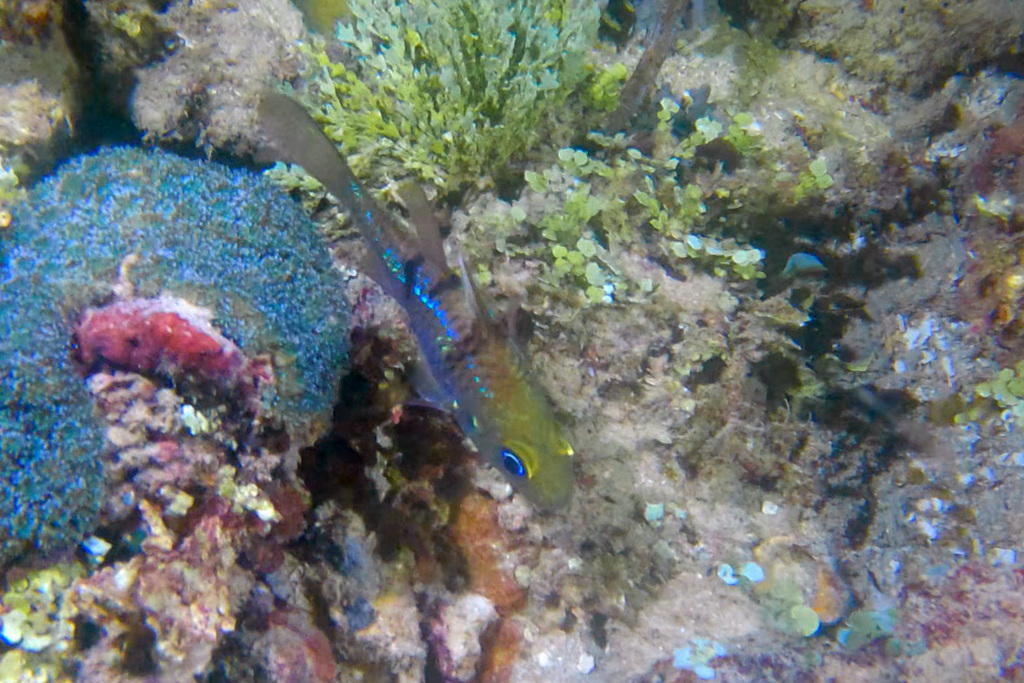
(c) Tom Heijnen, some rights reserved (CC BY) · CC BY · iNaturalist 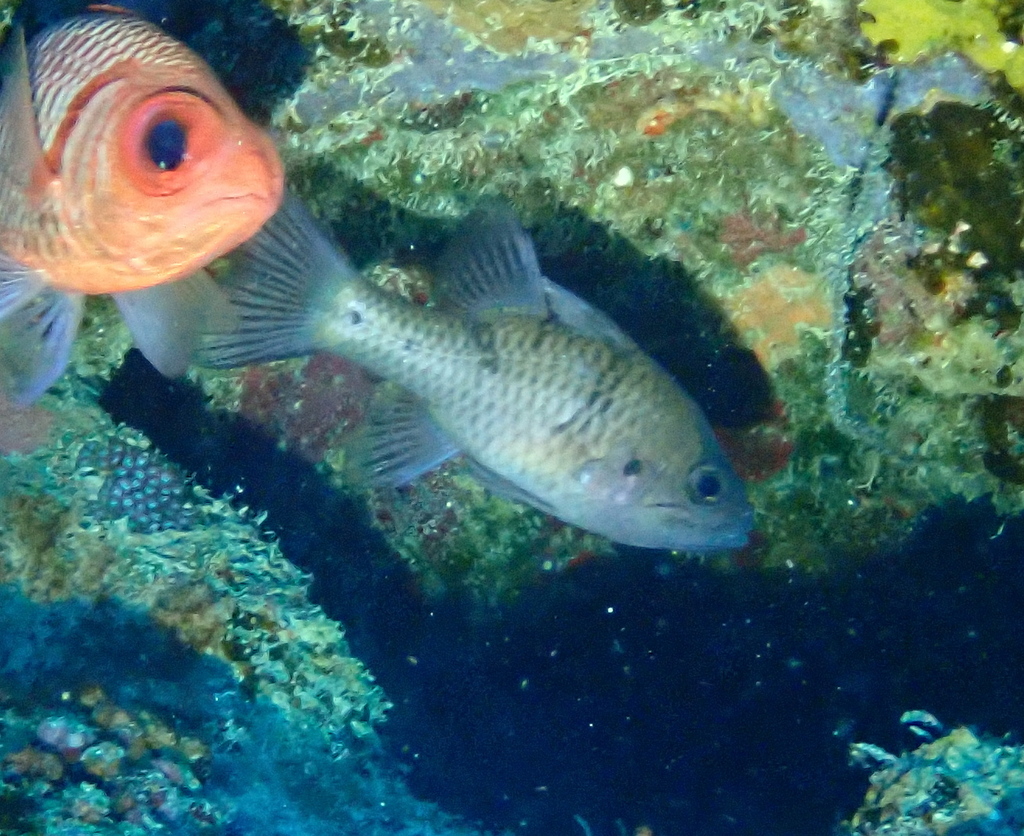
(c) Debra Baker, some rights reserved (CC BY) · CC BY · iNaturalist 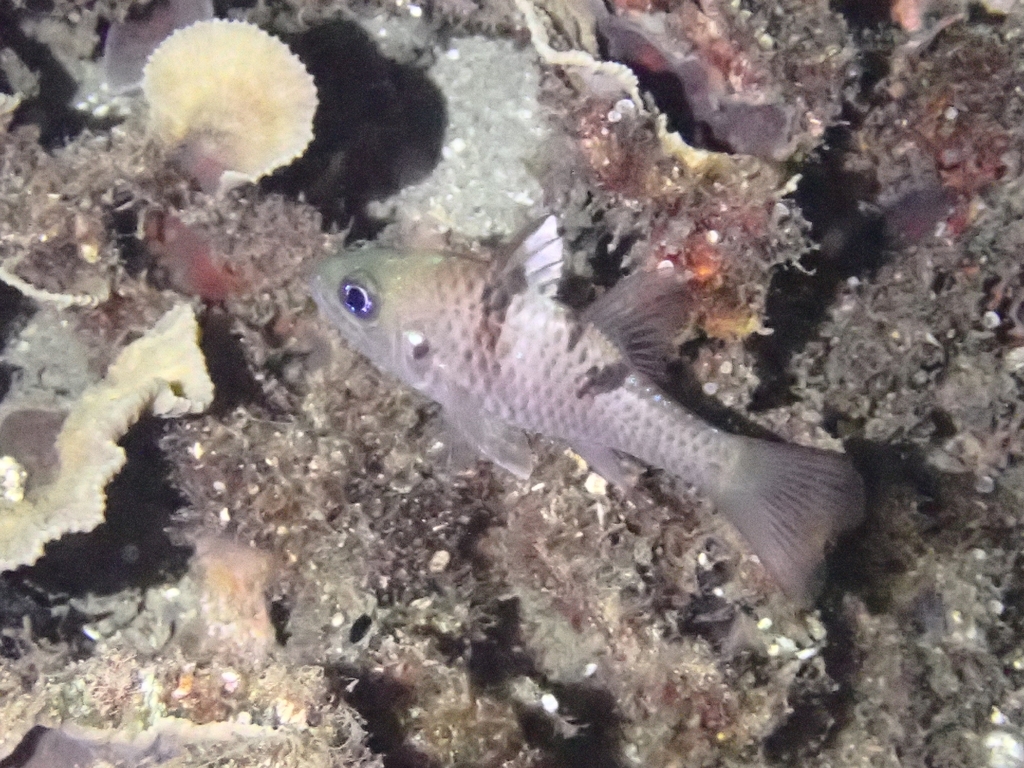
(c) Ben Costamagna, some rights reserved (CC BY) · CC BY · iNaturalist 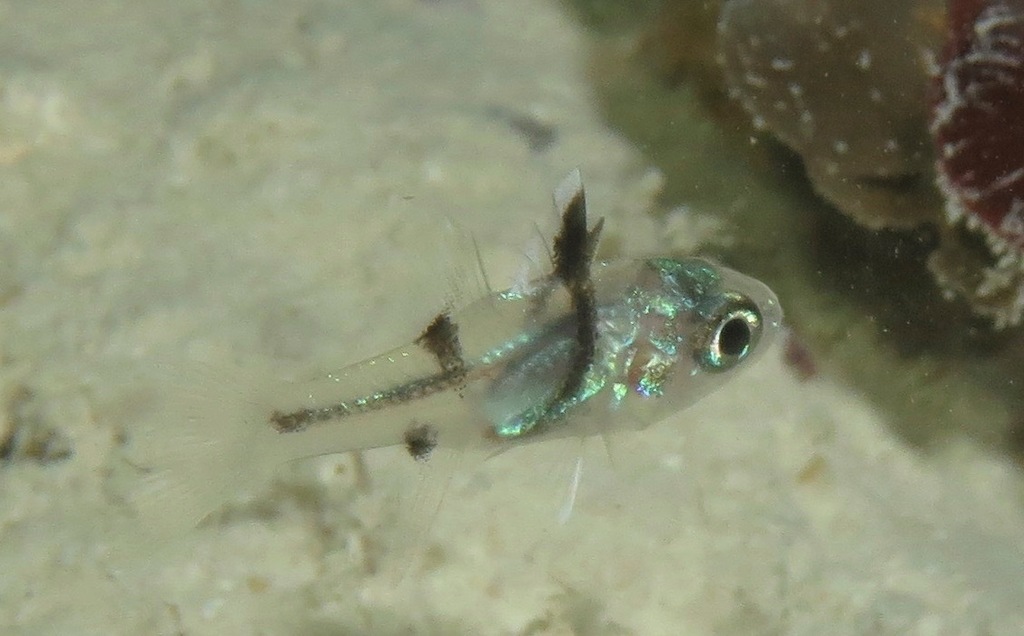
(c) jeyre, some rights reserved (CC BY) · CC BY · iNaturalist 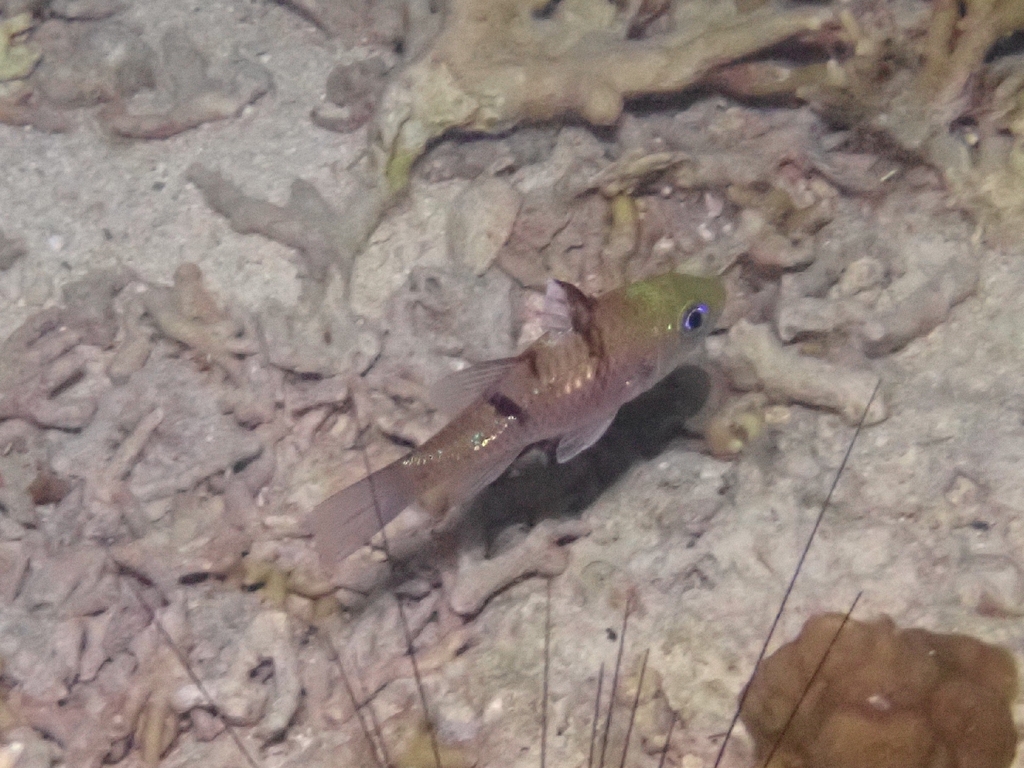
(c) Ben Costamagna, some rights reserved (CC BY) · CC BY · iNaturalist 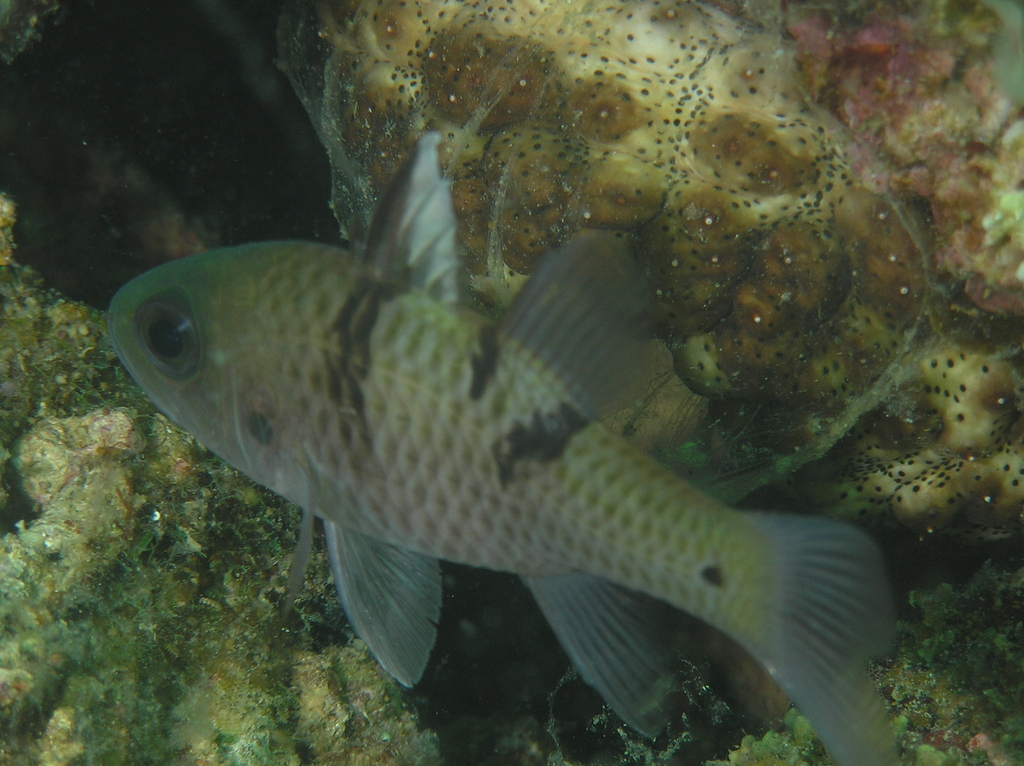
(c) Ditch Townsend, some rights reserved (CC BY-SA) · CC BY-SA · iNaturalist
Names and classification
- English
- Three-spot Cardinal, Three-spot Cardinal-fish, Three-spot Cardinalfish, Threespot Cardinalfish
Names in 2 more languages
- Japanese
- Misujiakahireishimochi, ミスジアカヒレイシモチ
- Simplified Chinese
- 三斑天竺鯛, 三斑锯竺鲷, 大目側仔, 大面側仔
Other scientific names: Amia koilomatodon, Apogon koilomatodon, Apogon trimaculatus
Similar species
- Pearly-finned Cardinalfish
Jaydia poeciloptera
- Barred Striped Cardinalfish
Ostorhinchus fasciatus
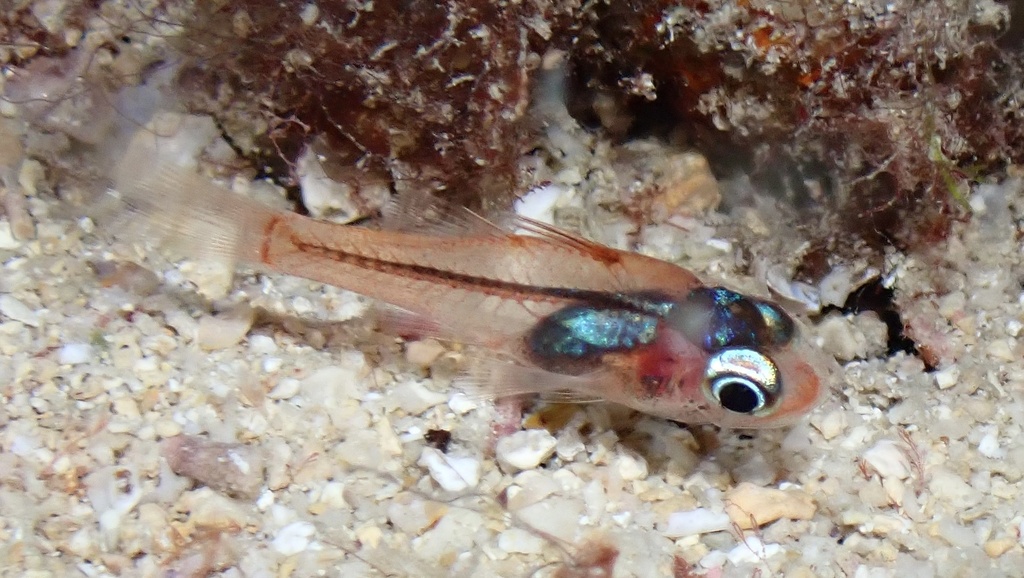 Cryptic Cardinalfish
Apogon erythrinus
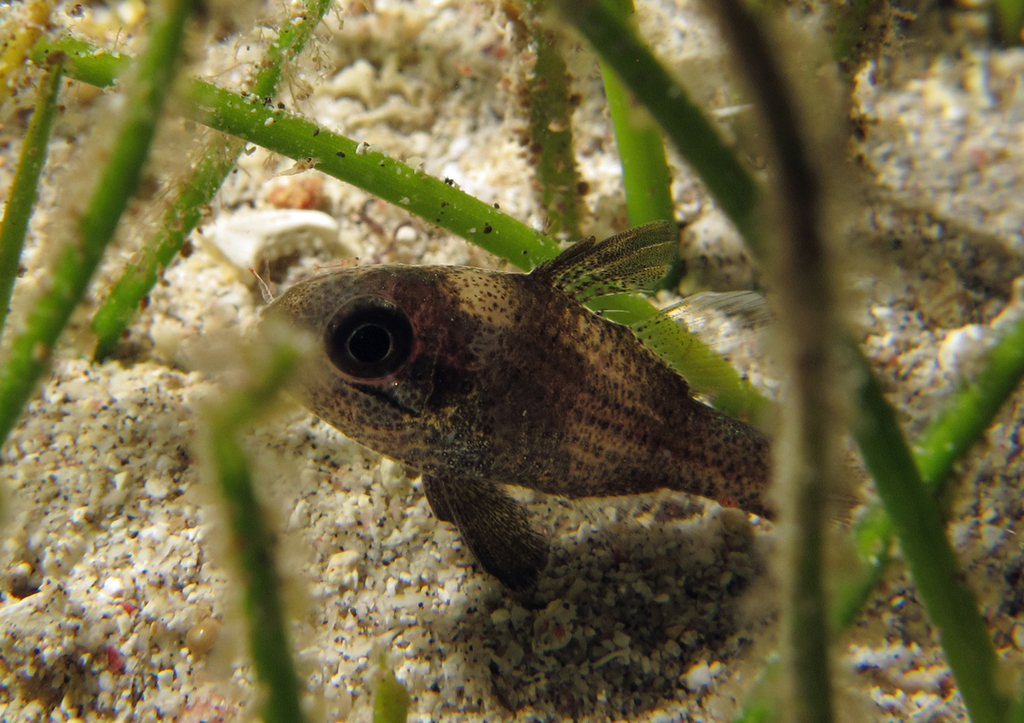 Timor Cardinal
Apogonichthyoides timorensis
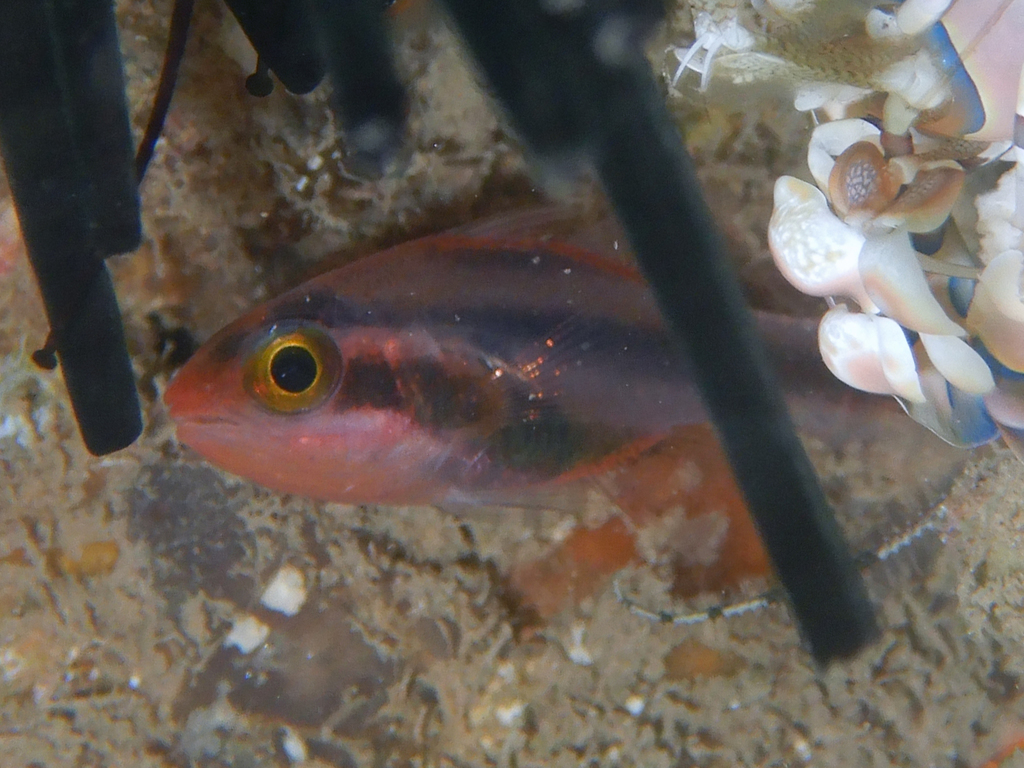 Obliquebanded cardinalfish
Apogon semiornatus
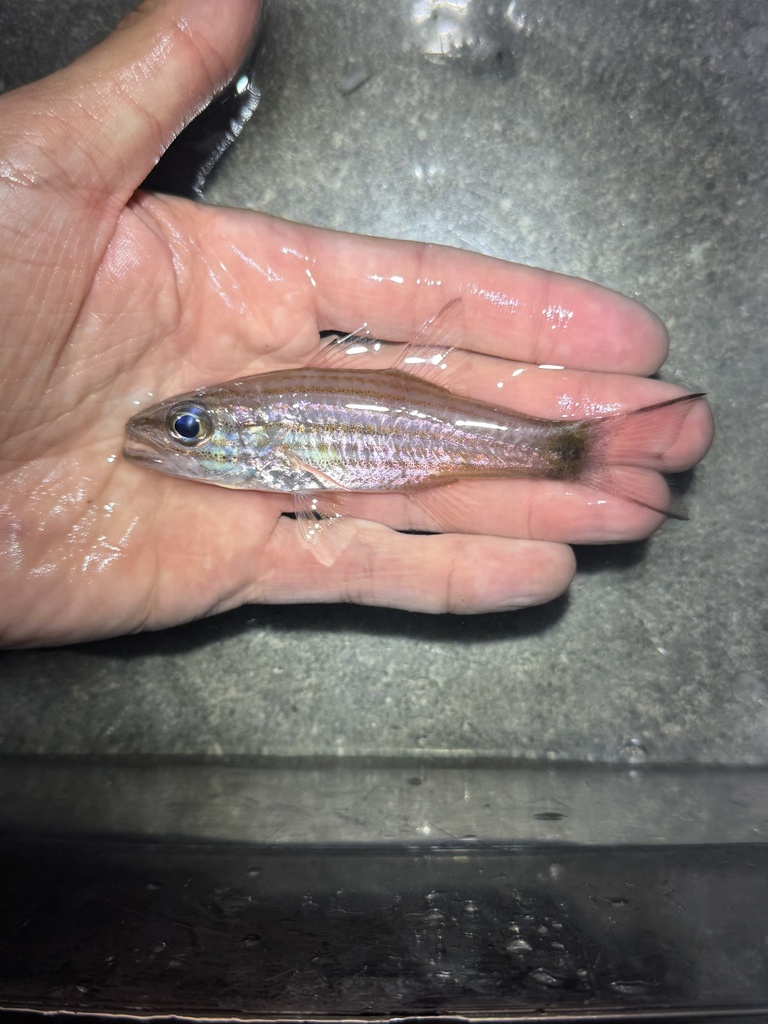 Wolf cardinalfish
Cheilodipterus artus
Sources and credits
Names and taxonomy: WoRMS (CC BY 4.0) and the GBIF Backbone (CC BY 4.0). Photos: iNaturalist observers, each under the licence shown (CC0, CC BY or CC BY-SA).
- Depth, temperature, months and maps: records from OBIS and GBIF under CC0 or CC BY.
- Descriptions: Wikipedia, licensed CC BY-SA, each linked to its article.
- Conservation status as published by GBIF (IUCN Red List).
- 680 open-data records from 1828 to 2023.
- Species data updated October 26, 2026.
Log what you see on your next dive
The free DiveHive diver app keeps your logbook with every sighting and shows what lives at the site you dive next.