
Jewelled blenny
Salarias fasciatus
- Usual depth0–5 m
- Water temperature22–30 °C
- Best monthsApril and May
- How commonOccasional
About this species
Salarias fasciatus, commonly known as the jewelled blenny or lawnmower blenny is a benthic, neritic, marine fish species endemic to Australasia. Despite being known as the lawnmower blenny, due to its propensity to consume algae growth in aquaria, it is principally a detritivore, with plant material making up only about 15% of its diet. The lawnmower blenny camoflauges itself with its surroundings, even changing color to hide from predators.
Text from the Wikipedia article “Salarias fasciatus”, licensed CC BY-SA 4.0. Read the article
Where and when
Where it has been recorded
Worldwide
Loading the map
Best months
Worldwide (open data)
- January: 18 records
- February: 29 records
- March: 23 records
- April: 69 records
- May: 106 records
- June: 26 records
- July: 35 records
- August: 31 records
- September: 49 records
- October: 43 records
- November: 28 records
- December: 16 records
Depth and water temperature
Depth
Mostly recorded at 0–5 m · Deepest record: 287 m
Water temperature
Recorded in surface water of 22–30 °C
Names and classification
- English
- Jewelled blenny, Banded Blenny, Banded Jewelled Blenny, Barred Blenny, jewelled blenny, Jewelled Rockskipper, Lawnmower Blenny, lineated blenny, Lined Blenny, Painted Blenny
Names in 5 more languages
- German
- Gestreifter Felsenspringer, Juwelen-Felshüpfer, Juwelen-Kammzähner
- French
- Blennie rayée
- Japanese
- Yaeyamagimpo, ヤエヤマギンポ
- Thai
- ปลาตั๊กแตนหินหน้าผี
- Simplified Chinese
- 細紋唇齒鳚
Other scientific names: Blennius fasciatus, Salarias fascitus, Salarias quadripennis
Similar species
- Ceram Blenny
Salarias ceramensis
- Blue-spot Blenny
Salarias guttatus
- Obscure Blenny
Salarias obscurus
- Fringelip blenny
Salarias sinuosus
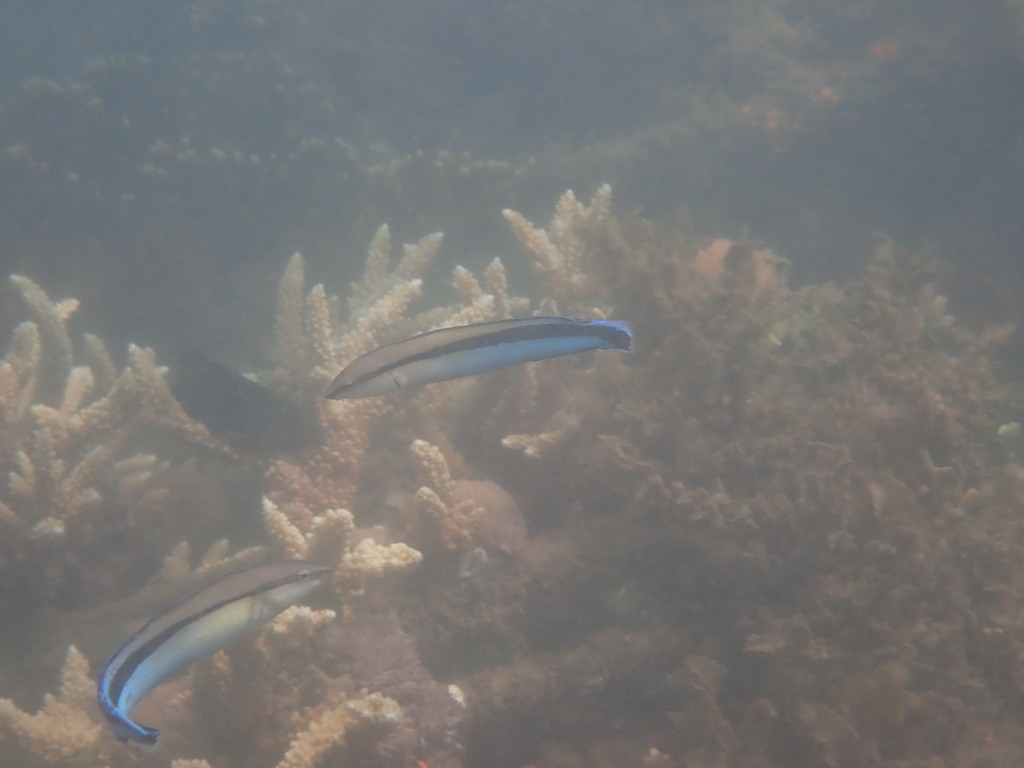 Mimic blenny
Aspidontus taeniatus
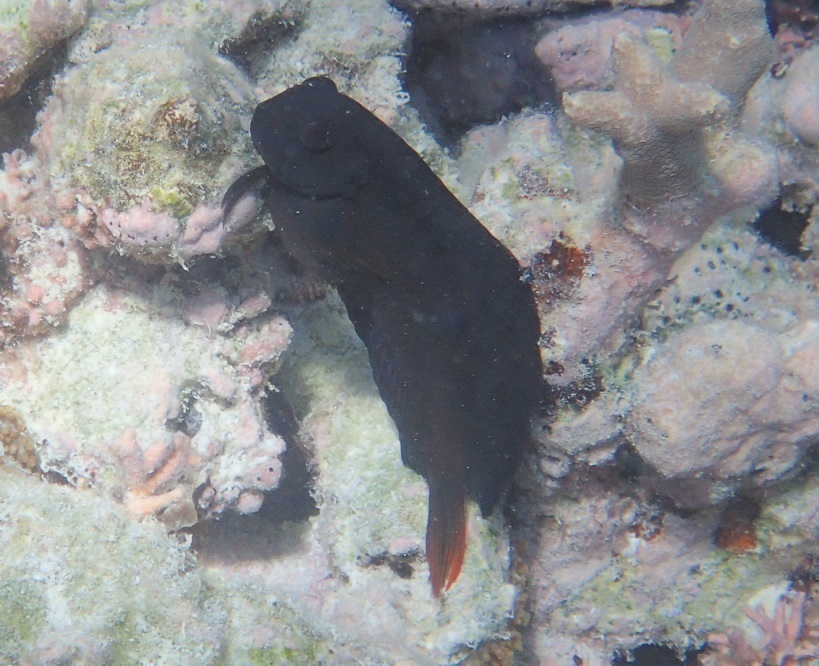 Black Blenny
Atrosalarias holomelas
Sources and credits
Names and taxonomy: WoRMS (CC BY 4.0) and the GBIF Backbone (CC BY 4.0). Photos: iNaturalist observers, each under the licence shown (CC0, CC BY or CC BY-SA).
- Depth, temperature, months and maps: records from OBIS and GBIF under CC0 or CC BY.
- Descriptions: Wikipedia, licensed CC BY-SA, each linked to its article.
- Conservation status as published by GBIF (IUCN Red List).
- 1,300 open-data records from 1786 to 2024.
Log what you see on your next dive
The free DiveHive diver app keeps your logbook with every sighting and shows what lives at the site you dive next.