
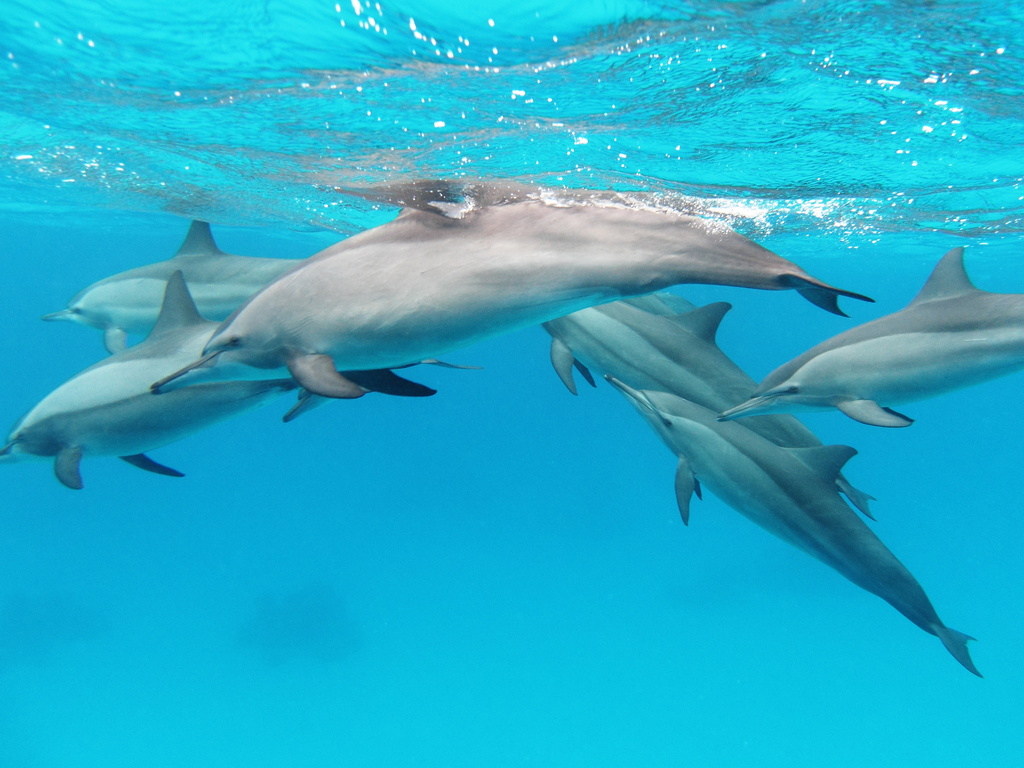
Central American spinner
Stenella longirostris
- Usual depth0–3,693 m
- Water temperature15–30 °C
- Best monthsAugust, September, and October
- How commonCommon
Photo credit: (c) Alexander Vasenin, some rights reserved (CC BY-SA) · CC BY-SA · iNaturalist
About this species
The spinner dolphin is a small dolphin found in off-shore tropical waters around the world. It is famous for its acrobatic displays in which it rotates around its longitudinal axis as it leaps through the air. It is a member of the family Delphinidae of toothed whales.
Text from the Wikipedia article “Spinner dolphin”, licensed CC BY-SA 4.0. Read the article
Where and when
Where it has been recorded
Worldwide
Loading the map
Best months
Worldwide (open data)
- January: 227 records
- February: 254 records
- March: 368 records
- April: 403 records
- May: 302 records
- June: 279 records
- July: 351 records
- August: 881 records
- September: 689 records
- October: 638 records
- November: 599 records
- December: 266 records
Depth and water temperature
Depth
Mostly recorded at 0–3,693 m · Deepest record: 4,010 m
Water temperature
Recorded in surface water of 15–30 °C
Photos

(c) Liisa Havukainen, some rights reserved (CC BY-SA) · CC BY-SA · iNaturalist 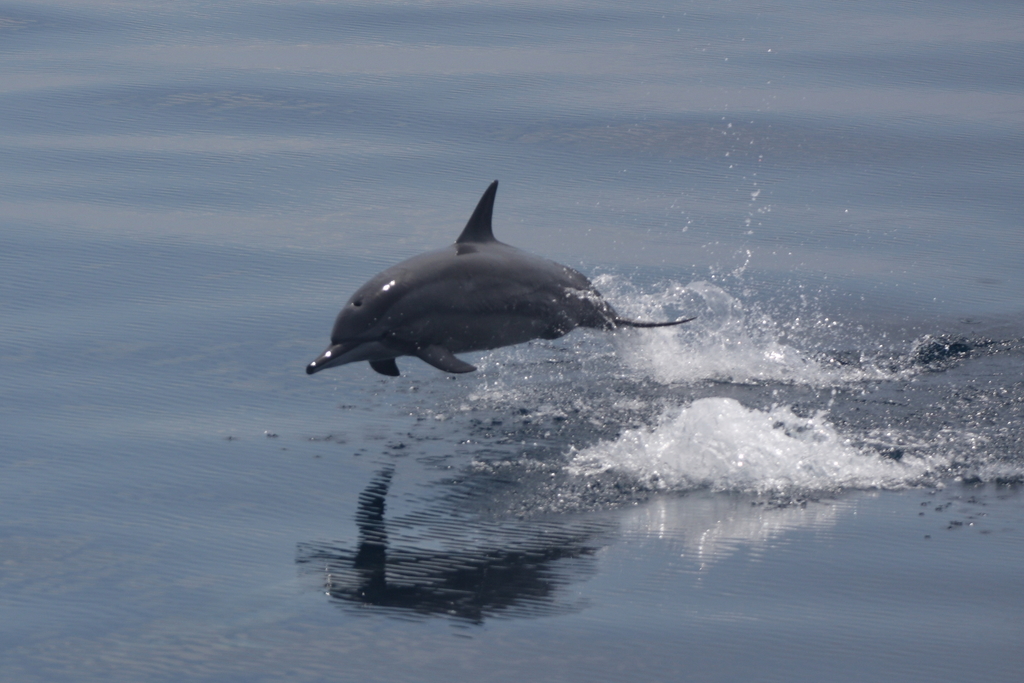
(c) Magnus Kjaergaard, some rights reserved (CC BY) · CC BY · iNaturalist 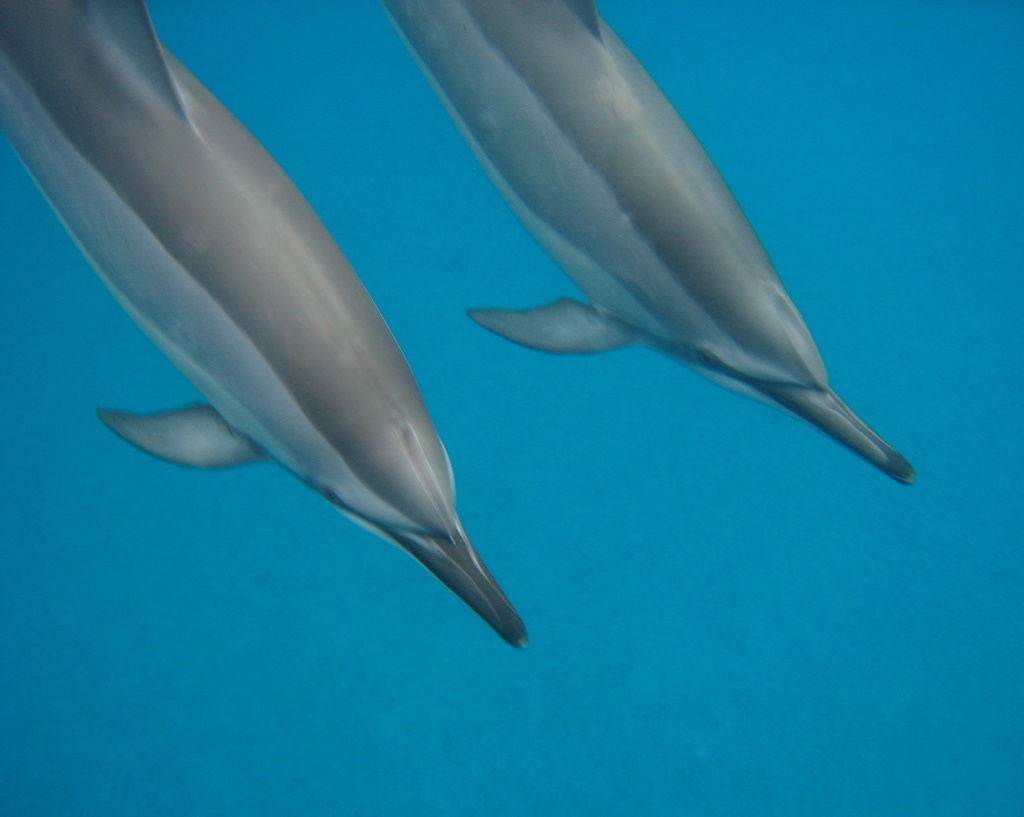
(c) Robert Webster, some rights reserved (CC BY-SA) · CC BY-SA · iNaturalist 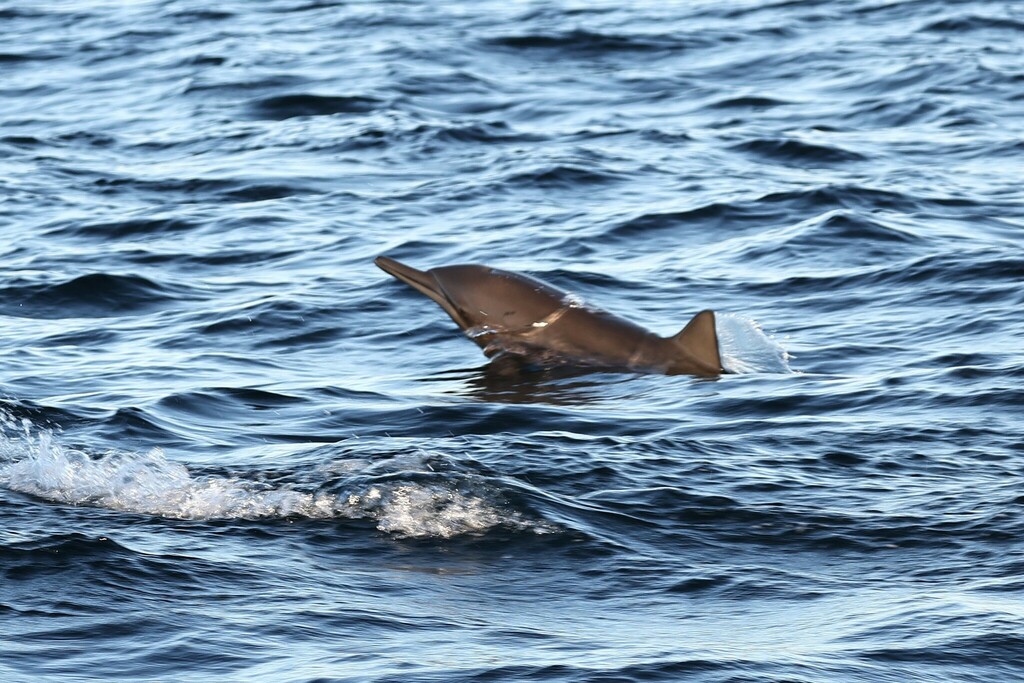
(c) nmoorhatch, some rights reserved (CC BY) · CC BY · iNaturalist 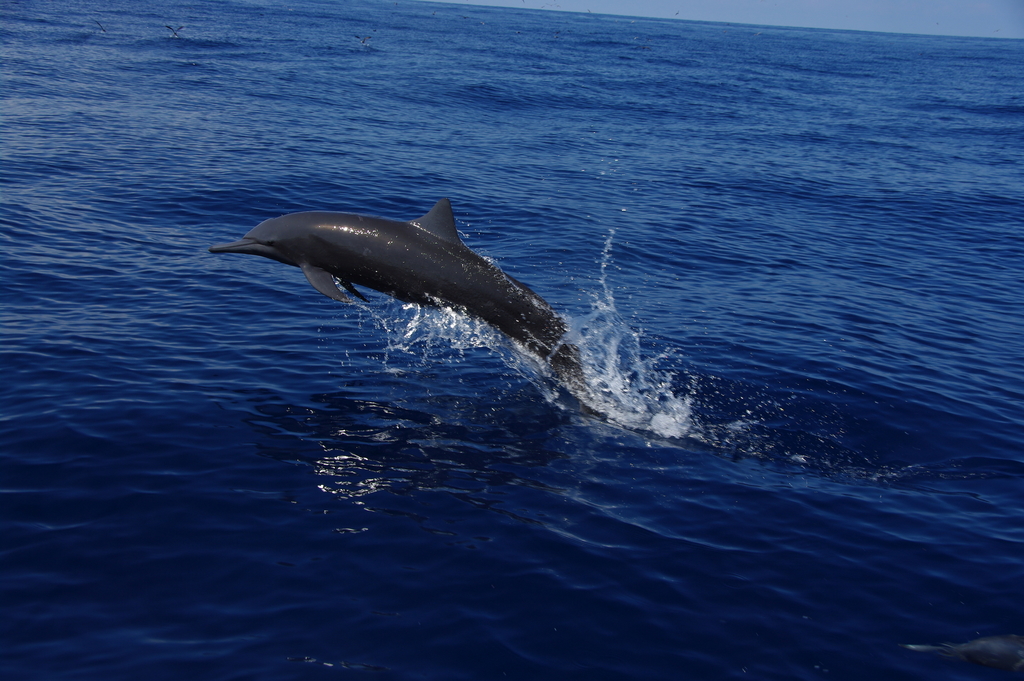
(c) Doug Macaulay, some rights reserved (CC BY) · CC BY · iNaturalist 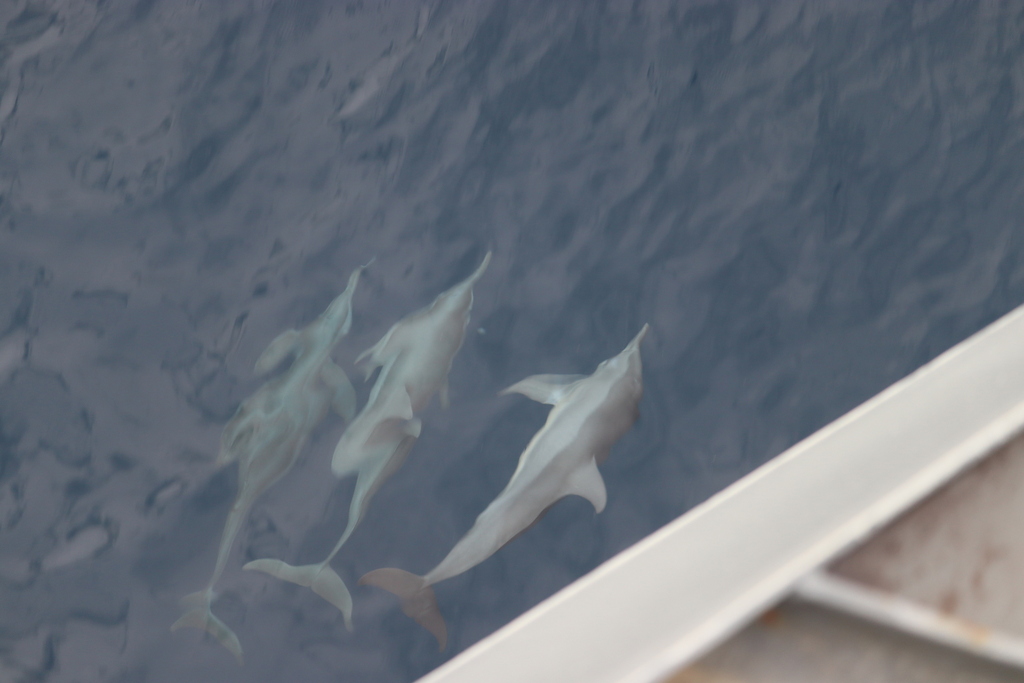
(c) harry beaman, some rights reserved (CC BY) · CC BY · iNaturalist 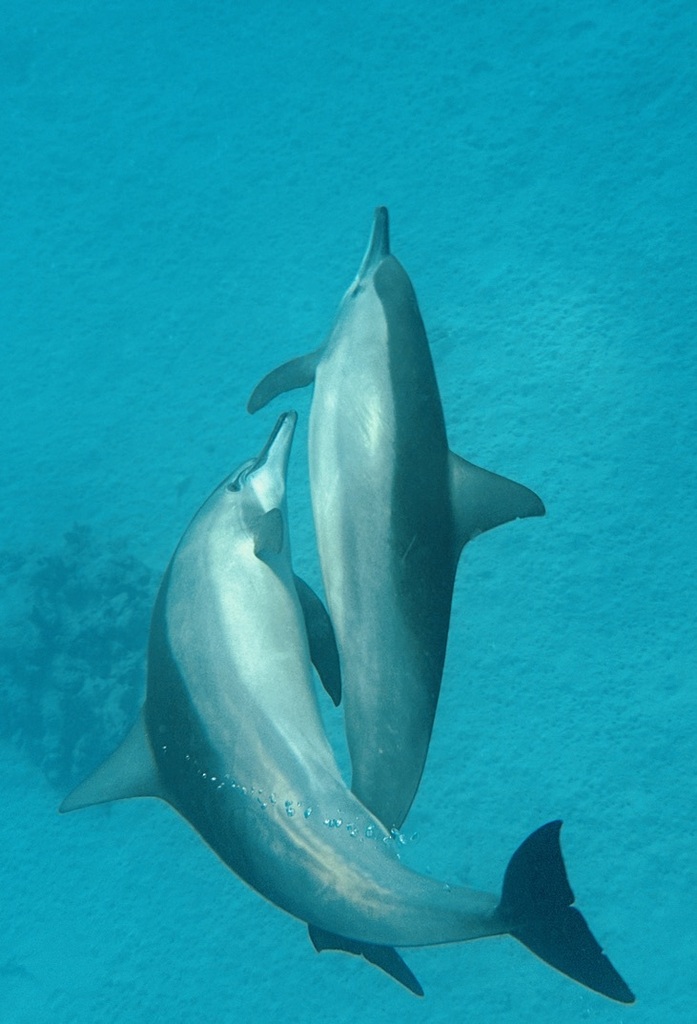
(c) Rui Ribeiro, some rights reserved (CC BY) · CC BY · iNaturalist
Names and classification
- English
- Central American spinner, Dwarf spinner dolphin, Eastern spinner, Gray's spinner, Long-beaked dolphin, Long-nosed dolphin, Central American Spinner Dolphin, centroamericana, dwarf spinner dolphin, Dwarf Spinner Dolphin, eastern spinner, Eastern Spinner Dolphin, Gray's Spinner Dolphin, long-beaked dolphin, Long-beaked Dolphin, longirostris, long-nosed dolphin, Long-snouted Dolphin, long-snouted spinner dolphin, orientalis, Pantropical Spinner Dolphin, red-bellied dolphin, rollover, roseiventris, small-headed dolphin, spinner, Spinner, spinner dolphin, Spinner Dolphin, spinner porpoise, whitebelly spinner
Names in 8 more languages
- German
- Langschnauzen-Delfin, Ostpazifischer Delfin, Ostpazifischer Delphin, Spinnerdelfin
- Spanish
- churumbeles, delfín churumbelo, delfin de hocico largo, delfín girador, Delfín girador, Delfín tornillo, delfín tornillon, Delfín Tornillón, delfin volteador, estenela giradora, falso delfin, tornillos
- French
- Dauphin a long bec, Dauphin à long bec, dauphin longirostre
- Indonesian
- Lumba-Lumba Moncong Panjang, lumba-lumba paruh panjang, lumba-lumba peruh panjang, lumba-lumba perut marah
- Japanese
- hashinaga iruka, ハシナガイルカ, 嘴長海豚
- Korean
- 긴부리돌고래, ginburi-dolgorae
- Thai
- plaloma huakhuadmalayu, plaloma kradod, โลมากระโดด
- Simplified Chinese
- 長吻飛旋海豚, 飞旋原海豚
Other scientific names: Clymene alope, Clymene microps, Clymene stenorhynchus, Clymenia alope, Clymenia longirostris, Clymenia microps, Clymenia roseiventris, Clymenia stenorhynchus, Delphinus alope, Delphinus longirostris, Delphinus microps, Delphinus roseiventris, Delphinus stenorhynchus, Fretidelphis roseiventris, Prodelphinus alope, Prodelphinus longirostris, Prodelphinus microps, Prodelphinus roseiventris, Stenella alope, Stenella microps, Steno roseiventris
Sources and credits
Names and taxonomy: WoRMS (CC BY 4.0) and the GBIF Backbone (CC BY 4.0). Photos: iNaturalist observers, each under the licence shown (CC0, CC BY or CC BY-SA).
- Depth, temperature, months and maps: records from OBIS and GBIF under CC0 or CC BY.
- Descriptions: Wikipedia, licensed CC BY-SA, each linked to its article.
- Conservation status as published by GBIF (IUCN Red List).
- 20,342 open-data records from 1828 to 2025.
- Species data updated October 26, 2026.
Log what you see on your next dive
The free DiveHive diver app keeps your logbook with every sighting and shows what lives at the site you dive next.