
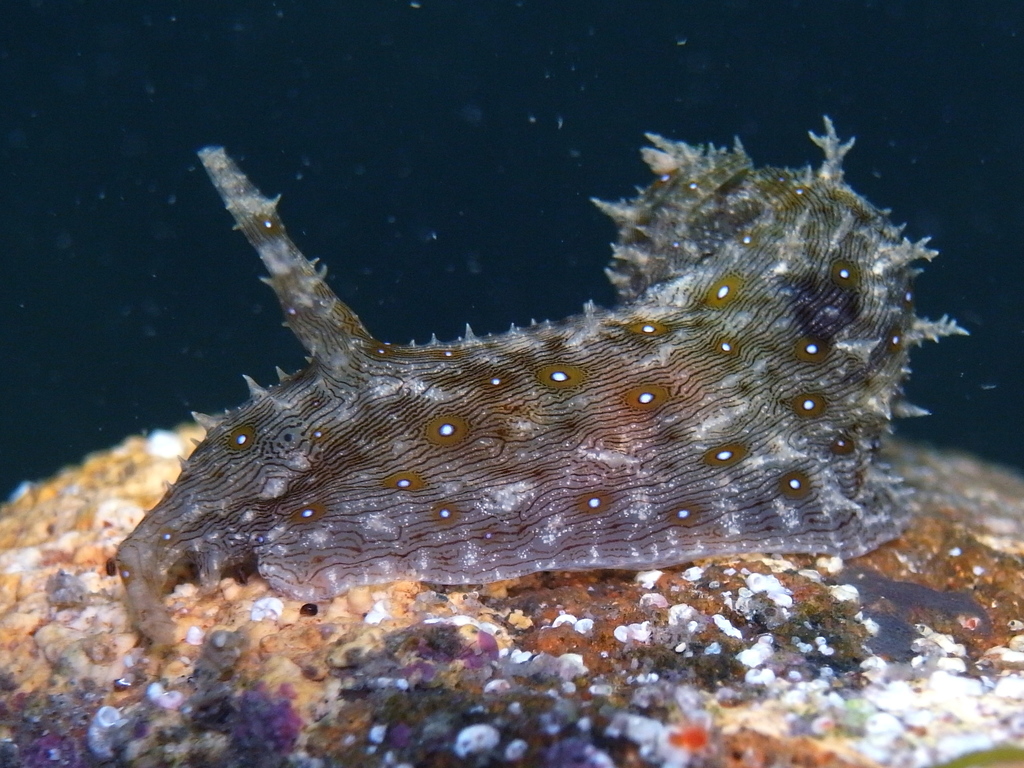
Spiky Sea Hare
Stylocheilus striatus
- Usual depth1–15 m
- Water temperature18–30 °C
- Best monthsFebruary, March, and April
- How commonOccasional
Photo credit: (c) Sylke Rohrlach, some rights reserved (CC BY-SA) · CC BY-SA · iNaturalist
About this species
Stylocheilus striatus is a species of sea hare found in the Indo-pacific region living from the intertidal zone to a depth of 30 metres. Common names include lined sea hare, blue ring sea hare and furry sea hare. Mature animals can reach sizes of up to 65 mm in length and are brown in colour with blue spots. Their diet mainly consists of blue algae. They play an important role in controlling toxic blooms of the cyanobacterium Lyngbya majuscula.
Text from the Wikipedia article “Stylocheilus striatus”, licensed CC BY-SA 4.0. Read the article
Where and when
Where it has been recorded
Worldwide
Loading the map
Best months
Worldwide (open data)
- January: 131 records
- February: 153 records
- March: 160 records
- April: 187 records
- May: 97 records
- June: 80 records
- July: 82 records
- August: 84 records
- September: 97 records
- October: 144 records
- November: 133 records
- December: 135 records
Depth and water temperature
Depth
Mostly recorded at 1–15 m · Deepest record: 28 m
Water temperature
Recorded in surface water of 18–30 °C
Photos
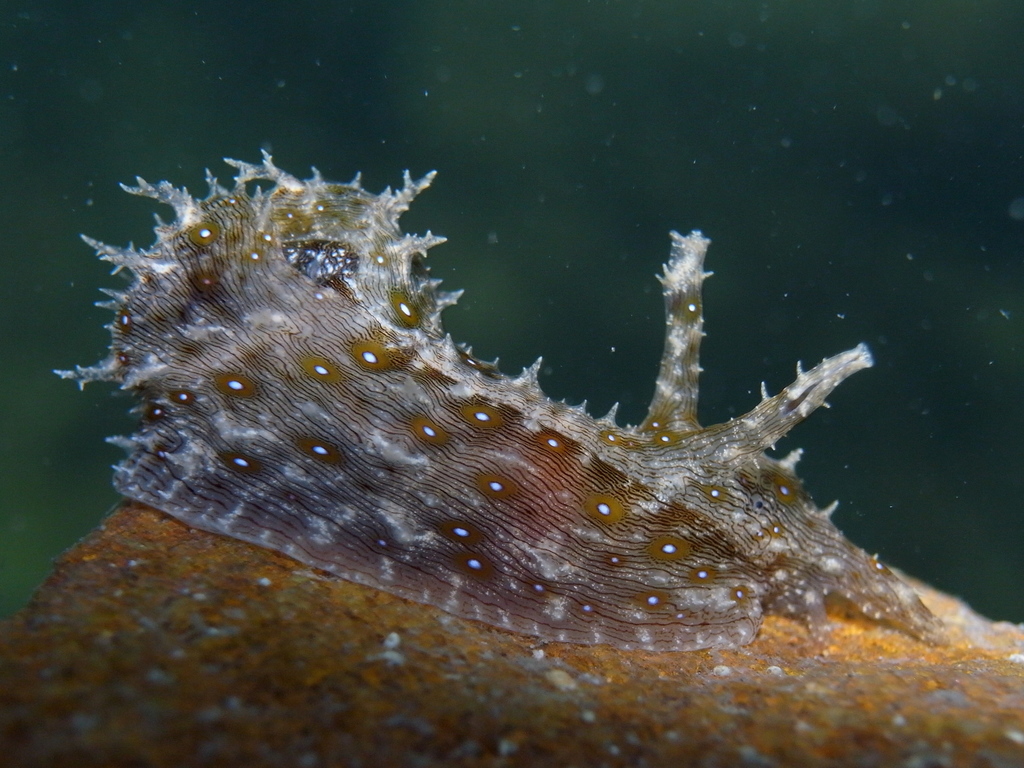
(c) Sylke Rohrlach, some rights reserved (CC BY-SA) · CC BY-SA · iNaturalist 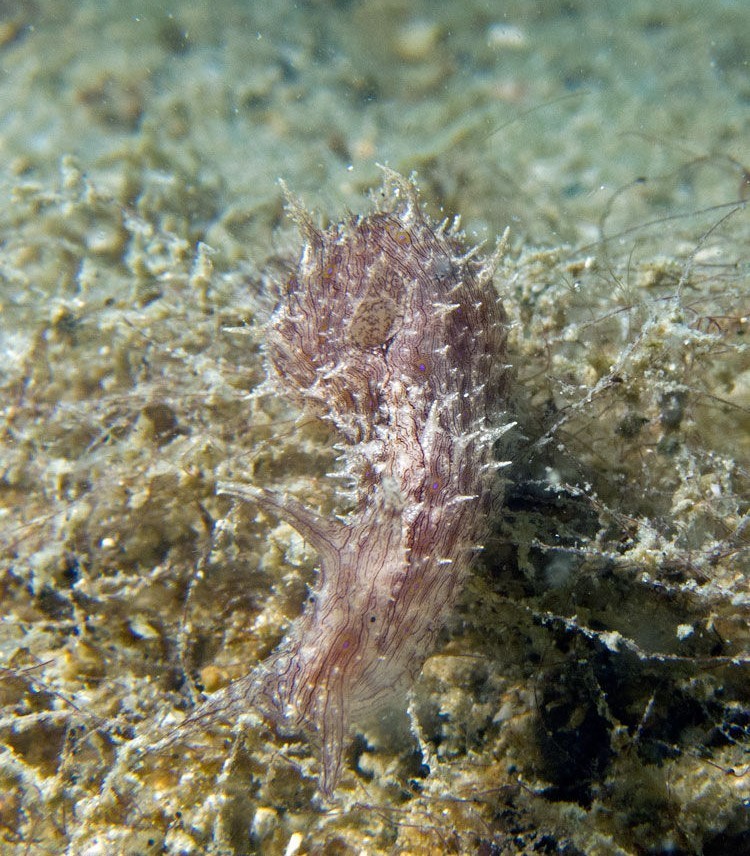
(c) Chaloklum Diving, some rights reserved (CC BY) · CC BY · iNaturalist 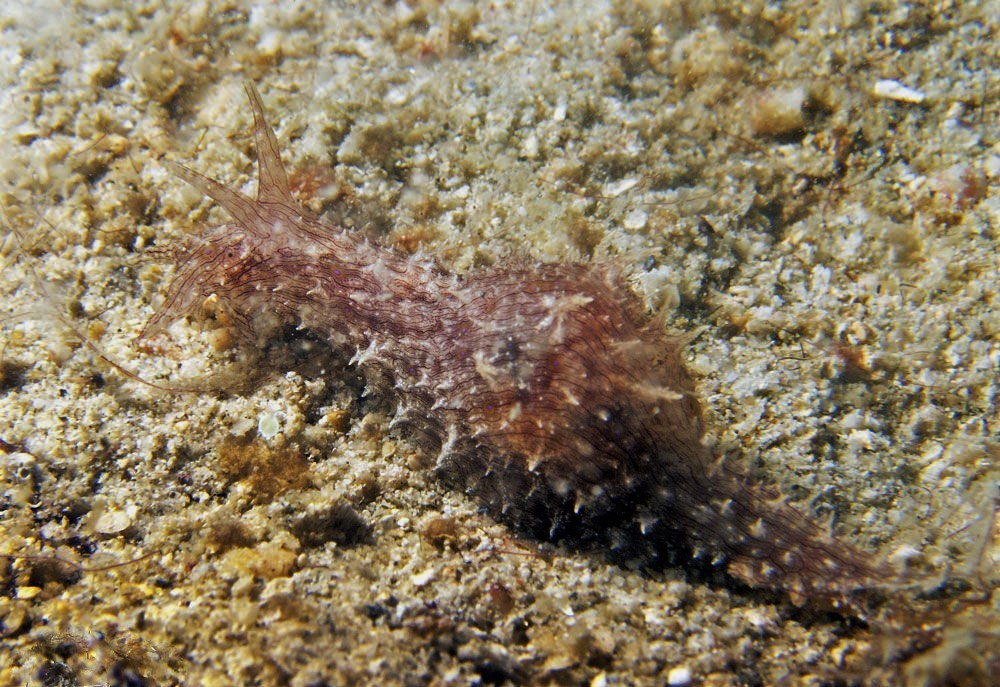
(c) Chaloklum Diving, some rights reserved (CC BY) · CC BY · iNaturalist 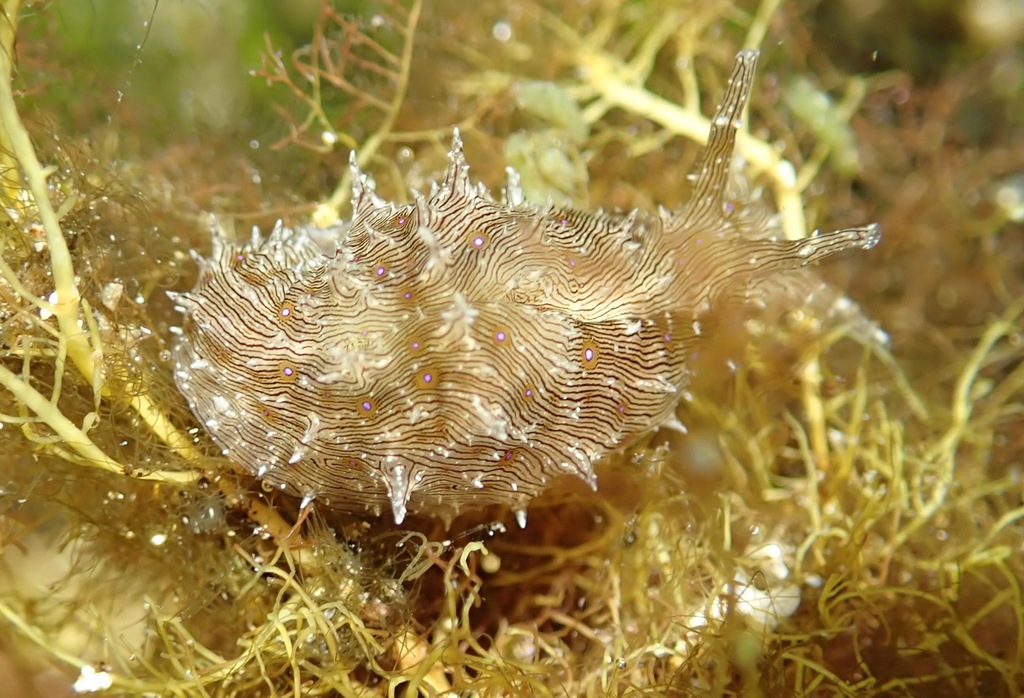
(c) libby hepburn, some rights reserved (CC BY) · CC BY · iNaturalist 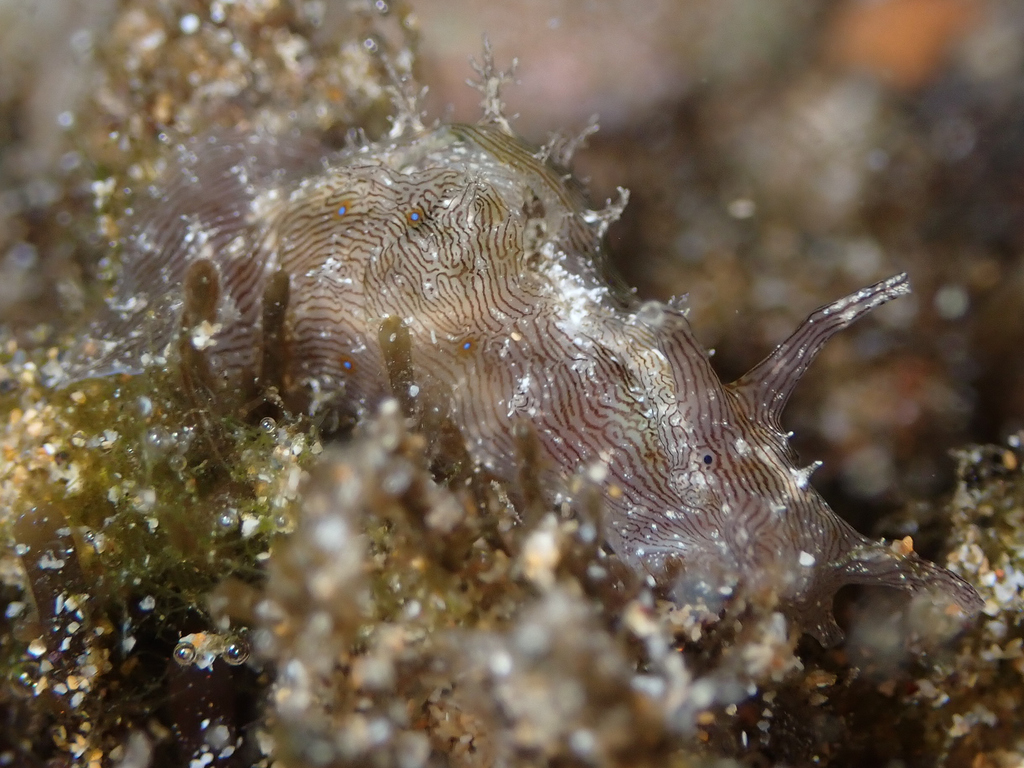
(c) Ken-ichi Ueda, some rights reserved (CC BY) · CC BY · iNaturalist 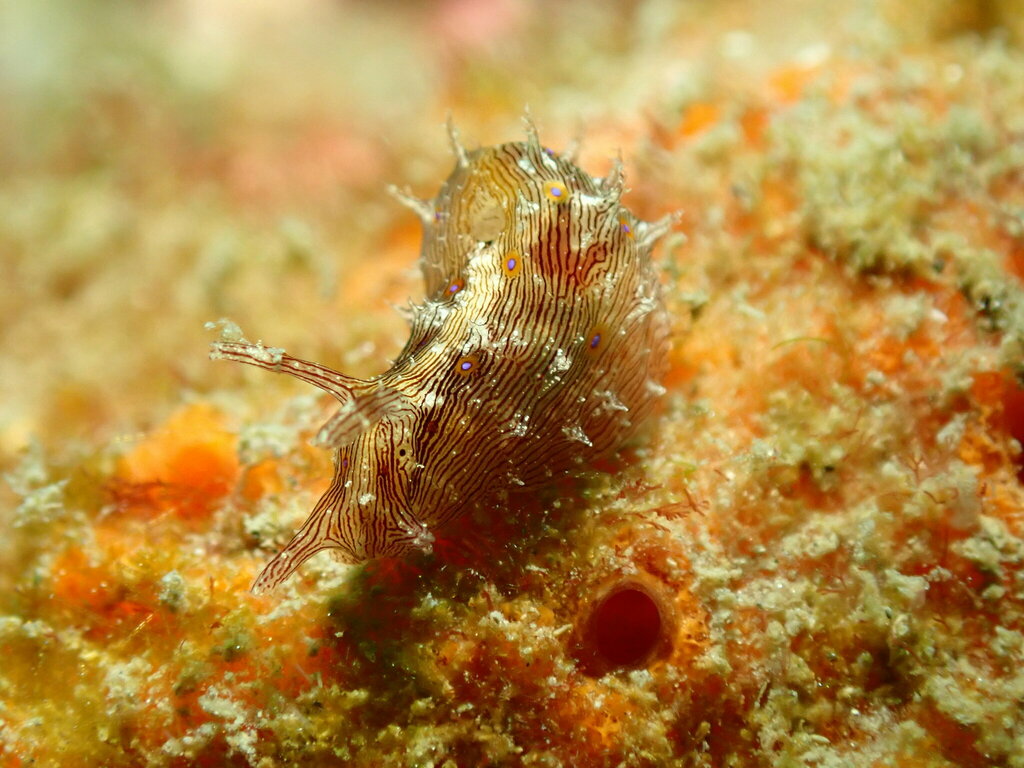
(c) 呂一起(Lyu yi-chi), some rights reserved (CC BY) · CC BY · iNaturalist 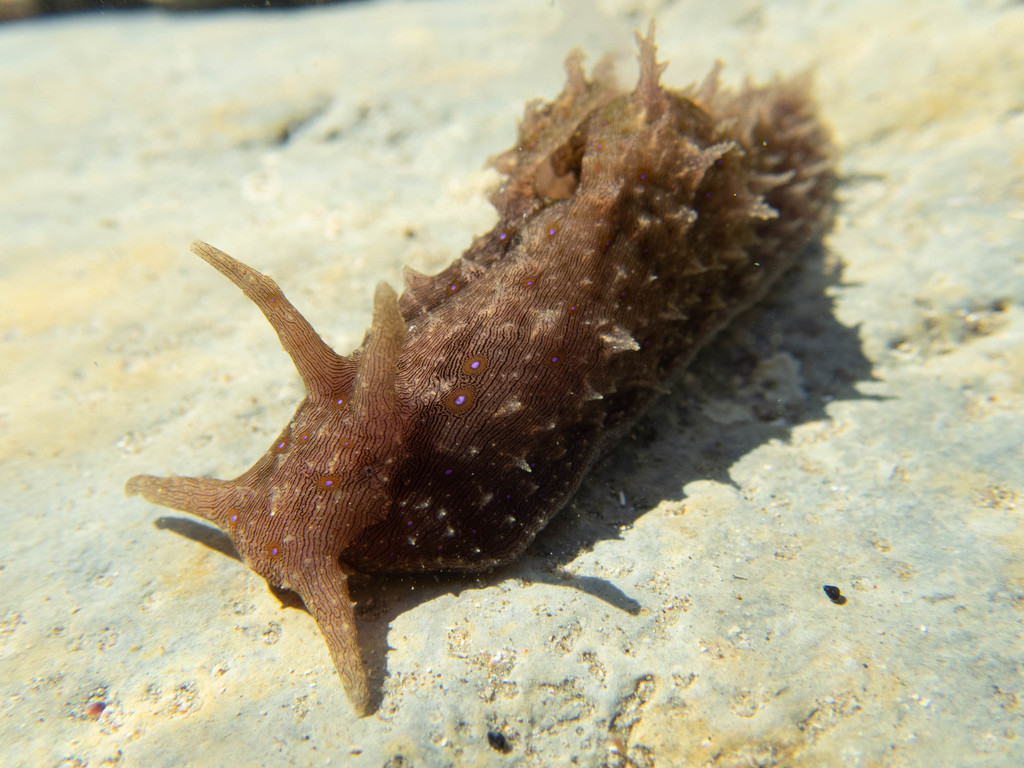
(c) M Rutherford, some rights reserved (CC BY) · CC BY · iNaturalist
Names and classification
- English
- Spiky Sea Hare, Lined Sea Hare, Striated Seahare
Names in 4 more languages
- Spanish
- Liebre de mar rayada
- French
- Lièvre de mer strié
- Japanese
- クロスジアメフラシ
- Simplified Chinese
- 柱唇海兔, 條紋柱唇海兔
Other scientific names: Aplysia striata, Notarchus lineolatus, Notarchus stimpsoni, Stylocheilus lineolatus, Stylocheilus quercinus
Similar species
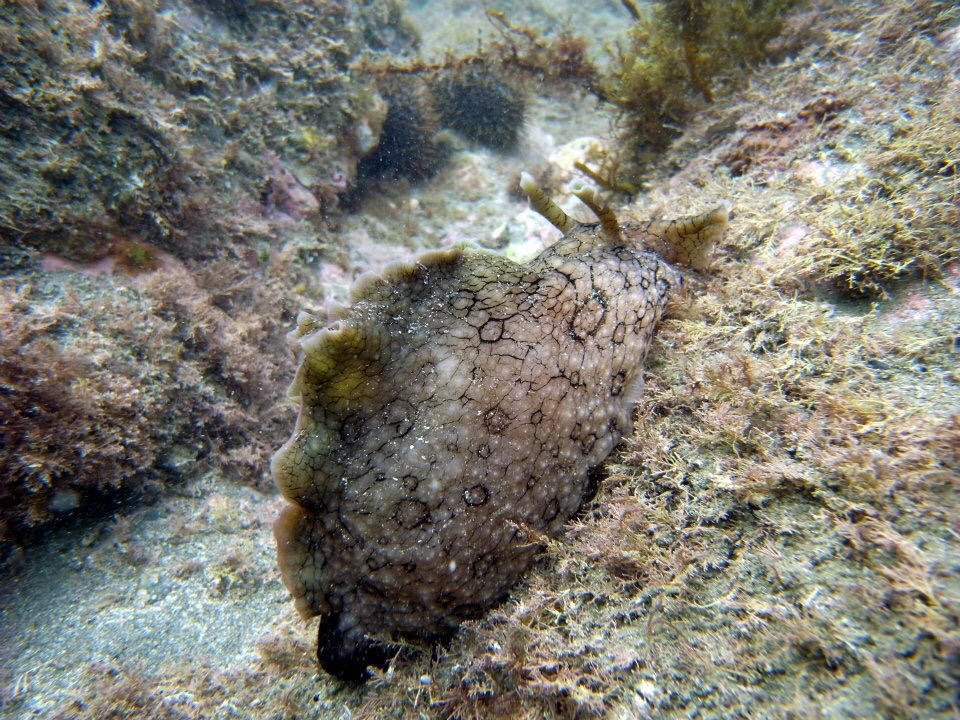 Ocellate Sea Hare
Aplysia argus
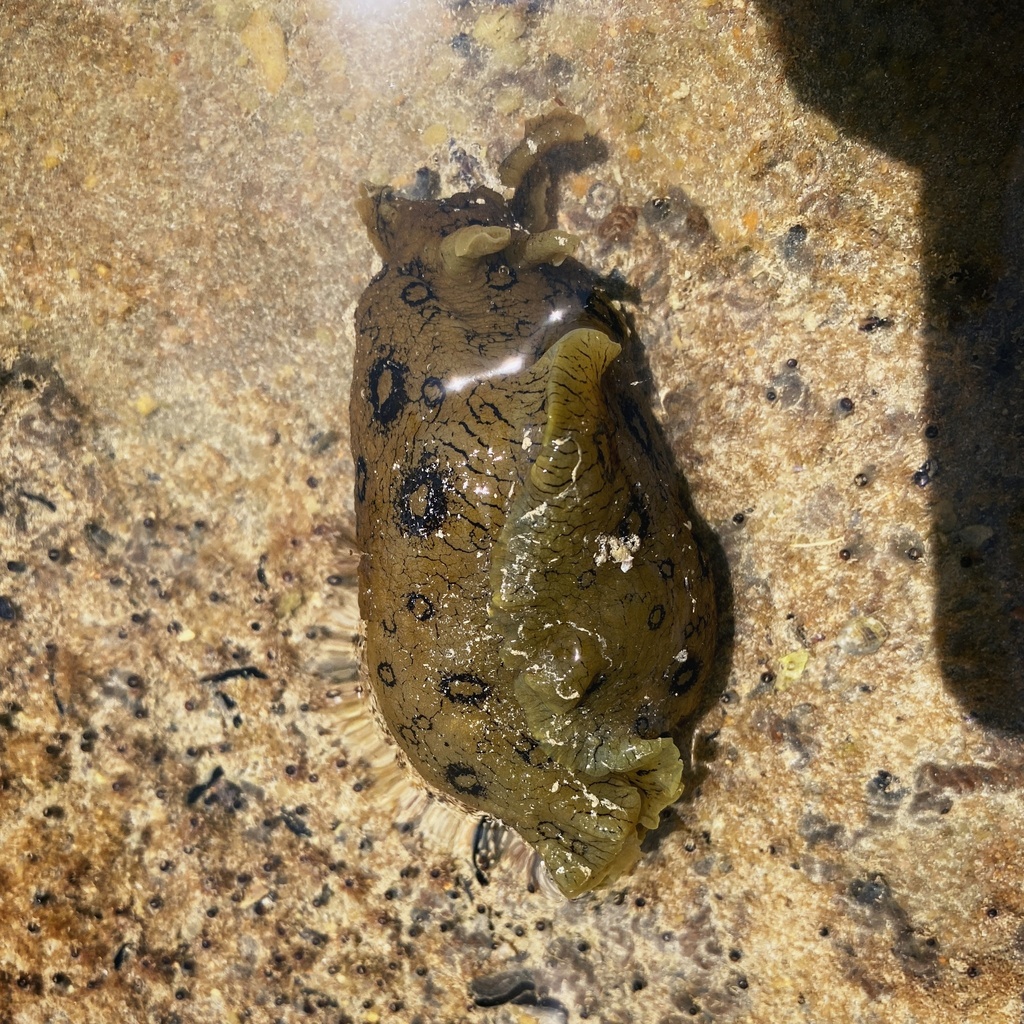 Large-spotted sea hare
Aplysia dactylomela
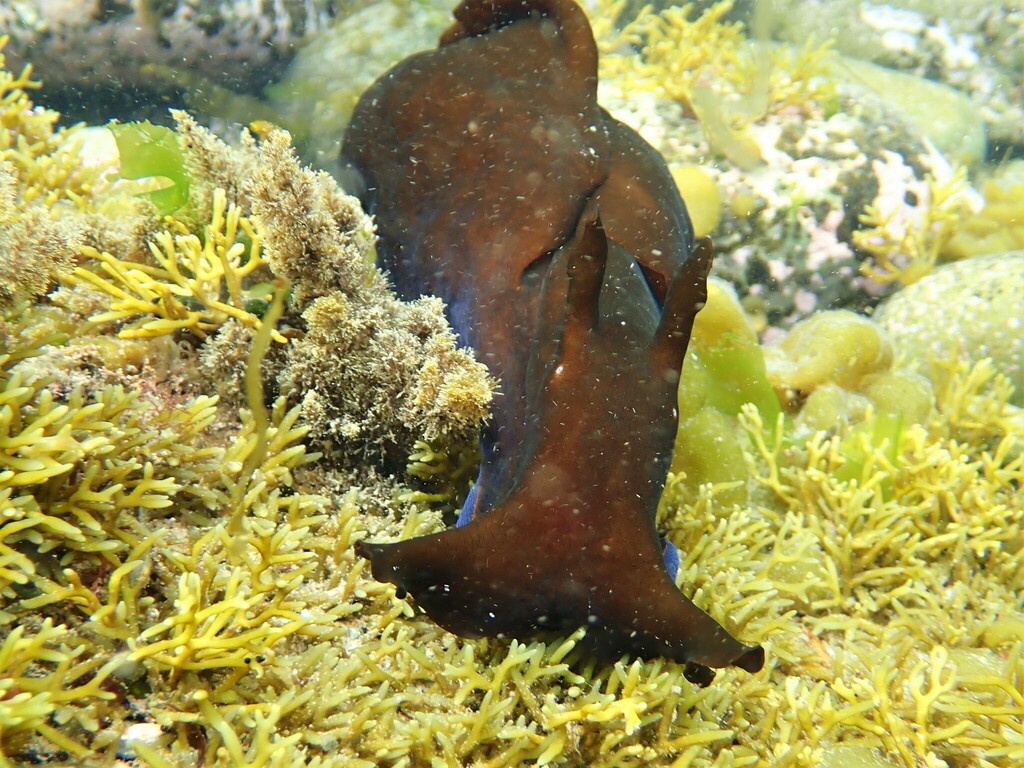 Sucker-foot Sea Hare
Aplysia juliana
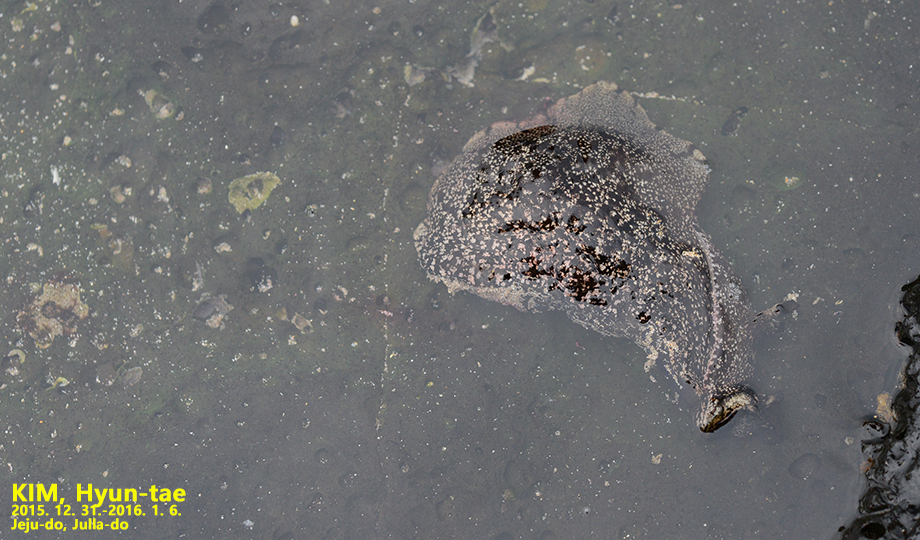
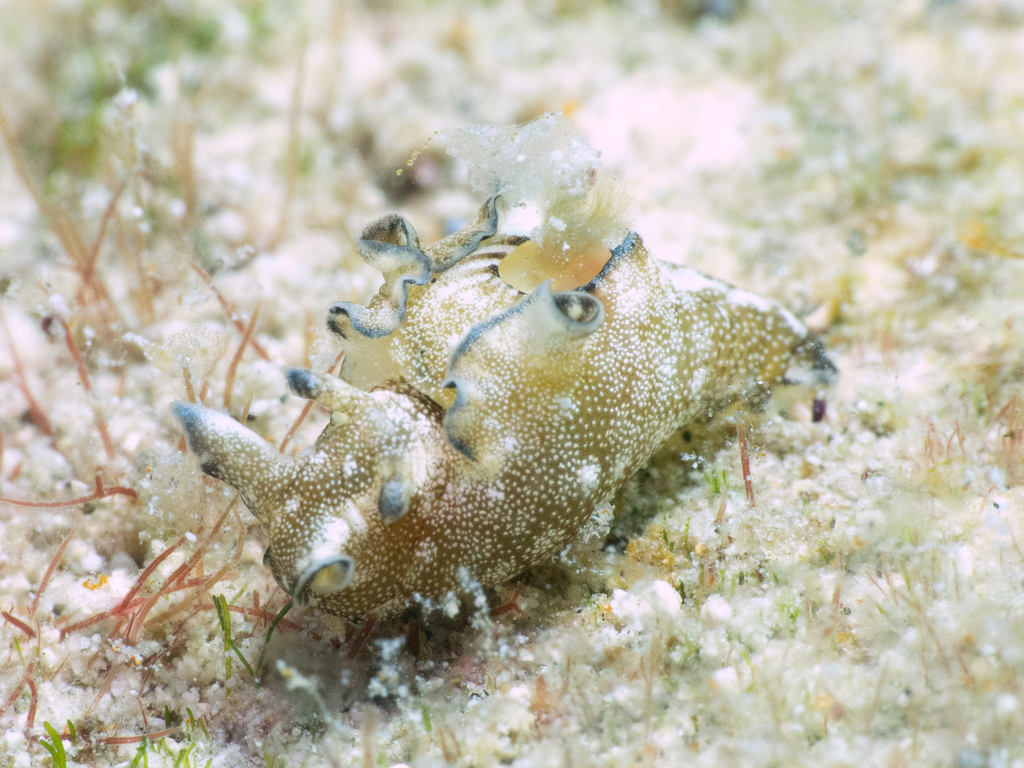 Dwarf sea hare
Aplysia parvula
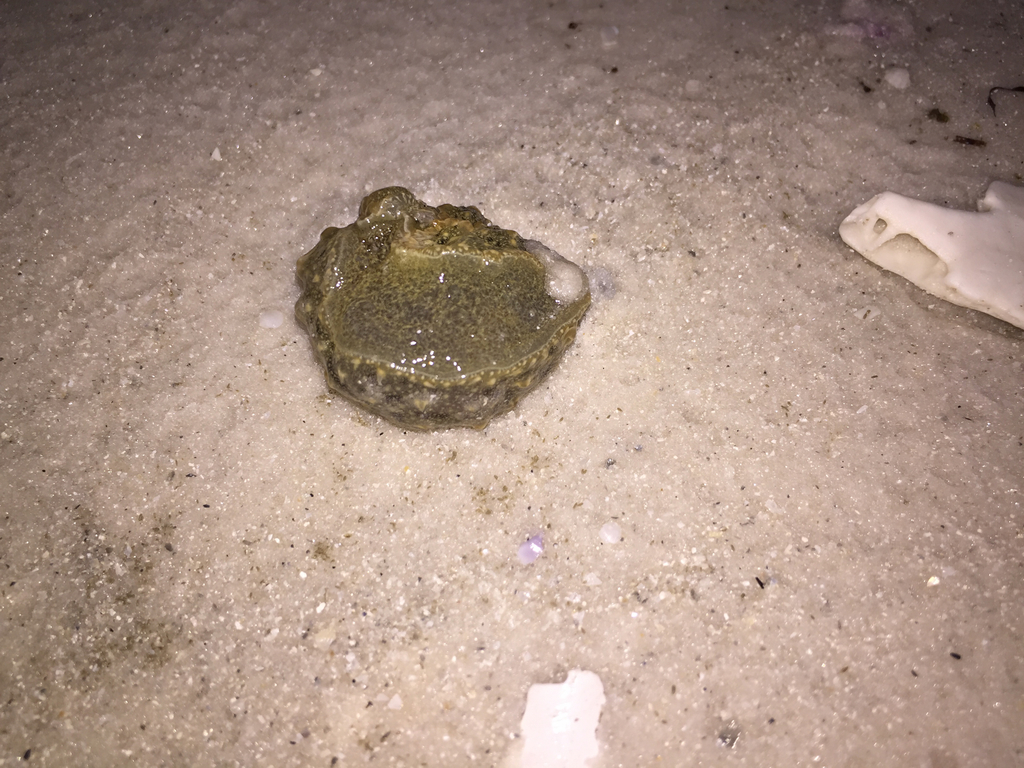 Blue-spotted sea hare
Bursatella leachii
Sources and credits
Names and taxonomy: WoRMS (CC BY 4.0) and the GBIF Backbone (CC BY 4.0). Photos: iNaturalist observers, each under the licence shown (CC0, CC BY or CC BY-SA).
- Depth, temperature, months and maps: records from OBIS and GBIF under CC0 or CC BY.
- Descriptions: Wikipedia, licensed CC BY-SA, each linked to its article.
- Conservation status as published by GBIF (IUCN Red List).
- 613 open-data records from 1921 to 2026.
- Species data updated October 26, 2026.
Log what you see on your next dive
The free DiveHive diver app keeps your logbook with every sighting and shows what lives at the site you dive next.