
Blue-striped Dwarfgoby
Trimma tevegae
- Usual depth8–46 m
- Water temperature24–30 °C
- Best monthsApril, June, and October
- How commonRare
About this species
Trimma tevegae, commonly known as the bluestripe pygmygoby or blue-striped cave goby among other names, is a species of goby from the western Pacific. They are small fish, averaging at 2 cm (0.79 in), orange-brown with white undersides in life, with characteristic iridescent blue or lavender stripes on the sides and on top of the body. They are usually found in large schools in the sloping or vertical drop-offs at coral reef edges. They are sometimes caught for the aquarium trade, and are also known by hobbyists under the name blue line flagtail goby. The species is named in honor of the schooner Te Vega.
Text from the Wikipedia article “Trimma tevegae”, licensed CC BY-SA 4.0. Read the article
Where and when
Where it has been recorded
Worldwide
Loading the map
Best months
Worldwide (open data)
- January: 14 records
- February: 10 records
- March: 6 records
- April: 20 records
- May: 17 records
- June: 21 records
- July: 4 records
- August: 17 records
- September: 14 records
- October: 26 records
- November: 13 records
- December: 6 records
Depth and water temperature
Depth
Mostly recorded at 8–46 m · Deepest record: 95.5 m
Water temperature
Recorded in surface water of 24–30 °C
Names and classification
- English
- Blue-striped Dwarfgoby, Bluestripe Dwarfgoby, Bluestripe Pygmy Goby, Cave Pygmy-goby, Tevegae Pygmygoby
Names in 2 more languages
- Japanese
- アオギハゼ
- Simplified Chinese
- 底斑磨塘鱧
Similar species
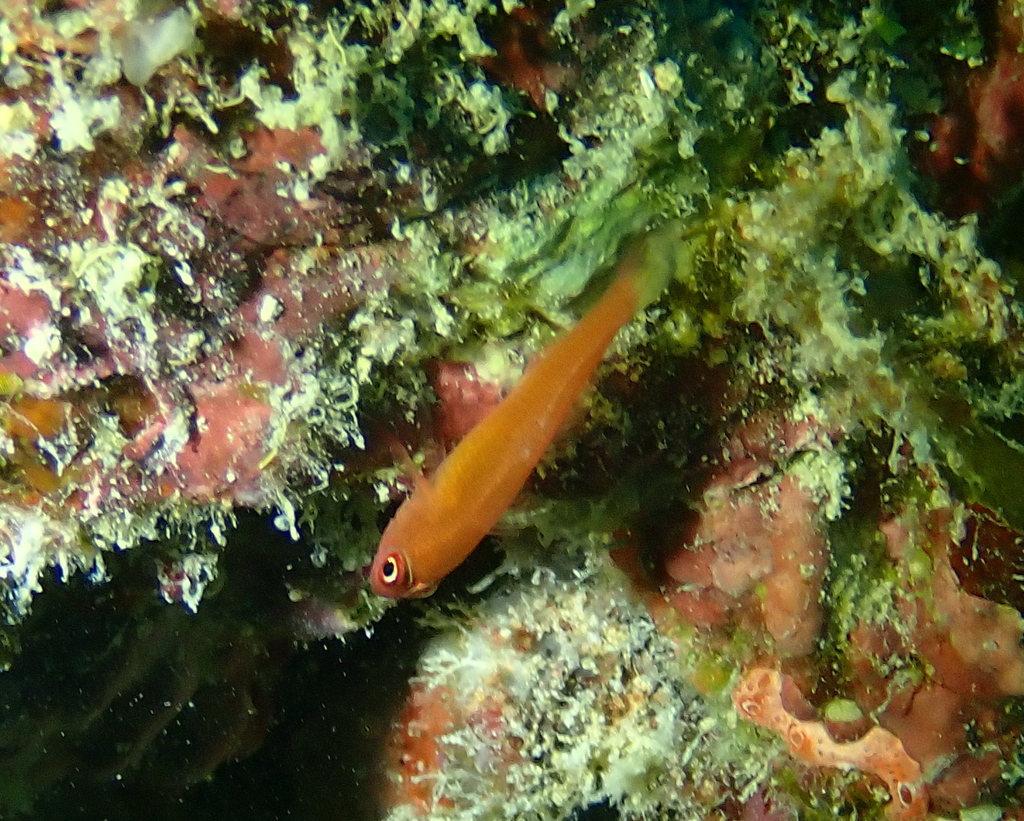 Red Dwarfgoby
Trimma benjamini
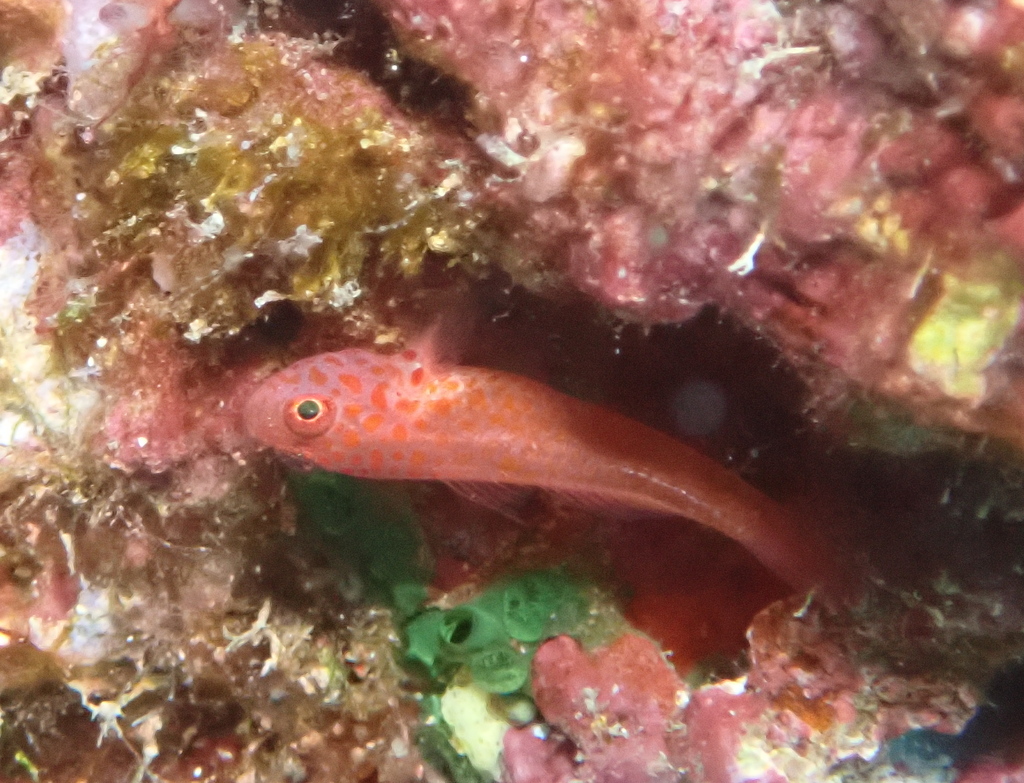 Flame Goby
Trimma macrophthalmus
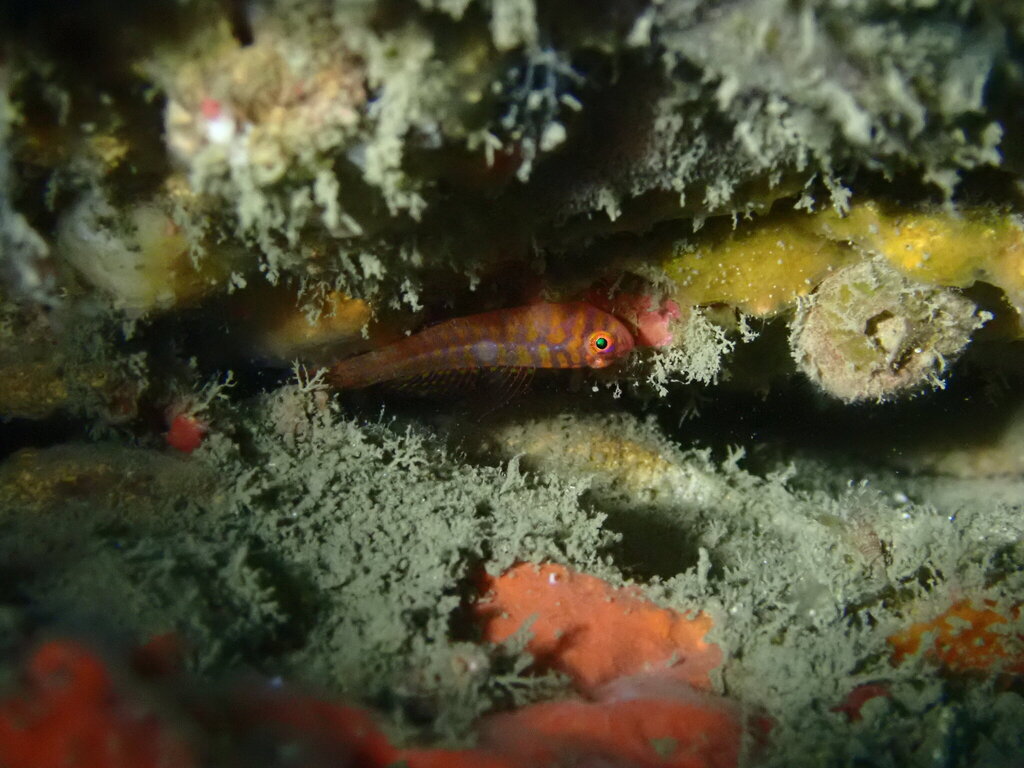 Okinawa Dwarfgoby
Trimma okinawae
- Caesiura Dwarfgoby
Trimma caesiura
- Stobb's Dwarfgoby
Trimma stobbsi
- Red-lined Pygmy-goby
Trimma striatum
Sources and credits
Names and taxonomy: WoRMS (CC BY 4.0) and the GBIF Backbone (CC BY 4.0). Photos: iNaturalist observers, each under the licence shown (CC0, CC BY or CC BY-SA).
- Depth, temperature, months and maps: records from OBIS and GBIF under CC0 or CC BY.
- Descriptions: Wikipedia, licensed CC BY-SA, each linked to its article.
- Conservation status as published by GBIF (IUCN Red List).
- 341 open-data records from 1957 to 2015.
Log what you see on your next dive
The free DiveHive diver app keeps your logbook with every sighting and shows what lives at the site you dive next.