
DiscoverSpeciesCorals and anemones
Orange cup coral
Tubastraea coccinea
- Usual depth4–48 m
- Water temperature14–29 °C
- Best monthsApril
- How commonOccasional
About this species
Orange cup coral is a species of large-polyp stony corals. This non-reef building coral extends translucent tentacles at night. Tubastraea coccinea is heterotrophic and does not contain zooxanthellae in its tissues as many tropical corals do, allowing it to grow in complete darkness as long as it can capture enough food. T. coccinea is an invasive coral known for its vibrant sun-like colors, which contrast against the dimly lit areas it inhabits. This organism has a massive geographic range, spreading as far as the Atlantic, Caribbean, and Gulf of Mexico since its original discovery in 1830. Ballast water is a significant benefactor to their spread, though T. coccinea has also been known to cling to the underside of passing ships. Further, its ability to use sexual and asexual reproduction and lack of reliance on photosynthesis promote its invasive spread. Attempts have been made to control its spread.
Text from the Wikipedia article “Orange cup coral”, licensed CC BY-SA 4.0. Read the article
Where and when
Where it has been recorded
Worldwide
Loading the map
Best months
Worldwide (open data)
- January: 3 records
- February: 11 records
- March: 9 records
- April: 181 records
- May: 20 records
- June: 15 records
- July: 44 records
- August: 15 records
- September: 12 records
- October: 15 records
- November: 17 records
- December: 6 records
Depth and water temperature
Depth
Mostly recorded at 4–48 m · Deepest record: 2,864.9 m
Water temperature
Recorded in surface water of 14–29 °C
Names and classification
- English
- Orange cup coral, orange coral, orange cup coral, red coral, Red Cup Coral, Sun Coral
Names in 7 more languages
- German
- Goldene Kelchkoralle
- Spanish
- Tubastraea Naranja
- French
- Tubastrée orange
- Japanese
- ヒメイボヤギ
- Korean
- 금빛나팔돌산호
- Thai
- ปะการังถ้วยส้ม
- Simplified Chinese
- 圓管星珊瑚, 短管星珊瑚
Other scientific names: Astropsammia pedersenii, Caryophyllia aurantiaca, Caryophyllia calycularis, Cladocora calycularis, Coenopsammia affinis, Coenopsammia coccinea, Coenopsammia ehrenbergiana, Coenopsammia gaimardi, Coenopsammia manni, Coenopsammia radiata, Coenopsammia tenuilamellosa, Coenopsammia urvillii, Dendrophyllia (Coenopsammia) affinis, Dendrophyllia affinis, Dendrophyllia aurantiaca, Dendrophyllia circularis, Dendrophyllia coccinea, Dendrophyllia ehrenbergiana, Dendrophyllia manni, Dendrophyllia radiata, Dendrophyllia surcularis, Dendrophyllia tenuilamellosa, Dendrophyllia turbinata, Lobopsammia darwini, Pachypsammia valida, Pachysammia valida, Placopsammia darwini, Tubastaea coccinea, Tubastraea pedersenii, Tubastraea tenuilamellosa
Similar species
- Black cup coral
Tubastraea micranthus
- Beaked stony coral
Enallopsammia rostrata
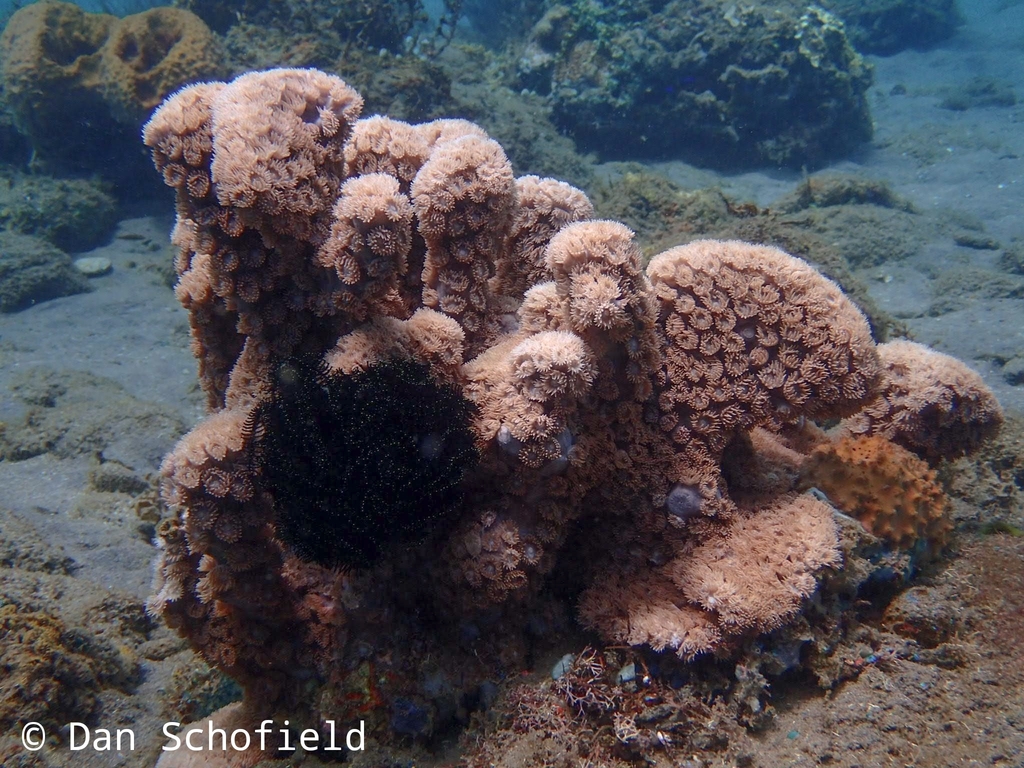 Bowl coral
Duncanopsammia peltata
Sources and credits
Names and taxonomy: WoRMS (CC BY 4.0) and the GBIF Backbone (CC BY 4.0). Photos: iNaturalist observers, each under the licence shown (CC0, CC BY or CC BY-SA).
- Depth, temperature, months and maps: records from OBIS and GBIF under CC0 or CC BY.
- Descriptions: Wikipedia, licensed CC BY-SA, each linked to its article.
- Conservation status as published by GBIF (IUCN Red List).
- 2,094 open-data records from 1830 to 2024.
Log what you see on your next dive
The free DiveHive diver app keeps your logbook with every sighting and shows what lives at the site you dive next.