
Bastard Seahorse
Acentronura gracilissima
- Water temperature20–29 °C
- Best monthsDecember
- How commonRare
About this species
Acentronura gracilissima, the bastard seahorse, is a species of pygmy pipehorse from the coastal waters of Japan and Vietnam, it is expected to occur elsewhere but reports in other areas need to be confirmed. It occurs on rock and algae reefs downto depths of 40 metres (130 ft) where it feeds on mysids, small crabs, fish larvae and probably also on harpacticoid copepods and gammarid shrimps as recorded in other species in the family Syngnathidae. The bastard seahorse is ovoviviparous; the males incubate the eggs in a brood pouch located under the tail.
Text from the Wikipedia article “Acentronura gracilissima”, licensed CC BY-SA 4.0. Read the article
Where and when
Where it has been recorded
Worldwide
Loading the map
Best months
Worldwide (open data)
- January: 0 records
- February: 0 records
- March: 0 records
- April: 0 records
- May: 0 records
- June: 0 records
- July: 0 records
- August: 0 records
- September: 0 records
- October: 0 records
- November: 0 records
- December: 1 records
Depth and water temperature
Water temperature
Recorded in surface water of 20–29 °C
Names and classification
- English
- Bastard Seahorse, Graceful Pipehorse
Names in 2 more languages
- Japanese
- Tatsunoitoko, タツノイトコ
- Simplified Chinese
- 細尾海馬, 细尾海马
Other scientific names: Atelurus germani, Hippocampus gracilissimus
Similar species
- Dwarf Pipehorse
Acentronura breviperula
- Dwarf Pipehorse
Acentronura tentaculata
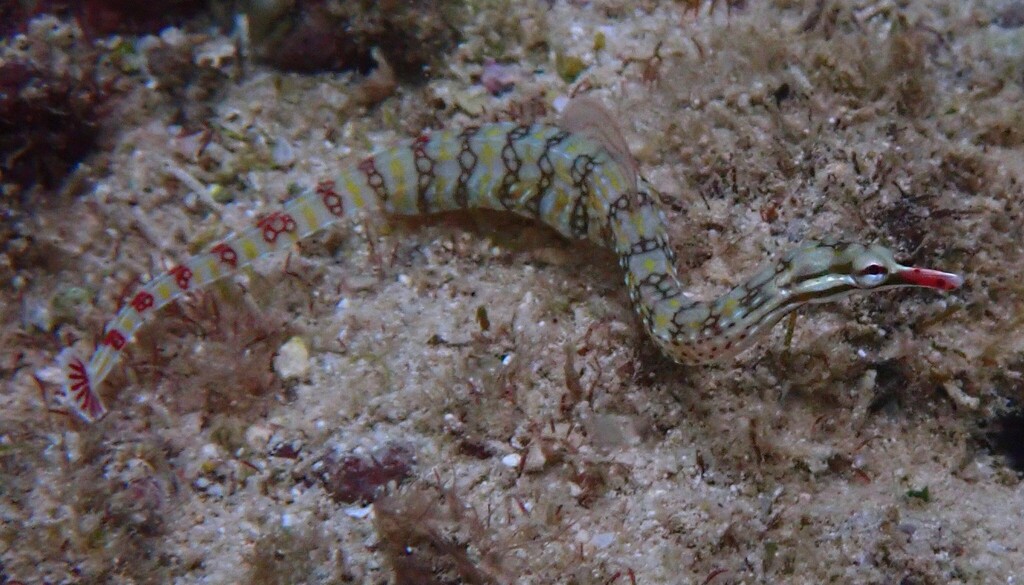 Banded Pipefish
Corythoichthys flavofasciatus
 Bloodspot Pipefish
Corythoichthys haematopterus
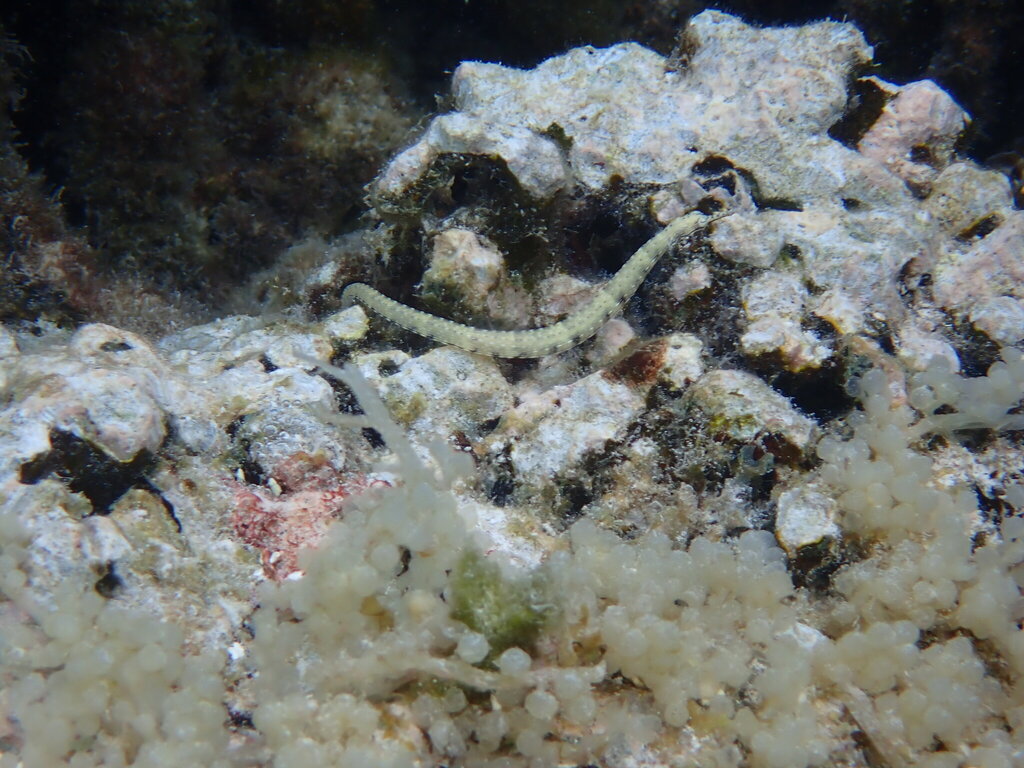 Banded pipefish
Corythoichthys intestinalis
 Bluestripe pipefish
Doryrhamphus excisus
Sources and credits
Names and taxonomy: WoRMS (CC BY 4.0) and the GBIF Backbone (CC BY 4.0). Photos: iNaturalist observers, each under the licence shown (CC0, CC BY or CC BY-SA).
- Depth, temperature, months and maps: records from OBIS and GBIF under CC0 or CC BY.
- Descriptions: Wikipedia, licensed CC BY-SA, each linked to its article.
- Conservation status as published by GBIF (IUCN Red List).
- 8 open-data records from 1900 to 1989.
Log what you see on your next dive
The free DiveHive diver app keeps your logbook with every sighting and shows what lives at the site you dive next.