
DiscoverSpeciesCorals and anemones
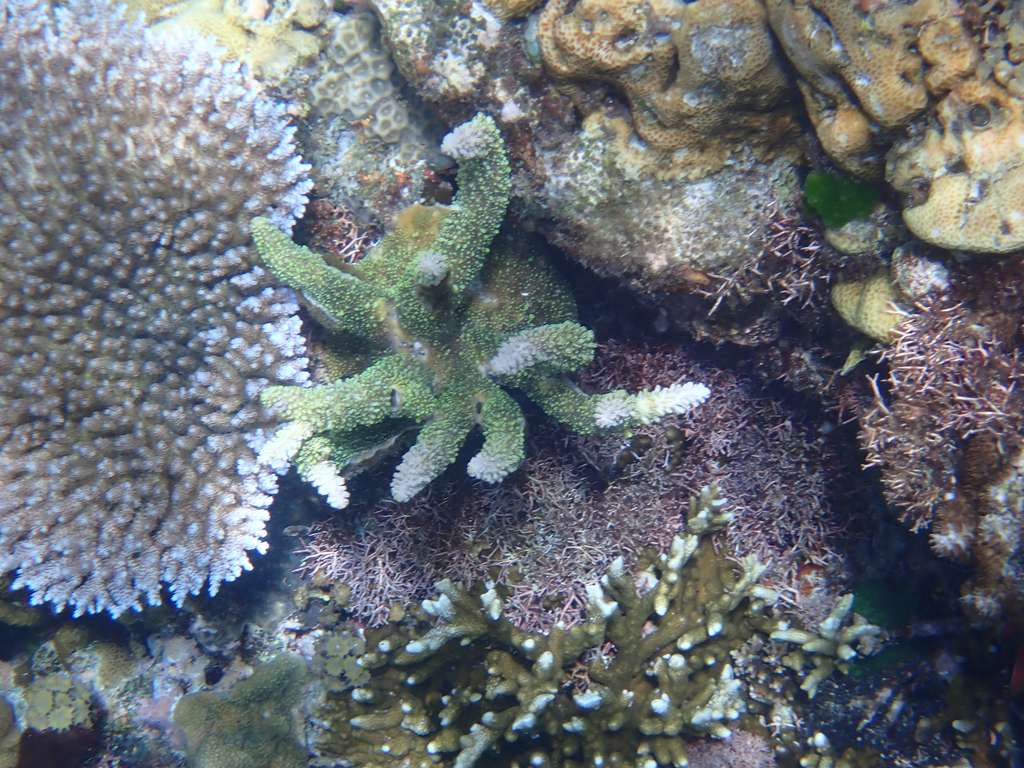
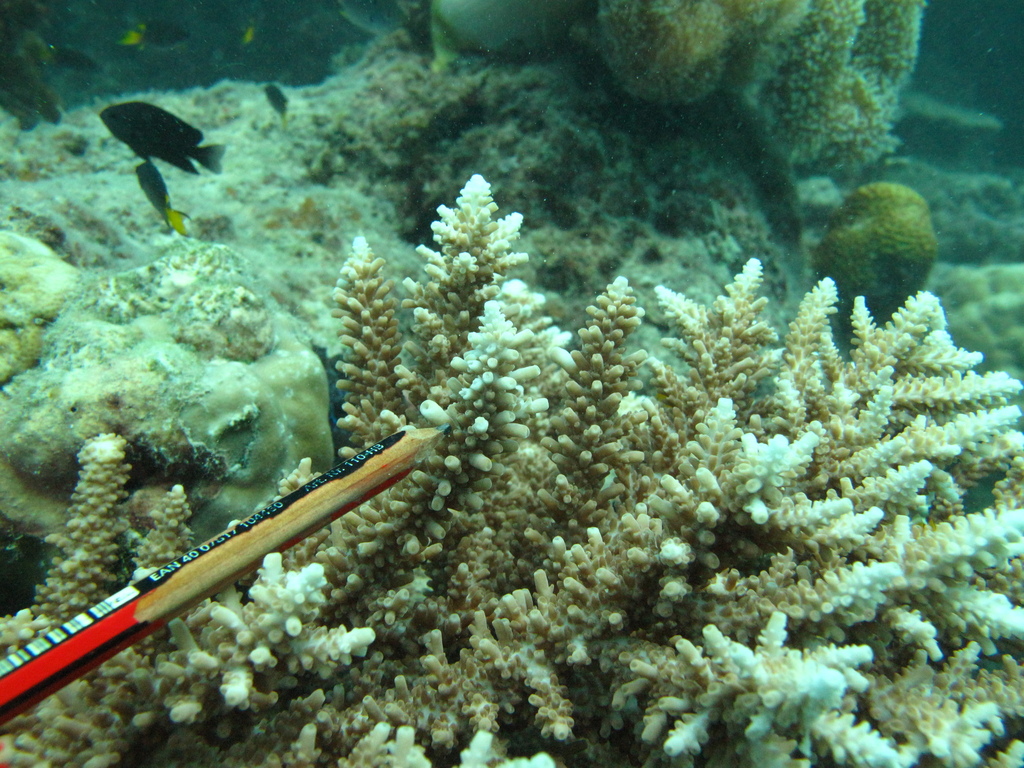
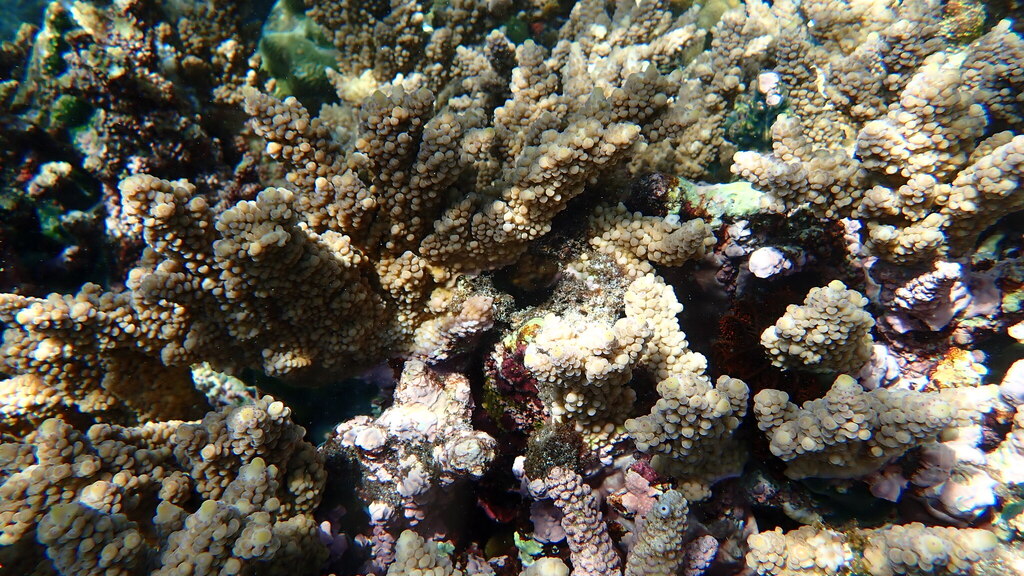
Acropora striata
- Usual depth7–16 m
- Water temperature23–30 °C
- Best monthsMay, August, and September
- How commonRare
About this species
Acropora striata is a species of acroporid coral found in the southwest Indian Ocean, the central Indo-Pacific, Japan and the East China Sea. It can also be found in the Marshall Islands, the Society Islands, the Cook Islands, Kiribati, the Solomon Islands, western and eastern Australia, the Great Barrier Reef, Palau, the south Mariana Islands and Pohnpei. It occurs in tropical shallow reefs on reef flats or rocky foreshores, at depths of 10 to 25 metres. It probably spawns in October and was described by Addison Emery Verrill in 1866.
Text from the Wikipedia article “Acropora striata”, licensed CC BY-SA 4.0. Read the article
Where and when
Where it has been recorded
Worldwide
Loading the map
Best months
Worldwide (open data)
- January: 0 records
- February: 0 records
- March: 9 records
- April: 10 records
- May: 27 records
- June: 8 records
- July: 9 records
- August: 19 records
- September: 18 records
- October: 17 records
- November: 9 records
- December: 1 records
Depth and water temperature
Depth
Mostly recorded at 7–16 m · Deepest record: 26 m
Water temperature
Recorded in surface water of 23–30 °C
Names and classification
Names in 1 more languages
- Japanese
- ヒメヅツミドリイシ
Other scientific names: Acropora (Acropora) striata, Madrepora (Rhabdocyathus) striata, Madrepora striata
Similar species
- Elkhorn coral
Acropora palmata
 Staghorn Coral
Acropora austera
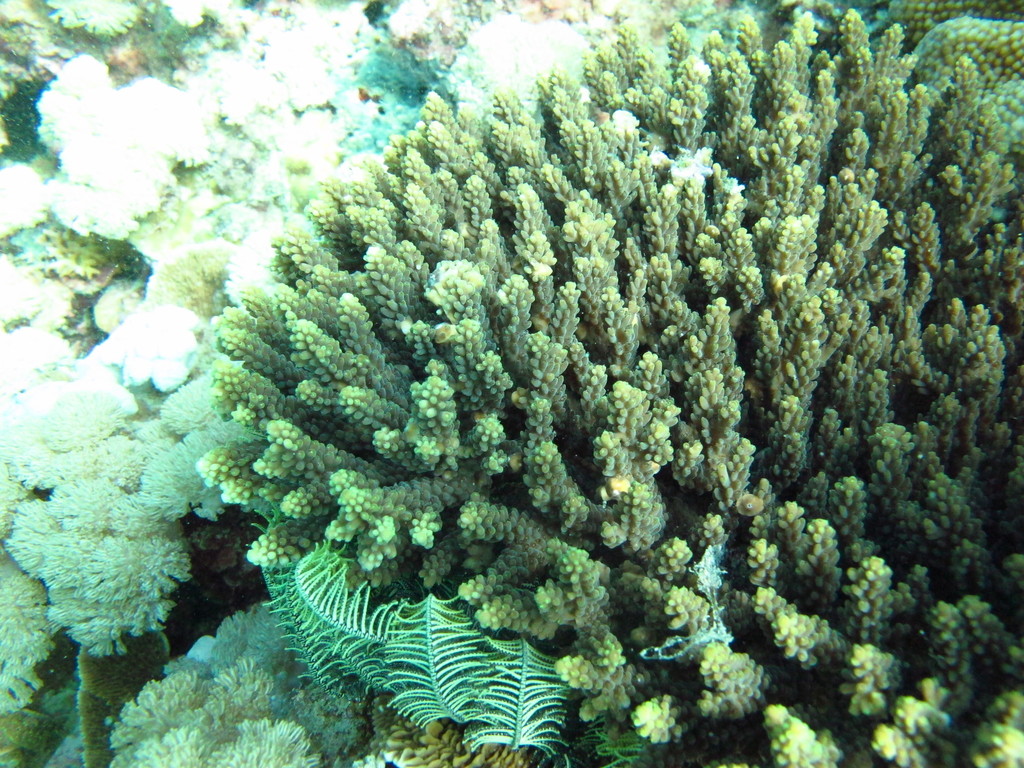
 Table coral
Acropora cytherea
Sources and credits
Names and taxonomy: WoRMS (CC BY 4.0) and the GBIF Backbone (CC BY 4.0). Photos: iNaturalist observers, each under the licence shown (CC0, CC BY or CC BY-SA).
- Depth, temperature, months and maps: records from OBIS and GBIF under CC0 or CC BY.
- Descriptions: Wikipedia, licensed CC BY-SA, each linked to its article.
- Conservation status as published by GBIF (IUCN Red List).
- 271 open-data records from 1970 to 2010.
Log what you see on your next dive
The free DiveHive diver app keeps your logbook with every sighting and shows what lives at the site you dive next.