
Australian Burrfish
Allomycterus pilatus
- Usual depth52–154 m
- Water temperature11–23 °C
- Best monthsMarch, April, and November
- How commonOccasional
About this species
The deepwater burrfish is a porcupinefish of the family Diodontidae, found off southern Australia, central and northern New Zealand, and in the Tasman Sea. It occurs at depths of 40 to 270 m in areas off the continental shelf. The species reaches 50 cm in total length and is reportedly easily entangled in nets due to its spines and ability to inflate its body. It is the only known member of its genus.
Text from the Wikipedia article “Deepwater burrfish”, licensed CC BY-SA 4.0. Read the article
Where and when
Where it has been recorded
Worldwide
Loading the map
Best months
Worldwide (open data)
- January: 8 records
- February: 100 records
- March: 115 records
- April: 113 records
- May: 95 records
- June: 73 records
- July: 95 records
- August: 104 records
- September: 54 records
- October: 96 records
- November: 120 records
- December: 103 records
Depth and water temperature
Depth
Mostly recorded at 52–154 m · Deepest record: 500 m
Water temperature
Recorded in surface water of 11–23 °C
Names and classification
- English
- Australian Burrfish, Deepwater Burrfish, Deepwater Porcupine Fish, No Common Name, porcupinefish, Small-spined Porcupinefish
Names in 2 more languages
- German
- Tiefsee-Igelfisch
- Japanese
- スミツキイシガキフグ
Other scientific names: Allomycterus whiteleyi, Allomycterus whitleyi
Similar species
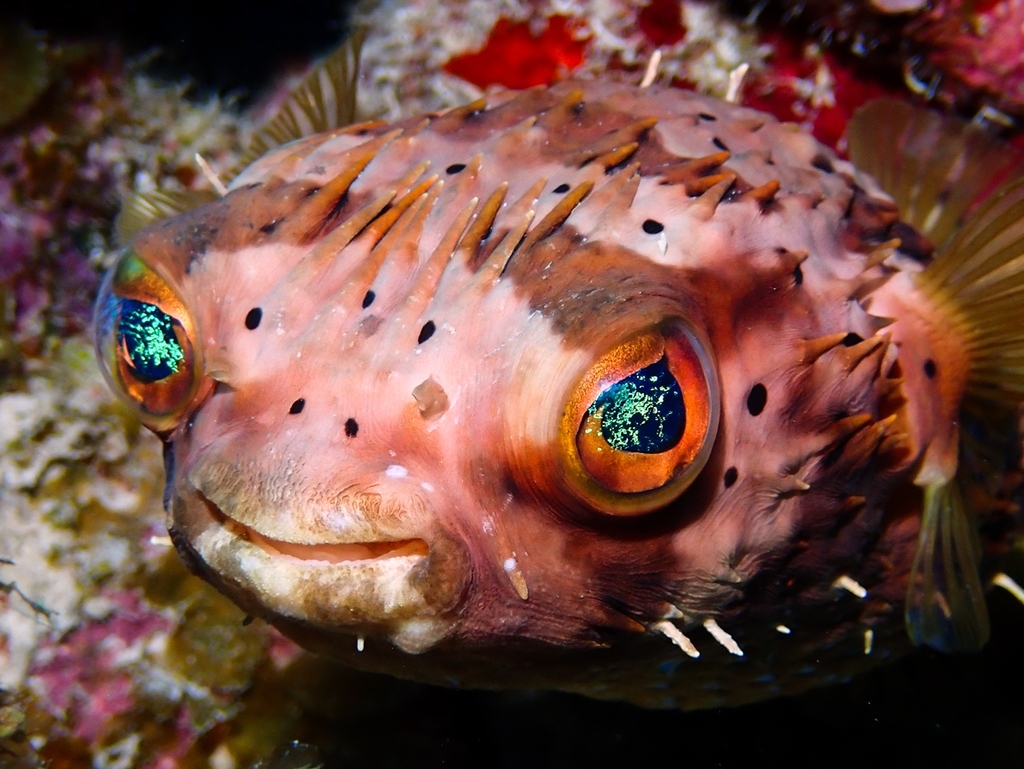 Balloonfish
Diodon holocanthus
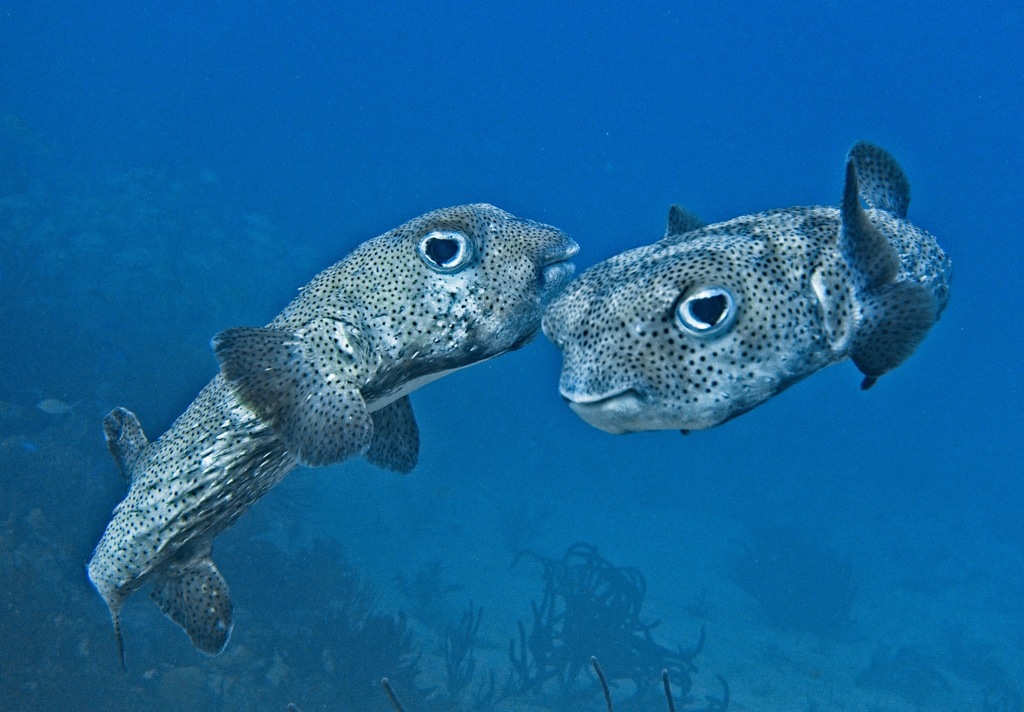 Porcupinefish
Diodon hystrix
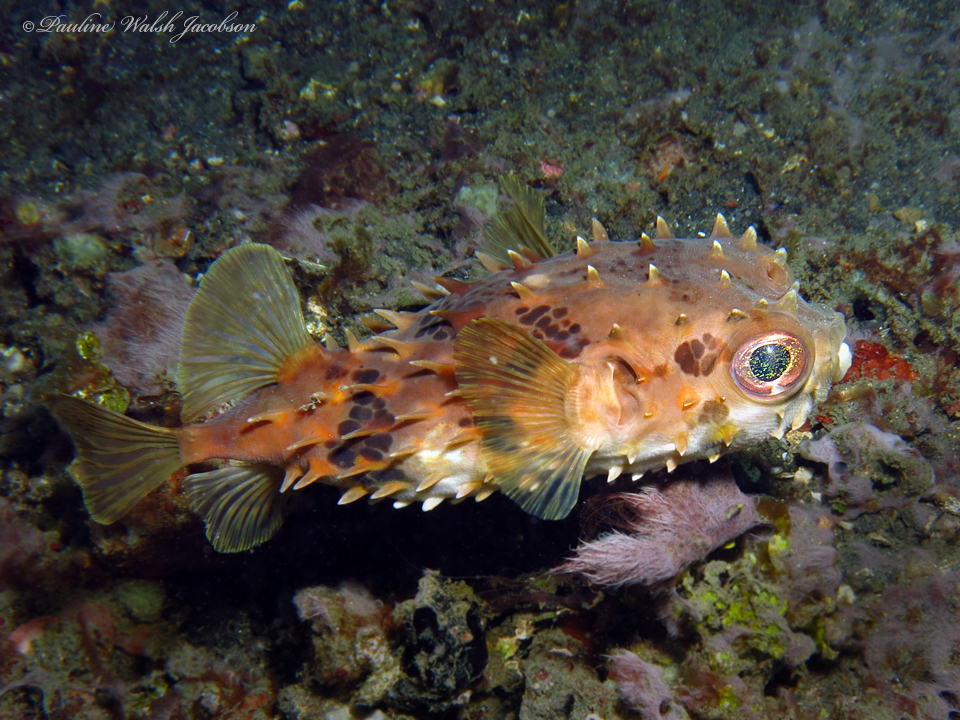 Birdbeak burrfish
Cyclichthys orbicularis
 Black-blotched porcupinefish
Diodon liturosus
Sources and credits
Names and taxonomy: WoRMS (CC BY 4.0) and the GBIF Backbone (CC BY 4.0). Photos: iNaturalist observers, each under the licence shown (CC0, CC BY or CC BY-SA).
- Depth, temperature, months and maps: records from OBIS and GBIF under CC0 or CC BY.
- Descriptions: Wikipedia, licensed CC BY-SA, each linked to its article.
- Conservation status as published by GBIF (IUCN Red List).
- 1,850 open-data records from 1898 to 2016.
Log what you see on your next dive
The free DiveHive diver app keeps your logbook with every sighting and shows what lives at the site you dive next.