
DiscoverSpeciesSharks and rays
Common thresher
Alopias vulpinus
- Usual depth2–16 m
- Water temperature11–29 °C
- Best monthsAugust and September
- How commonCommon
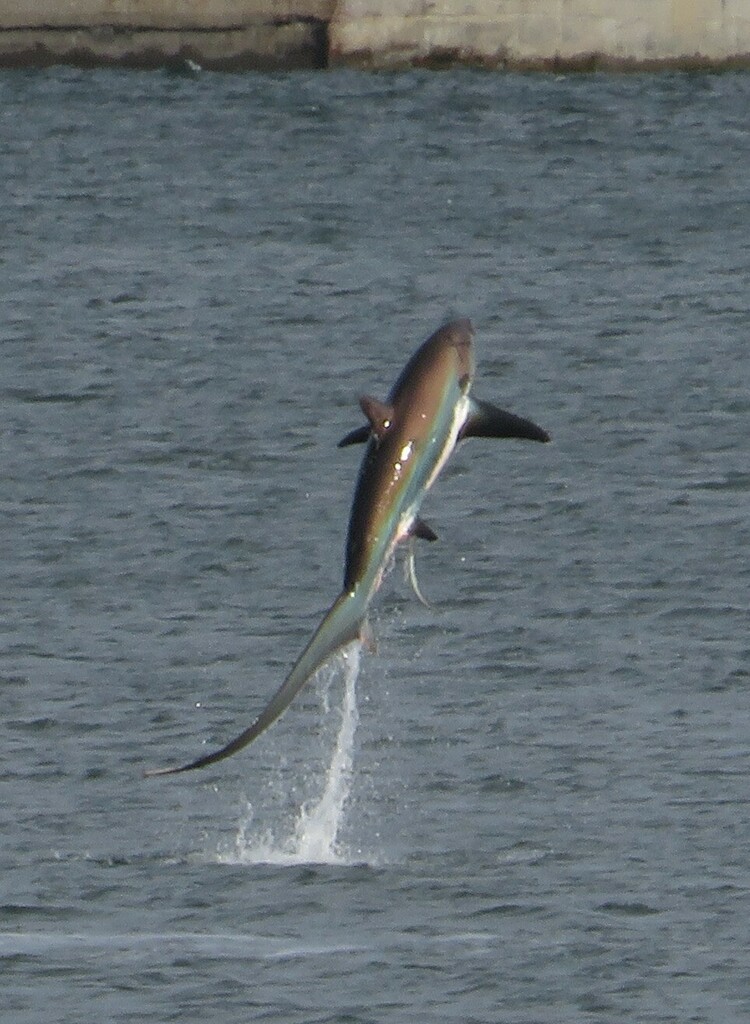
Photo credit: (c) alicia penney, some rights reserved (CC BY) · CC BY · iNaturalist
About this species
The common thresher, also known as Atlantic thresher, is the largest species of thresher shark, family Alopiidae, reaching 6 m (20 ft) in length. About half of its length consists of the elongated upper lobe of its caudal fin. With a streamlined body, short pointed snout, and modestly sized eyes, the common thresher resembles the pelagic thresher. It can be distinguished from the latter species by the white of its belly extending in a band over the bases of its pectoral fins. The common thresher is distributed worldwide in tropical and temperate waters, though it prefers cooler temperatures. It can be found both close to shore and in the open ocean, from the surface to a depth of 550 m (1,800 ft). It is seasonally migratory and spends summers at lower latitudes.
Text from the Wikipedia article “Common thresher”, licensed CC BY-SA 4.0. Read the article
Where and when
Where it has been recorded
Worldwide
Loading the map
Best months
Worldwide (open data)
- January: 19 records
- February: 21 records
- March: 24 records
- April: 25 records
- May: 24 records
- June: 289 records
- July: 2,217 records
- August: 8,653 records
- September: 10,275 records
- October: 5,841 records
- November: 1,703 records
- December: 509 records
Depth and water temperature
Depth
Mostly recorded at 2–16 m · Deepest record: 456.5 m
Water temperature
Recorded in surface water of 11–29 °C
Photos

(c) Jon Sullivan, some rights reserved (CC BY) · CC BY · iNaturalist 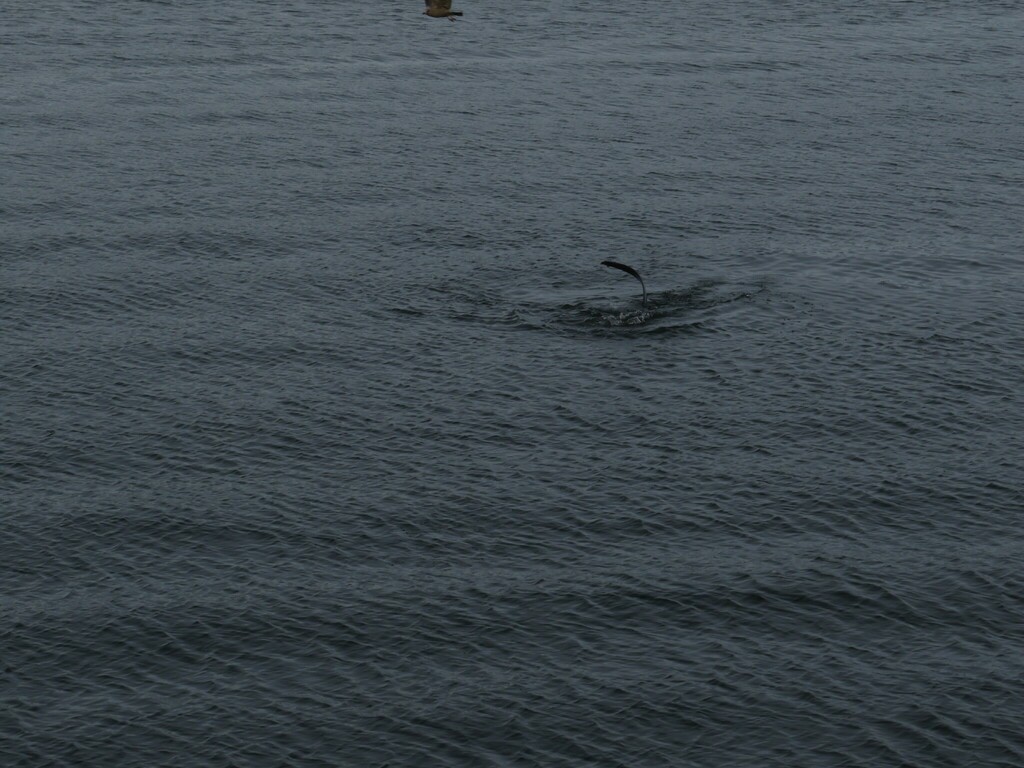
(c) alicia penney, some rights reserved (CC BY) · CC BY · iNaturalist 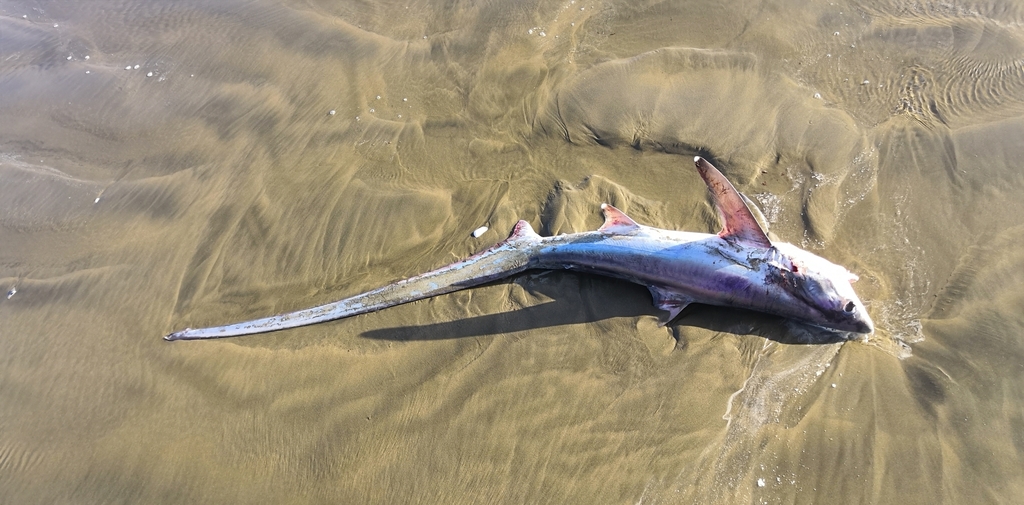
(c) Lawrence Troup, some rights reserved (CC BY-SA) · CC BY-SA · iNaturalist 
no rights reserved · CC0 1.0 · iNaturalist 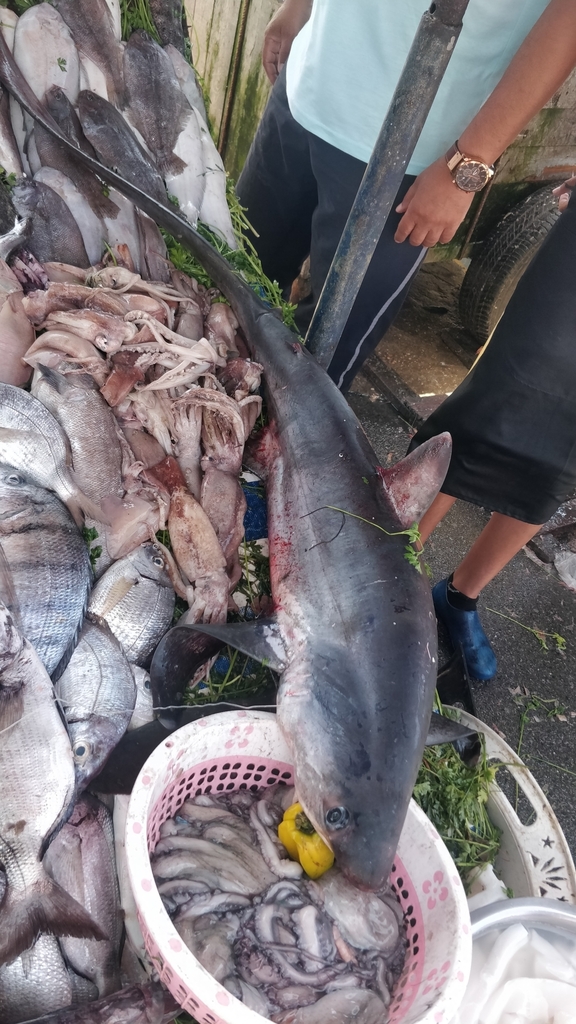
(c) Ben Jobson, some rights reserved (CC BY) · CC BY · iNaturalist 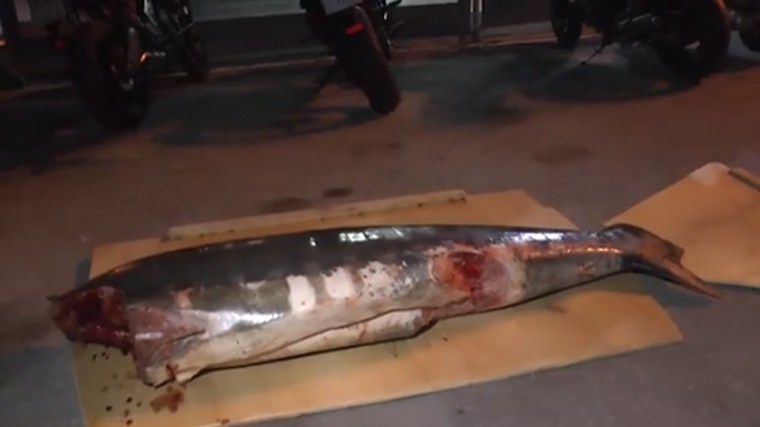
(c) biodiversitygr, some rights reserved (CC BY) · CC BY · iNaturalist 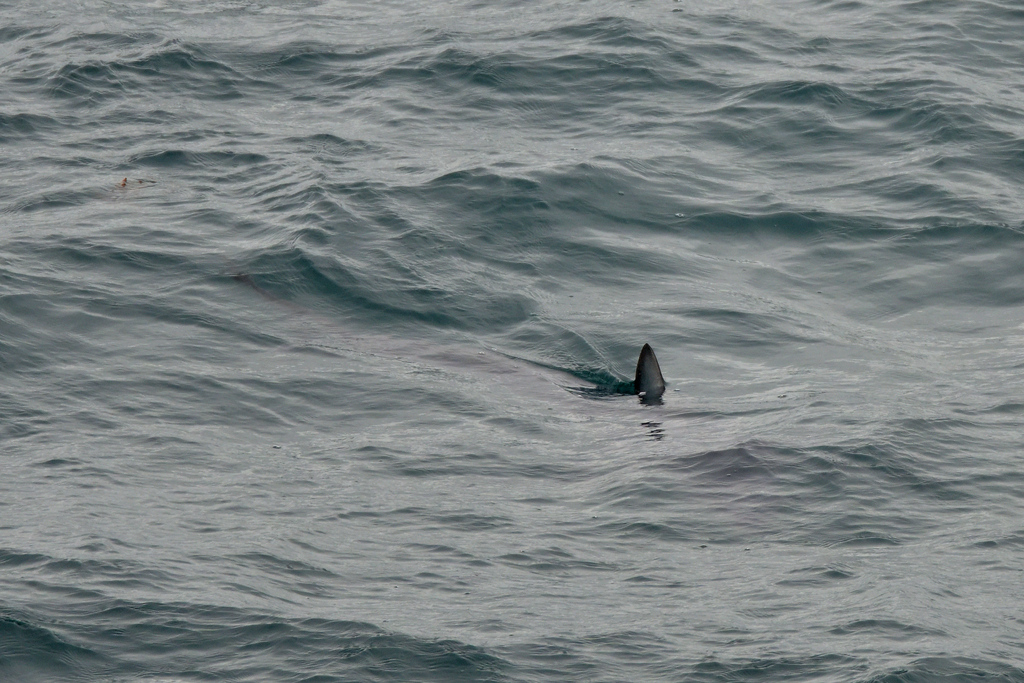
(c) Christopher Stephens, some rights reserved (CC BY-SA) · CC BY-SA · iNaturalist
Names and classification
- English
- Common thresher, Fox shark, Long-tailed shark, Sea ape, Sea fox, Slasher, Atlantic Thresher, Big-eye Thresher, Bigeye Thresher, common thresher, Common Thresher, Common Thresher Shark, fox shark, Fox Shark, Grayfish, Green Thresher, long-tailed shark, Pelagic Thresher, sea ape, sea fox, Sea Fox, slasher, Swingletail, Swiveltail, Swivetail, thintail thresher, Thintail Thresher, Thrasher, thrasher shark, thresher, Thresher, thresher shark, Thresher Shark, Thresher shark or Bigeye thresher, Thresher, Thintail thresher, Thresher Shark, tresher, Tresher Shark, Tresher Shark, Tresher, Whip-tailed Shark, whiptail shark
Names in 4 more languages
- German
- Drescher, Drescherhai, Fuchshai, Gemeiner Fuchshai, Gewöhnlicher Fuchshai, Langschweif, Seefuchs
- Spanish
- Azotador, Chichi espada, Coleto, Coludo, Coludo Pinto, Grillo, Guadaña, peix espasa, Pejerrabo, Peje sable, Peje zorra, Peje zorro, Pez espada, Pez palo, pez zorro, Pez zorro, Pichirata, Rabo de zorra, rabosa, Raposa, Raposa marina, Tiburón pez zorro, Tiburón ratón, Tiburón zorro, tiburón zorro común, zorra de mar, zorro, zorro blanco
- French
- Faux, la faux, Loup de mer, péi aspasu ratou, Pèis rato, poisson épée, Poisson-épée, renard, Renard, renard de mer, Renard de mer, renard marin, Renard, Renard de mer, Requin renard, Requin renard commun, Requin-renard commun, singe de mer, Singe de mer, Thon blanc, touille à l'épée
- Japanese
- ma-onaga, Mao-naga, Maonaga, nadebuka, nezumezame, onagazame, マオナガ
Other scientific names: Alopecias barrae, Alopecias chilensis, Alopecias longimana, Alopecias vulpes, Alopias caudatus, Alopias greyi, Alopias macrourus, Alopias vulpes, Carcharias vulpes, Galeus vulpecula, Squalus alopecias, Squalus vulpes, Squalus vulpinus, Vulpecula marina
Similar species
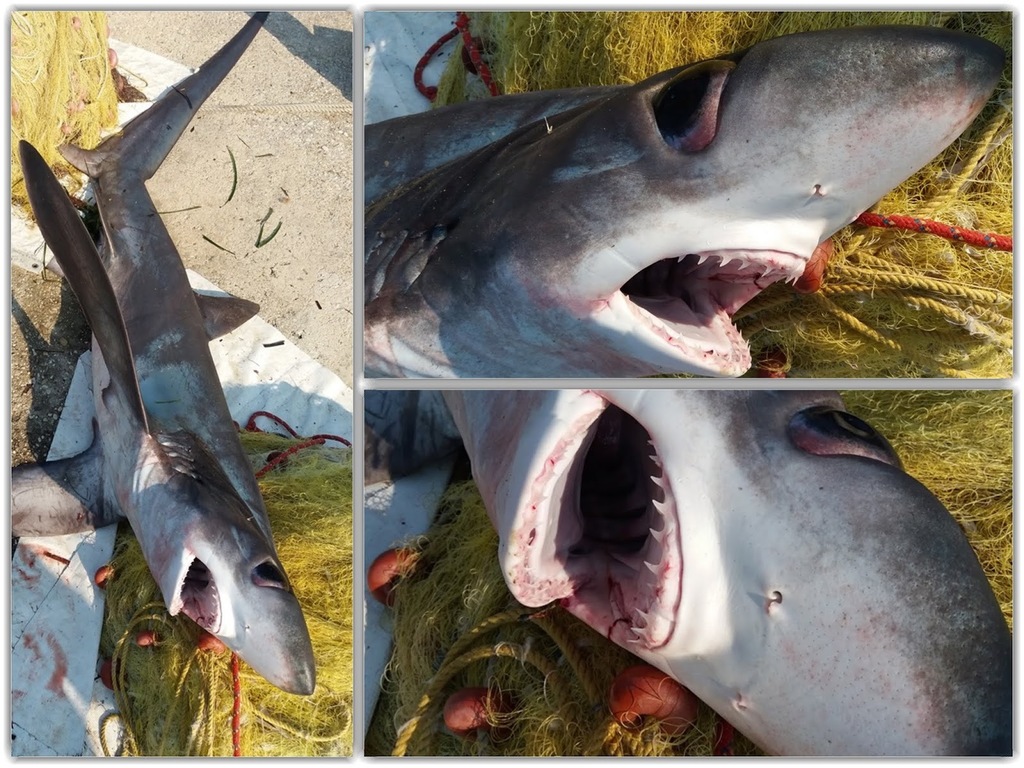 Bigeye thresher
Alopias superciliosus
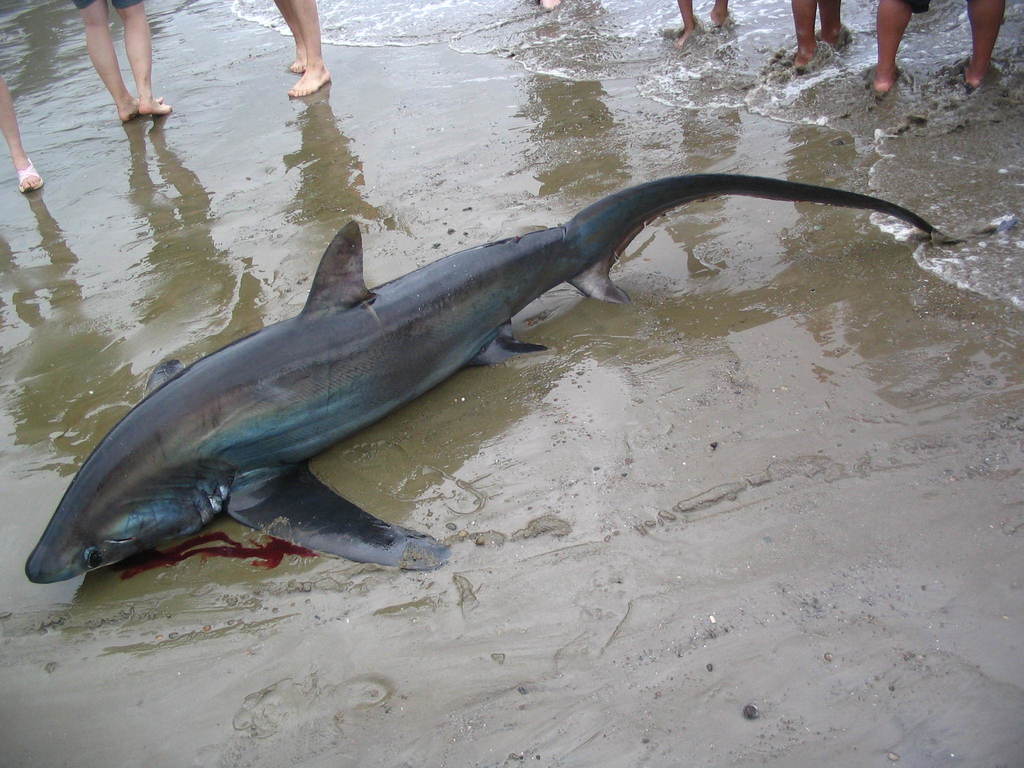 Fox shark
Alopias pelagicus
Sources and credits
Names and taxonomy: WoRMS (CC BY 4.0) and the GBIF Backbone (CC BY 4.0). Photos: iNaturalist observers, each under the licence shown (CC0, CC BY or CC BY-SA).
- Depth, temperature, months and maps: records from OBIS and GBIF under CC0 or CC BY.
- Descriptions: Wikipedia, licensed CC BY-SA, each linked to its article.
- Conservation status as published by GBIF (IUCN Red List).
- 72,648 open-data records from 1788 to 2024.
- Species data updated October 31, 2026.
Log what you see on your next dive
The free DiveHive diver app keeps your logbook with every sighting and shows what lives at the site you dive next.