
Barbeled leatherjacket
Anacanthus barbatus
- Usual depth17–49 m
- Water temperature19–30 °C
- Best monthsAugust, September, and October
- How commonOccasional
About this species
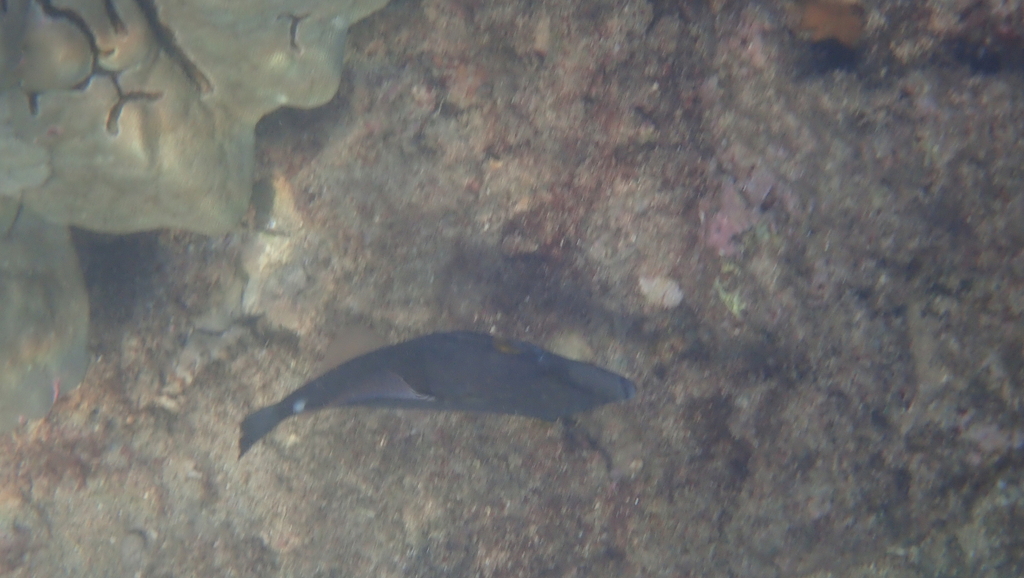
Anacanthus barbatus, also known as the bearded leatherjacket, is a species of filefish found in the Indo-Pacific. It is found on reefs at depths of from 3 to 8 metres. This species grows to a length of 35 centimetres (14 in) TL. This species is the only known member of its genus. This species is of minor importance to local commercial fisheries.
Text from the Wikipedia article “Anacanthus”, licensed CC BY-SA 4.0. Read the article
Where and when
Where it has been recorded
Worldwide
Loading the map
Best months
Worldwide (open data)
- January: 10 records
- February: 21 records
- March: 18 records
- April: 18 records
- May: 9 records
- June: 23 records
- July: 16 records
- August: 31 records
- September: 31 records
- October: 51 records
- November: 27 records
- December: 4 records
Depth and water temperature
Depth
Mostly recorded at 17–49 m · Deepest record: 66.5 m
Water temperature
Recorded in surface water of 19–30 °C
Names and classification
- English
- Barbeled leatherjacket, Bearded Filefish, Bearded Leatherjacket, beardie, Jumping Leatherjacket, Ribbon Leatherjacket, Tape-fish, Tapefish
Names in 4 more languages
- Spanish
- Pez Lija Cinta
- Japanese
- Ukeguchino Hosomionagano Okinahagi, ウケグチノホソミオナガノオキナハギ
- Thai
- ปลางัวดาบ
- Simplified Chinese
- 剝皮魚, 擬鬚魨
Other scientific names: Psilocephalus barbatus
Similar species
 Leatherjacket
Aluterus monoceros
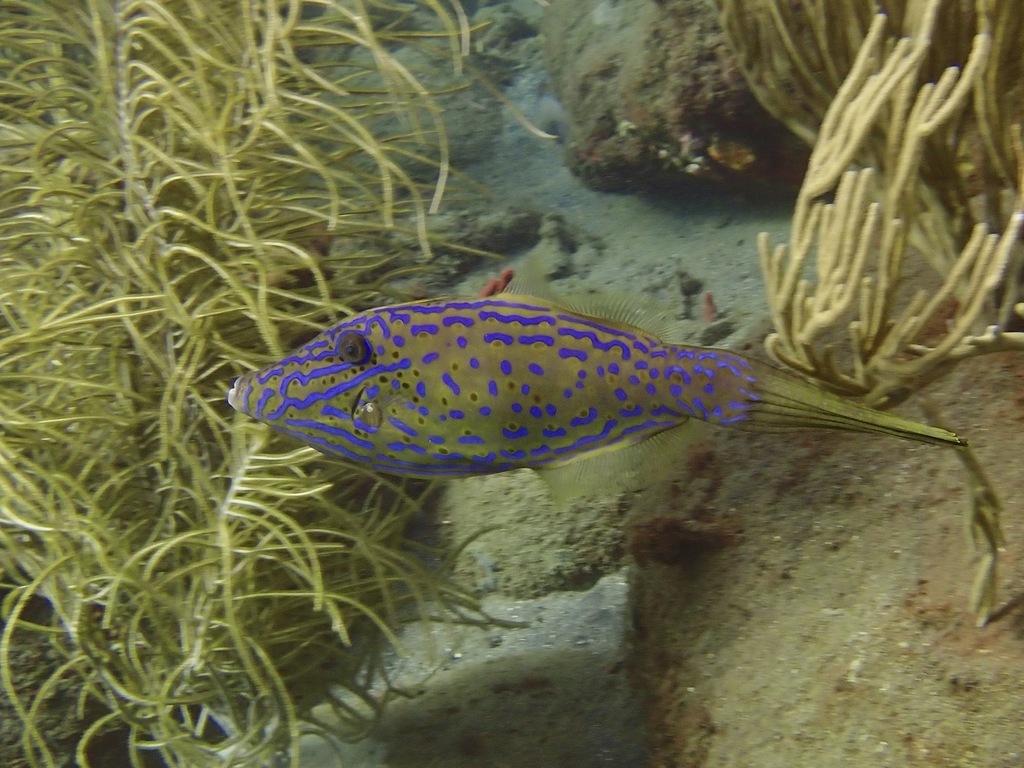 Scrawled filefish
Aluterus scriptus
 Broom filefish
Amanses scopas
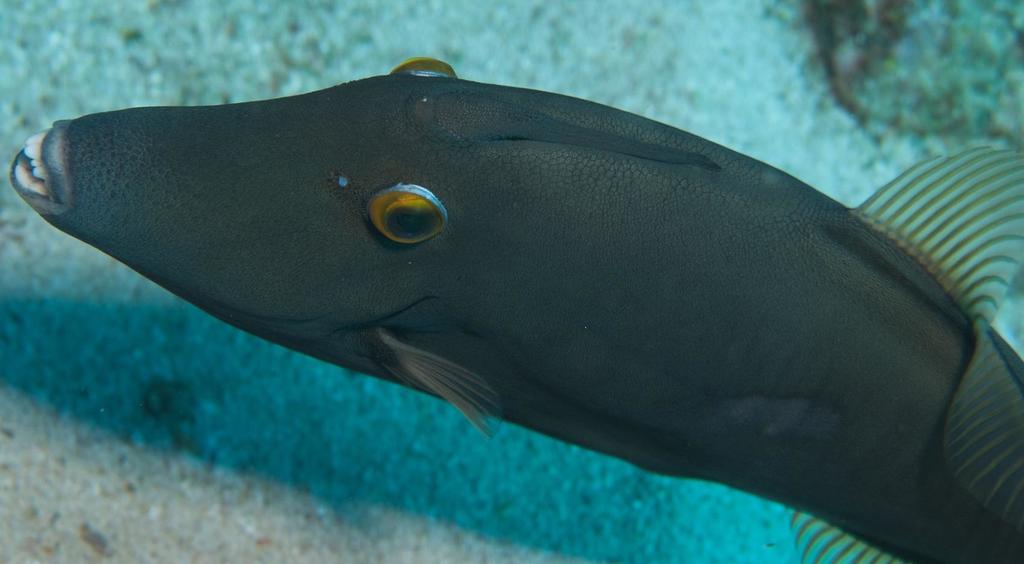 Barred filefish
Cantherhines dumerilii
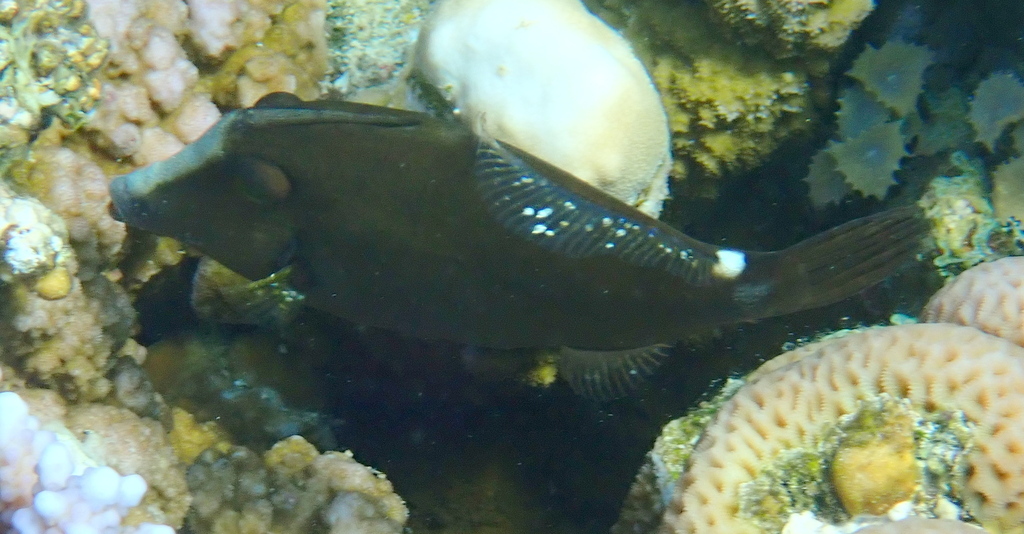 Honeycomb filefish
Cantherhines pardalis
 Sandwich Isle file
Cantherhines sandwichiensis
Sources and credits
Names and taxonomy: WoRMS (CC BY 4.0) and the GBIF Backbone (CC BY 4.0). Photos: iNaturalist observers, each under the licence shown (CC0, CC BY or CC BY-SA).
- Depth, temperature, months and maps: records from OBIS and GBIF under CC0 or CC BY.
- Descriptions: Wikipedia, licensed CC BY-SA, each linked to its article.
- Conservation status as published by GBIF (IUCN Red List).
- 362 open-data records from 1830 to 2022.
- Species data updated October 26, 2026.
Log what you see on your next dive
The free DiveHive diver app keeps your logbook with every sighting and shows what lives at the site you dive next.