
Celebes Longfin Eel
Anguilla celebesensis
- Usual depth0 m
- Water temperature28–29 °C
- Best monthsApril
- How commonRare
About this species
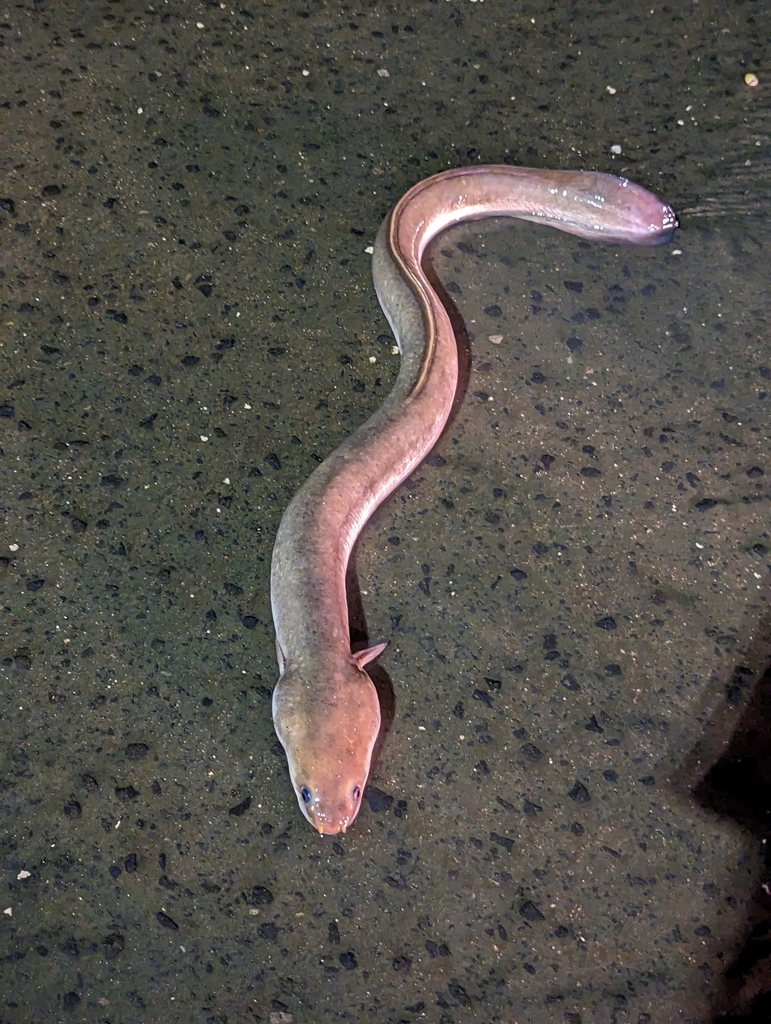
The Celebes longfin eel is an eel in the family Anguillidae. It was described by Johann Jakob Kaup in 1856. It is a tropical eel known from freshwaters in the Western Pacific, including Indonesia, the Philippines, New Guinea, and Western and American Samoa. The eels spend most of their lives in freshwater but migrate to the ocean to breed. Males can reach a maximum total length of 150 centimetres.
Text from the Wikipedia article “Celebes longfin eel”, licensed CC BY-SA 4.0. Read the article
Where and when
Where it has been recorded
Worldwide
Loading the map
Best months
Worldwide (open data)
- January: 0 records
- February: 0 records
- March: 0 records
- April: 2 records
- May: 0 records
- June: 1 records
- July: 1 records
- August: 1 records
- September: 1 records
- October: 0 records
- November: 0 records
- December: 0 records
Depth and water temperature
Depth
Mostly recorded at 0 m · Deepest record: 0 m
Water temperature
Recorded in surface water of 28–29 °C
Names and classification
- English
- Celebes Longfin Eel, Indonesian mottled eel
Other scientific names: Anguilla amboinensis, Anguilla ancestralis, Anguilla celebensis, Anguilla cellebesensis
Similar species
- Australian shortfinned eel
Anguilla australis
- Australian Longfin Eel
Anguilla reinhardtii
 Black fin eel
Anguilla bicolor
 Giant mottled eel
Anguilla marmorata
- New Zealand longfin eel
Anguilla dieffenbachii
- Japanese eel
Anguilla japonica
Sources and credits
Names and taxonomy: WoRMS (CC BY 4.0) and the GBIF Backbone (CC BY 4.0). Photos: iNaturalist observers, each under the licence shown (CC0, CC BY or CC BY-SA).
- Depth, temperature, months and maps: records from OBIS and GBIF under CC0 or CC BY.
- Descriptions: Wikipedia, licensed CC BY-SA, each linked to its article.
- Conservation status as published by GBIF (IUCN Red List).
- 35 open-data records from 1931 to 1981.
- Species data updated October 26, 2026.
Log what you see on your next dive
The free DiveHive diver app keeps your logbook with every sighting and shows what lives at the site you dive next.