
cleftbelly trevally
Atropus atropos
- Usual depth5–29 m
- Water temperature25–30 °C
- Best monthsJune
- How commonRare
About this species
The cleftbelly trevally, also known as the cleftbelly kingfish, Kuweh trevally or thin crevalle, is a species of tropical marine fish of the jack family, Carangidae. The species inhabits coastal waters throughout the Indo-West Pacific region from South Africa in the west to Japan in the east, often found near the water's surface. The cleftbelly trevally is distinguished by a number of anatomical characteristics, with a deep median groove in the belly giving the species its common name. It is not a large fish, growing to a maximum recorded length of 26.5 cm (10.4 in). Cleftbelly trevally are predatory fish, taking a variety of small crustaceans and fish. The species is of minor importance to fisheries throughout its range.
Text from the Wikipedia article “Cleftbelly trevally”, licensed CC BY-SA 4.0. Read the article
Where and when
Where it has been recorded
Worldwide
Loading the map
Best months
Worldwide (open data)
- January: 3 records
- February: 0 records
- March: 4 records
- April: 2 records
- May: 1 records
- June: 10 records
- July: 0 records
- August: 5 records
- September: 1 records
- October: 1 records
- November: 2 records
- December: 2 records
Depth and water temperature
Depth
Mostly recorded at 5–29 m · Deepest record: 1,756 m
Water temperature
Recorded in surface water of 25–30 °C
Names and classification
- English
- cleftbelly trevally, thin crevalle
Names in 2 more languages
- Spanish
- Pámpano de Quilla
- Japanese
- Kuboaji, クボアジ
Other scientific names: Atropus atropus, Brama atropos, Caranx atropus
Similar species
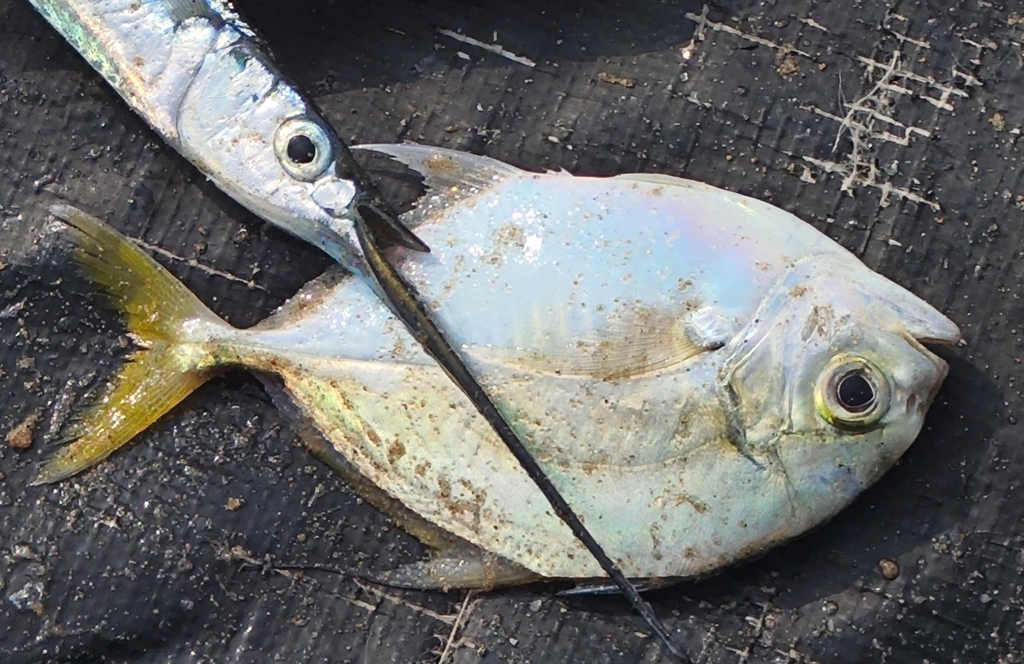 Bump-nosed Trevally
Atropus hedlandensis
- Black-crested Trevally
Atropus aurochs
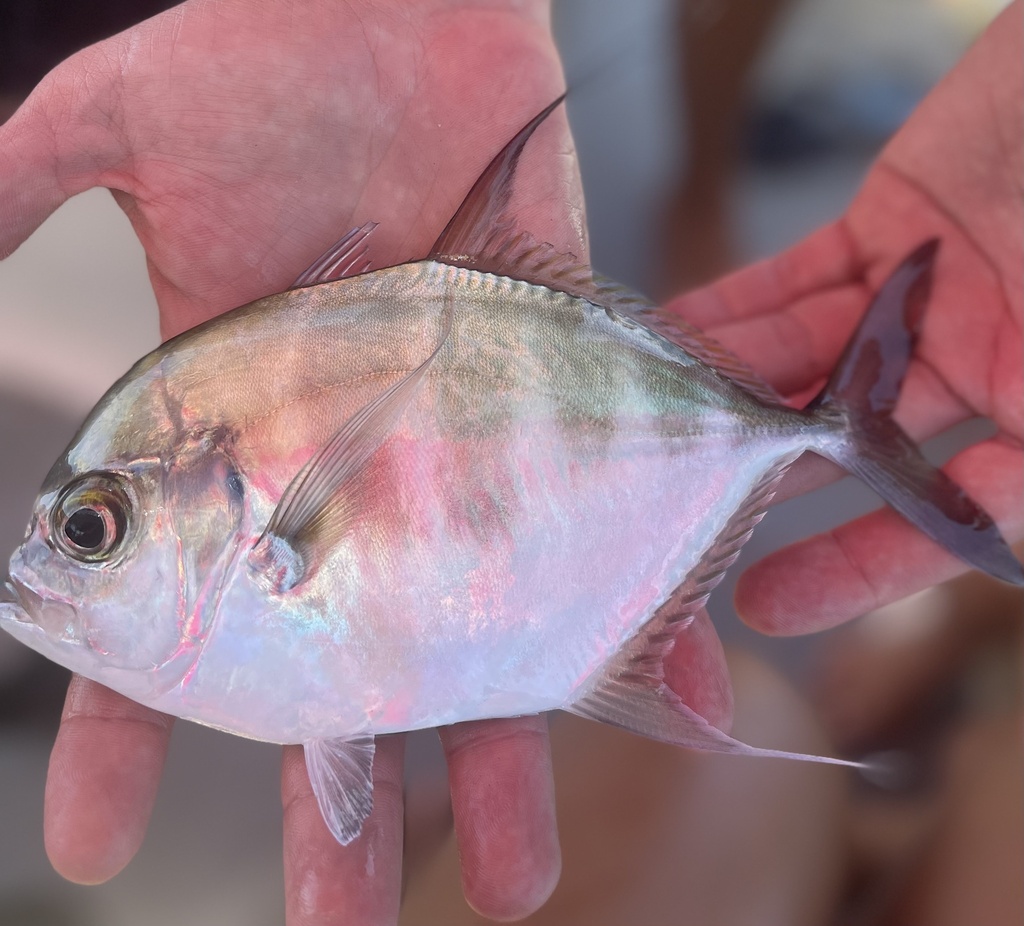 longfinned trevally
Atropus armatus
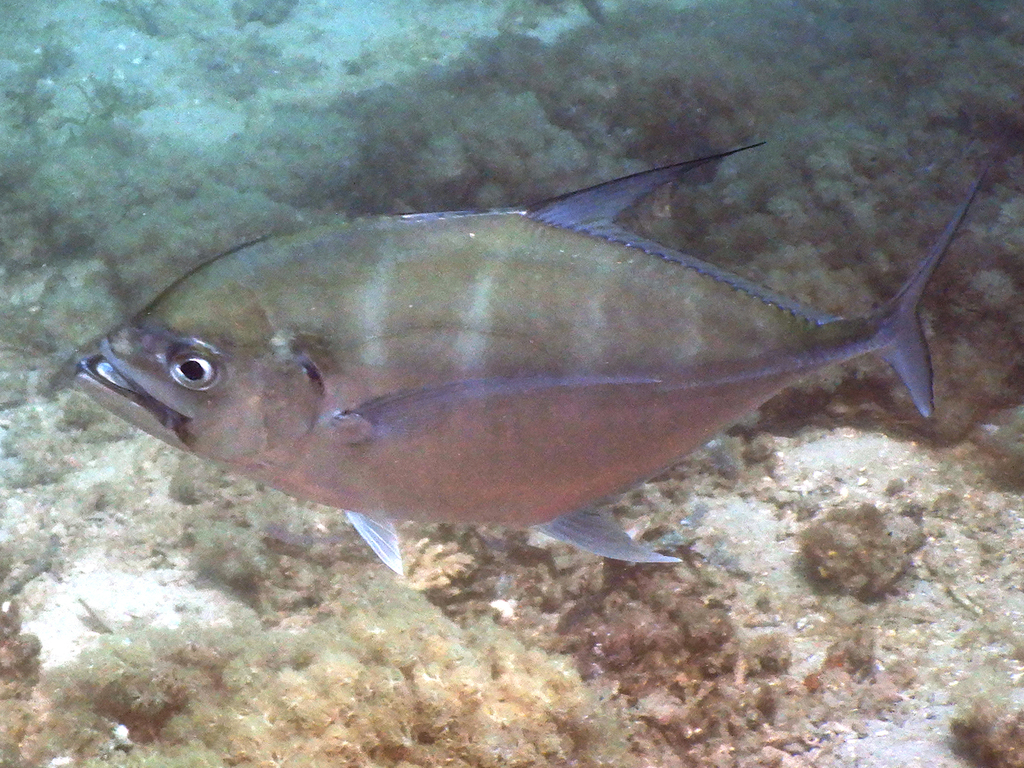 Cale Cale Trevally
Atropus mentalis
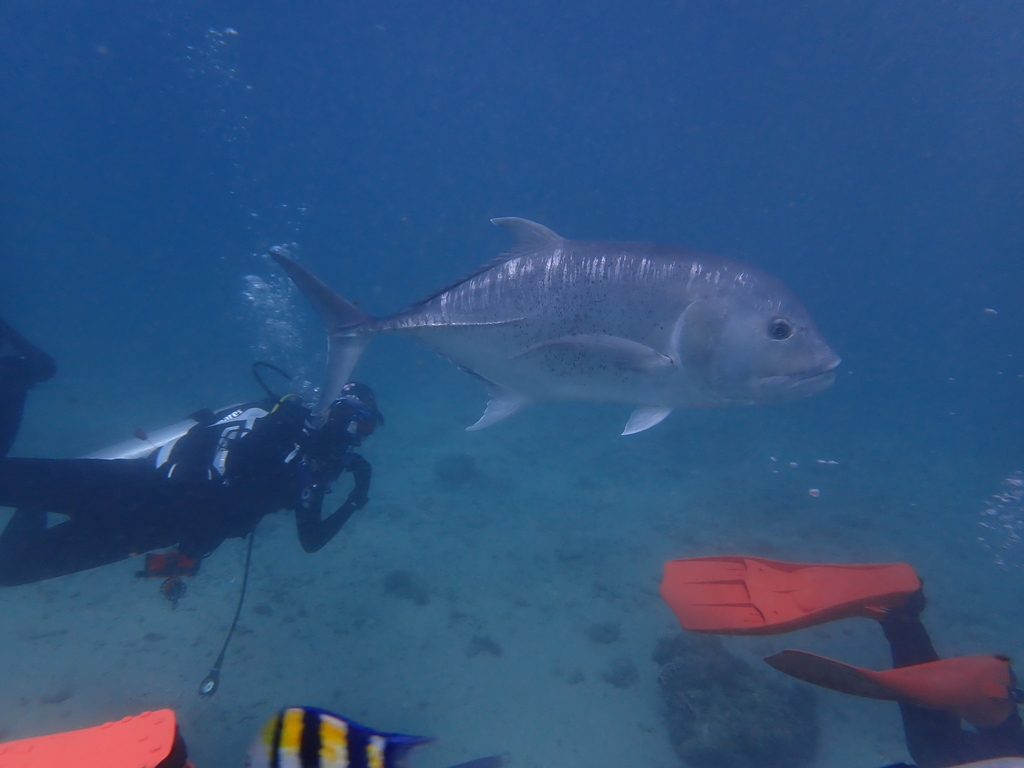 Giant trevally
Caranx ignobilis
 Bluefin trevally
Caranx melampygus
Sources and credits
Names and taxonomy: WoRMS (CC BY 4.0) and the GBIF Backbone (CC BY 4.0). Photos: iNaturalist observers, each under the licence shown (CC0, CC BY or CC BY-SA).
- Depth, temperature, months and maps: records from OBIS and GBIF under CC0 or CC BY.
- Descriptions: Wikipedia, licensed CC BY-SA, each linked to its article.
- Conservation status as published by GBIF (IUCN Red List).
- 173 open-data records from 1801 to 2019.
Log what you see on your next dive
The free DiveHive diver app keeps your logbook with every sighting and shows what lives at the site you dive next.