
Pelican flounder
Chascanopsetta lugubris
- Usual depth271–550 m
- Water temperature16–30 °C
- Best monthsAugust, September, and November
- How commonOccasional
About this species
Chascanopsetta is a genus of flatfish in the family Bothidae found in deeper parts of the Pacific and Indian Oceans with a single species, C. lugubris also occurring in the Atlantic Ocean. It contains ten member species.
Text from the Wikipedia article “Chascanopsetta”, licensed CC BY-SA 4.0. Read the article
Where and when
Where it has been recorded
Worldwide
Loading the map
Best months
Worldwide (open data)
- January: 12 records
- February: 21 records
- March: 25 records
- April: 30 records
- May: 33 records
- June: 32 records
- July: 29 records
- August: 46 records
- September: 42 records
- October: 31 records
- November: 44 records
- December: 22 records
Depth and water temperature
Depth
Mostly recorded at 271–550 m · Deepest record: 1,023 m
Water temperature
Recorded in surface water of 16–30 °C
Names and classification
- English
- Pelican flounder, pelican flounder
Names in 5 more languages
- Spanish
- Lenguado pelicano, lenguado pelícano
- French
- Perpeire pelican, Perpeire pélican, Perpeire pélican, Rombou pélican, Rombou pélican
- Japanese
- ザラガレイ
- Thai
- ปลาลิ้นควายทะเลลึก
- Simplified Chinese
- 半邊魚, 大口長頜鮃, 扁魚, 比目魚, 皇帝魚
Other scientific names: Chascanopsetta blumenalia, Chascanopsetta galatheae, Chascanopsetta gilchristi, Chascanopsetta maculata, Chascanopsetta microstoma, Chascanopsetta raptator, Trachypterophrys raptator
Similar species
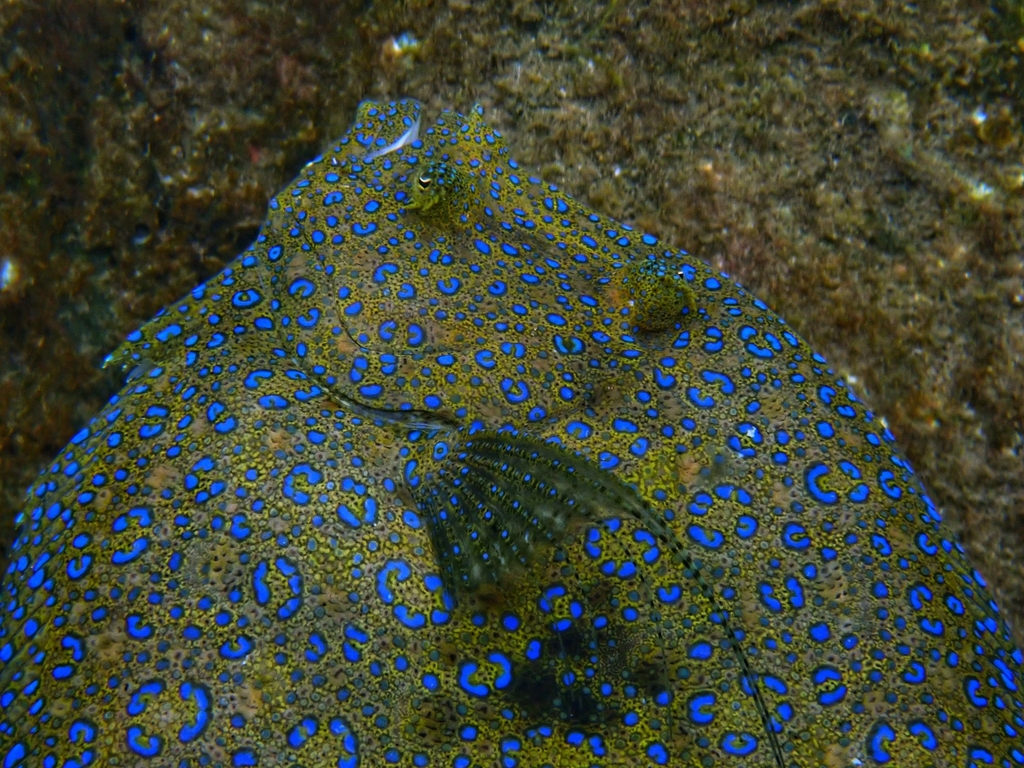 Tropical flounder
Bothus mancus
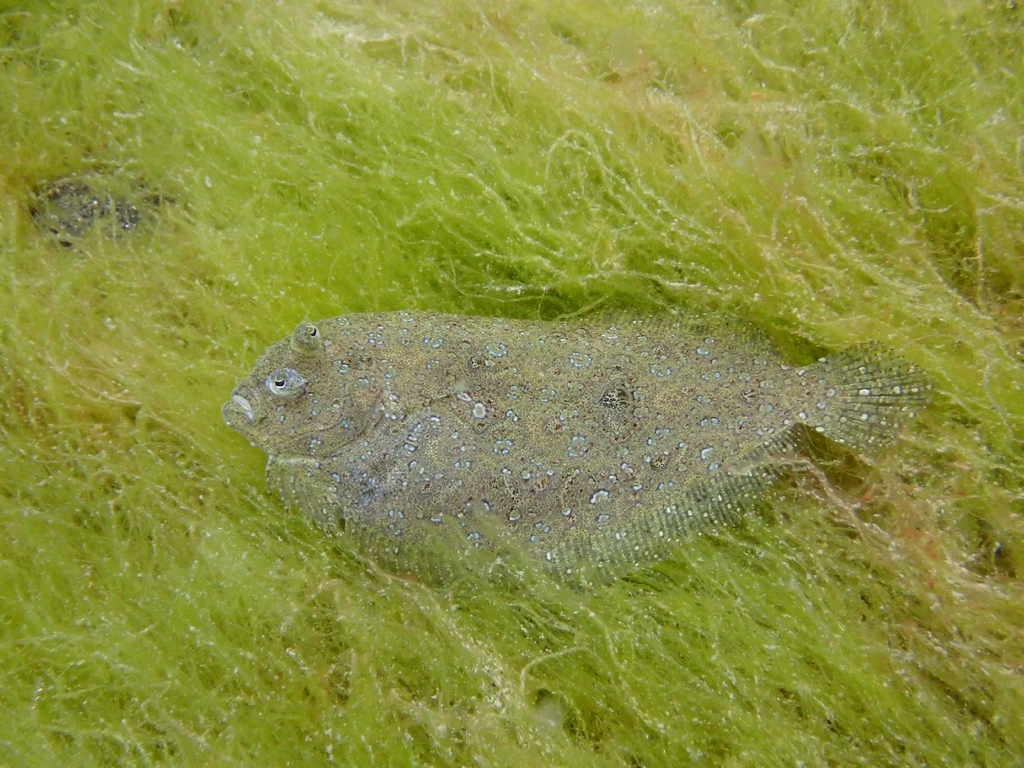 Leopard flounder
Bothus pantherinus
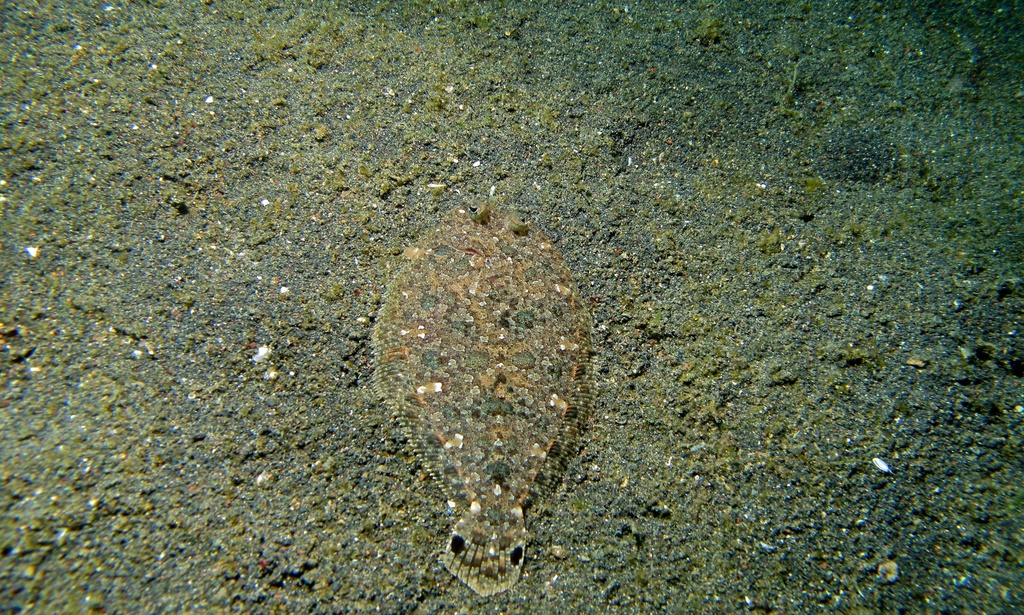 Largescale flounder
Engyprosopon grandisquama
- Brown Flounder
Arnoglossus aspilos
- Brown Lefteye Flounder
Arnoglossus brunneus
Sources and credits
Names and taxonomy: WoRMS (CC BY 4.0) and the GBIF Backbone (CC BY 4.0). Photos: iNaturalist observers, each under the licence shown (CC0, CC BY or CC BY-SA).
- Depth, temperature, months and maps: records from OBIS and GBIF under CC0 or CC BY.
- Descriptions: Wikipedia, licensed CC BY-SA, each linked to its article.
- Conservation status as published by GBIF (IUCN Red List).
- 640 open-data records from 1894 to 2025.
- Species data updated October 26, 2026.
Log what you see on your next dive
The free DiveHive diver app keeps your logbook with every sighting and shows what lives at the site you dive next.