

Oriental Sea Slug
Chromodoris orientalis
- Usual depth3–18 m
- Water temperature13–27 °C
- Best monthsApril, May, and September
- How commonOccasional
Photo credit: (c) 呂一起(Lyu yi-chi), some rights reserved (CC BY) · CC BY · iNaturalist
About this species
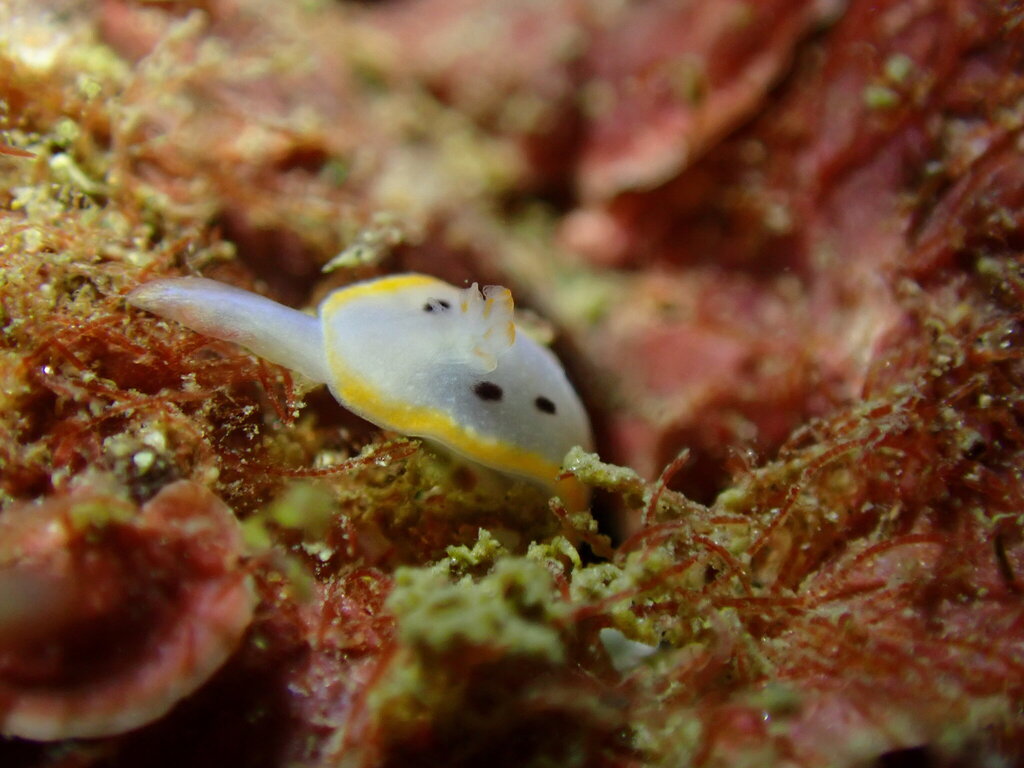
Chromodoris orientalis is a species of colourful nudibranch in the family Chromodorididae. It is a white sea slug with irregularly spaced black spots and a yellow, orange, or brown ring around its whole body and on its gills.
Text from the Wikipedia article “Chromodoris orientalis”, licensed CC BY-SA 4.0. Read the article
Where and when
Where it has been recorded
Worldwide
Loading the map
Best months
Worldwide (open data)
- January: 19 records
- February: 32 records
- March: 59 records
- April: 121 records
- May: 131 records
- June: 63 records
- July: 36 records
- August: 68 records
- September: 110 records
- October: 62 records
- November: 25 records
- December: 23 records
Depth and water temperature
Depth
Mostly recorded at 3–18 m · Deepest record: 27 m
Water temperature
Recorded in surface water of 13–27 °C
Photos
(c) 呂一起(Lyu yi-chi), some rights reserved (CC BY) · CC BY · iNaturalist 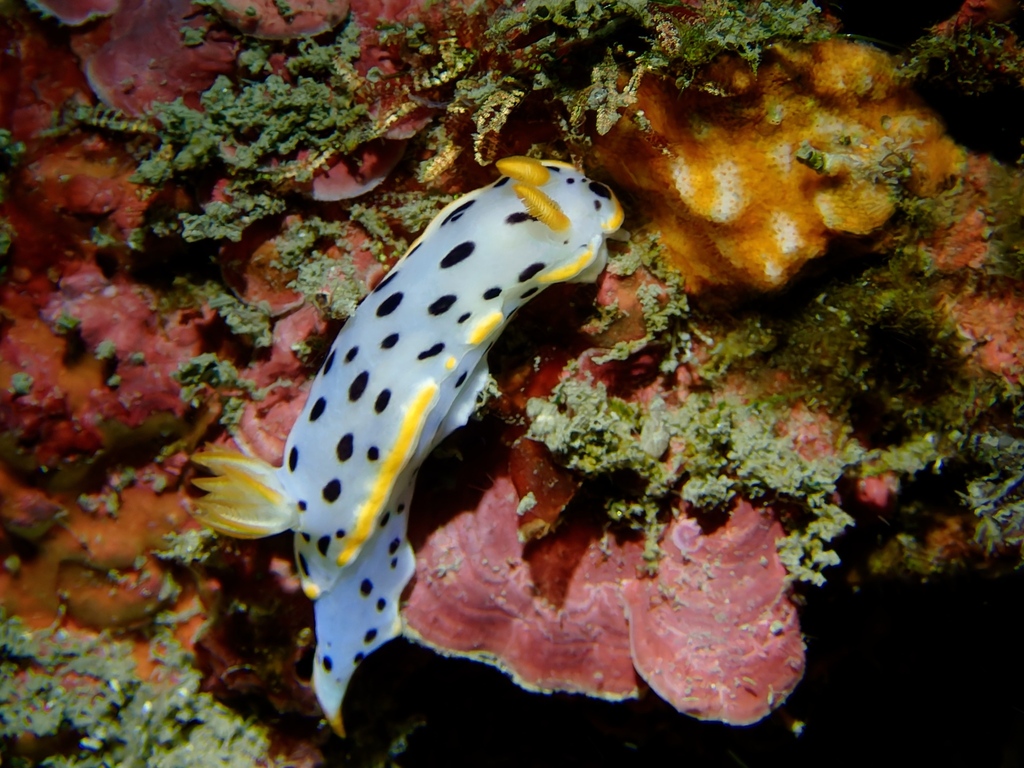
(c) Jay Paroline, some rights reserved (CC BY) · CC BY · iNaturalist 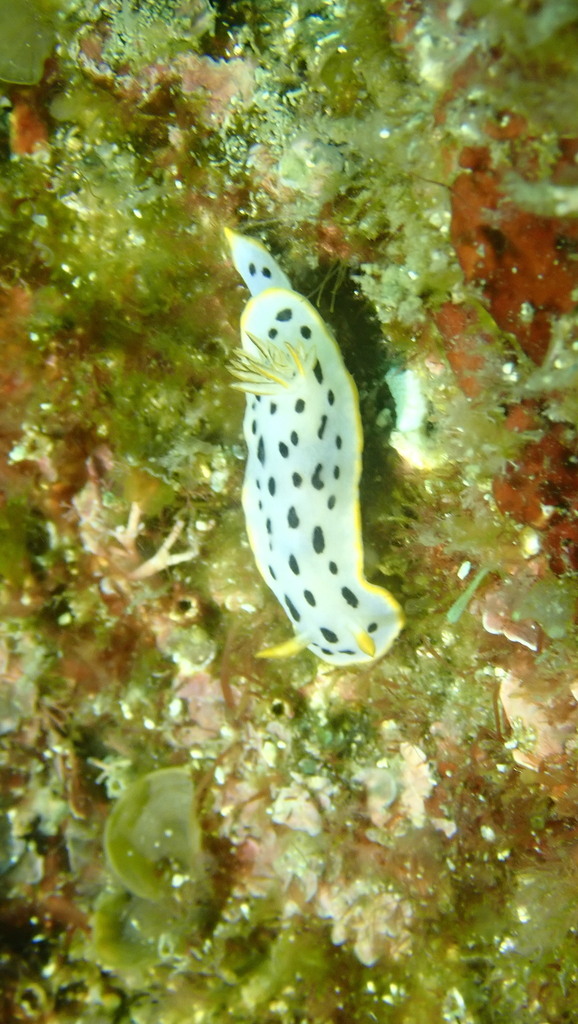
no rights reserved · CC0 1.0 · iNaturalist
Names and classification
- English
- Oriental Sea Slug, Spotted White Sea Slug
Names in 3 more languages
- Japanese
- シロウミウシ
- Korean
- 흰갯민숭달팽이
- Simplified Chinese
- 東方多彩海蛞蝓, 東洋多彩海蛞蝓
Similar species
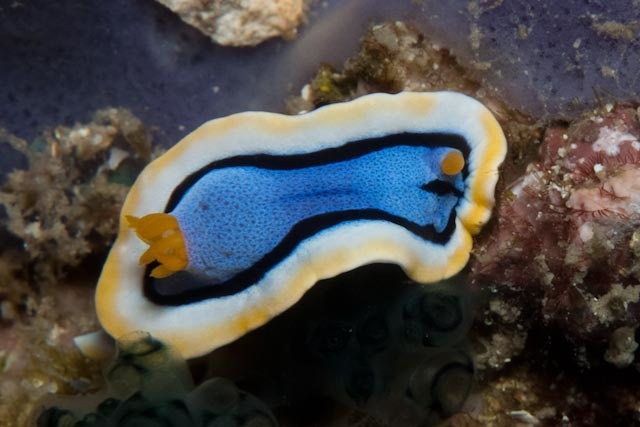 Anna's Chromodoris
Chromodoris annae
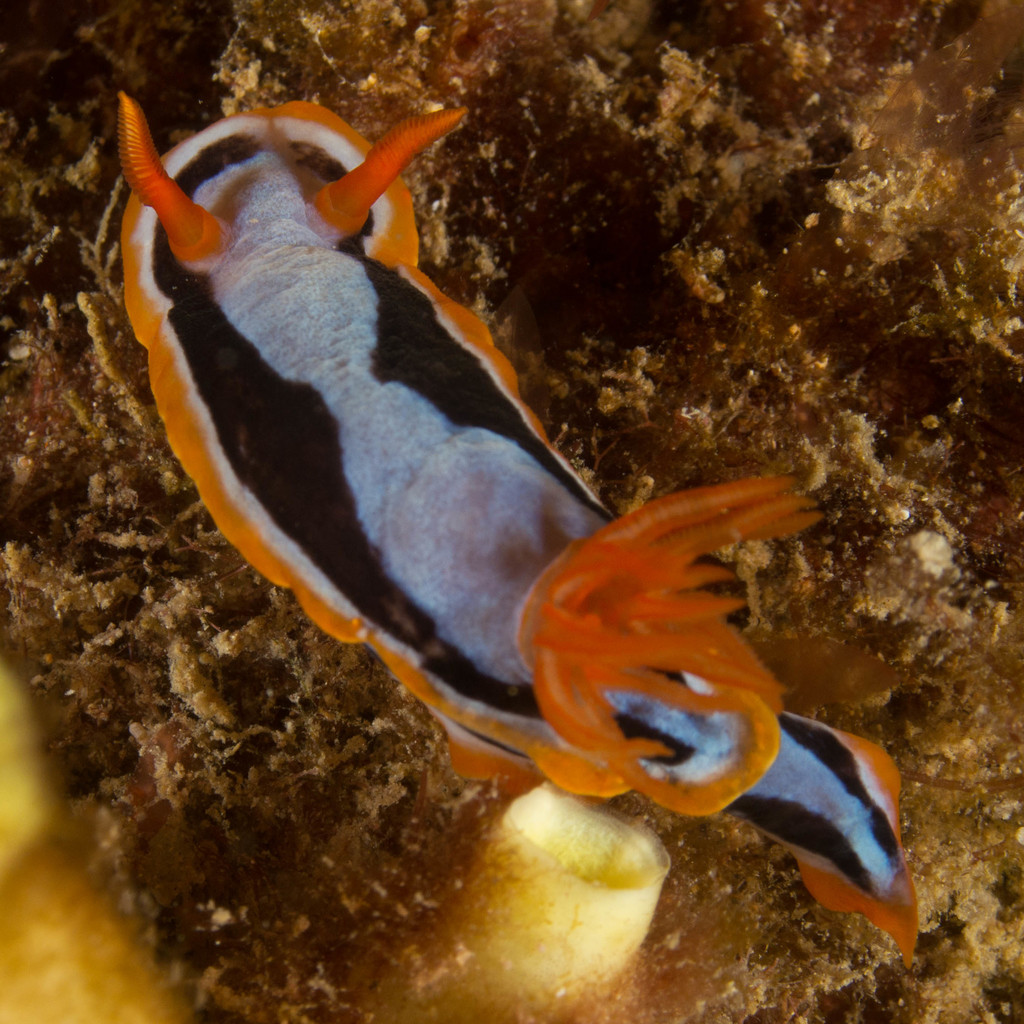
 Elisabeth's Chromodoris
Chromodoris elisabethina
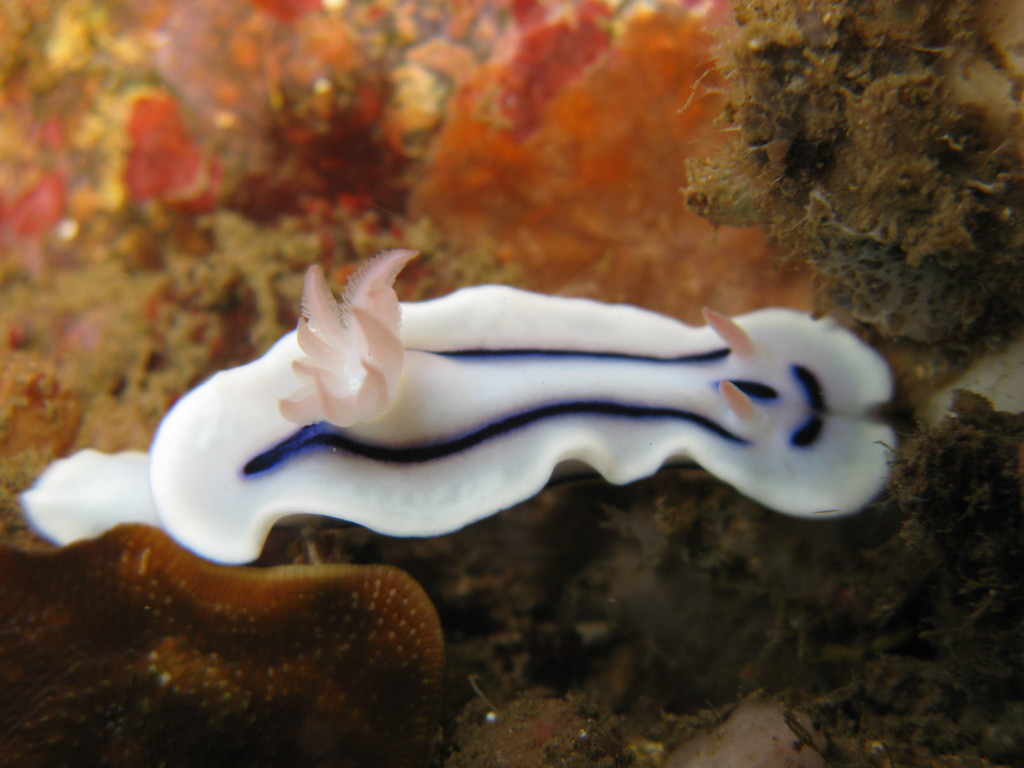 Pyjama Rainbow Dorid
Chromodoris lochi
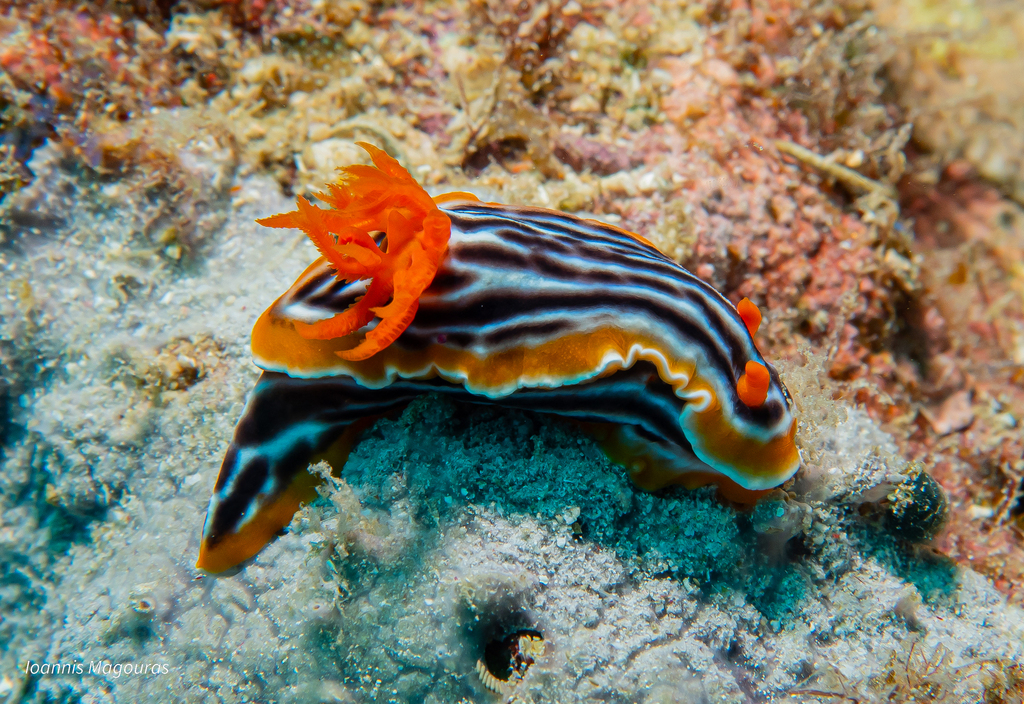 Magnificent Chromodoris
Chromodoris magnifica
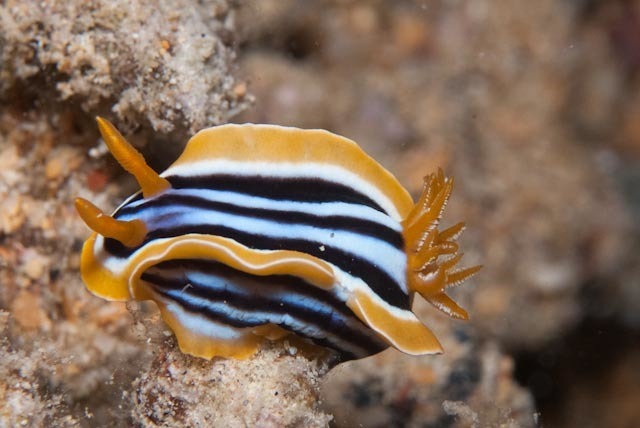 Striped pyjama nudibranch
Chromodoris quadricolor
Sources and credits
Names and taxonomy: WoRMS (CC BY 4.0) and the GBIF Backbone (CC BY 4.0). Photos: iNaturalist observers, each under the licence shown (CC0, CC BY or CC BY-SA).
- Depth, temperature, months and maps: records from OBIS and GBIF under CC0 or CC BY.
- Descriptions: Wikipedia, licensed CC BY-SA, each linked to its article.
- Conservation status as published by GBIF (IUCN Red List).
- 234 open-data records from 1990 to 2026.
- Species data updated November 1, 2026.
Log what you see on your next dive
The free DiveHive diver app keeps your logbook with every sighting and shows what lives at the site you dive next.