
Conde's Fairy-wrasse
Cirrhilabrus condei
- Usual depth7–31 m
- Water temperature28–30 °C
- Best monthsDecember
- How commonRare
About this species
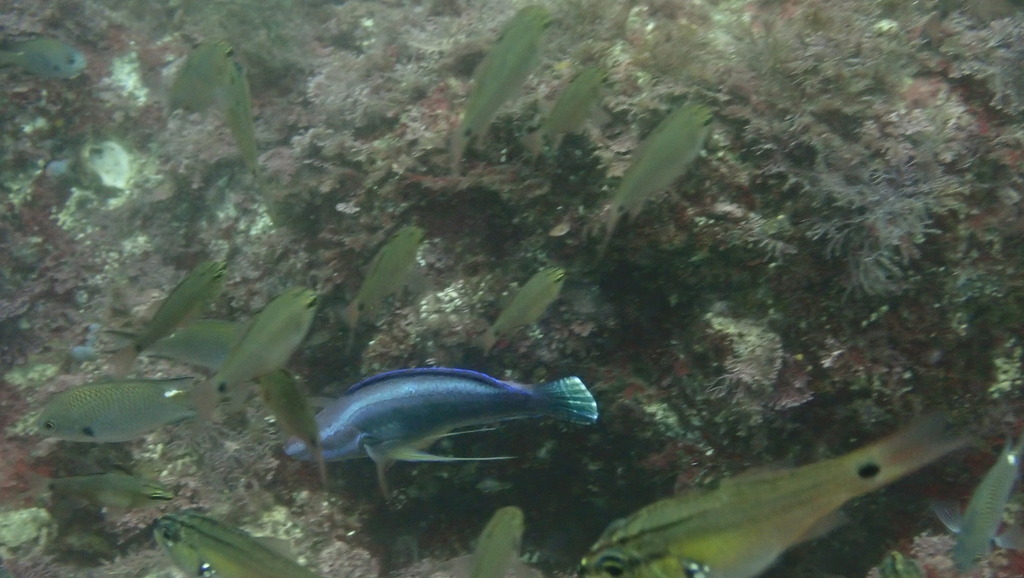
Cirrhilabrus condei are fairy wrasse which is also known as Conde's wrasse. They originate from the shallow rubble flats of Melanesia. The Conde's fairy wrasse is very peaceful; they are red alone black with a white belly. Female Conde's wrasse are red with a pale stripe along the lower rear, a black dorsal fin, a pale stripe with a white lower body, and a red anal fin. Males are similar with more intense coloration. The life cycle and mating behavior of Cirrhilabrus condei distinct pairing during breeding. Unlike other wrasses, they raise the front 2/3 of their dorsal fins and sometimes colors may vary depending on the fish's mood, breeding timeframe, and age of the specimen.
Text from the Wikipedia article “Cirrhilabrus condei”, licensed CC BY-SA 4.0. Read the article
Where and when
Where it has been recorded
Worldwide
Loading the map
Best months
Worldwide (open data)
- January: 1 records
- February: 0 records
- March: 1 records
- April: 2 records
- May: 2 records
- June: 0 records
- July: 0 records
- August: 2 records
- September: 0 records
- October: 4 records
- November: 1 records
- December: 9 records
Depth and water temperature
Depth
Mostly recorded at 7–31 m · Deepest record: 70 m
Water temperature
Recorded in surface water of 28–30 °C
Names and classification
- English
- Conde's Fairy-wrasse, Conde's Fairy Wrasse, Conde's Wrasse
Similar species
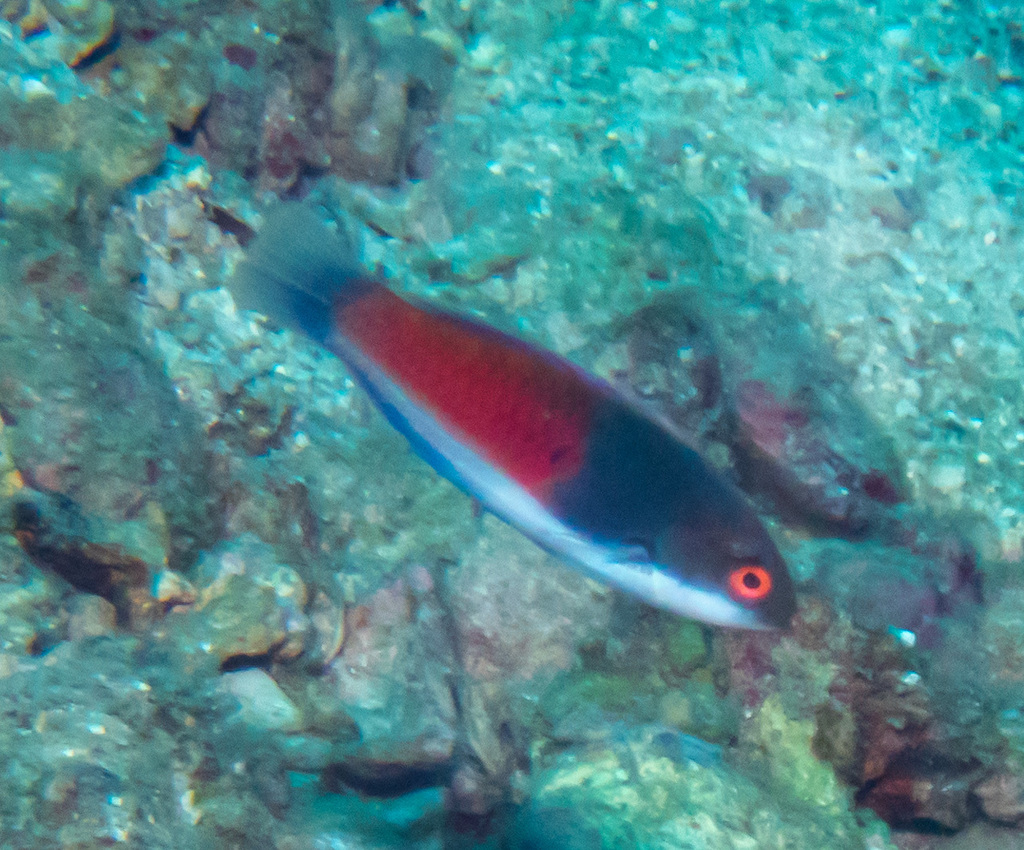 Blue-scaled Fairy Wrasse
Cirrhilabrus cyanopleura
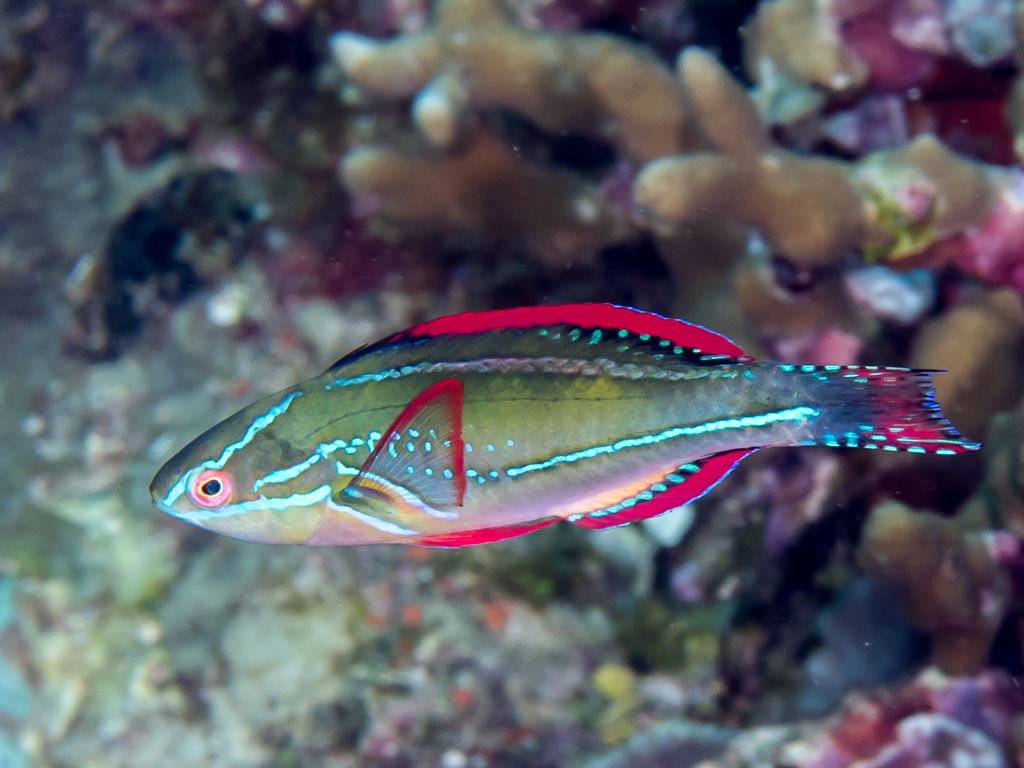 Exquisite wrasse
Cirrhilabrus exquisitus
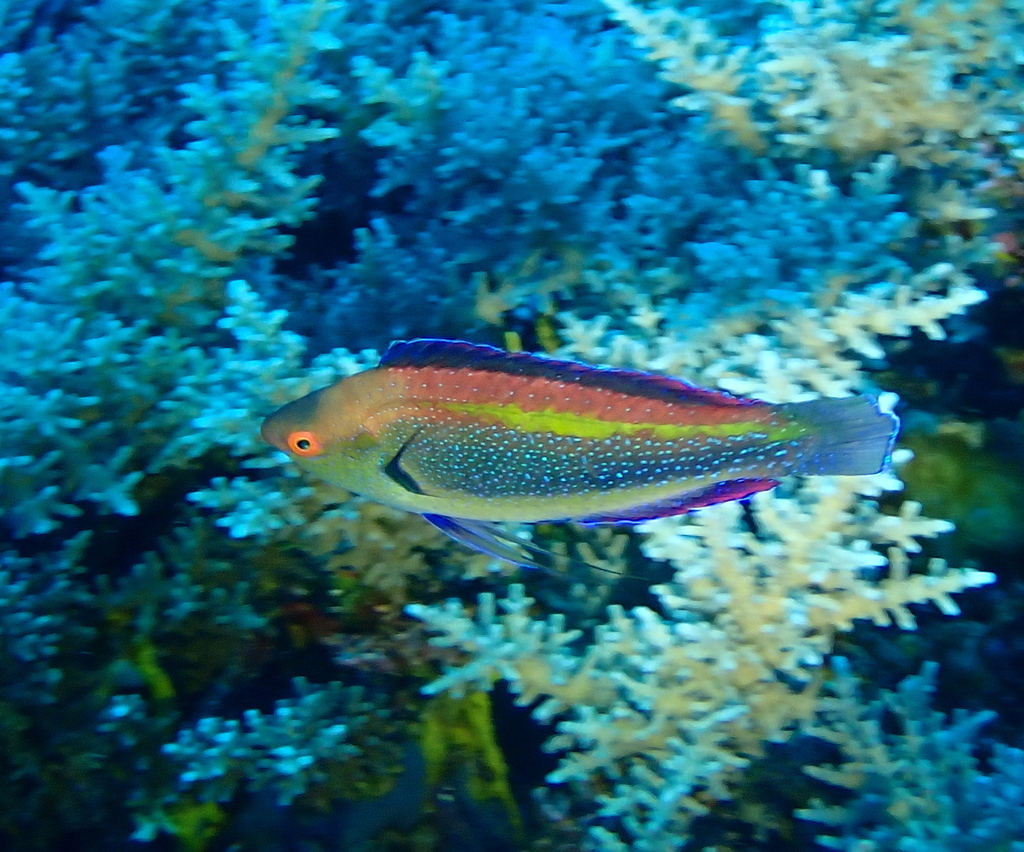 Black-finned Wrasse
Cirrhilabrus punctatus
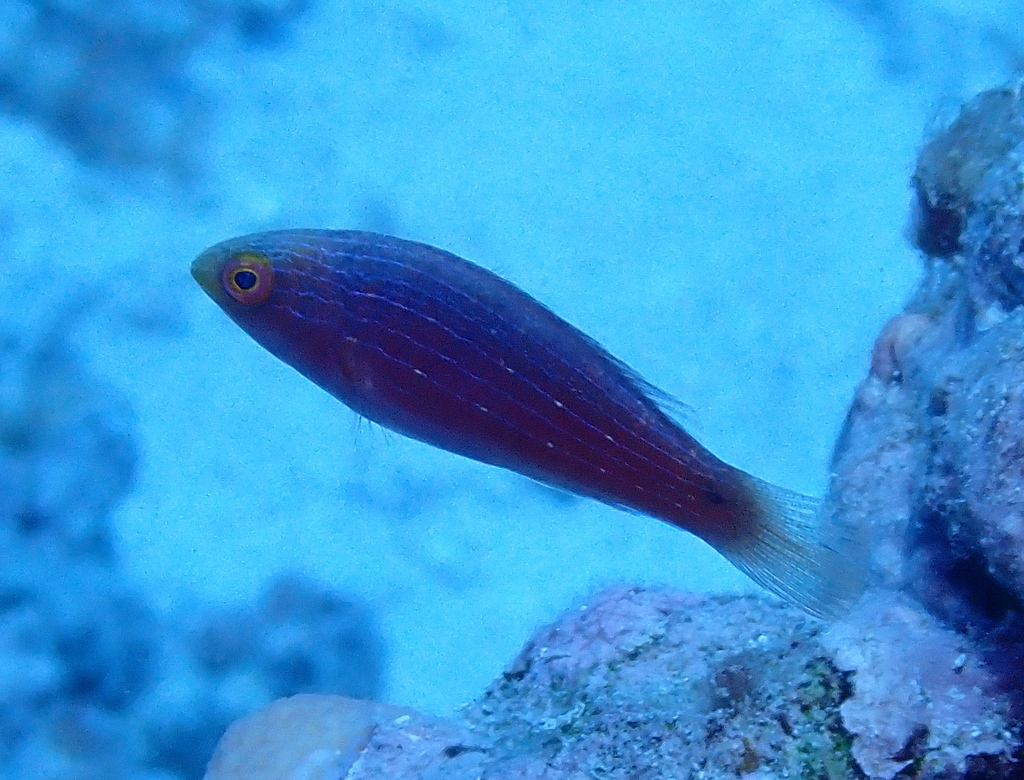 Scott's Fairy-wrasse
Cirrhilabrus scottorum
 Peacock Wrasse
Cirrhilabrus temminckii
- Blackstriped Wrasse
Cirrhilabrus katherinae
Sources and credits
Names and taxonomy: WoRMS (CC BY 4.0) and the GBIF Backbone (CC BY 4.0). Photos: iNaturalist observers, each under the licence shown (CC0, CC BY or CC BY-SA).
- Depth, temperature, months and maps: records from OBIS and GBIF under CC0 or CC BY.
- Descriptions: Wikipedia, licensed CC BY-SA, each linked to its article.
- Conservation status as published by GBIF (IUCN Red List).
- 16 open-data records from 1973 to 2008.
- Species data updated November 1, 2026.
Log what you see on your next dive
The free DiveHive diver app keeps your logbook with every sighting and shows what lives at the site you dive next.