
Orange-Striped Fairy Wrasse
Cirrhilabrus earlei
- Usual depth2–102 m
- Water temperature8–29 °C
- Best monthsMay
- How commonRare
About this species
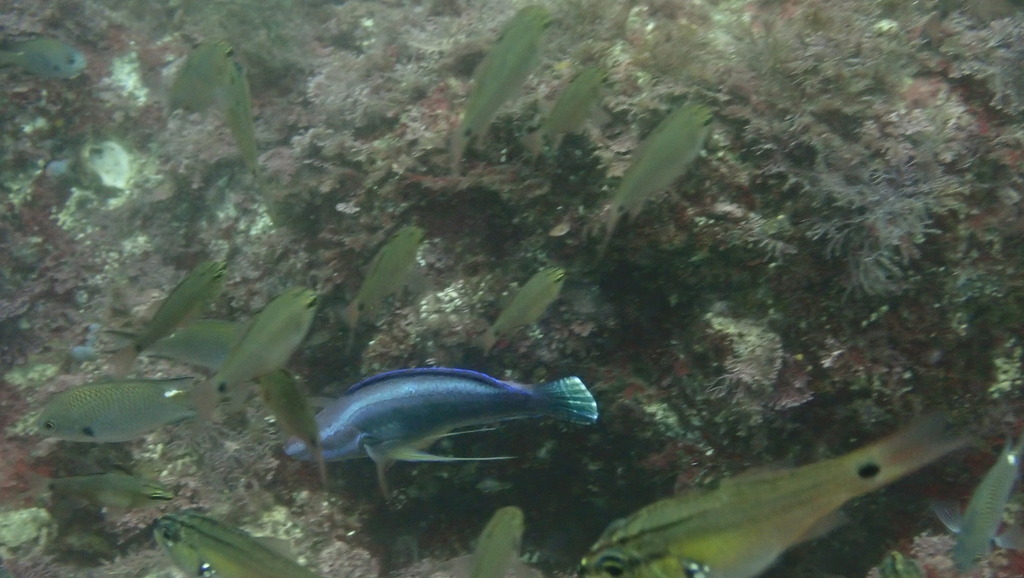
Cirrhilabrus earlei is a species of fairy wrasse. They occur in the Western Central Pacific, Palau and Micronesia. In 2001 John Randall and Richard Pyle officially documented and described the species. Cirrhilabrus earlei is the known to the twilight reefs of Palau and the Majuro Atoll in the Marshall Islands. They live under depth range of 60–92 m, and its length is 6.9 cm SL. Male Cirrhilabrus earlei are adorned with sword-shaped tails, the tiny female species are same as male stimulates the male into the nuptial.
Text from the Wikipedia article “Cirrhilabrus earlei”, licensed CC BY-SA 4.0. Read the article
Where and when
Where it has been recorded
Worldwide
Loading the map
Best months
Worldwide (open data)
- January: 0 records
- February: 0 records
- March: 0 records
- April: 1 records
- May: 7 records
- June: 0 records
- July: 0 records
- August: 3 records
- September: 0 records
- October: 0 records
- November: 0 records
- December: 0 records
Depth and water temperature
Depth
Mostly recorded at 2–102 m · Deepest record: 101.5 m
Water temperature
Recorded in surface water of 8–29 °C
Names and classification
- English
- Orange-Striped Fairy Wrasse, Orange-striped Wrasse
Similar species
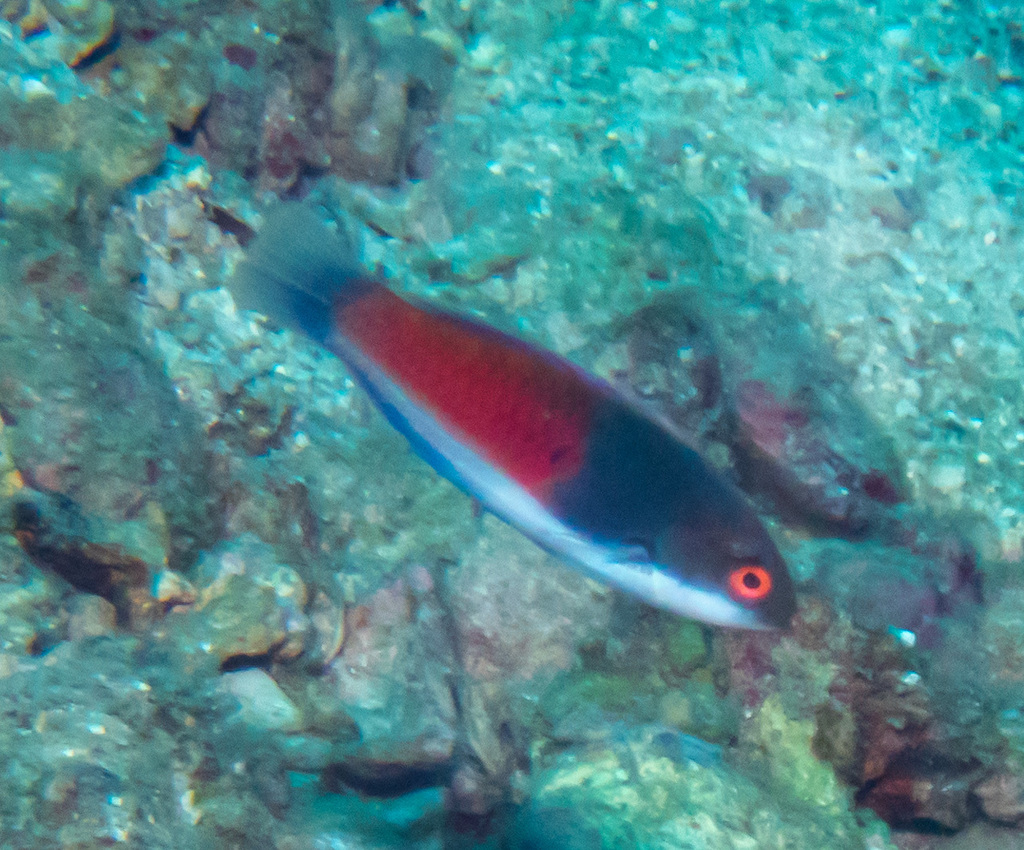 Blue-scaled Fairy Wrasse
Cirrhilabrus cyanopleura
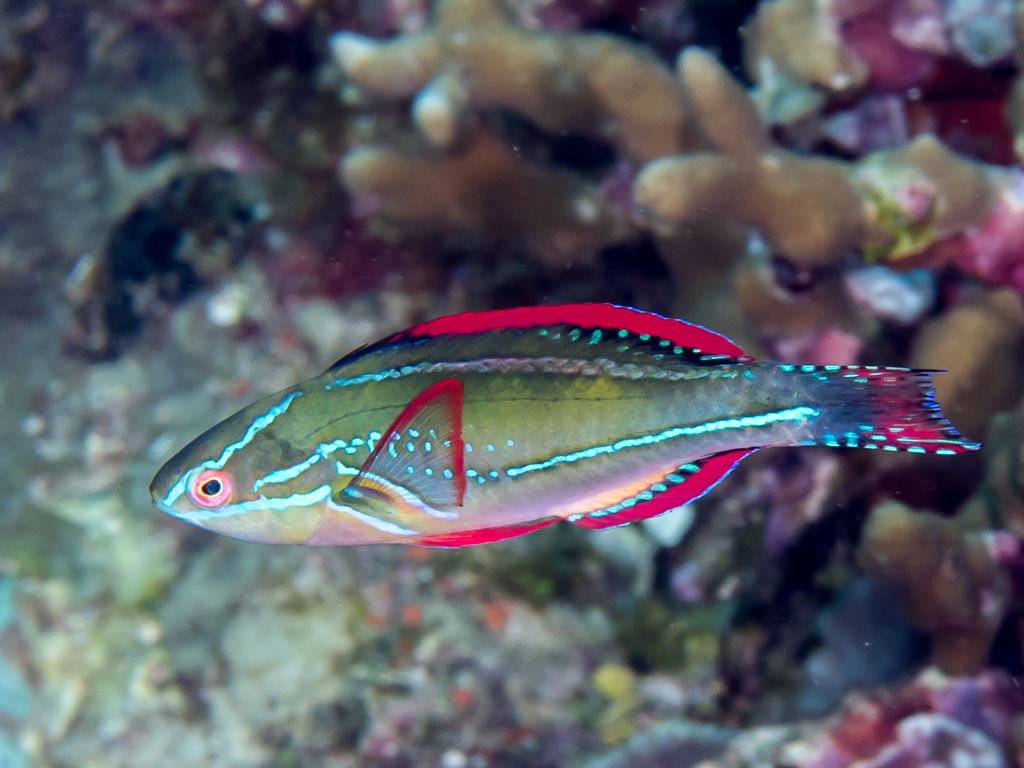 Exquisite wrasse
Cirrhilabrus exquisitus
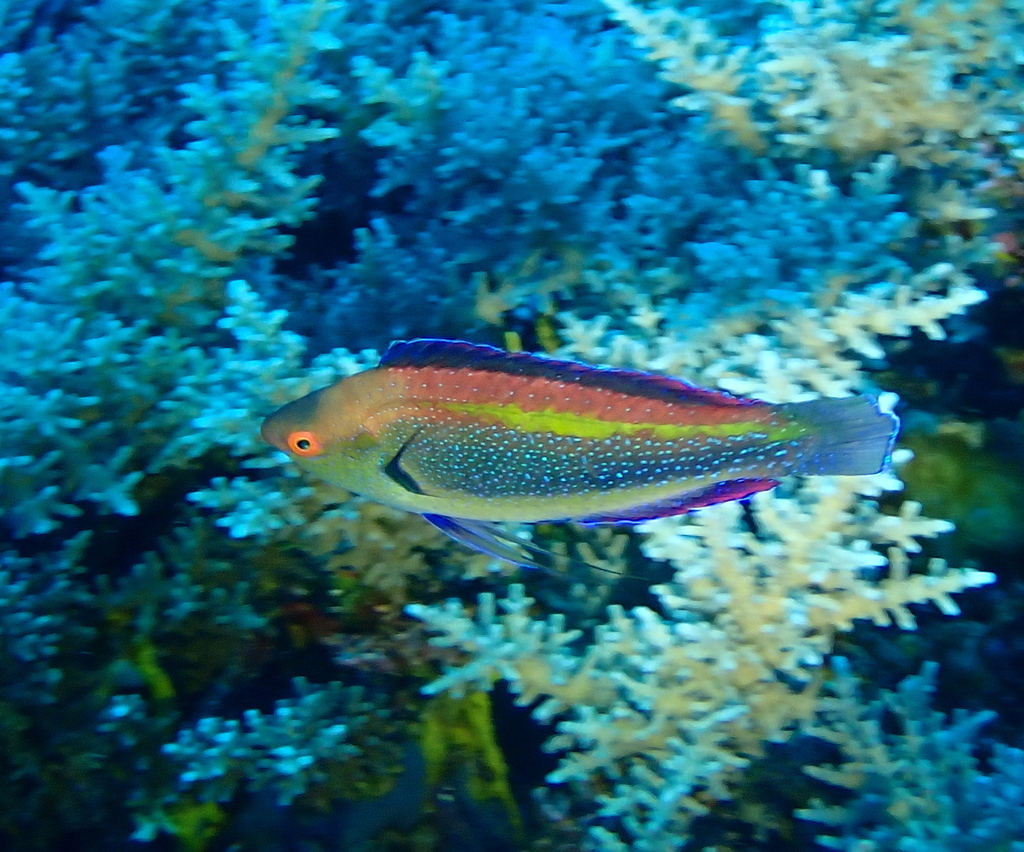 Black-finned Wrasse
Cirrhilabrus punctatus
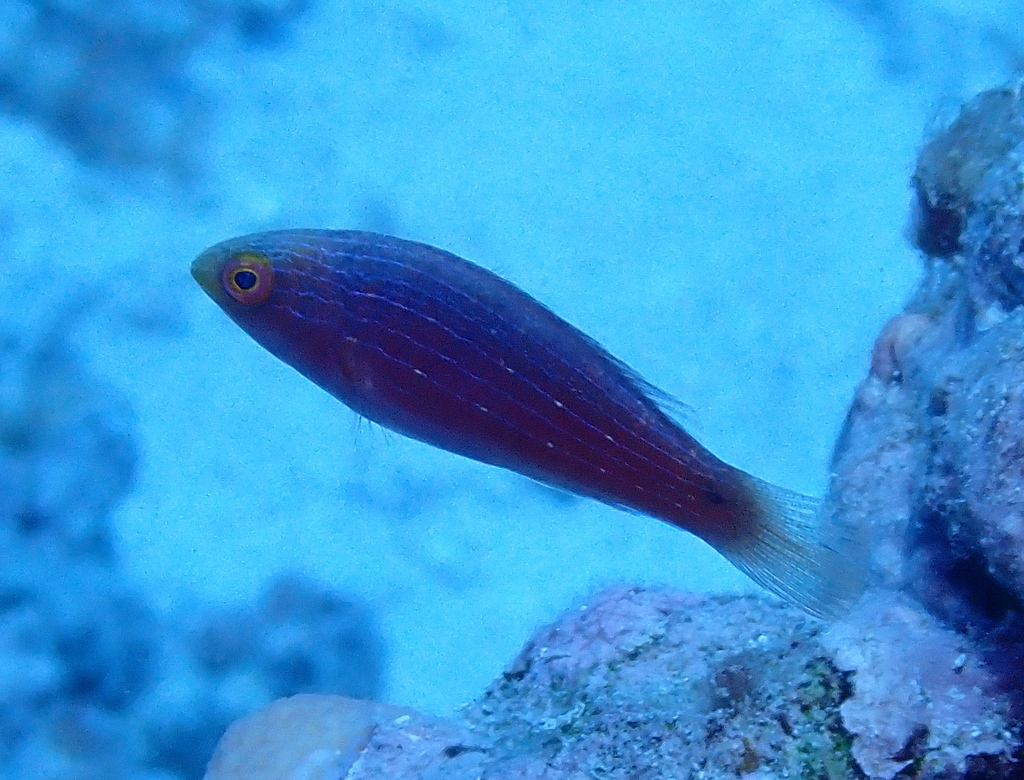 Scott's Fairy-wrasse
Cirrhilabrus scottorum
 Peacock Wrasse
Cirrhilabrus temminckii
- Blackstriped Wrasse
Cirrhilabrus katherinae
Sources and credits
Names and taxonomy: WoRMS (CC BY 4.0) and the GBIF Backbone (CC BY 4.0). Photos: iNaturalist observers, each under the licence shown (CC0, CC BY or CC BY-SA).
- Depth, temperature, months and maps: records from OBIS and GBIF under CC0 or CC BY.
- Descriptions: Wikipedia, licensed CC BY-SA, each linked to its article.
- Conservation status as published by GBIF (IUCN Red List).
- 9 open-data records from 1997 to 2020.
- Species data updated November 1, 2026.
Log what you see on your next dive
The free DiveHive diver app keeps your logbook with every sighting and shows what lives at the site you dive next.