
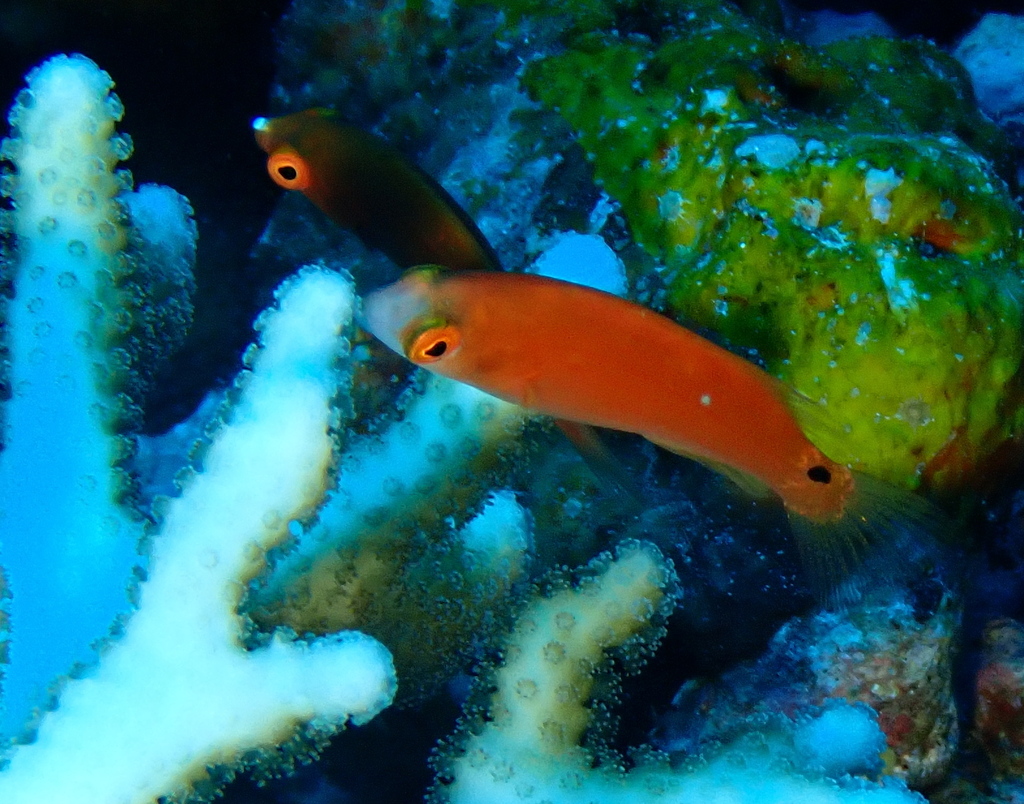
Marjorie's Fairy Wrasse
Cirrhilabrus marjorie
- Usual depth14–33 m
- Water temperature27–28 °C
- Best monthsMarch, May, and November
- How commonRare
Photo credit: (c) Debra Baker, some rights reserved (CC BY) · CC BY · iNaturalist
About this species
Marjorie's wrasse is a species of wrasse native to the coral reefs of the Fiji. This species can reach a standard length of 5.8 cm (2.3 in). It can be found at depths from 20 to 50 m, most often between 30 and 36 m. The specific name honours Marjorie Awai, the Curator of the Florida Aquarium, and who was formerly a Curatorial Assistant in the ichthyology Department at the Bishop Museum in Hawaii.
Text from the Wikipedia article “Marjorie's wrasse”, licensed CC BY-SA 4.0. Read the article
Where and when
Where it has been recorded
Worldwide
Loading the map
Best months
Worldwide (open data)
- January: 1 records
- February: 3 records
- March: 9 records
- April: 3 records
- May: 8 records
- June: 0 records
- July: 0 records
- August: 0 records
- September: 2 records
- October: 3 records
- November: 9 records
- December: 3 records
Depth and water temperature
Depth
Mostly recorded at 14–33 m · Deepest record: 33 m
Water temperature
Recorded in surface water of 27–28 °C
Photos
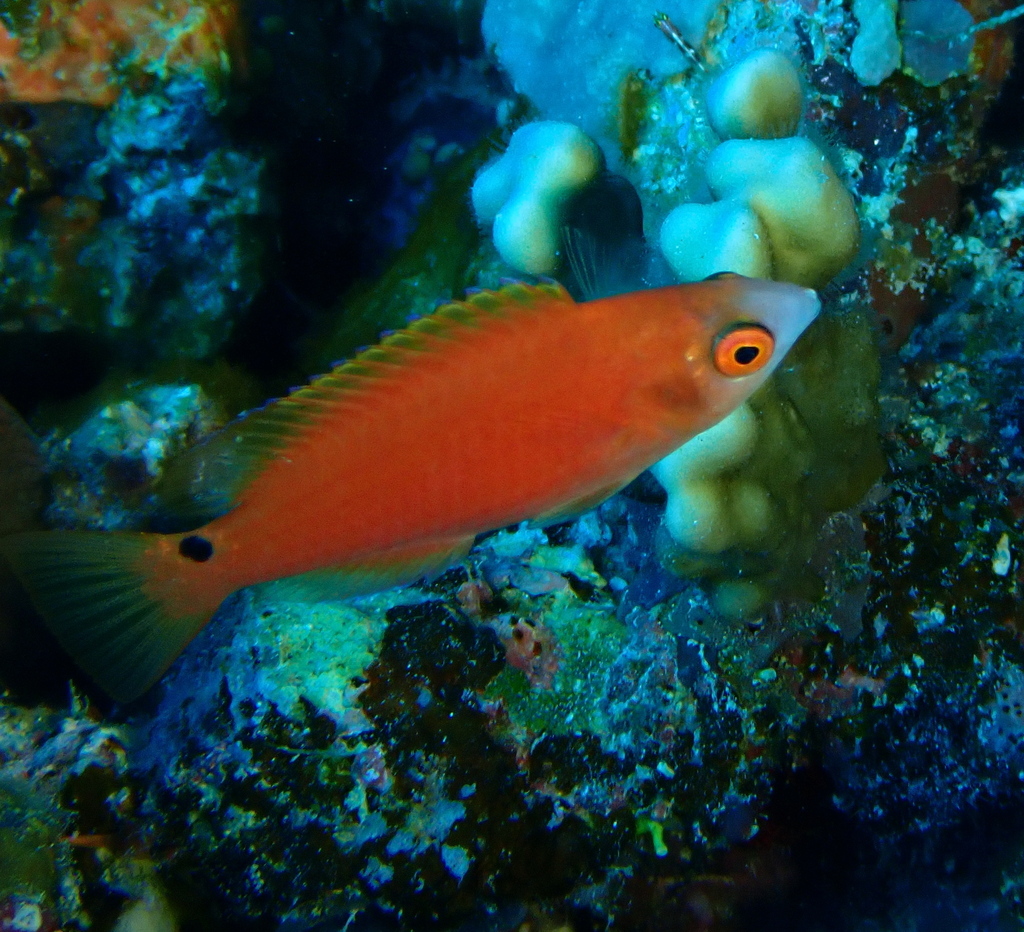
(c) Debra Baker, some rights reserved (CC BY) · CC BY · iNaturalist 
(c) jeyre, some rights reserved (CC BY) · CC BY · iNaturalist
Names and classification
- English
- Marjorie's Fairy Wrasse, Marjorie's Wrasse
Similar species
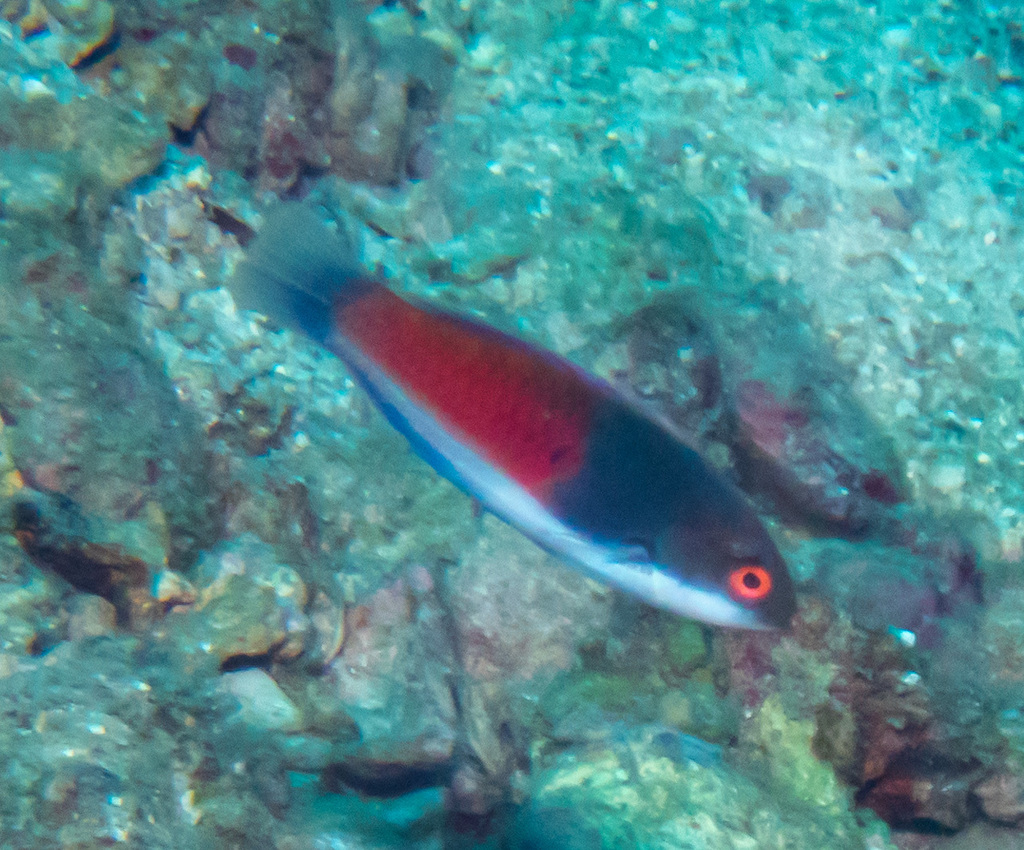 Blue-scaled Fairy Wrasse
Cirrhilabrus cyanopleura
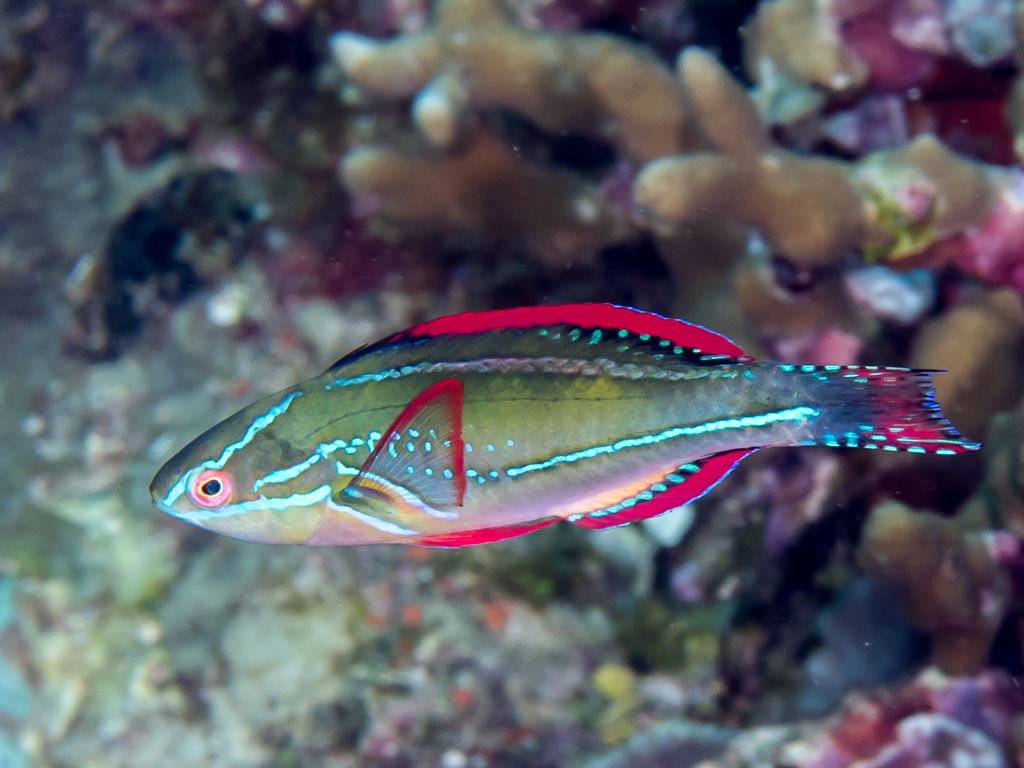 Exquisite wrasse
Cirrhilabrus exquisitus
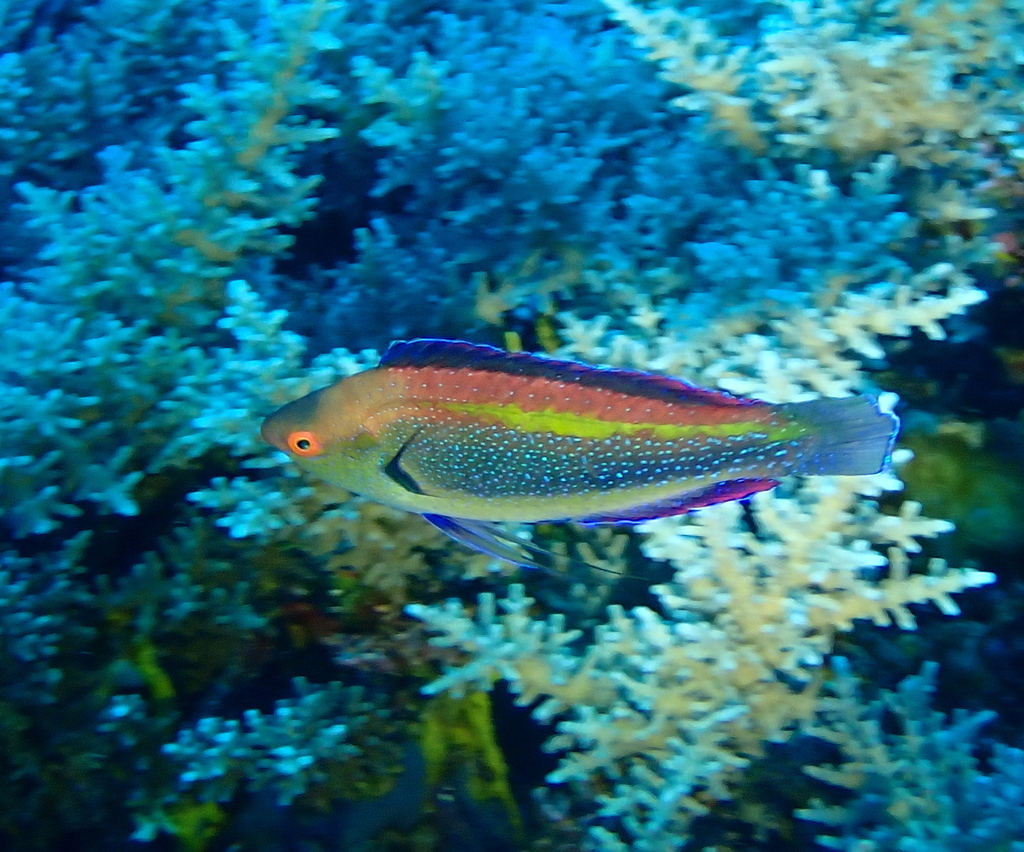 Black-finned Wrasse
Cirrhilabrus punctatus
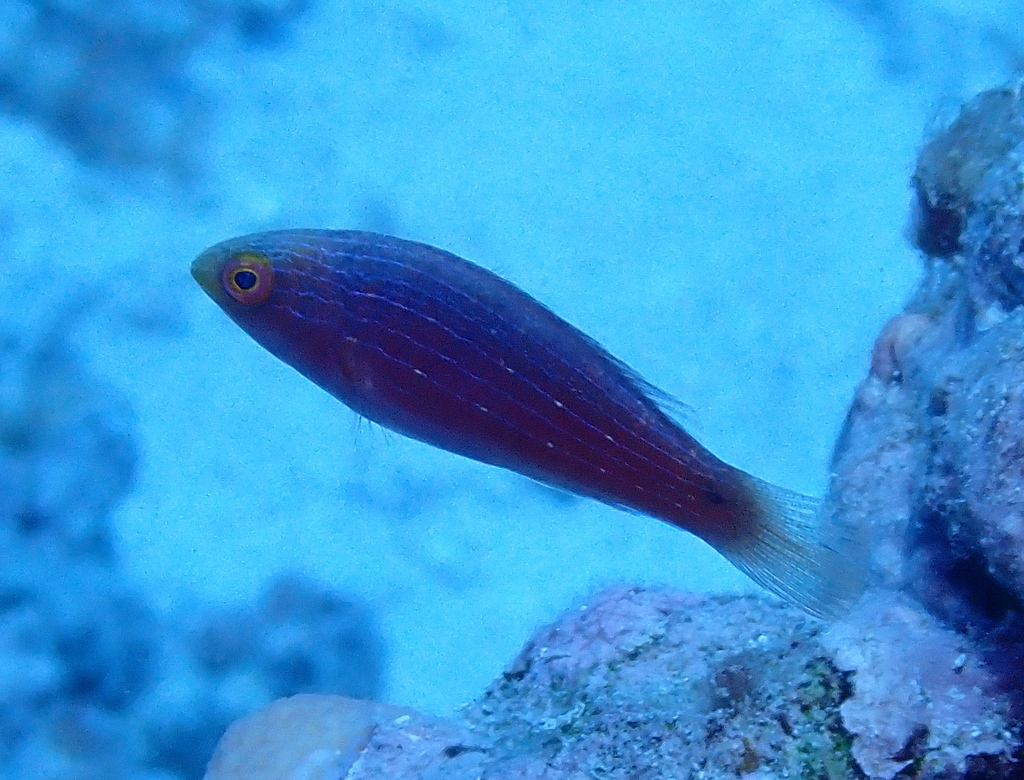 Scott's Fairy-wrasse
Cirrhilabrus scottorum
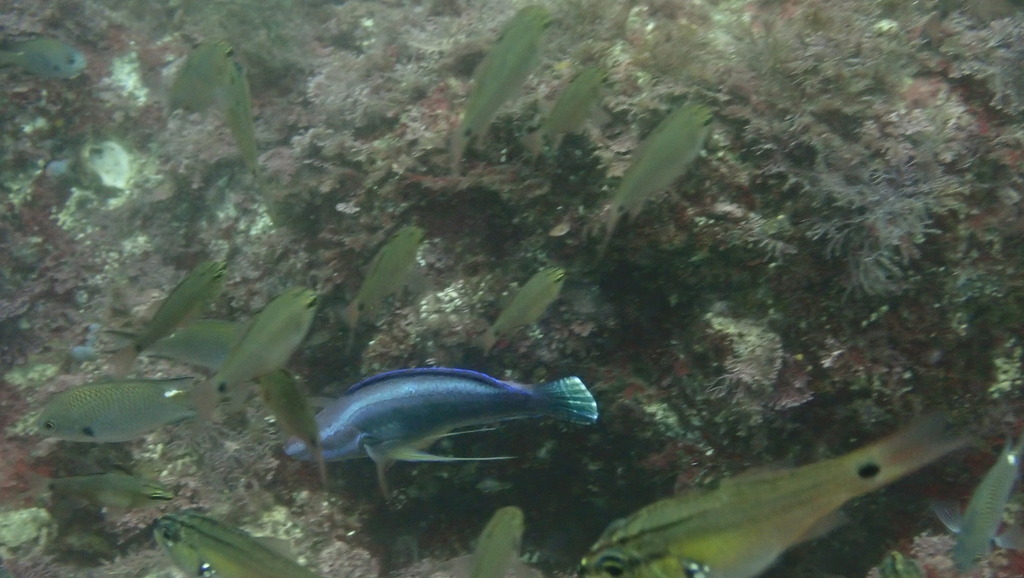 Peacock Wrasse
Cirrhilabrus temminckii
- Blackstriped Wrasse
Cirrhilabrus katherinae
Sources and credits
Names and taxonomy: WoRMS (CC BY 4.0) and the GBIF Backbone (CC BY 4.0). Photos: iNaturalist observers, each under the licence shown (CC0, CC BY or CC BY-SA).
- Depth, temperature, months and maps: records from OBIS and GBIF under CC0 or CC BY.
- Descriptions: Wikipedia, licensed CC BY-SA, each linked to its article.
- Conservation status as published by GBIF (IUCN Red List).
- 39 open-data records from 2002 to 2003.
- Species data updated November 1, 2026.
Log what you see on your next dive
The free DiveHive diver app keeps your logbook with every sighting and shows what lives at the site you dive next.