
DiscoverSpeciesOther invertebrates
Red Thread-gilled Worm
Cirriformia tentaculata
- Usual depth0–66 m
- Water temperature8–29 °C
- Best monthsMarch, May, and June
- How commonCommon
About this species
Cirriformia tentaculata, is a species of marine polychaete worm in the family Cirratulidae.
Text from the Wikipedia article “Cirriformia tentaculata”, licensed CC BY-SA 4.0. Read the article
Where and when
Where it has been recorded
Worldwide
Loading the map
Best months
Worldwide (open data)
- January: 146 records
- February: 199 records
- March: 547 records
- April: 508 records
- May: 680 records
- June: 584 records
- July: 329 records
- August: 371 records
- September: 395 records
- October: 174 records
- November: 95 records
- December: 50 records
Depth and water temperature
Depth
Mostly recorded at 0–66 m · Deepest record: 500 m
Water temperature
Recorded in surface water of 8–29 °C
Names and classification
- English
- Red Thread-gilled Worm
Names in 3 more languages
- French
- Ver aux fils rouges
- Japanese
- ミズヒキゴカイ
- Korean
- 명주실타래갯지렁이
Other scientific names: Audouinia comosa, Audouinia crassa, Audouinia lamarckii, Audouinia norwegica, Audouinia tentaculata, Cirratulus atrocollaris, Cirratulus comosus, Cirratulus lamarckii, Cirratulus pallidus, Cirratulus tentaculatus, Cirrhatulus lamarckii, Terebella tentaculata, Timarete tentaculata
Similar species
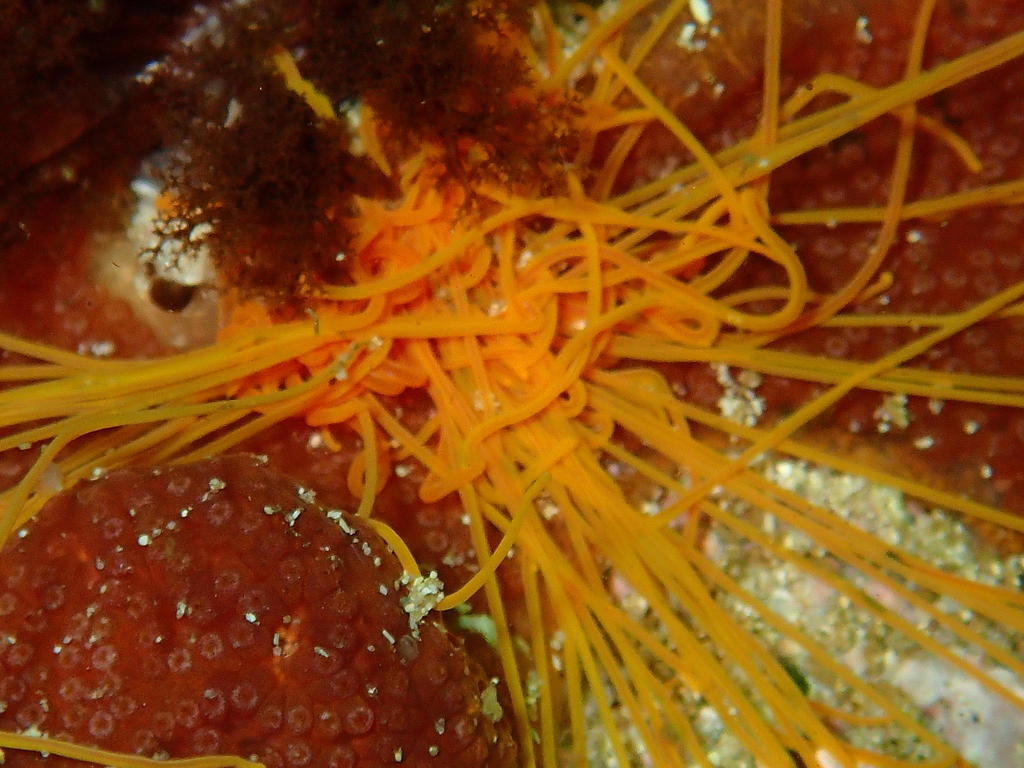 Orange Burrowing Worm
Cirriformia capensis
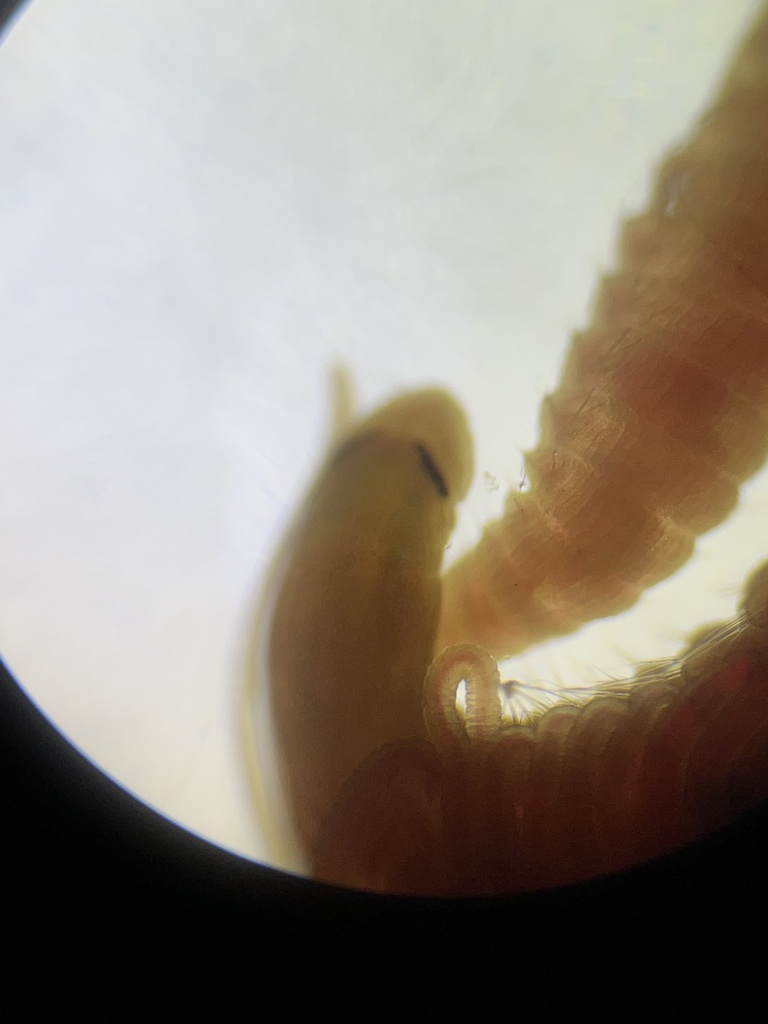 Bristleworm
Cirratulus cirratus
Sources and credits
Names and taxonomy: WoRMS (CC BY 4.0) and the GBIF Backbone (CC BY 4.0). Photos: iNaturalist observers, each under the licence shown (CC0, CC BY or CC BY-SA).
- Depth, temperature, months and maps: records from OBIS and GBIF under CC0 or CC BY.
- Descriptions: Wikipedia, licensed CC BY-SA, each linked to its article.
- Conservation status as published by GBIF (IUCN Red List).
- 8,297 open-data records from 1808 to 2023.
- Species data updated November 1, 2026.
Log what you see on your next dive
The free DiveHive diver app keeps your logbook with every sighting and shows what lives at the site you dive next.